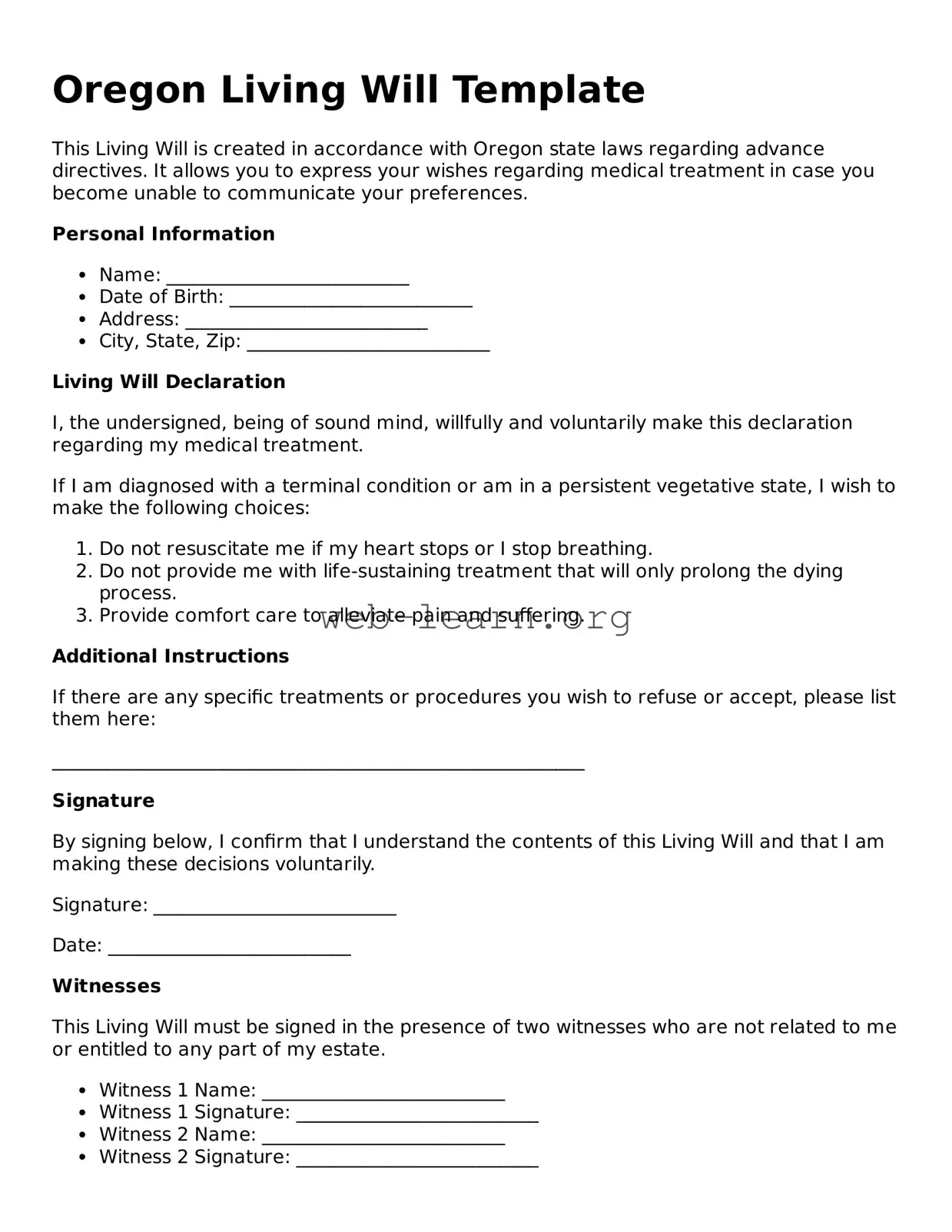
In Oregon, individuals have the opportunity to express their healthcare preferences through a Living Will, a crucial document that outlines one's wishes regarding medical treatment in the event of a terminal illness or incapacitation. This form empowers individuals to make decisions about life-sustaining treatments, such as resuscitation efforts, artificial nutrition, and hydration. By completing a Living Will, residents can ensure that their values and desires are respected when they may no longer be able to communicate them. The document must be signed and witnessed to be valid, reflecting the importance of having a clear and legally recognized expression of one’s wishes. Additionally, it is advisable to discuss these preferences with family members and healthcare providers to facilitate understanding and support. This proactive approach not only alleviates the burden on loved ones during difficult times but also provides peace of mind for the individual, knowing their choices will be honored. Understanding the nuances of the Oregon Living Will form is essential for anyone considering this important aspect of their healthcare planning.
Oregon Living Will Template
This Living Will is created in accordance with Oregon state laws regarding advance directives. It allows you to express your wishes regarding medical treatment in case you become unable to communicate your preferences.
Personal Information
Living Will Declaration
I, the undersigned, being of sound mind, willfully and voluntarily make this declaration regarding my medical treatment.
If I am diagnosed with a terminal condition or am in a persistent vegetative state, I wish to make the following choices:
Additional Instructions
If there are any specific treatments or procedures you wish to refuse or accept, please list them here:
_________________________________________________________
Signature
By signing below, I confirm that I understand the contents of this Living Will and that I am making these decisions voluntarily.
Signature: __________________________
Date: __________________________
Witnesses
This Living Will must be signed in the presence of two witnesses who are not related to me or entitled to any part of my estate.
Thank you for taking the time to document your wishes. Your choices matter and can provide guidance to your loved ones during difficult times.
| Fact Name | Details |
|---|---|
| Governing Law | The Oregon Living Will is governed by Oregon Revised Statutes (ORS) 127.531 to 127.541. |
| Purpose | This document allows individuals to express their wishes regarding medical treatment in case they become unable to communicate. |
| Eligibility | Any adult resident of Oregon can create a Living Will. |
| Signature Requirement | The form must be signed by the individual and witnessed by two people or notarized. |
| Witness Restrictions | Witnesses cannot be related by blood or marriage, nor can they be beneficiaries of the individual's estate. |
| Revocation | A Living Will can be revoked at any time by the individual, either verbally or in writing. |
| Healthcare Proxy | This document does not appoint a healthcare proxy; a separate document is needed for that purpose. |
| Types of Treatment | Individuals can specify which types of life-sustaining treatments they wish to receive or refuse. |
| Storage | It is recommended to keep the Living Will in an accessible location and provide copies to family members and healthcare providers. |
| Legal Validity | Oregon Living Wills are legally valid as long as they meet the state's requirements for execution and content. |
Filling out the Oregon Living Will form is an important step in expressing your healthcare wishes. Once completed, you will have a clear document that reflects your decisions regarding medical treatment in the event that you cannot communicate them yourself.
What is a Living Will in Oregon?
A Living Will is a legal document that allows individuals to express their wishes regarding medical treatment in the event they become unable to communicate those wishes themselves. In Oregon, this document is often referred to as an "advance directive." It outlines the types of medical interventions a person does or does not want, particularly in situations involving terminal illness or severe incapacitation.
Who can create a Living Will in Oregon?
Any adult who is at least 18 years old and of sound mind can create a Living Will in Oregon. This means that the individual must understand the nature and consequences of their decisions regarding medical treatment. It is important that the person creating the document does so voluntarily and without any undue pressure from others.
How do I create a Living Will in Oregon?
Creating a Living Will in Oregon involves a few straightforward steps:
It is advisable to discuss your wishes with family members and healthcare providers to ensure everyone understands your preferences.
Can I change or revoke my Living Will?
Yes, you can change or revoke your Living Will at any time, as long as you are mentally competent to do so. To revoke the document, you can simply destroy it or create a new Living Will that explicitly states your updated wishes. It is crucial to inform your healthcare providers and family members about any changes you make to ensure they are aware of your current preferences.
What happens if I do not have a Living Will?
If you do not have a Living Will and become unable to communicate your medical preferences, your healthcare providers will typically follow the standard procedures for treatment. This may involve making decisions based on what they believe is in your best interest, which might not align with your personal wishes. Having a Living Will can provide clarity and ensure that your preferences are respected in critical situations.
Filling out the Oregon Living Will form is an important step in ensuring that your healthcare wishes are respected. However, many individuals make common mistakes that can lead to confusion or complications later on. Understanding these pitfalls can help you navigate the process more smoothly.
One frequent mistake is not providing clear instructions. When detailing your preferences for medical treatment, vague language can lead to misinterpretation. Be specific about the types of interventions you do or do not want, as this clarity is crucial for healthcare providers.
Another common error is failing to sign the document properly. In Oregon, your Living Will must be signed by you in the presence of two witnesses or a notary. Neglecting this step can render the document invalid, leaving your wishes unfulfilled.
People often forget to update their Living Will as circumstances change. Life events such as marriage, divorce, or a significant health diagnosis can alter your preferences. Regularly reviewing and revising your Living Will ensures that it accurately reflects your current wishes.
Additionally, some individuals overlook the importance of discussing their Living Will with family members. Open conversations about your healthcare preferences can prevent misunderstandings and ensure that your loved ones are aware of your wishes when the time comes.
Another mistake is not including alternative decision-makers. If you are unable to communicate your wishes, it is essential to designate someone who can make decisions on your behalf. Failing to do so can lead to delays and disagreements among family members.
In some cases, people neglect to check the requirements for witnesses. In Oregon, the witnesses cannot be related to you or have a financial interest in your estate. Ignoring these rules can invalidate your Living Will.
Some individuals may also forget to keep copies of their Living Will in accessible locations. Having multiple copies on hand and sharing them with relevant parties, like family members and healthcare providers, ensures that your wishes are known and can be acted upon.
Lastly, many people underestimate the importance of reviewing the document periodically. Laws and personal circumstances can change. Regularly checking that your Living Will aligns with your current values and legal standards is essential for ensuring its effectiveness.
When preparing for end-of-life decisions, many individuals in Oregon choose to complete a Living Will. However, this document is often accompanied by several other forms that help ensure your healthcare preferences are honored. Here’s a list of common documents that complement the Oregon Living Will form.
Understanding these documents can empower you to make informed decisions about your healthcare and end-of-life preferences. By preparing a comprehensive set of forms, you can ensure that your wishes are respected and your loved ones are supported during challenging times.
A Living Will is a crucial document that outlines an individual's preferences for medical treatment in the event they become unable to communicate their wishes. Several other documents serve similar purposes, ensuring that personal healthcare decisions are respected. Here are ten documents that share similarities with a Living Will:
When filling out the Oregon Living Will form, it's important to follow certain guidelines. Here’s a list of what you should and shouldn’t do:
Make sure to follow these guidelines to ensure your wishes are clearly communicated and legally recognized.
Understanding the Oregon Living Will form is essential for making informed decisions about your healthcare preferences. However, several misconceptions often arise. Here are ten common misunderstandings about this important document:
By clarifying these misconceptions, individuals can better understand the importance of the Oregon Living Will form and ensure their healthcare preferences are honored.
Filling out and using the Oregon Living Will form is an important step in ensuring your healthcare wishes are respected. Here are some key takeaways to keep in mind:
Taking these steps can help ensure that your healthcare preferences are honored, providing peace of mind for you and your loved ones.
Advance Directive - A Living Will is an essential part of advance care planning, allowing you to take control of your healthcare decisions.
Living Will and Power of Attorney - This document provides guidance to healthcare providers about your end-of-life care choices.