When entering into a rental arrangement in Oregon, understanding the Oregon Lease Agreement form is essential for both landlords and tenants. This document serves as a legally binding contract that outlines the rights and responsibilities of each party involved in the lease. It typically includes critical details such as the duration of the lease, rental amount, and payment due dates. Additionally, it addresses important aspects like security deposits, maintenance responsibilities, and conditions for terminating the lease. Both parties must be aware of the specific terms laid out in the agreement, as they govern the relationship throughout the lease term. Moreover, the form may include clauses related to pets, subletting, and any restrictions that may apply to the property. By having a clear and comprehensive lease agreement, both landlords and tenants can avoid misunderstandings and ensure a smoother rental experience.
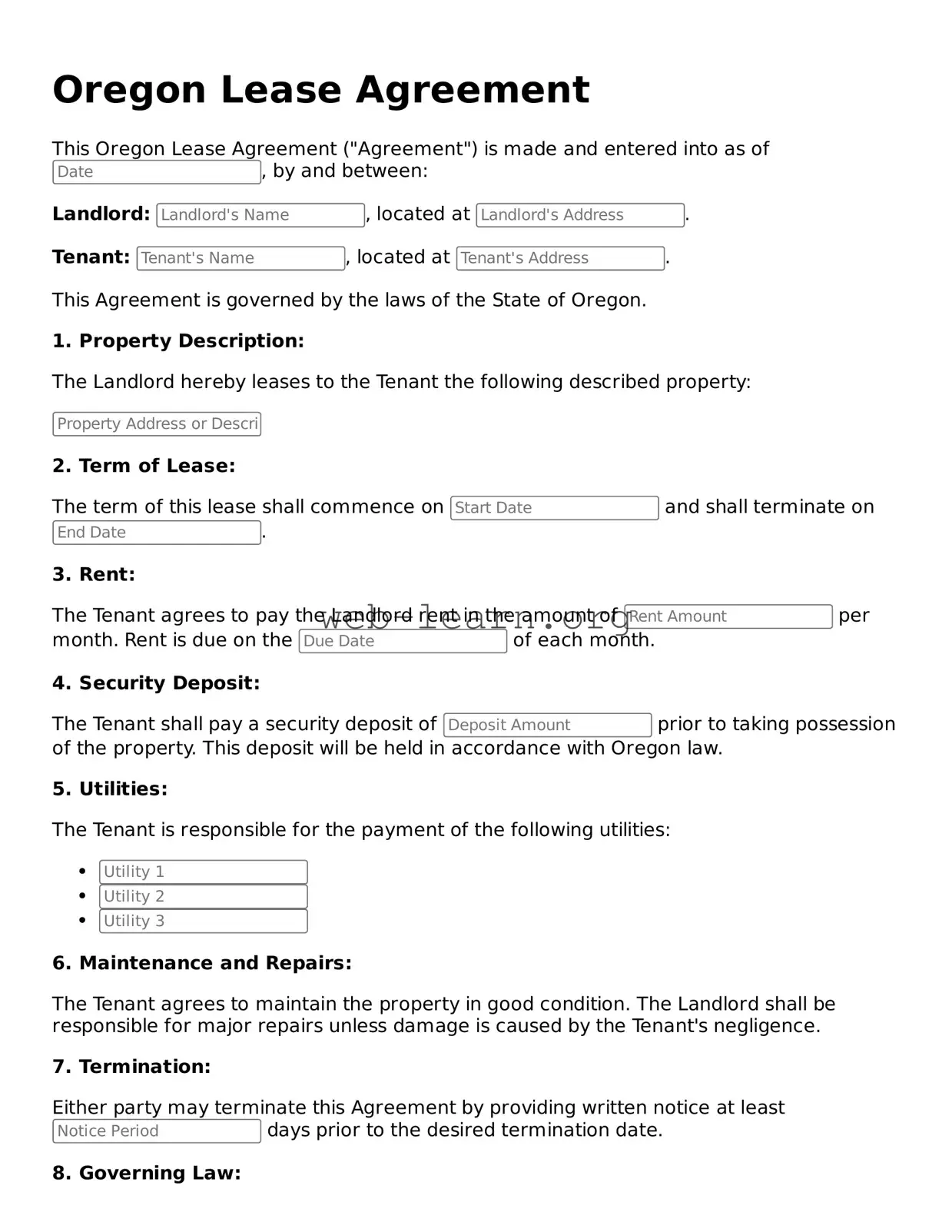
Oregon Lease Agreement
This Oregon Lease Agreement ("Agreement") is made and entered into as of , by and between:
Landlord: , located at .
Tenant: , located at .
This Agreement is governed by the laws of the State of Oregon.
1. Property Description:
The Landlord hereby leases to the Tenant the following described property:
2. Term of Lease:
The term of this lease shall commence on and shall terminate on .
3. Rent:
The Tenant agrees to pay the Landlord rent in the amount of per month. Rent is due on the of each month.
4. Security Deposit:
The Tenant shall pay a security deposit of prior to taking possession of the property. This deposit will be held in accordance with Oregon law.
5. Utilities:
The Tenant is responsible for the payment of the following utilities:
6. Maintenance and Repairs:
The Tenant agrees to maintain the property in good condition. The Landlord shall be responsible for major repairs unless damage is caused by the Tenant's negligence.
7. Termination:
Either party may terminate this Agreement by providing written notice at least days prior to the desired termination date.
8. Governing Law:
This Agreement shall be governed by the laws of the State of Oregon.
IN WITNESS WHEREOF, the parties hereto have executed this Lease Agreement as of the day and year first above written.
Landlord Signature: ________________________ Date: _______________
Tenant Signature: ________________________ Date: _______________
| Fact Name | Description |
|---|---|
| Governing Law | The Oregon Lease Agreement is governed by the laws of the State of Oregon. |
| Parties Involved | The form typically includes the landlord and tenant as the main parties involved in the lease. |
| Property Description | A detailed description of the rental property must be included, specifying the address and type of property. |
| Lease Term | The agreement specifies the duration of the lease, which can be fixed-term or month-to-month. |
| Rent Payment | The form outlines the amount of rent due, payment method, and due date each month. |
| Security Deposit | Details regarding the security deposit, including the amount and conditions for its return, are included. |
| Maintenance Responsibilities | The lease outlines the responsibilities of both the landlord and tenant regarding property maintenance. |
| Termination Conditions | The conditions under which either party can terminate the lease are clearly defined. |
| Dispute Resolution | The agreement may include a clause for resolving disputes, such as mediation or arbitration. |
| Additional Clauses | Other clauses may address pets, smoking, and alterations to the property, depending on the agreement. |
Filling out the Oregon Lease Agreement form is a straightforward process. Once you have completed the form, you will be ready to finalize the rental arrangement between the landlord and tenant.
An Oregon Lease Agreement is a legally binding contract between a landlord and a tenant that outlines the terms and conditions for renting a residential property in Oregon. This document typically includes details such as the rental amount, duration of the lease, and the responsibilities of both parties.
Key components of an Oregon Lease Agreement often include:
While a written lease agreement is not legally required for month-to-month rentals, it is highly recommended. A written agreement helps clarify expectations and protect the rights of both parties. For fixed-term leases, a written agreement is essential to ensure that all terms are documented and enforceable.
Leases in Oregon can vary in duration. Common terms include:
It's essential to specify the lease duration in the agreement to avoid misunderstandings.
In Oregon, landlords can charge a security deposit, but it cannot exceed the equivalent of two months' rent. The lease agreement should clearly state the amount and the conditions under which the deposit may be withheld at the end of the tenancy. Landlords are required to return the deposit, minus any deductions, within 31 days after the tenant moves out.
For fixed-term leases, landlords cannot increase rent until the lease expires. However, for month-to-month leases, landlords may increase rent with proper notice. In Oregon, a 90-day written notice is required for rent increases.
If a tenant wishes to break the lease early, they may be subject to penalties as outlined in the lease agreement. This could include forfeiting the security deposit or paying rent until a new tenant is found. It's advisable for tenants to communicate with their landlord to explore possible solutions.
Yes, Oregon has specific tenant rights that protect renters. These include:
Understanding these rights is crucial for both tenants and landlords.
Sample Oregon Lease Agreements can be found online through various legal resources or local housing authorities. It's important to ensure that any template used complies with Oregon laws and is tailored to fit the specific needs of both the landlord and tenant.
When completing the Oregon Lease Agreement form, many individuals overlook critical details that can lead to misunderstandings or disputes later on. One common mistake is failing to include the correct names of all parties involved. It’s essential to ensure that every tenant and landlord is accurately named to avoid confusion regarding responsibilities.
Another frequent error is neglecting to specify the rental amount clearly. While it may seem straightforward, omitting the rent amount or miswriting it can create significant issues. Always double-check that the rent is clearly stated in both numbers and words to prevent any ambiguity.
People often forget to indicate the lease term. Whether it’s a month-to-month agreement or a fixed-term lease, this information is crucial. Without it, tenants and landlords may have different expectations about the duration of the rental arrangement.
Additionally, many individuals fail to include details about security deposits. Not specifying the amount and conditions for the return of the deposit can lead to disputes when the lease ends. Clearly outline these terms to protect both parties.
Another mistake is not addressing maintenance responsibilities. The lease should clearly state who is responsible for repairs and maintenance. This helps prevent disagreements over who should handle issues that arise during the tenancy.
Some people overlook the importance of including rules regarding pets. If pets are allowed, specify any restrictions or additional fees. Conversely, if pets are prohibited, make that clear to avoid misunderstandings later on.
Another common oversight is failing to include the notice period required for termination of the lease. Both parties should understand how much notice is needed to end the agreement. This protects everyone’s rights and ensures a smooth transition when the lease ends.
In some cases, individuals do not review local laws before finalizing the lease. Each state has specific regulations regarding rental agreements. Familiarizing yourself with Oregon’s laws can help ensure compliance and protect your rights.
People sometimes forget to sign and date the agreement. An unsigned lease may not be legally binding, leaving both parties vulnerable. Make sure that all required signatures are present before the lease takes effect.
Lastly, many individuals neglect to keep a copy of the signed lease. It’s vital to retain a copy for reference throughout the tenancy. This ensures that both parties have access to the terms of the agreement, which can be helpful in case of disputes.
When entering into a lease agreement in Oregon, several other forms and documents often accompany the primary lease. These documents help clarify the terms of the lease, protect the rights of both landlords and tenants, and ensure compliance with state laws. Below are some commonly used documents that you may encounter.
Understanding these documents is crucial for both landlords and tenants. Each plays a significant role in ensuring a smooth rental experience and protecting the interests of all parties involved. By being aware of these forms, individuals can navigate the leasing process with greater confidence and clarity.
A Lease Agreement is a crucial document in rental transactions, but it shares similarities with several other legal documents. Here are four documents that are similar to a Lease Agreement:
When filling out the Oregon Lease Agreement form, it is important to follow certain guidelines to ensure accuracy and compliance. Below are seven recommendations to consider.
Understanding the Oregon Lease Agreement form is crucial for both landlords and tenants. However, several misconceptions can lead to confusion and potential disputes. Here are nine common misconceptions:
While both documents serve to outline the terms of a rental arrangement, a lease agreement typically covers a longer duration and includes more detailed provisions.
Although written agreements are recommended for clarity, oral agreements can also be legally binding under certain circumstances.
Oregon law requires landlords to provide proper notice before initiating eviction proceedings, ensuring tenants have a fair opportunity to respond.
Security deposits can be refunded, provided tenants meet the conditions outlined in the lease agreement and leave the property in good condition.
Tenants may only withhold rent under specific legal circumstances, such as significant repairs not being addressed by the landlord.
While many terms can be negotiated, some provisions, particularly those mandated by law, cannot be altered.
Landlords must provide reasonable notice before entering the property, except in emergencies, to respect the tenant's right to privacy.
Oregon has established laws governing lease agreements, including requirements for disclosures and tenant protections.
While changes to a lease agreement require mutual consent, modifications can be made at any time if both parties agree.
Addressing these misconceptions can help both landlords and tenants navigate their rights and responsibilities more effectively. It is essential to approach lease agreements with a clear understanding to foster positive rental relationships.
When filling out and using the Oregon Lease Agreement form, consider the following key takeaways:
Arkansas Lease Agreement - Defines the responsibilities of the landlord and tenant.
Free Lease Agreement Florida - Addresses the handling of disputes between parties.
Downloadable Lease Agreement - This agreement often requires both parties to sign and date for validity.
Free Printable Lease Agreement Template - Details the obligations for property upkeep and repairs.