For families considering homeschooling in Oregon, submitting a Homeschool Letter of Intent is an essential first step in the process. This form serves as a formal notification to the local education authority that parents or guardians plan to educate their children at home. It includes key information such as the names and ages of the children being homeschooled, as well as the address of the home where the education will take place. By completing this form, families establish their commitment to providing an educational experience that meets state requirements. It's important to note that while the letter does not require detailed curriculum information, it signals the intent to comply with Oregon's homeschooling laws. This simple yet significant document lays the groundwork for a fulfilling educational journey tailored to each child's unique needs and learning style.
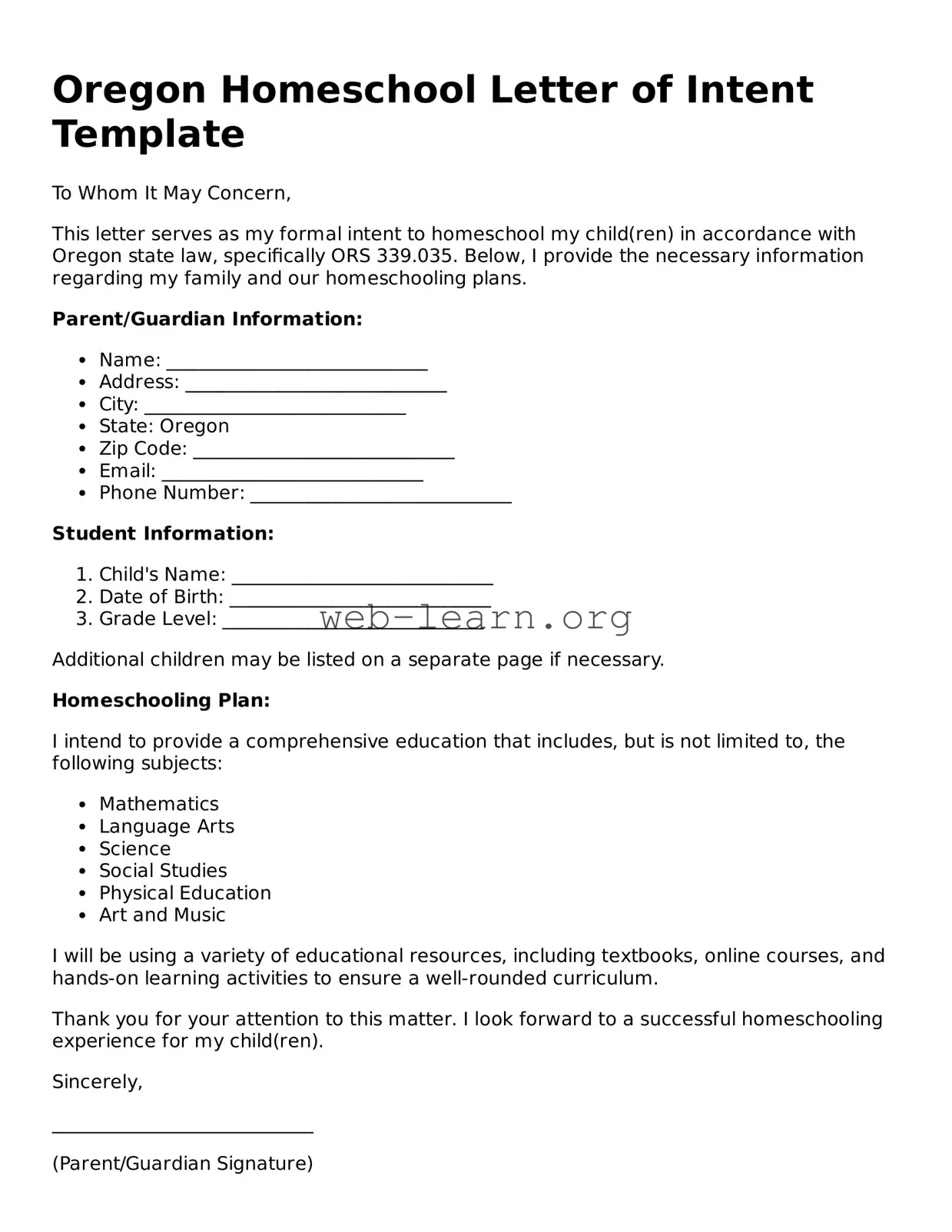
Oregon Homeschool Letter of Intent Template
To Whom It May Concern,
This letter serves as my formal intent to homeschool my child(ren) in accordance with Oregon state law, specifically ORS 339.035. Below, I provide the necessary information regarding my family and our homeschooling plans.
Parent/Guardian Information:
Student Information:
Additional children may be listed on a separate page if necessary.
Homeschooling Plan:
I intend to provide a comprehensive education that includes, but is not limited to, the following subjects:
I will be using a variety of educational resources, including textbooks, online courses, and hands-on learning activities to ensure a well-rounded curriculum.
Thank you for your attention to this matter. I look forward to a successful homeschooling experience for my child(ren).
Sincerely,
____________________________
(Parent/Guardian Signature)
Date: ____________________________
| Fact Name | Description |
|---|---|
| Purpose of the Form | The Oregon Homeschool Letter of Intent form is used by parents to officially notify the state that they intend to homeschool their children. |
| Governing Law | This form is governed by Oregon Revised Statutes (ORS) 339.035, which outlines the requirements for homeschooling in the state. |
| Submission Deadline | Parents must submit the Letter of Intent within 10 days of beginning their homeschooling program. |
| Required Information | The form requires basic information, such as the names and ages of the children being homeschooled and the address of the family. |
Once you have the Oregon Homeschool Letter of Intent form, you can begin filling it out. This form is essential for notifying the local school district of your intent to homeschool your child. After submitting it, you will receive further information about the requirements and resources available to you as a homeschooling parent.
The Oregon Homeschool Letter of Intent is a formal document that parents or guardians must submit to their local school district to notify them of their decision to homeschool their children. This letter serves as an official declaration of intent and is a requirement under Oregon law.
The Letter of Intent should be submitted to the school district by the time you begin homeschooling. If you are withdrawing a child from a public school, it’s advisable to submit the letter at least a few weeks before you plan to start homeschooling to ensure a smooth transition.
The Letter of Intent must include the following information:
Including this information helps the school district keep accurate records and ensures compliance with state regulations.
No specific format is mandated, but it should be clear and concise. You can create your own letter or use templates available online. Just make sure all required information is included.
Yes, in Oregon, you are required to submit a new Letter of Intent each year. This annual renewal helps ensure that the school district is aware of your continued homeschooling status.
Once you submit the Letter of Intent, the school district will typically acknowledge receipt. They may not respond directly, but they will update their records. You are then free to begin your homeschooling program.
Failure to submit the Letter of Intent can lead to complications. The school district may consider your child truant, which can result in legal issues. It’s crucial to follow the law to avoid any potential problems.
Yes, you can withdraw your child from public school after submitting the Letter of Intent. However, it’s best to do so officially through the school’s withdrawal process to avoid any misunderstandings regarding your child’s enrollment status.
The Letter of Intent form is often available on your local school district's website. You can also find resources and templates on various homeschooling websites and forums dedicated to Oregon homeschooling.
Completing the Oregon Homeschool Letter of Intent form can be straightforward, but several common mistakes can lead to complications. One frequent error is failing to provide all required information. Each section of the form is designed to gather specific details about the student and the educational plan. Omitting any part can result in delays or the need for resubmission.
Another mistake is not updating the form when necessary. Families may forget to submit a new letter if there are changes in the child's educational status or if they decide to switch homeschooling methods. It is essential to keep the information current to ensure compliance with state regulations.
Some individuals also overlook the importance of signatures. The form requires a signature from a parent or guardian, and submitting it without this essential step can render the document invalid. Double-checking for a signature can prevent unnecessary setbacks.
Additionally, many people do not take the time to review the instructions thoroughly. Each part of the form has specific guidelines that must be followed. Skipping this step can lead to misunderstandings about what information is needed, resulting in incomplete or incorrect submissions.
Lastly, individuals sometimes fail to submit the form within the required timeframe. The Oregon Department of Education has specific deadlines for submitting the Letter of Intent. Missing these deadlines can impact the homeschooling process, leading to potential legal issues. Staying aware of these timelines is crucial for a smooth homeschooling experience.
When parents decide to homeschool their children in Oregon, they must submit a Homeschool Letter of Intent. However, this document is just one part of a broader set of forms and documents that can help facilitate a successful homeschooling experience. Below are some important forms that are often used alongside the Homeschool Letter of Intent.
Having these documents prepared and organized can greatly enhance the homeschooling experience. They not only help in meeting legal requirements but also support a structured and effective learning environment for children.
When filling out the Oregon Homeschool Letter of Intent form, it's important to follow specific guidelines to ensure a smooth process. Here are some dos and don'ts to keep in mind:
Many people have misunderstandings about the Oregon Homeschool Letter of Intent form. Here are six common misconceptions:
Understanding these misconceptions can help parents navigate the homeschooling process more confidently.
Filling out and using the Oregon Homeschool Letter of Intent form is a crucial step for parents looking to homeschool their children. Here are some key takeaways to keep in mind:
Best Homeschool Programs in Hawaii - It may also provide clarity on what is expected from you as a homeschooling parent.
Unschooling in Ct - Some states require the letter to be submitted by a certain deadline each year.
How to Write a Letter of Intent for Homeschooling - Can be a simple way to communicate educational intentions.