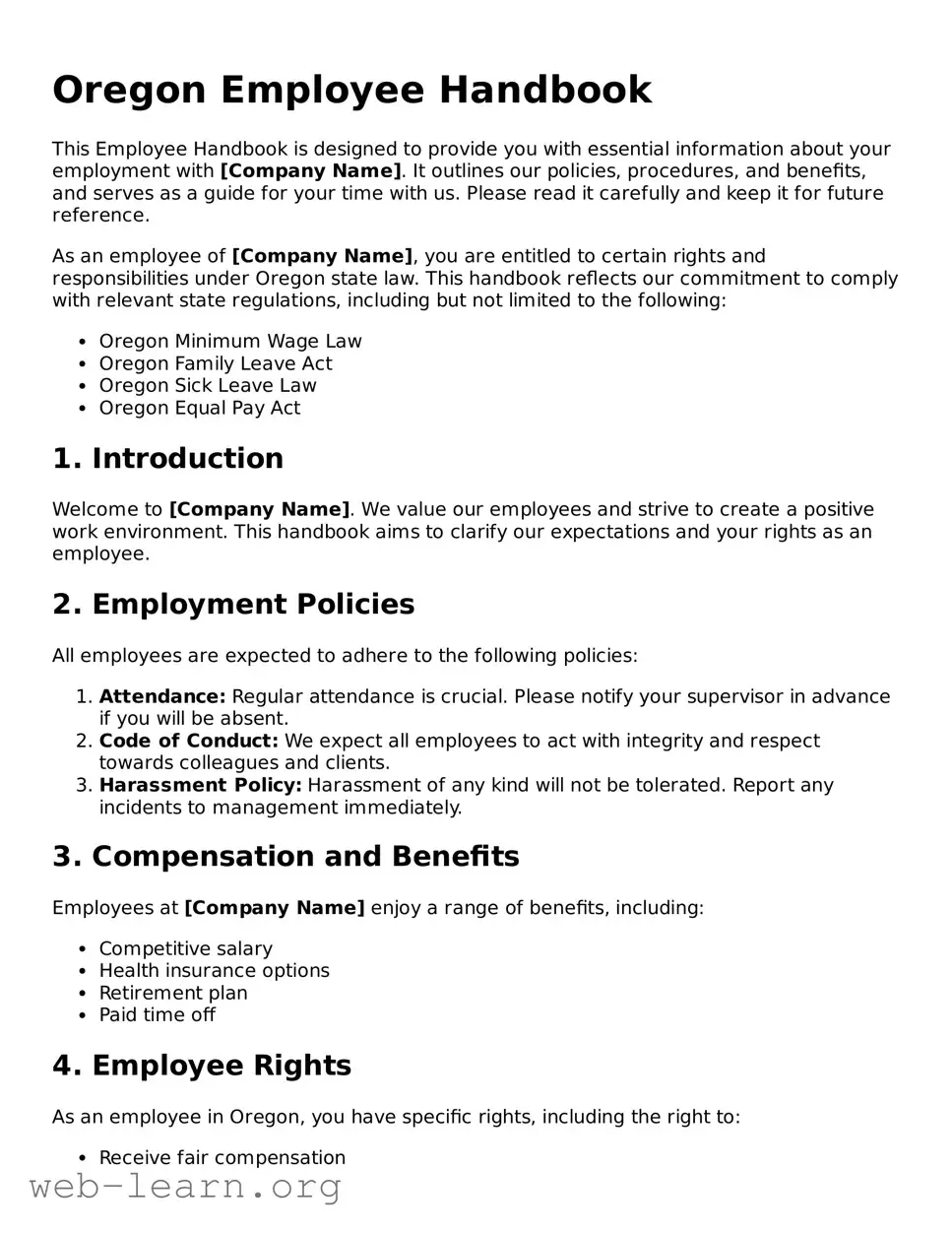
Creating a comprehensive employee handbook is essential for any business in Oregon. This document serves as a vital resource for both employers and employees, outlining workplace policies, procedures, and expectations. Key aspects of the Oregon Employee Handbook include information on employment policies, workplace conduct, and employee rights. It typically addresses topics such as anti-discrimination policies, harassment prevention, and disciplinary procedures. Additionally, the handbook should cover benefits, leave policies, and safety protocols, ensuring that employees understand their entitlements and responsibilities. By providing clear guidelines, the employee handbook fosters a positive work environment and helps to prevent misunderstandings, making it an indispensable tool for effective workplace communication.
Oregon Employee Handbook
This Employee Handbook is designed to provide you with essential information about your employment with [Company Name]. It outlines our policies, procedures, and benefits, and serves as a guide for your time with us. Please read it carefully and keep it for future reference.
As an employee of [Company Name], you are entitled to certain rights and responsibilities under Oregon state law. This handbook reflects our commitment to comply with relevant state regulations, including but not limited to the following:
1. Introduction
Welcome to [Company Name]. We value our employees and strive to create a positive work environment. This handbook aims to clarify our expectations and your rights as an employee.
2. Employment Policies
All employees are expected to adhere to the following policies:
3. Compensation and Benefits
Employees at [Company Name] enjoy a range of benefits, including:
4. Employee Rights
As an employee in Oregon, you have specific rights, including the right to:
5. Acknowledgment of Receipt
By signing below, you acknowledge that you have received, read, and understood the Oregon Employee Handbook.
Employee Name: [Employee Name]
Employee Signature: ________________________
Date: [Date]
| Fact Name | Description |
|---|---|
| Purpose | The Oregon Employee Handbook serves as a guide for employees, outlining company policies, procedures, and expectations. |
| Legal Requirement | While not legally mandated, providing an employee handbook is recommended to ensure clarity and compliance with state laws. |
| Governing Laws | The handbook should comply with Oregon labor laws, including the Oregon Revised Statutes (ORS) and federal employment regulations. |
| Contents | Common sections include workplace conduct, benefits, leave policies, and grievance procedures. |
| Distribution | Employees should receive a copy upon hiring, and updates must be communicated promptly to ensure everyone is informed. |
Filling out the Oregon Employee Handbook form is an important step in ensuring that you understand your rights and responsibilities as an employee. Once you have completed the form, you will be ready to submit it to your employer for review. This process helps to establish clear communication and expectations between you and your workplace.
The Oregon Employee Handbook form is a document that outlines the policies, procedures, and expectations for employees working in Oregon. It serves as a guide for both employers and employees, detailing important information such as workplace conduct, benefits, and employee rights.
An Employee Handbook is important because it helps establish clear communication between employers and employees. It can reduce misunderstandings and provide a reference point for both parties regarding workplace rules and regulations. Furthermore, it can help protect the employer from potential legal issues by demonstrating that the company has communicated its policies effectively.
The Oregon Employee Handbook should include, but is not limited to, the following sections:
The Employee Handbook should be reviewed and updated regularly, at least once a year or whenever there are significant changes in laws, regulations, or company policies. Keeping the handbook current ensures that employees have access to the most accurate and relevant information.
While it is not legally required for employees to sign the Employee Handbook, it is a good practice to have them acknowledge receipt and understanding of the handbook. This acknowledgment can help reinforce the importance of the policies and provide a record that employees have been informed of the company’s expectations.
Filling out the Oregon Employee Handbook form can be a straightforward process, but many individuals make common mistakes that can lead to confusion later on. One frequent error is neglecting to read the entire handbook before signing. Understanding the policies and procedures outlined is crucial. Without this knowledge, employees may inadvertently agree to terms they do not fully comprehend.
Another mistake is failing to update personal information. If an employee’s address, phone number, or emergency contact changes, it’s essential to reflect these updates in the handbook. Outdated information can cause delays in communication and may lead to complications in emergency situations.
Some individuals overlook the importance of signing and dating the form. An unsigned or undated form may not be considered valid, which can create issues down the line. It’s a simple step that ensures the document is official and recognized by the employer.
Additionally, people often forget to ask questions about unclear policies. If something in the handbook doesn’t make sense, it’s better to seek clarification than to make assumptions. Employers appreciate when employees take the initiative to understand their rights and responsibilities.
Another common error is skipping the acknowledgment of receipt. This section confirms that the employee has received the handbook. Without this acknowledgment, employers may assume that the employee is not aware of the policies, which can lead to misunderstandings.
In some cases, individuals may not take the time to review the handbook regularly. Policies can change, and staying informed is essential for compliance and understanding workplace expectations. Regularly revisiting the handbook helps employees stay updated on any new rules or changes.
People also sometimes fail to keep a copy of the signed handbook for their records. Having a personal copy can be invaluable if any disputes arise regarding policies or if an employee needs to reference specific guidelines in the future.
Another mistake involves not discussing the handbook with supervisors or HR. Engaging in conversations about the content can provide further insights and foster a better understanding of the workplace culture and expectations.
Lastly, employees may ignore the importance of confidentiality clauses included in the handbook. Understanding these clauses is crucial, as violating them can lead to serious repercussions. Employees should be aware of what information is considered confidential and how to handle it appropriately.
By being mindful of these common mistakes, employees can ensure that they fill out the Oregon Employee Handbook form correctly and understand their rights and responsibilities in the workplace.
The Oregon Employee Handbook is an essential document that outlines company policies, procedures, and employee rights. Along with this handbook, several other forms and documents are commonly utilized to ensure clarity and compliance within the workplace. Below are four key documents that often accompany the Employee Handbook.
These documents work together to create a comprehensive framework that supports both the employer and employees in maintaining a productive and compliant workplace. By understanding and utilizing these forms, organizations can foster a positive work environment.
The Employee Handbook serves as a vital resource within an organization, outlining policies, procedures, and expectations for employees. Several other documents share similarities with the Employee Handbook in terms of purpose and content. Below is a list of nine such documents, each with a brief explanation of how they relate to the Employee Handbook.
Each of these documents plays a crucial role in shaping the employee experience and ensuring that all staff members understand their rights and responsibilities within the organization.
When filling out the Oregon Employee Handbook form, it is important to follow certain guidelines to ensure accuracy and compliance. Below is a list of things to do and avoid.
Things You Should Do:
Things You Shouldn't Do:
When it comes to the Oregon Employee Handbook form, several misconceptions can lead to confusion. Understanding these myths can help employers and employees alike navigate their rights and responsibilities more effectively. Here are four common misconceptions:
This is not true. While certain legal requirements exist, each handbook can be tailored to fit the specific culture and needs of the organization. Employers should customize their handbooks to reflect their unique policies and practices.
In reality, handbooks should be living documents. As laws change and company policies evolve, it is essential to review and update the handbook regularly to ensure compliance and relevance.
While a well-crafted handbook can help mitigate legal risks, it does not provide absolute protection. Employers must still adhere to all applicable laws and regulations, and handbooks should not contradict those laws.
This misconception can lead to misunderstandings. Employers should encourage employees to read the handbook and may even require them to acknowledge receipt and understanding of its contents. This helps ensure everyone is on the same page regarding policies and expectations.
Filling out and using the Oregon Employee Handbook form effectively is crucial for both employers and employees. Here are some key takeaways to consider: