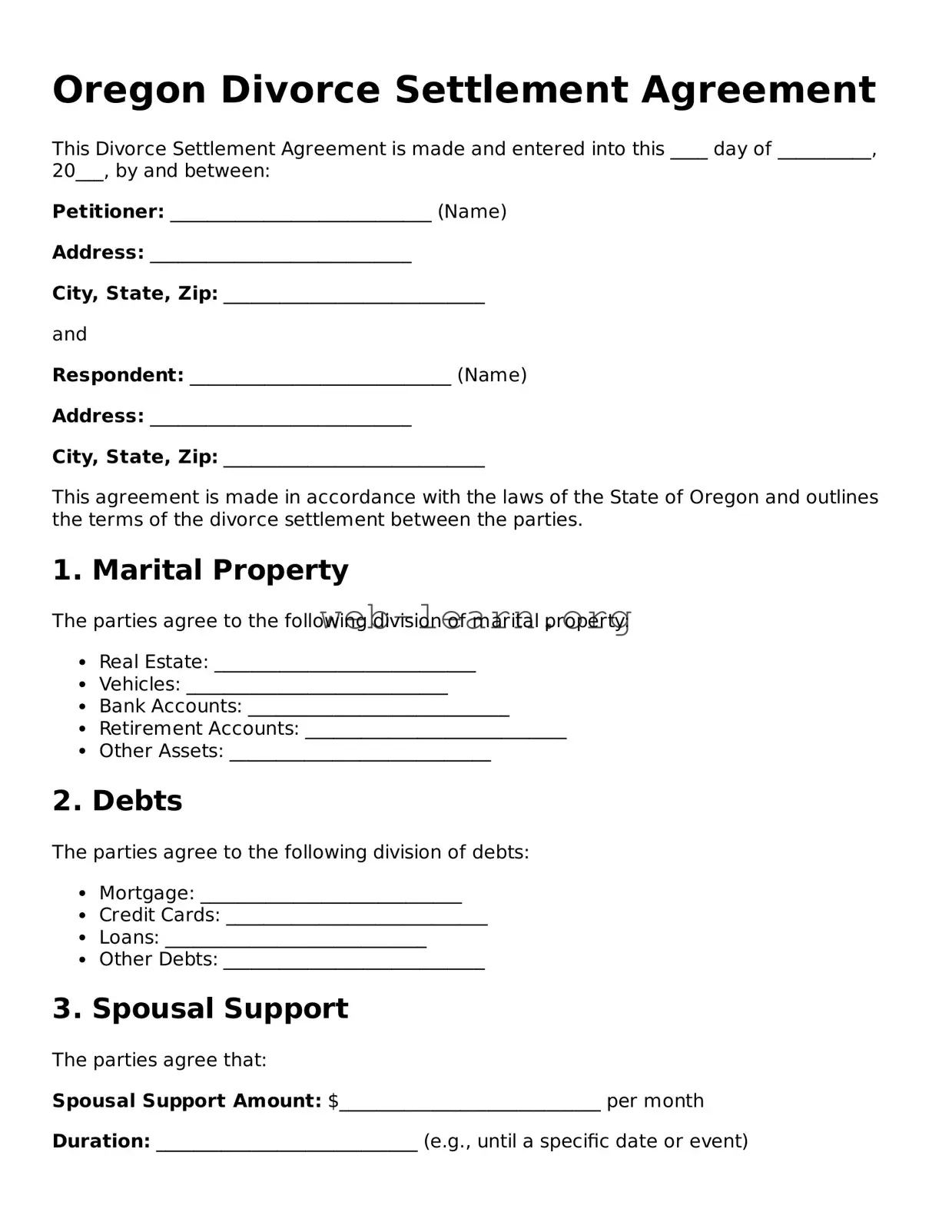
When navigating the complexities of divorce in Oregon, one crucial document stands out: the Divorce Settlement Agreement form. This form serves as a roadmap for couples seeking to finalize their separation, addressing vital issues such as property division, child custody, and spousal support. By clearly outlining the terms agreed upon by both parties, the form aims to minimize conflict and provide a sense of closure. It includes essential sections that detail the distribution of assets and debts, arrangements for any children involved, and financial obligations moving forward. Understanding the significance of this document can empower individuals to make informed decisions, ensuring that their rights are protected and their future is secured. In this article, we will delve into the key components of the Oregon Divorce Settlement Agreement form, offering insights and guidance for those embarking on this challenging journey.
Oregon Divorce Settlement Agreement
This Divorce Settlement Agreement is made and entered into this ____ day of __________, 20___, by and between:
Petitioner: ____________________________ (Name)
Address: ____________________________
City, State, Zip: ____________________________
and
Respondent: ____________________________ (Name)
Address: ____________________________
City, State, Zip: ____________________________
This agreement is made in accordance with the laws of the State of Oregon and outlines the terms of the divorce settlement between the parties.
1. Marital Property
The parties agree to the following division of marital property:
2. Debts
The parties agree to the following division of debts:
3. Spousal Support
The parties agree that:
Spousal Support Amount: $____________________________ per month
Duration: ____________________________ (e.g., until a specific date or event)
4. Child Custody and Support
The parties agree to the following arrangements regarding their children:
5. Miscellaneous Provisions
Both parties agree to the following additional terms:
6. Signatures
By signing below, both parties agree to the terms of this Divorce Settlement Agreement:
Petitioner Signature: ____________________________ Date: _______________
Respondent Signature: ____________________________ Date: _______________
This agreement is intended to be a legally binding document and may be enforced in accordance with the laws of the State of Oregon.
| Fact Name | Description |
|---|---|
| Purpose | The Oregon Divorce Settlement Agreement form outlines the terms agreed upon by both parties regarding asset division, child custody, and support obligations. |
| Governing Law | This form is governed by the Oregon Revised Statutes, specifically ORS 107.105 and ORS 107.135. |
| Mutual Agreement | Both spouses must voluntarily agree to the terms included in the settlement for it to be valid. |
| Filing Requirement | The completed form must be filed with the court as part of the divorce proceedings. |
| Child Support | If children are involved, the agreement must include provisions for child support, following Oregon's guidelines. |
| Asset Division | The form details how marital assets and debts will be divided between the spouses. |
| Legal Representation | While not mandatory, it is advisable for each party to seek independent legal advice before signing the agreement. |
| Modification | Any changes to the agreement after it has been signed must be made in writing and agreed upon by both parties. |
| Finality | Once approved by the court, the terms of the settlement are legally binding and enforceable. |
After gathering the necessary information and documents, you are ready to complete the Oregon Divorce Settlement Agreement form. This form is essential for outlining the terms of your divorce, including asset division, child custody, and support arrangements. Follow these steps carefully to ensure that all required sections are filled out accurately.
Once you have completed the form, you will need to file it with the appropriate court and ensure that your spouse receives a copy. This step is crucial for moving forward with your divorce proceedings.
A Divorce Settlement Agreement is a legal document that outlines the terms and conditions agreed upon by both parties during a divorce. This agreement typically covers various aspects such as the division of assets, debt allocation, child custody arrangements, visitation rights, and spousal support. It serves as a comprehensive plan that both spouses must adhere to after the divorce is finalized.
To create a Divorce Settlement Agreement in Oregon, both parties should first engage in open discussions to negotiate the terms of their divorce. It is often beneficial to consult with a mediator or legal professional to ensure that the agreement is fair and legally sound. Once both parties reach an understanding, the terms should be documented in writing. This written agreement must then be signed by both parties. After signing, it should be submitted to the court for approval as part of the divorce proceedings.
Yes, once the Divorce Settlement Agreement is approved by the court, it becomes legally binding. This means that both parties are required to adhere to the terms outlined in the agreement. If one party fails to comply, the other party may seek enforcement through the court system. It is crucial to ensure that the agreement is comprehensive and clear to avoid potential disputes in the future.
Life circumstances can change, and sometimes the terms of a Divorce Settlement Agreement may need to be modified. If either party experiences significant changes—such as a job loss, relocation, or changes in financial status—they may petition the court to modify the agreement. It is important to document any changes and seek legal advice to ensure that modifications are made in accordance with the law.
Filling out the Oregon Divorce Settlement Agreement form can be a complex process. Many individuals make common mistakes that can delay their divorce or lead to misunderstandings later on. One frequent error is failing to provide complete information. Each section of the form requires specific details, and missing information can result in the need for additional filings.
Another common mistake is not clearly defining the division of assets. It is essential to specify who gets what, including property, bank accounts, and personal belongings. Vague language can lead to disputes after the agreement is finalized. Additionally, overlooking debts can be problematic. Both parties should list all debts and clarify how they will be paid off to avoid future complications.
Many people also neglect to consider tax implications. Certain assets, like retirement accounts, may have tax consequences that should be addressed in the agreement. Ignoring these aspects can create financial burdens later on. Furthermore, failing to include child custody and support arrangements can lead to significant issues. It is crucial to outline parenting plans and financial responsibilities to ensure the well-being of the children involved.
Another mistake is not updating the agreement if circumstances change. Life events such as job loss or relocation can affect the terms of the settlement. It is vital to revisit the agreement and make necessary adjustments. Additionally, some individuals may forget to sign the document. An unsigned agreement is not legally binding, which can invalidate the entire process.
Finally, many people do not seek legal advice when filling out the form. While it is possible to complete the form independently, consulting with a legal professional can provide clarity and help avoid pitfalls. A knowledgeable advisor can ensure that all aspects of the agreement comply with Oregon law, reducing the likelihood of future disputes.
When navigating a divorce in Oregon, several important documents often accompany the Divorce Settlement Agreement. These forms help clarify various aspects of the divorce process, ensuring that both parties understand their rights and responsibilities. Here’s a list of some commonly used forms that may be needed alongside the settlement agreement:
Understanding these forms can help make the divorce process smoother and less stressful. Each document plays a crucial role in ensuring that both parties are informed and that the divorce is handled fairly and legally.
When filling out the Oregon Divorce Settlement Agreement form, it's important to approach the process with care. Here are some key do's and don'ts to keep in mind:
Following these guidelines can help ensure that your Divorce Settlement Agreement is completed correctly and efficiently.
Understanding the Oregon Divorce Settlement Agreement form can be challenging. Here are some common misconceptions that people may have about this important document:
Addressing these misconceptions can help individuals navigate the divorce process more effectively and ensure that their rights and interests are protected.
When navigating the Oregon Divorce Settlement Agreement form, it is essential to understand several key aspects to ensure a smooth process. Here are five important takeaways:
Divorce Contract Template - It can address the division of personal items with sentimental value.
Settlement Agreement Divorce Georgia - The form can include terms for relocation of one party after the divorce.
Divorce Templates - It is an essential document for anyone going through a divorce.
How Long Do You Have to Be Married to Get Half of Everything in Florida - It may include terms for the division of debts incurred during the marriage.