The Oregon Deed form plays a crucial role in real estate transactions, serving as a legal document that facilitates the transfer of property ownership. It outlines essential details such as the names of the parties involved, a description of the property, and the terms of the transfer. This form ensures that both the seller and buyer are clear on their rights and obligations. Additionally, it may include information about any liens or encumbrances on the property, providing transparency in the transaction process. By properly executing the Oregon Deed form, parties can protect their interests and ensure that the transfer is recognized by the state. Understanding its components is vital for anyone looking to buy or sell property in Oregon, as it lays the foundation for a smooth and legally sound transfer of ownership.
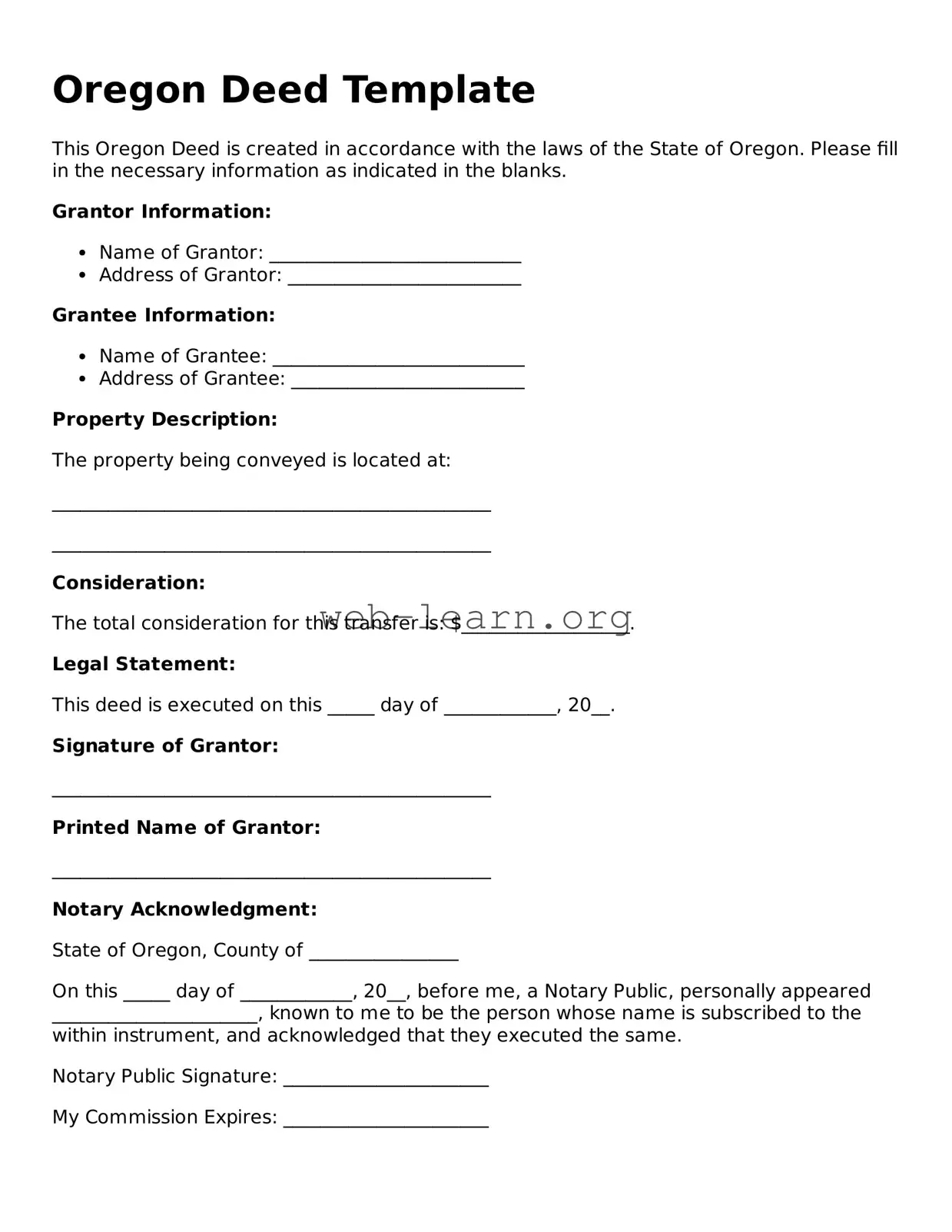
Oregon Deed Template
This Oregon Deed is created in accordance with the laws of the State of Oregon. Please fill in the necessary information as indicated in the blanks.
Grantor Information:
Grantee Information:
Property Description:
The property being conveyed is located at:
_______________________________________________
_______________________________________________
Consideration:
The total consideration for this transfer is: $__________________.
Legal Statement:
This deed is executed on this _____ day of ____________, 20__.
Signature of Grantor:
_______________________________________________
Printed Name of Grantor:
_______________________________________________
Notary Acknowledgment:
State of Oregon, County of ________________
On this _____ day of ____________, 20__, before me, a Notary Public, personally appeared ______________________, known to me to be the person whose name is subscribed to the within instrument, and acknowledged that they executed the same.
Notary Public Signature: ______________________
My Commission Expires: ______________________
| Fact Name | Description |
|---|---|
| Purpose | The Oregon Deed form is primarily used to transfer ownership of real property from one party to another. |
| Types of Deeds | Oregon recognizes several types of deeds, including warranty deeds, quitclaim deeds, and grant deeds, each serving different purposes in property transactions. |
| Governing Laws | The Oregon Deed form is governed by the Oregon Revised Statutes, specifically ORS Chapter 93, which outlines the requirements for property conveyance. |
| Recording Requirements | To ensure legal recognition, the completed deed must be recorded with the county clerk's office in the county where the property is located. |
| Signature Requirements | The deed must be signed by the grantor (the person transferring the property) and may require notarization for it to be valid. |
Once you have the Oregon Deed form ready, it is important to complete it accurately. After filling out the form, you will need to sign it and have it notarized. This ensures that the deed is legally valid and can be recorded with the county clerk.
What is an Oregon Deed form?
An Oregon Deed form is a legal document used to transfer ownership of real property in the state of Oregon. It serves as proof of the transfer and outlines the rights and responsibilities of the parties involved. There are several types of deeds, including warranty deeds and quitclaim deeds, each serving different purposes.
What types of deeds are available in Oregon?
How do I fill out an Oregon Deed form?
To fill out the form, include the names of the grantor (seller) and grantee (buyer), a legal description of the property, and the date of the transfer. Make sure to sign the deed in front of a notary public. Accurate information is crucial to avoid future disputes.
Do I need to have the deed notarized?
Yes, in Oregon, a deed must be notarized to be legally valid. The notary will verify the identities of the parties involved and witness their signatures. This step helps ensure that the transfer is legitimate.
Where do I file the Oregon Deed form?
You should file the completed deed with the county clerk's office in the county where the property is located. Filing is important because it makes the transfer public record, protecting the interests of the new owner.
Are there any fees associated with filing a deed in Oregon?
Yes, there are typically fees for filing a deed, which can vary by county. It's advisable to check with your local county clerk's office for the exact amount and any additional requirements that may apply.
Can I use a generic deed form for my property transfer?
While you can find generic deed forms online, it’s best to use a form specifically designed for Oregon. Each state has its own laws regarding property transfers, and using the correct form helps ensure compliance with local regulations.
What happens if I don’t file the deed?
If you fail to file the deed, the transfer may not be legally recognized. This can lead to complications, such as disputes over ownership or difficulties when trying to sell the property in the future. Filing is a crucial step in protecting your ownership rights.
Filling out a deed form in Oregon can be a straightforward process, but many people make common mistakes that can lead to complications down the road. One frequent error is not providing complete and accurate information. When listing the names of the grantor and grantee, it’s essential to ensure that all names are spelled correctly and match the names on official identification. Missing or incorrect names can create issues with property ownership and may require additional steps to correct.
Another mistake often made is failing to include a proper legal description of the property. A legal description is not the same as a street address; it should accurately describe the boundaries and specifics of the property. Without this information, the deed may be deemed invalid, leading to potential disputes about property lines and ownership rights.
People also frequently overlook the need for signatures. Both the grantor and, in some cases, the grantee must sign the deed for it to be valid. Not only should the signatures be included, but they also need to be notarized. A notarized signature adds an extra layer of authenticity and is often required for the deed to be accepted by the county recorder.
Lastly, many individuals neglect to record the deed after it has been completed. Recording the deed with the appropriate county office is crucial for establishing public notice of ownership. If a deed is not recorded, it can lead to complications in proving ownership, especially if there are future disputes or if the property is sold again. Taking the time to ensure that the deed is properly filled out and recorded can save a lot of trouble later on.
When dealing with property transactions in Oregon, several forms and documents often accompany the Oregon Deed form. These documents help ensure that the transfer of property is clear, legal, and properly recorded. Below are some commonly used forms that you might encounter.
Understanding these documents can make the property transfer process smoother and more transparent. Always consider seeking professional advice if you have questions or need assistance with any of these forms.
The Deed form is an important legal document, but it shares similarities with several other documents. Here’s a list of eight documents that are comparable to a Deed form, along with explanations of how they relate:
When filling out the Oregon Deed form, it is essential to approach the task with care and attention to detail. Here are some important dos and don’ts to consider:
When it comes to the Oregon Deed form, several misconceptions can lead to confusion for those looking to transfer property. Understanding the truth behind these myths can help clarify the process and ensure that everything goes smoothly.
Not all deeds serve the same purpose. In Oregon, there are different types of deeds, such as warranty deeds and quitclaim deeds. Each type has its own implications regarding the rights and protections afforded to the buyer and seller.
While notarization is often recommended, it is not always a strict requirement in Oregon. A deed can be valid without a notary, but having it notarized can help prevent disputes and provide an extra layer of security.
This is not entirely accurate. While a deed is a legal document that conveys property, it can be amended or corrected if both parties agree. It’s important to follow the proper procedures to ensure that any changes are legally binding.
Deeds are not limited to sales. They are also used for gifting property, transferring ownership between family members, or even placing property into a trust. Understanding the various uses of a deed can help individuals navigate their property ownership options more effectively.
When filling out and using the Oregon Deed form, it is essential to keep several key points in mind.
By following these guidelines, you can help ensure a smooth and successful property transfer process in Oregon.
How to Get a Copy of a Deed in Arkansas - Properly executed Deed forms are essential for maintaining the integrity of the real estate market.
Louisiana Deed Requirements - The date of execution is usually included in the deed for record-keeping purposes.
Quitclaim Deed Georgia - A warranty deed guarantees the seller's right to transfer the property.