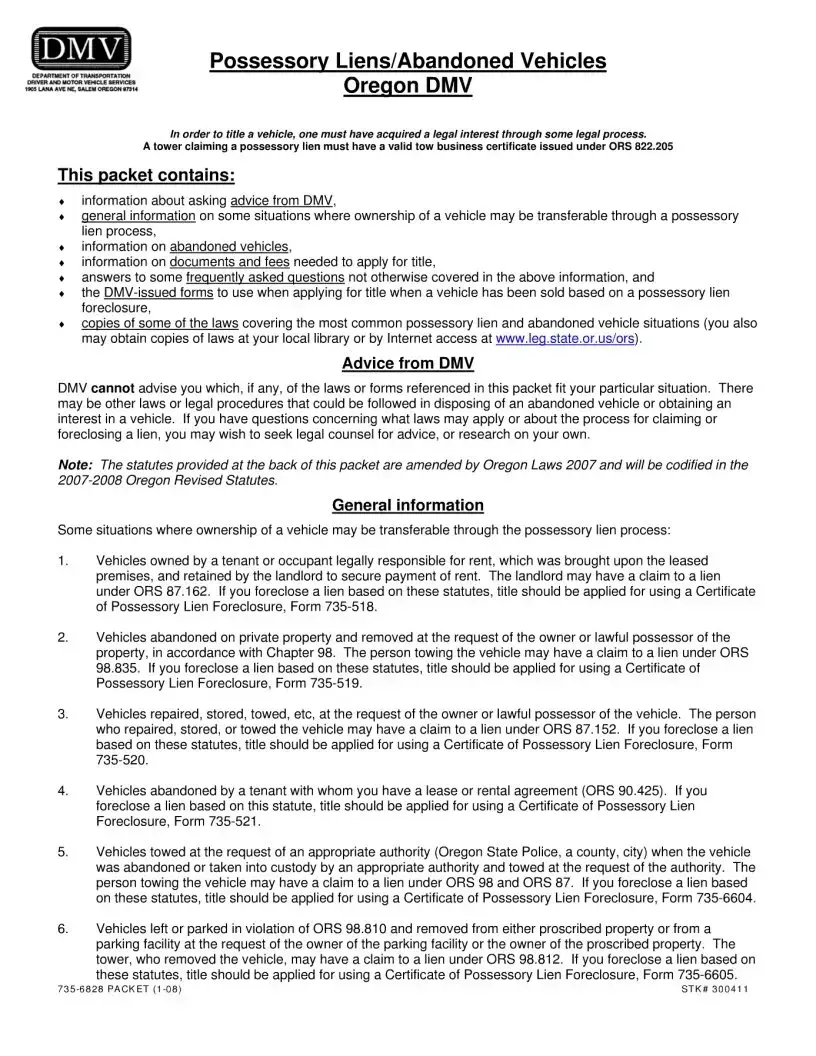
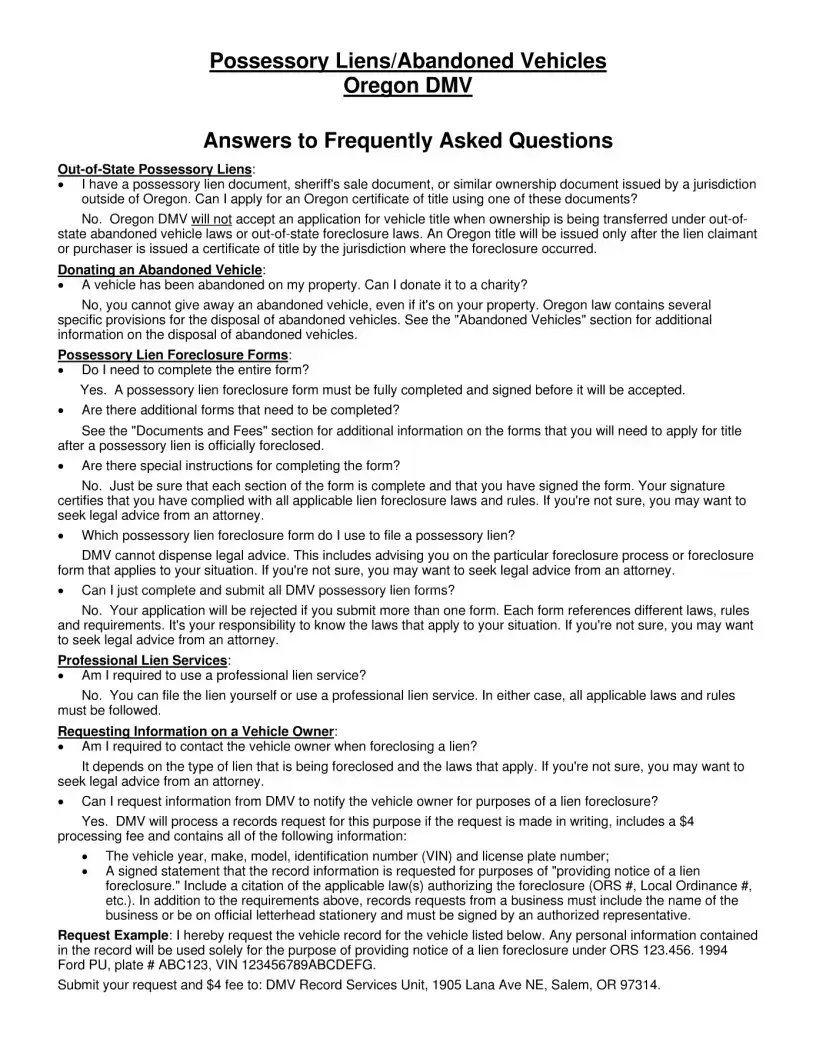
The Oregon Abandoned Vehicles form is a crucial document for anyone dealing with the complexities of vehicle ownership transfer, especially in cases involving abandoned vehicles or possessory liens. This form serves as a guide, outlining the legal processes required to claim ownership of a vehicle that has been abandoned or towed. It includes essential information about how to obtain advice from the Department of Motor Vehicles (DMV) and provides clarity on various situations where ownership can change hands through a possessory lien. The packet contains specific forms to apply for title after a vehicle has been sold due to a lien foreclosure, along with details on the necessary documents and fees involved in the process. Additionally, it addresses common questions and includes references to relevant laws that govern these situations. Understanding the nuances of this form is vital for landlords, towing companies, and vehicle owners alike, as it lays out the steps to legally reclaim or title a vehicle that may no longer be in the rightful owner's possession.
| Fact Name | Details |
|---|---|
| Governing Law | The Oregon Abandoned Vehicles form is governed by several laws, primarily ORS Chapter 819 and ORS Chapter 98. |
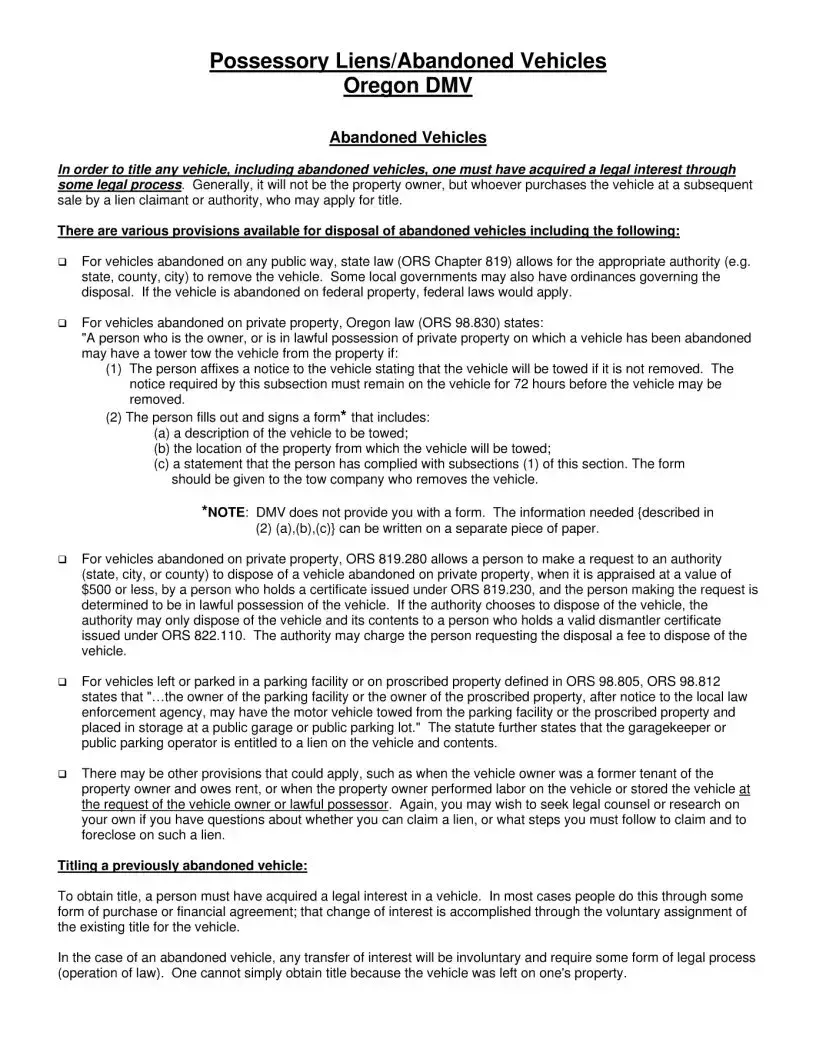
| Legal Interest Requirement | To title a vehicle, including abandoned ones, an individual must have acquired a legal interest through a recognized legal process. |
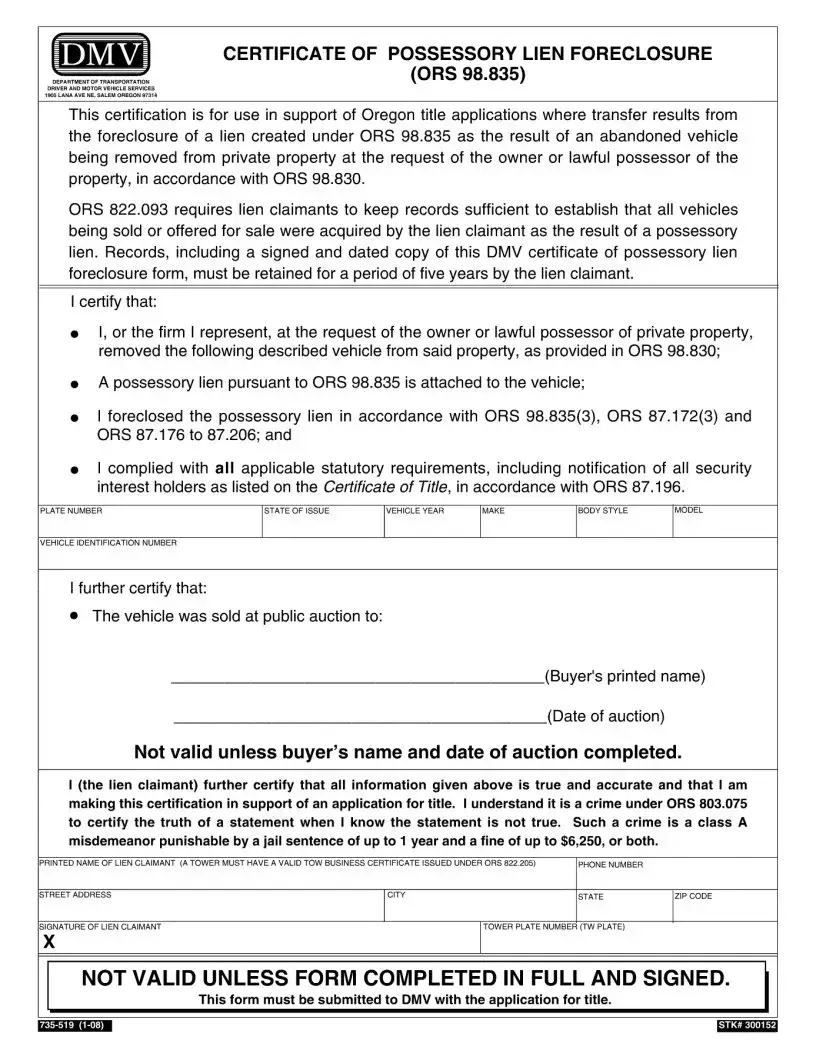
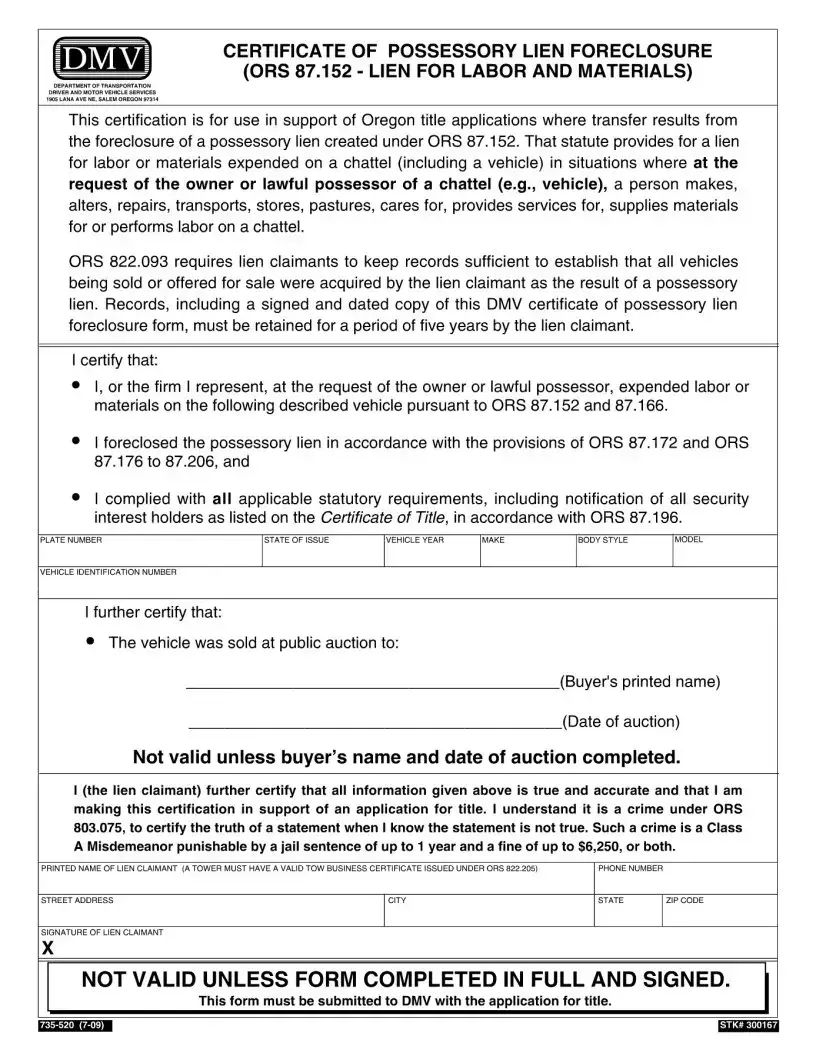
| Possessory Liens | A tower claiming a possessory lien must hold a valid tow business certificate issued under ORS 822.205. |
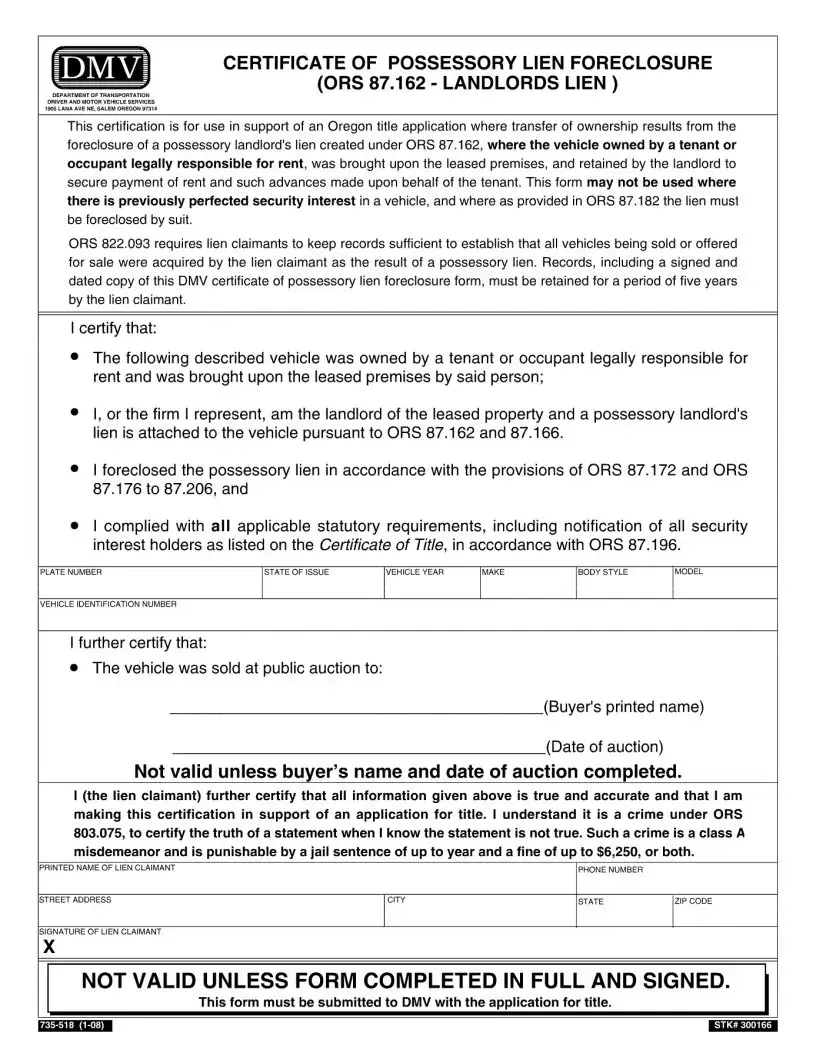
| Types of Vehicles | The form addresses various scenarios, including vehicles abandoned on private property, public ways, or those left by tenants. |
| Application Forms | Different forms are required for different lien foreclosure situations, including Forms 735-518, 735-519, and 735-520. |
| DMV Limitations | The DMV does not provide legal advice on which laws or forms apply to individual situations, encouraging users to seek legal counsel if needed. |
| Disposal Procedures | For vehicles abandoned on private property, a notice must be affixed to the vehicle for 72 hours before towing can occur, as outlined in ORS 98.830. |
Filling out the Oregon Abandoned Vehicles form is a straightforward process that requires careful attention to detail. Once you have completed the form, you will need to submit it along with any necessary documentation and fees to the appropriate authority for processing.
What is the purpose of the Oregon Abandoned Vehicles form?
The Oregon Abandoned Vehicles form is used to establish a legal process for claiming ownership of a vehicle that has been abandoned. This form helps individuals and businesses navigate the requirements for obtaining a title to such vehicles, especially when a possessory lien is involved. It outlines the necessary steps and documentation required to apply for a title when a vehicle has been abandoned on private property or has been towed.
Who can claim a possessory lien on an abandoned vehicle?
Several parties may claim a possessory lien on an abandoned vehicle, including:
Each situation has specific requirements outlined in Oregon law that must be followed to successfully claim the lien.
What steps should I take if I find an abandoned vehicle on my property?
If you discover an abandoned vehicle on your property, follow these steps:
Make sure to keep a record of all communications and actions taken regarding the vehicle.
What are the fees associated with applying for a title for an abandoned vehicle?
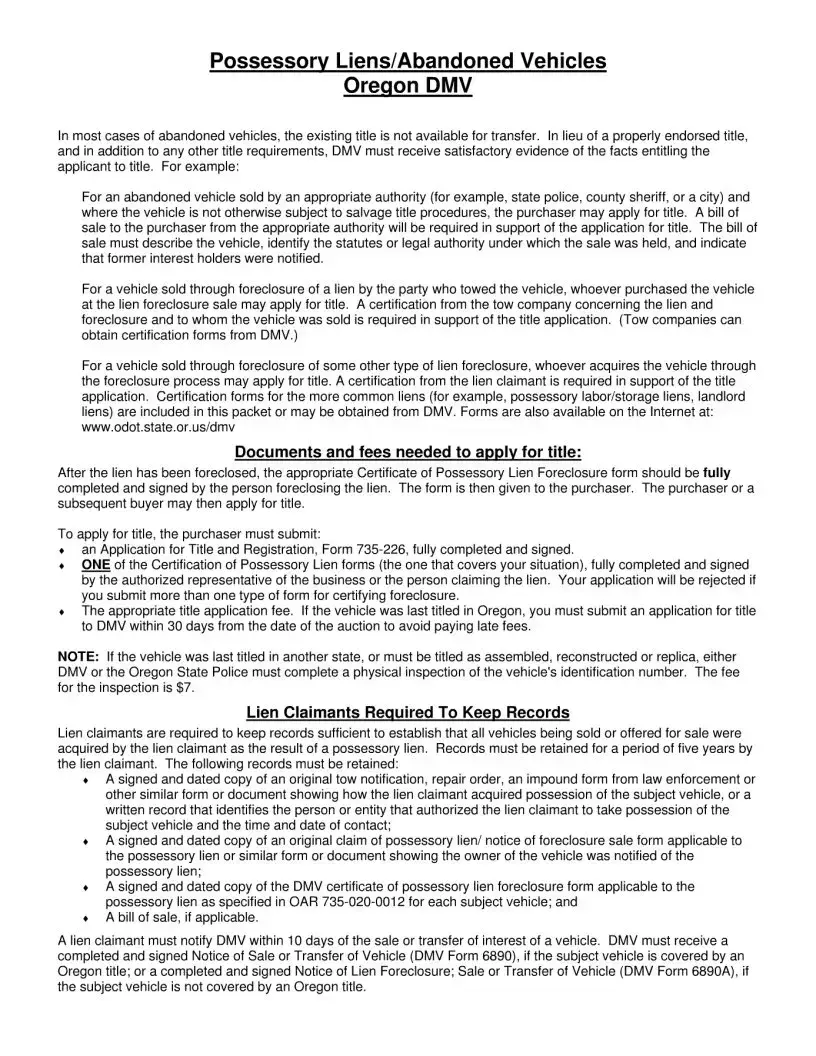
Fees can vary depending on the specific circumstances and the local authority involved. Generally, you may incur costs for towing the vehicle, as well as DMV fees when applying for the title. It is advisable to check with your local DMV office for the exact fee structure and any additional costs that may apply.
Can I seek legal advice regarding the process of claiming an abandoned vehicle?
Yes, if you have specific questions or concerns about your situation, it is wise to seek legal counsel. The DMV cannot provide legal advice or guidance on which laws or forms apply to your case. Consulting with a legal professional can help you understand your rights and obligations in the process of claiming an abandoned vehicle.
Filling out the Oregon Abandoned Vehicles form can be a straightforward process, but many individuals make common mistakes that can lead to delays or complications. One frequent error is failing to provide complete and accurate vehicle information. This includes not including the vehicle identification number (VIN), make, model, and year. Omitting any of these details can result in the form being rejected or returned for correction.
Another common mistake is neglecting to sign the form. A signature is essential as it verifies that the information provided is accurate and that the person submitting the form has the legal right to claim the vehicle. Without a signature, the DMV cannot process the application, and this can lead to unnecessary delays.
People often overlook the importance of including all necessary documentation and fees. The form requires specific supporting documents to be submitted alongside it. Failing to include proof of ownership or the required fees can halt the process. It’s crucial to review the checklist provided in the form packet to ensure that all necessary items are included.
Additionally, many individuals do not follow the correct procedure for notifying the previous owner of the vehicle. According to Oregon law, proper notice must be given before towing or disposing of an abandoned vehicle. Skipping this step can lead to legal complications or disputes regarding ownership.
Lastly, misunderstanding the timeline for submitting the form is a common issue. Some people may think they can wait too long after towing the vehicle to file the form. However, there are specific timeframes outlined in the law that must be adhered to. Missing these deadlines can result in the loss of the ability to claim the vehicle altogether.
The process of dealing with abandoned vehicles in Oregon involves several important forms and documents. Each serves a specific purpose in establishing legal ownership or facilitating the disposal of a vehicle. Understanding these documents can help streamline the process and ensure compliance with state laws.
Each of these forms plays a crucial role in the legal landscape surrounding abandoned vehicles in Oregon. By ensuring that the correct documentation is completed, individuals and businesses can navigate the complexities of vehicle ownership and lien claims more effectively.
The Oregon Abandoned Vehicles form is similar to several other documents related to vehicle ownership and liens. Here’s a list of those documents and how they relate:
When filling out the Oregon Abandoned Vehicles form, it’s important to follow specific guidelines to ensure a smooth process. Here are five things you should and shouldn't do:
Misconception 1: The property owner can automatically claim ownership of an abandoned vehicle.
Many people believe that if a vehicle is left on their property, they can simply take ownership of it. However, this is not the case. Ownership of an abandoned vehicle typically requires a legal process. The property owner must follow specific steps, including notifying the appropriate authorities and possibly filing for a possessory lien.
Misconception 2: The DMV provides all necessary forms for abandoned vehicles.
Some assume that the DMV will supply all the forms needed to process an abandoned vehicle claim. In reality, while the DMV provides certain forms, such as those for possessory lien foreclosure, they do not provide every necessary document. Individuals may need to write down required information on a separate piece of paper if a specific form is not available.
Misconception 3: Any towing company can remove an abandoned vehicle without restrictions.
It’s a common belief that any towing company can tow an abandoned vehicle at will. However, Oregon law requires that the towing company must have a valid tow business certificate. Additionally, proper notice must be given before a vehicle can be towed from private property.
Misconception 4: The process for obtaining a title for an abandoned vehicle is straightforward.
Many think that acquiring a title for an abandoned vehicle is a simple task. In truth, the process can be complex and may vary depending on the circumstances. Individuals must ensure they have acquired a legal interest in the vehicle and follow the correct procedures, which may involve multiple steps and compliance with various statutes.
When dealing with the Oregon Abandoned Vehicles form, it’s essential to understand the process thoroughly. Here are key takeaways to keep in mind:
Understanding these points will help you navigate the process more effectively and ensure compliance with Oregon laws regarding abandoned vehicles.