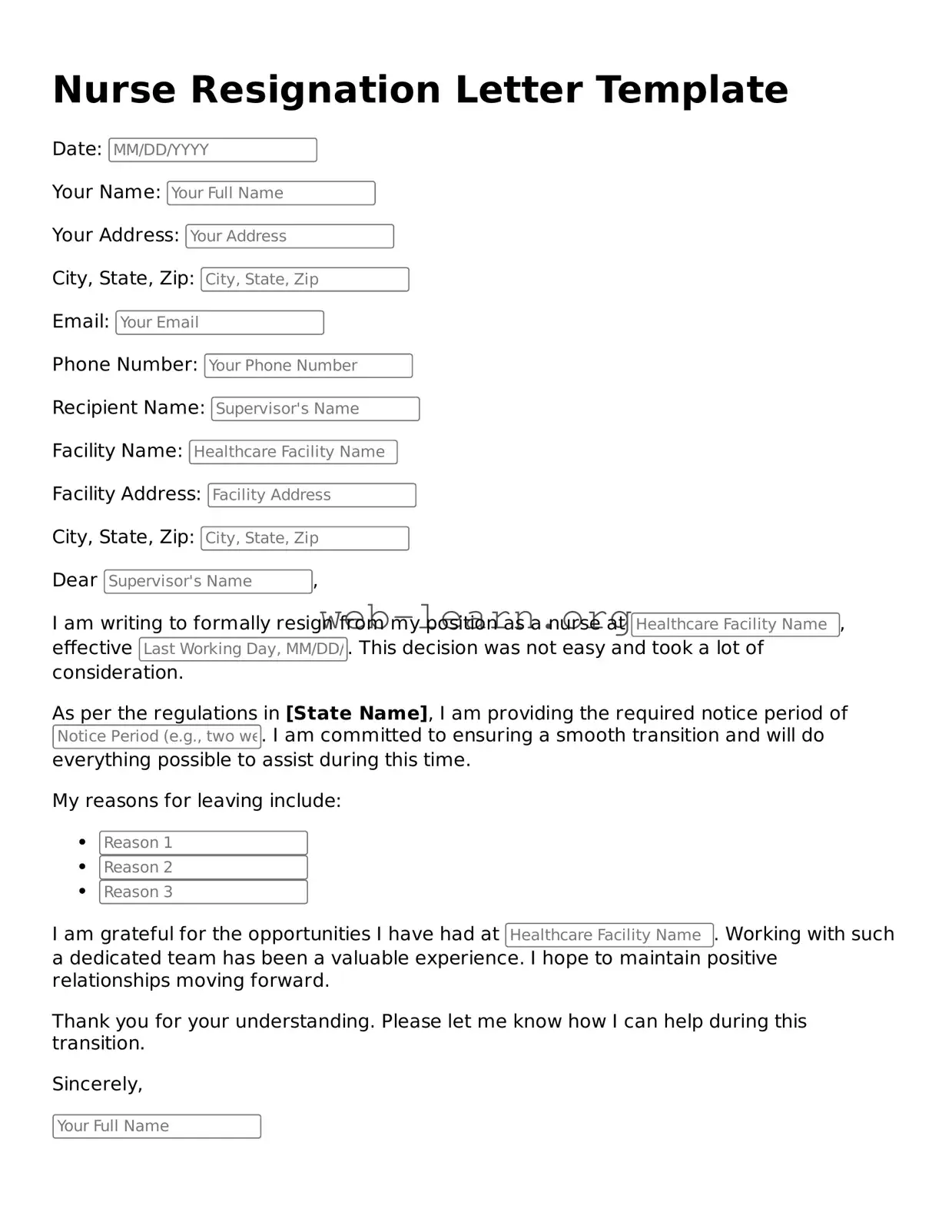
Navigating the complexities of a career in nursing can lead to many pivotal moments, including the decision to resign. When that time comes, a Nurse Resignation Letter serves as a formal notification to employers about your intent to leave your position. This document typically includes essential details such as your name, the date of your resignation, and your last working day. It’s also an opportunity to express gratitude for the experiences gained and the relationships built during your tenure. By using a clear and concise format, you ensure that your message is understood without ambiguity. Additionally, including a brief explanation for your departure can foster goodwill and maintain professional relationships. Crafting this letter thoughtfully can leave a lasting positive impression, even as you transition to the next chapter of your career.
Nurse Resignation Letter Template
Date:
Your Name:
Your Address:
City, State, Zip:
Email:
Phone Number:
Recipient Name:
Facility Name:
Facility Address:
City, State, Zip:
Dear ,
I am writing to formally resign from my position as a nurse at , effective . This decision was not easy and took a lot of consideration.
As per the regulations in [State Name], I am providing the required notice period of . I am committed to ensuring a smooth transition and will do everything possible to assist during this time.
My reasons for leaving include:
I am grateful for the opportunities I have had at . Working with such a dedicated team has been a valuable experience. I hope to maintain positive relationships moving forward.
Thank you for your understanding. Please let me know how I can help during this transition.
Sincerely,
| Fact Name | Description |
|---|---|
| Purpose | A Nurse Resignation Letter form is used by nurses to formally resign from their position, ensuring a clear communication of intent to their employer. |
| Notice Period | Most states require a notice period, typically two weeks, to allow for a smooth transition and to maintain professional relationships. |
| State-Specific Requirements | Some states have specific regulations regarding resignation letters, including the need for a written notice under certain employment contracts. |
| Governing Laws | In states like California, the governing law includes the California Labor Code, which outlines employer and employee rights during resignation. |
| Professional Etiquette | Submitting a resignation letter is considered professional etiquette, helping to maintain a positive reputation within the healthcare community. |
Once you have the Nurse Resignation Letter form ready, it's important to complete it accurately to ensure a smooth transition. Follow these steps to fill it out correctly.
After completing the form, make sure to keep a copy for your records. Submit the signed letter to your supervisor or the HR department as per your organization’s procedures.
A Nurse Resignation Letter is a formal document that a nurse submits to their employer to announce their decision to leave their position. It serves as a professional way to communicate the resignation and can help maintain a positive relationship with the employer.
Submitting a resignation letter is important for several reasons:
A well-crafted resignation letter typically includes the following elements:
Typically, a two-week notice is standard in most professions, including nursing. However, it’s best to check your employment contract or company policy, as some organizations may require more notice. Providing adequate notice helps ensure a smooth transition for both you and your employer.
While you can verbally inform your supervisor of your resignation, it is highly recommended to follow up with a written resignation letter. A written letter provides documentation of your resignation and helps clarify your intentions.
If you find yourself in a situation where you must resign immediately, it’s still important to communicate this in writing. In your letter, explain your circumstances and express your regret for the short notice. Be aware that immediate resignations may impact your professional reputation.
It is not mandatory to provide a reason for your resignation in your letter. However, if you feel comfortable sharing your reasons, it can be helpful, especially if you are leaving on good terms. Keep the explanation brief and professional.
Yes, using a resignation letter template can be a great starting point. Just ensure to customize it to reflect your situation and maintain a personal touch. Tailoring the letter helps convey your sincerity and professionalism.
After submitting your resignation letter, it’s a good idea to:
When it comes to resigning from a nursing position, filling out the Nurse Resignation Letter form correctly is crucial. Unfortunately, many individuals make common mistakes that can complicate the process. Understanding these pitfalls can help ensure a smoother transition.
One of the most frequent errors is forgetting to include a clear resignation date. It’s essential to specify when your resignation will take effect. Without this information, your employer may be left guessing, which can lead to confusion and potential misunderstandings.
Another mistake is being vague about the reasons for leaving. While you don’t need to provide a detailed explanation, a simple statement can help maintain professionalism. A lack of clarity can create uncertainty and may even affect your future references.
Some individuals neglect to express gratitude in their letters. Acknowledging the support and opportunities you received during your time at the organization can leave a positive impression. This small gesture can go a long way in maintaining good relationships.
Additionally, failing to proofread the letter is a common oversight. Typos and grammatical errors can undermine your professionalism. Taking a moment to review your letter can help ensure that it reflects your best self.
Many people also forget to include their contact information. After resigning, you may still want to keep the lines of communication open. Providing your email or phone number can facilitate this, making it easier for your employer to reach you if necessary.
Another mistake is not adhering to the required notice period. Most employers expect a two-week notice, but this can vary. Check your employment contract or company policy to ensure compliance. Failing to do so can create tension and affect your professional reputation.
Sometimes, individuals make the error of not delivering the resignation letter in person. While it’s acceptable to send it via email or through the mail, a face-to-face conversation can show respect and professionalism. It allows for a more personal touch during a significant transition.
Some nurses may also forget to keep a copy of their resignation letter. This document serves as a record of your decision and can be useful for future reference. Keeping a copy can help you stay organized and prepared for any follow-up discussions.
Finally, many fail to consider the emotional impact of their resignation. Leaving a job can be a significant life change, and it’s important to take time to reflect on your feelings. Acknowledging this can help you navigate the transition more smoothly and prepare for your next steps.
When a nurse decides to resign from their position, several important documents may accompany the Nurse Resignation Letter. Each of these forms serves a specific purpose in ensuring a smooth transition for both the nurse and the healthcare facility. Below is a list of common documents that are often used in conjunction with the resignation letter.
Each of these documents plays a vital role in the resignation process, ensuring that all necessary steps are taken to facilitate a respectful and organized departure. By addressing these forms, both the nurse and the healthcare facility can work together to ensure a smooth transition.
When filling out the Nurse Resignation Letter form, it is important to follow certain guidelines to ensure clarity and professionalism. Below is a list of things you should and shouldn't do.
When it comes to the Nurse Resignation Letter form, several misconceptions can lead to confusion. Here are four common misunderstandings:
When filling out and using the Nurse Resignation Letter form, keep these key takeaways in mind:
Following these guidelines will help ensure a smooth resignation process.