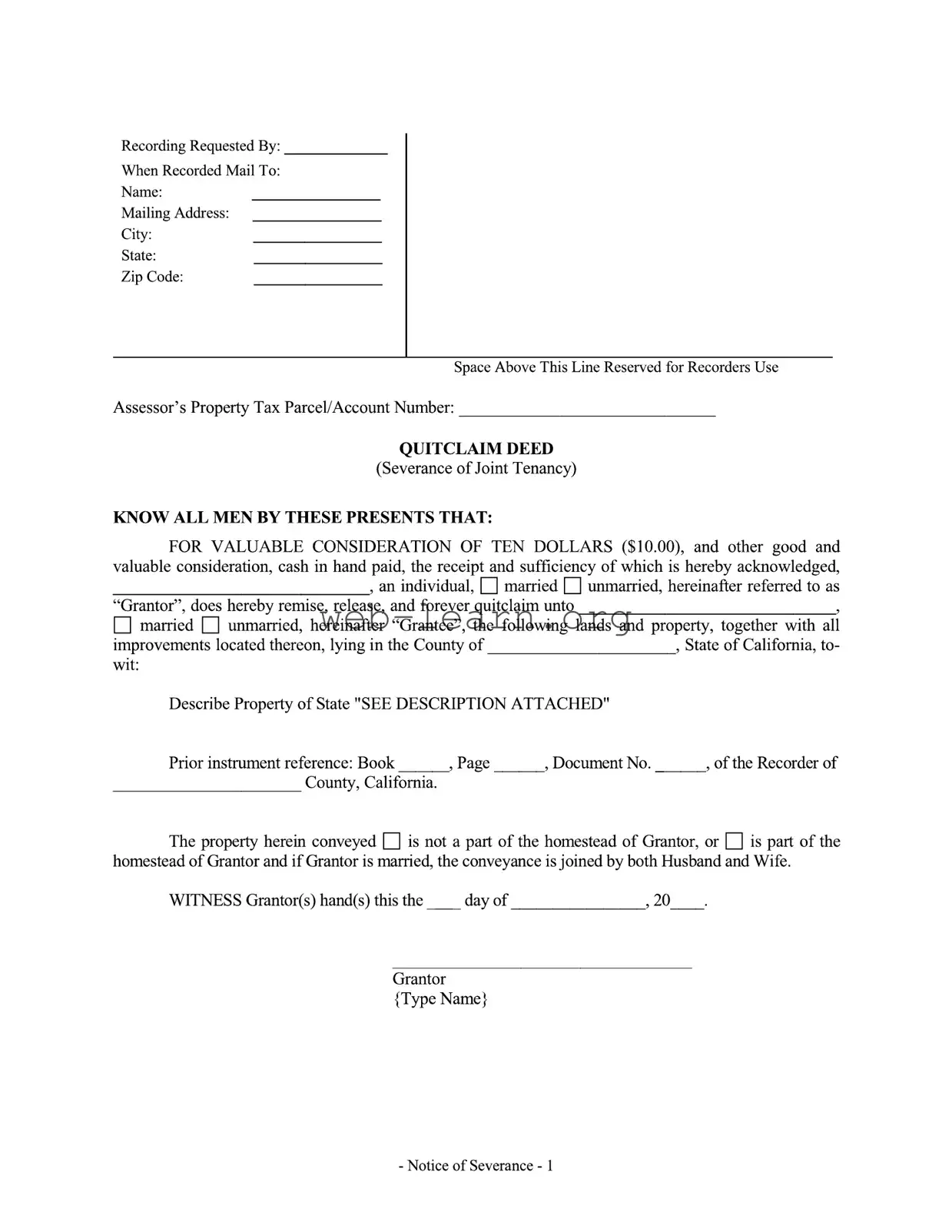
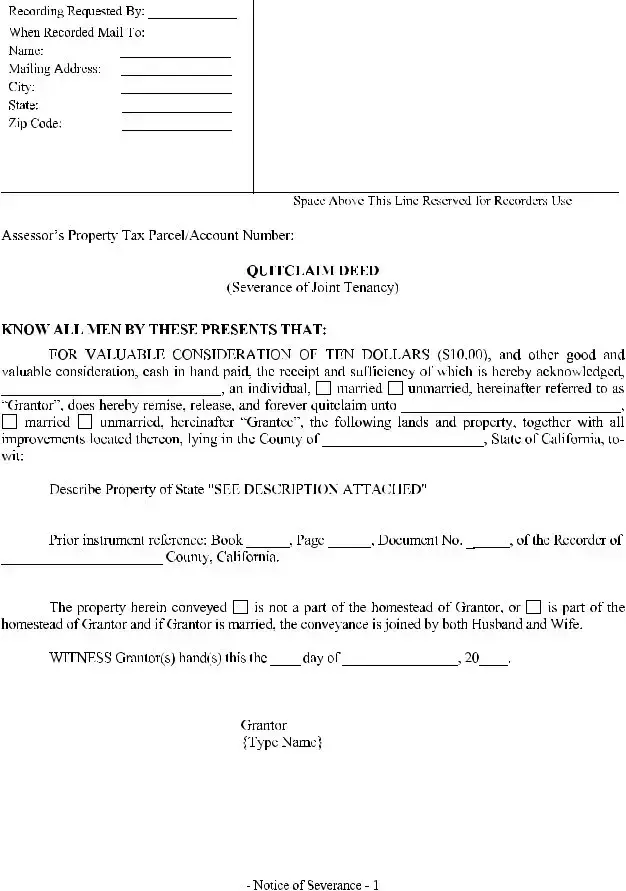
The Notice of Severance of Joint Tenancy is an essential form used in California during divorce proceedings, particularly when dealing with jointly owned property. This form allows one party, referred to as the Grantor, to formally sever their joint tenancy with another party, known as the Grantee. By completing this document, the Grantor acknowledges the transfer of their interest in the property, effectively changing the ownership status from joint tenants to tenants in common. This distinction is crucial, as it affects how the property can be managed and what happens to it in the event of one party's death. The form includes sections for the names and addresses of both parties, a legal description of the property, and a declaration of whether the property is part of the Grantor's homestead. Additionally, it requires notarization to ensure the authenticity of the signatures involved. The completion and recording of this form are vital steps to protect the interests of both parties, making it a key component of the divorce process in California.

| Fact Name | Fact Description |
|---|---|
| Purpose | The Notice of Severance of Joint Tenancy is used to formally sever a joint tenancy in California, changing the ownership structure to tenants in common. |
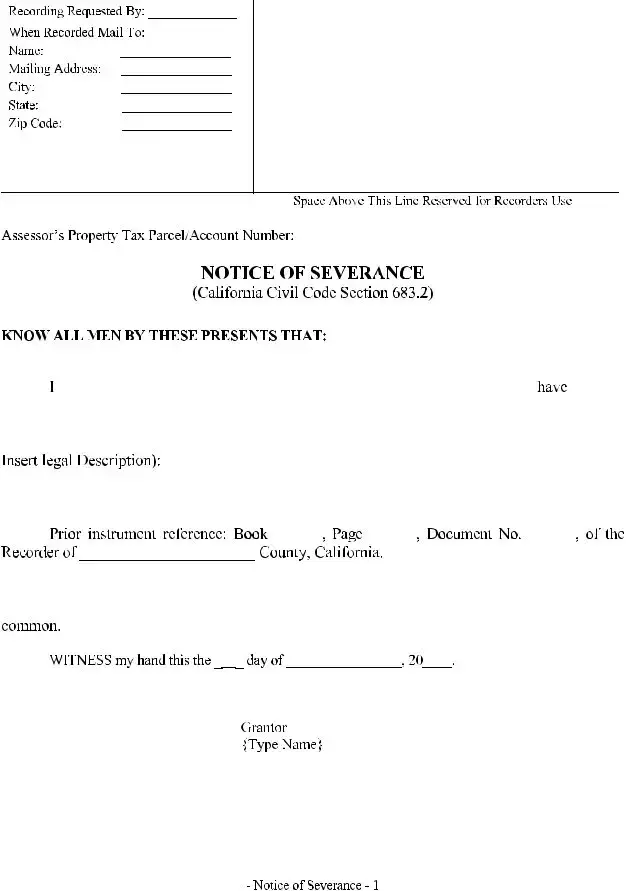
| Governing Law | This form is governed by California Civil Code Section 683.2, which outlines the requirements for severing a joint tenancy. |
| Filing Requirement | The Notice must be recorded in the county where the property is located to be effective. |
| Signatures | Both the grantor and the grantee must sign the form. If the grantor is married, both spouses should join in the conveyance. |
| Consideration | The form mentions a nominal consideration of ten dollars, which is often included to satisfy legal requirements. |
| Homestead Status | The form allows the grantor to indicate whether the property is part of their homestead, affecting rights after severance. |
| Effect of Severance | Once the Notice is filed, the joint tenancy is severed, and the property is owned as tenants in common, meaning each party has an individual share. |
Completing the Notice of Severance of Joint Tenancy form is a crucial step in the process of severing joint ownership of property. This form must be filled out accurately to ensure that the joint tenancy is legally terminated. Follow these steps carefully to complete the form correctly.
After completing the form, it is essential to have it notarized and then recorded with the appropriate county recorder's office. This step finalizes the severance of the joint tenancy and protects your interests in the property. Ensure that all information is accurate to avoid any legal complications in the future.
What is the purpose of the Notice of Severance of Joint Tenancy form?
The Notice of Severance of Joint Tenancy serves a critical function in the context of property ownership, particularly during divorce proceedings in California. This form is used to formally sever the joint tenancy between two individuals, typically spouses, thereby converting their ownership interest in the property from joint tenants to tenants in common. This change is significant because it alters how the property will be handled in the event of one owner's death. In a joint tenancy, the right of survivorship applies, meaning the surviving owner automatically inherits the deceased owner's share. By severing the joint tenancy, each party retains a distinct share of the property that can be sold, transferred, or inherited independently.
Who needs to sign the Notice of Severance?
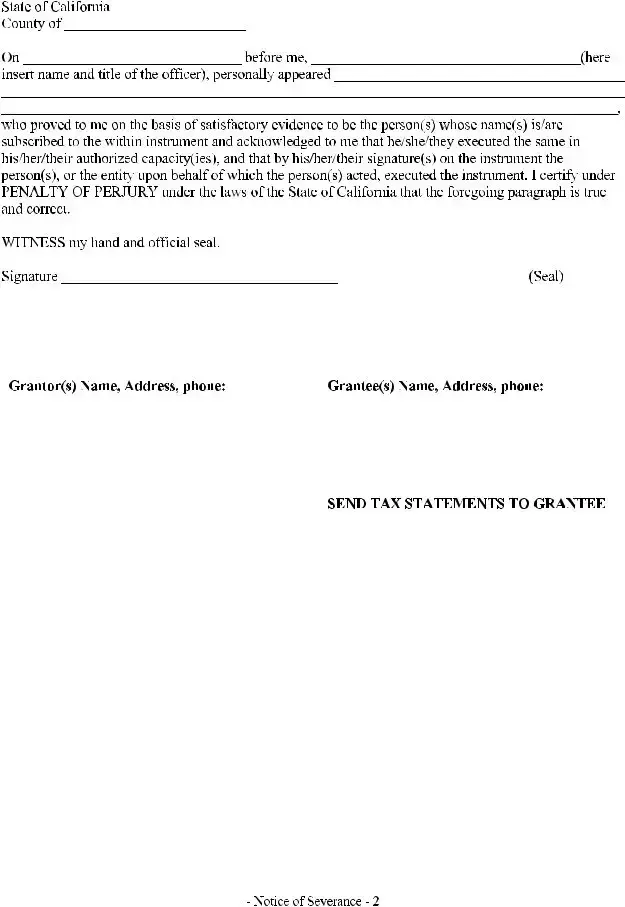
Both parties involved in the joint tenancy must be aware of and agree to the severance. The form requires the signature of the individual initiating the severance, referred to as the "Grantor." If the Grantor is married, their spouse must also sign the document to confirm that they are aware of the severance. This requirement helps protect the interests of both parties and ensures that the severance is legally binding. Additionally, the form must be notarized to validate the signatures, providing an extra layer of authenticity and legal recognition.
How does one properly execute the Notice of Severance?
Executing the Notice of Severance involves several key steps. First, the individual wishing to sever the joint tenancy must complete the form with accurate details, including the property description and the names of both parties. Following this, the Grantor must sign the form in front of a notary public, who will then certify the signature. After notarization, the completed form should be recorded with the county recorder's office where the property is located. This recording is essential, as it serves as public notice of the severance and protects the Grantor's interest in the property. Failing to record the notice could leave the property vulnerable to claims by the other joint tenant or third parties.
What are the implications of severing a joint tenancy?
Severing a joint tenancy has significant legal implications. Once the severance is complete, the property is owned as tenants in common, meaning each party holds an individual share of the property. This shift affects how the property can be sold or transferred. For instance, either tenant can sell or mortgage their share without needing the other party's consent. Furthermore, in the event of one owner's death, their share will not automatically transfer to the surviving owner but will instead become part of their estate, subject to probate. This change can affect estate planning and inheritance matters, making it crucial for individuals to understand the consequences of severing a joint tenancy before proceeding.
Filling out the Notice of Severance of Joint Tenancy form in California can be a straightforward process, but many individuals make common mistakes that can lead to complications. One frequent error is failing to accurately complete the Grantor and Grantee sections. It’s essential to clearly identify both parties involved, including their marital status. Omitting or incorrectly entering this information can create confusion and may invalidate the document.
Another mistake involves neglecting to provide a complete legal description of the property. The form requires a detailed description, and simply stating "see attached" without including the actual attachment can lead to issues. Ensure that the description is precise and matches the records in the county office to avoid disputes later.
Many people overlook the importance of notarization. The form must be signed in front of a notary public, who will verify the identities of the signers. Failing to have the document notarized can render it ineffective. This step is crucial to ensure that the severance is legally recognized.
Additionally, individuals often forget to include the Assessor’s Property Tax Parcel/Account Number. This number is vital for identifying the property in question and should be accurately filled in. Missing this information can delay the processing of the form and may lead to complications with property taxes.
Inaccurate dates can also pose a problem. The form requires specific dates, including when the document was signed. Entering the wrong date can create confusion regarding the severance timeline and may affect any future legal proceedings.
Another common error is not checking for consistency throughout the document. All names, addresses, and other information must match across different sections of the form. Inconsistencies can raise red flags during processing and may require additional steps to rectify.
People sometimes fail to send the form to the correct address after recording. It is crucial to ensure that the document is sent to the appropriate parties, including the Grantee. Misaddressing can lead to delays in receiving important documents or notifications.
Lastly, individuals may not keep copies of the submitted form. It’s important to retain a copy for personal records. This can be helpful in the future if there are any disputes or if proof of the severance is needed. Keeping thorough records is a best practice that can save time and hassle later.
When navigating a divorce in California, understanding the various forms and documents involved can significantly ease the process. The Notice of Severance of Joint Tenancy is just one piece of the puzzle. Below is a list of other important documents that may accompany this form, each serving a unique purpose in the legal proceedings.
Each of these documents plays a critical role in the divorce process, ensuring that all parties are informed and protected. By understanding these forms, individuals can approach their divorce with greater confidence and clarity.
When filling out the Notice of Severance of Joint Tenancy California Divorce form, it's essential to follow specific guidelines to ensure accuracy and compliance. Below are four important things to do and not do during this process.
Here are some common misconceptions about the Notice Of Severance Of Joint Tenancy form used in California during a divorce:
Ensure accurate completion of the Notice of Severance of Joint Tenancy form. This includes providing all required information, such as names, addresses, and property details.
Understand that severing a joint tenancy changes ownership to tenants in common. This means that each party has a distinct share of the property.
Recording the severance is crucial. The form must be filed in the county where the property is located to be legally effective.
Consult with a legal expert if you have questions. Navigating property law can be complex, and professional guidance can help avoid mistakes.
Be aware of the implications of severing a joint tenancy. This action can affect inheritance rights and property management.
Keep copies of all documents. It’s important to have a record of the severance for future reference, especially in legal matters.