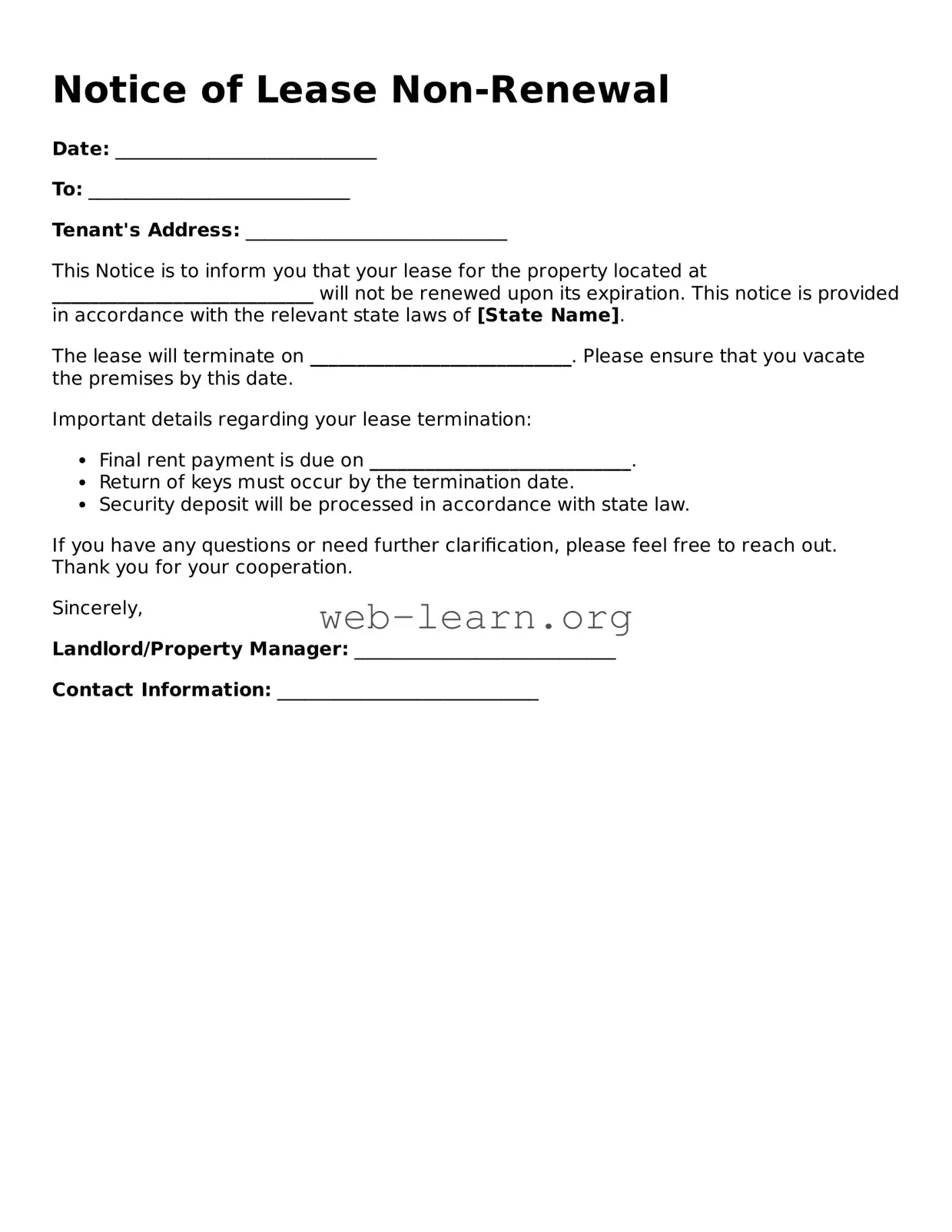
The Notice of Lease Non-Renewal form serves as a crucial document in the rental relationship between landlords and tenants. This form is utilized when either party wishes to terminate the lease agreement at the end of its term, signaling the intent not to continue the tenancy. It typically includes essential information such as the names of the parties involved, the address of the rental property, and the specific date when the lease will end. Clarity is vital; therefore, the form should explicitly state the reason for non-renewal, if applicable, and outline any obligations that remain until the lease concludes. Timeliness is also important; many jurisdictions require that this notice be delivered within a specific timeframe before the lease expires. Understanding the nuances of this form can help both landlords and tenants navigate the transition smoothly, ensuring that all legal requirements are met and that both parties are aware of their rights and responsibilities as the lease term comes to a close.
Notice of Lease Non-Renewal
Date: ____________________________
To: ____________________________
Tenant's Address: ____________________________
This Notice is to inform you that your lease for the property located at ____________________________ will not be renewed upon its expiration. This notice is provided in accordance with the relevant state laws of [State Name].
The lease will terminate on ____________________________. Please ensure that you vacate the premises by this date.
Important details regarding your lease termination:
If you have any questions or need further clarification, please feel free to reach out. Thank you for your cooperation.
Sincerely,
Landlord/Property Manager: ____________________________
Contact Information: ____________________________
| Fact Name | Description |
|---|---|
| Purpose | The Notice of Lease Non-Renewal form is used by landlords to inform tenants that their lease will not be renewed at the end of its term. |
| Timing | Typically, this notice must be given a certain number of days before the lease expires, depending on state law. |
| State-Specific Requirements | Each state has its own rules regarding the notice period and method of delivery. For example, California requires a 30-day notice for month-to-month leases. |
| Tenant Rights | Tenants have the right to contest the non-renewal in certain circumstances, such as discrimination or retaliation. |
| Documentation | Landlords should keep a copy of the notice for their records, as it serves as proof of communication. |
| Governing Laws | The form is governed by state landlord-tenant laws, which vary widely. For instance, New York law outlines specific requirements for non-renewal notices. |
After completing the Notice of Lease Non-Renewal form, you will need to deliver it to your landlord or property manager. Ensure that you keep a copy for your records. This step is crucial for maintaining clear communication regarding your lease status.
What is a Notice of Lease Non-Renewal?
A Notice of Lease Non-Renewal is a formal document that informs a tenant that their lease will not be renewed once it expires. This notice serves as a way for landlords to communicate their decision and provides tenants with important information about the end of their tenancy.
Who can issue a Notice of Lease Non-Renewal?
Typically, the landlord or property manager is responsible for issuing this notice. They must have the authority to manage the property and make decisions regarding lease agreements. In some cases, a designated representative may also issue the notice on behalf of the landlord.
When should a Notice of Lease Non-Renewal be given?
The timing of the notice depends on the terms outlined in the lease agreement and state laws. Generally, it is advisable to provide the notice at least 30 days before the lease expiration date. However, some jurisdictions may require a longer notice period, so it’s essential to check local regulations.
What information should be included in the notice?
A well-crafted Notice of Lease Non-Renewal should include the following:
Is a Notice of Lease Non-Renewal legally required?
While many landlords choose to provide a Notice of Lease Non-Renewal as a best practice, it may not be legally required in all situations. Some leases automatically terminate at the end of the term without the need for notice. However, providing this notice can help avoid misunderstandings and ensure a smoother transition for both parties.
Can a tenant contest a Notice of Lease Non-Renewal?
Tenants may contest a Notice of Lease Non-Renewal if they believe it violates the terms of the lease or applicable laws. Common grounds for contesting may include claims of retaliation, discrimination, or if the landlord failed to provide proper notice as required by law.
What happens if a tenant does not move out after receiving the notice?
If a tenant does not vacate the property by the lease expiration date, the landlord may need to initiate eviction proceedings. This process typically involves filing a legal action in court to regain possession of the property. It is crucial for landlords to follow the legal procedures to avoid potential issues.
Can a landlord change their mind after issuing a Notice of Lease Non-Renewal?
Once a Notice of Lease Non-Renewal has been issued, the landlord may have limited options for reversing their decision. If the tenant has not yet vacated the property, the landlord might choose to negotiate a lease renewal. However, any such agreement should be documented in writing to avoid future disputes.
What should a tenant do upon receiving a Notice of Lease Non-Renewal?
Upon receiving a Notice of Lease Non-Renewal, tenants should carefully review the document and the lease terms. They should begin making arrangements for their move, including finding a new place to live. It is also advisable for tenants to communicate with the landlord if they have questions or wish to discuss the possibility of renewing the lease.
Are there any consequences for landlords who fail to provide a Notice of Lease Non-Renewal?
Landlords who fail to provide a Notice of Lease Non-Renewal when required by law or lease terms may face legal consequences. This could include challenges to eviction proceedings or potential claims from tenants. Therefore, it is beneficial for landlords to adhere to proper notice requirements to protect their rights and interests.
When filling out the Notice of Lease Non-Renewal form, many individuals encounter common pitfalls that can lead to confusion or complications. One frequent mistake is failing to provide accurate tenant information. This includes the tenant's full name and the address of the rental property. Omitting or misspelling this information can cause delays in processing the notice.
Another common error is not specifying the correct dates. The notice must clearly indicate the intended end date of the lease. If the dates are incorrect or unclear, it can lead to misunderstandings between the landlord and tenant regarding the lease's termination.
Many people also forget to sign the notice. A signature is essential for the document to be considered valid. Without it, the notice may be deemed incomplete, and the tenant may not receive proper notification of the lease non-renewal.
Additionally, some individuals neglect to check their local laws regarding notice periods. Different states and municipalities have varying requirements for how much notice must be given before a lease is not renewed. Ignoring these regulations can result in legal complications.
Another mistake involves using vague language. The notice should be clear and direct. Ambiguities can lead to confusion and may undermine the effectiveness of the notice.
Many also overlook the importance of keeping a copy of the notice for their records. This serves as proof that the notice was sent and can be crucial if disputes arise later. Failing to retain a copy can leave landlords without documentation of their actions.
People sometimes forget to deliver the notice properly. Whether it’s by mail, email, or in person, the method of delivery should comply with local regulations. Improper delivery can invalidate the notice.
Some individuals fill out the form but do not provide a reason for the non-renewal. While not always required, including a reason can help clarify the situation and may prevent future disputes.
Another mistake is not considering the impact of their decision. The non-renewal notice can affect the tenant's future housing options. It’s important to approach this process thoughtfully and respectfully.
Lastly, many people fail to communicate openly with their tenants before sending the notice. A conversation can often resolve issues and lead to a more amicable conclusion than a formal notice. Open dialogue can help maintain a positive landlord-tenant relationship.
When preparing to issue a Notice of Lease Non-Renewal, it’s important to consider additional documents that may be relevant to the process. These forms help clarify the situation for both landlords and tenants, ensuring that all parties are informed and protected. Here are some commonly used documents that accompany the Notice of Lease Non-Renewal:
Each of these documents plays a vital role in the lease termination process. They help ensure that both landlords and tenants are aware of their rights and responsibilities, making the transition smoother for everyone involved.
The Notice of Lease Non-Renewal form shares similarities with several other documents related to lease agreements and property management. Below is a list of eight such documents, along with explanations of how they are similar to the Notice of Lease Non-Renewal form.
When filling out the Notice of Lease Non-Renewal form, it is important to ensure that the process goes smoothly. Here are some key things to keep in mind:
Following these guidelines will help ensure that your Notice of Lease Non-Renewal form is completed properly and submitted successfully.
When it comes to the Notice of Lease Non-Renewal form, many misunderstandings can lead to confusion for both landlords and tenants. Here are five common misconceptions:
Many people believe that the Notice of Lease Non-Renewal form is only necessary in specific jurisdictions. In reality, most states have laws that require landlords to provide notice to tenants before a lease expires, regardless of local regulations.
Some assume that the notice must be hand-delivered to be valid. However, many jurisdictions allow landlords to send the notice via mail or electronic means, as long as it complies with state laws.
This belief is not entirely accurate. Tenants may have the right to contest a non-renewal notice if they believe it violates their rights or if the landlord has not followed proper procedures.
While both documents deal with the end of a rental agreement, they serve different purposes. A lease termination notice ends a lease before its expiration, whereas a non-renewal notice simply informs tenants that the lease will not be extended.
Many landlords mistakenly believe they can send the notice at any time. However, most states have specific time frames within which the notice must be delivered, often ranging from 30 to 60 days before the lease expires.
When dealing with the Notice of Lease Non-Renewal form, there are several important points to keep in mind. Understanding these can help ensure a smooth process for both landlords and tenants.
Hunting Lease Agreement Pdf - It may address the use of tree stands or blinds on the property.
Free Room Rental Agreement Template - The document can outline the landlord's right to enter the room for inspections.