The New York Transfer-on-Death Deed (TOD) form is a valuable tool for individuals looking to streamline the transfer of their property upon death. This form allows property owners to designate a beneficiary who will automatically receive ownership of the property without the need for probate. By completing this deed, you can ensure a smoother transition of assets, which can help reduce stress for your loved ones during a difficult time. The form requires clear identification of the property and the beneficiary, making it essential to provide accurate details. Additionally, it must be signed in the presence of a notary public and filed with the appropriate county clerk's office to be valid. Understanding the nuances of this deed can empower property owners to make informed decisions about their estate planning, ensuring that their wishes are honored and their heirs are protected.
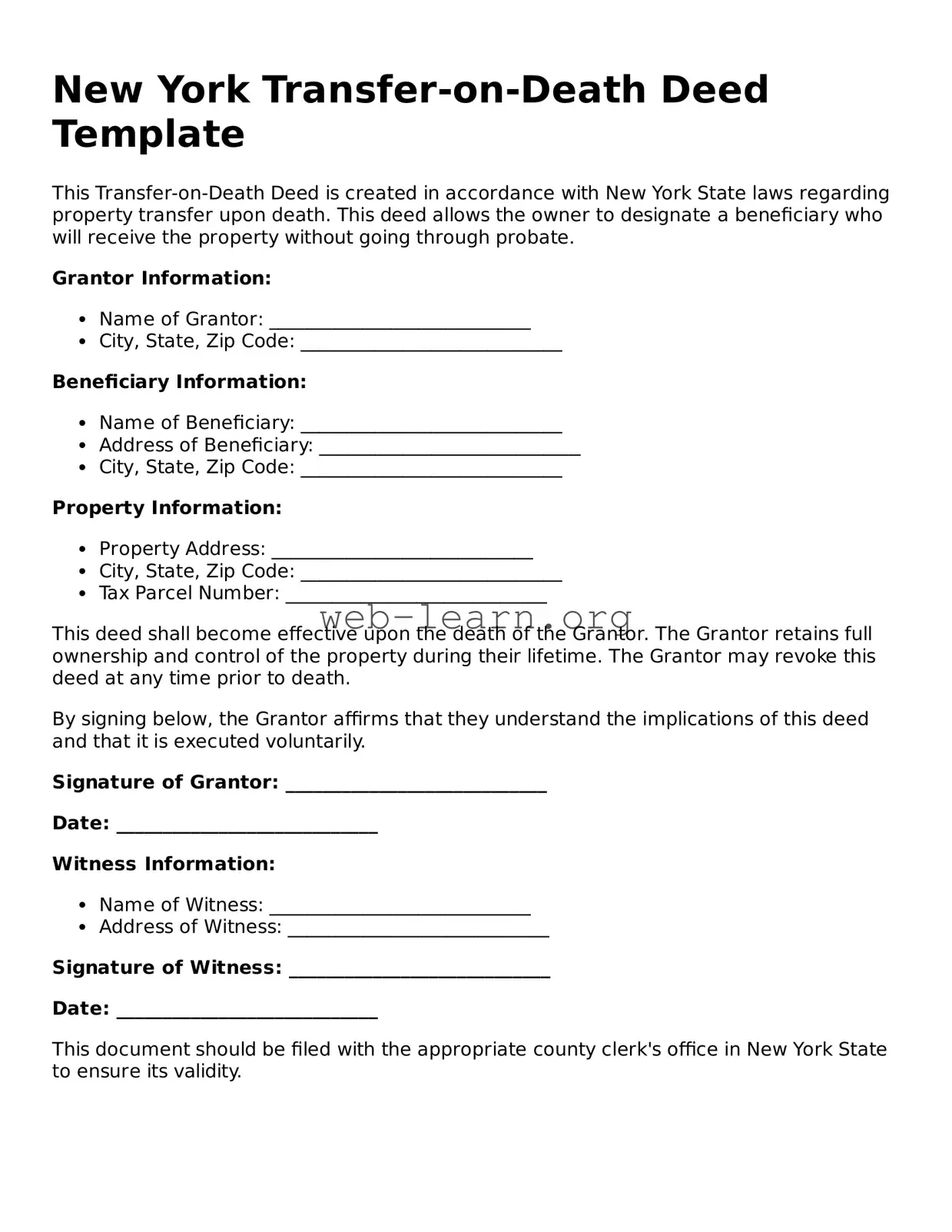
New York Transfer-on-Death Deed Template
This Transfer-on-Death Deed is created in accordance with New York State laws regarding property transfer upon death. This deed allows the owner to designate a beneficiary who will receive the property without going through probate.
Grantor Information:
Beneficiary Information:
Property Information:
This deed shall become effective upon the death of the Grantor. The Grantor retains full ownership and control of the property during their lifetime. The Grantor may revoke this deed at any time prior to death.
By signing below, the Grantor affirms that they understand the implications of this deed and that it is executed voluntarily.
Signature of Grantor: ____________________________
Date: ____________________________
Witness Information:
Signature of Witness: ____________________________
Date: ____________________________
This document should be filed with the appropriate county clerk's office in New York State to ensure its validity.
| Fact Name | Details |
|---|---|
| Definition | A Transfer-on-Death (TOD) deed allows a property owner to transfer real estate to a beneficiary upon the owner's death, avoiding probate. |
| Governing Law | The New York Transfer-on-Death Deed is governed by New York Estates, Powers and Trusts Law (EPTL) § 2-1.11. |
| Eligibility | Only individuals who own real property in New York can create a TOD deed. The property must be residential or commercial real estate. |
| Revocation | A Transfer-on-Death deed can be revoked by the property owner at any time before their death, through a written instrument. |
| Execution Requirements | The deed must be signed by the property owner and acknowledged before a notary public to be valid. |
| Filing | The TOD deed must be recorded in the county where the property is located to take effect and notify the public of the transfer. |
Once you have your New York Transfer-on-Death Deed form ready, it’s time to fill it out correctly. This form allows you to designate a beneficiary who will receive your property upon your passing. Completing it accurately ensures that your wishes are honored without complications.
What is a Transfer-on-Death Deed in New York?
A Transfer-on-Death Deed (TOD) is a legal document that allows an individual to transfer real property to a beneficiary upon their death. This deed enables property owners to designate a beneficiary without the need for probate, simplifying the transfer process. The property remains under the owner’s control during their lifetime, and they can revoke or change the deed at any time before death.
How do I create a Transfer-on-Death Deed?
To create a TOD deed in New York, you must complete the required form, which includes details about the property and the designated beneficiary. It is important to ensure that the deed is signed in the presence of a notary public. Once completed, the deed must be filed with the county clerk’s office where the property is located to be effective.
Can I change or revoke a Transfer-on-Death Deed?
Yes, a Transfer-on-Death Deed can be revoked or changed at any time before the property owner’s death. To do this, the owner must execute a new deed or a revocation form. The new or revocation deed must also be filed with the county clerk’s office to ensure that the changes are recognized legally.
Are there any limitations on who can be a beneficiary?
In New York, beneficiaries of a Transfer-on-Death Deed can be individuals, such as family members or friends, or entities, like trusts or organizations. However, it is essential to ensure that the beneficiary is legally capable of receiving the property. For instance, minors may require a guardian to manage the property until they reach adulthood.
What happens if the beneficiary predeceases the property owner?
If the designated beneficiary dies before the property owner, the TOD deed typically becomes void. The property owner may need to create a new deed or designate a new beneficiary. It is advisable to review and update the deed regularly to reflect any changes in circumstances.
Is there any tax implication associated with a Transfer-on-Death Deed?
Generally, a Transfer-on-Death Deed does not trigger immediate tax consequences. The property is transferred to the beneficiary upon the owner's death, which may subject the estate to estate taxes if the value exceeds certain thresholds. Beneficiaries should consult with a tax professional to understand any potential tax liabilities upon receiving the property.
Filling out the New York Transfer-on-Death Deed form can be a straightforward process, but many people make common mistakes that can lead to complications down the line. One frequent error is failing to provide accurate property descriptions. A vague or incorrect description can create confusion and may even invalidate the deed.
Another mistake is neglecting to include the names of all beneficiaries. If a person intends to transfer property to multiple individuals but only lists one, the others may be left without any claim to the property. It's crucial to ensure that every intended beneficiary is clearly named.
Some individuals overlook the importance of signing the deed properly. All parties involved must sign the document in the presence of a notary public. A missing signature can render the deed ineffective. Additionally, forgetting to date the document can also cause issues, as the date of signing is essential for determining the validity of the transfer.
People often fail to understand the implications of joint ownership. If the property is owned jointly with rights of survivorship, the Transfer-on-Death Deed may not be necessary. This misunderstanding can lead to unnecessary complications and confusion about ownership after one party passes away.
Another common error is not recording the deed with the county clerk's office. Even after completing the form correctly, if it is not filed properly, the transfer may not be recognized. Recording the deed is a crucial step that should not be overlooked.
Some filers mistakenly assume that a Transfer-on-Death Deed supersedes a will. However, the deed operates independently of a will, which can lead to conflicts if both documents are not aligned. Ensuring consistency between the deed and any existing estate planning documents is vital.
In addition, people sometimes forget to check for existing liens or encumbrances on the property. If there are outstanding debts tied to the property, these may complicate the transfer process. It's essential to address any financial obligations before executing the deed.
Another issue arises when individuals do not keep copies of the completed deed. It's important to retain a copy for personal records and to provide a copy to the beneficiaries. Without documentation, disputes may arise about the intended transfer.
Finally, some individuals fail to seek guidance or advice. Navigating legal documents can be daunting, and consulting with an attorney can help avoid pitfalls. Professional assistance can provide clarity and ensure that all aspects of the deed are handled correctly.
The New York Transfer-on-Death Deed (TOD) form is a valuable tool for individuals looking to transfer property to their beneficiaries without the need for probate. However, several other documents often accompany this form to ensure a smooth transfer process and to address various legal aspects related to property and estate management. Below is a list of commonly used forms that complement the TOD deed.
Each of these documents plays a critical role in estate planning and property transfer. Understanding their purposes can help individuals navigate the complexities of transferring property and ensure that their wishes are honored after they pass away.
The Transfer-on-Death Deed form has similarities with several other legal documents. Each serves a unique purpose but shares common elements in transferring property or assets. Here’s a list of documents that are similar:
When filling out the New York Transfer-on-Death Deed form, it is essential to follow specific guidelines to ensure the document is valid and effective. Here’s a list of things you should and shouldn’t do:
The New York Transfer-on-Death Deed (TOD) is a relatively new tool that allows individuals to transfer real estate to beneficiaries upon their death without going through probate. However, several misconceptions surround this deed that can lead to confusion. Here are eight common misconceptions:
Understanding these misconceptions can help individuals make informed decisions about using a Transfer-on-Death Deed in New York. Proper planning and clarity about the deed's function can lead to smoother transitions of property ownership.
Filling out and using the New York Transfer-on-Death Deed form involves several important steps and considerations. Below are key takeaways to keep in mind:
Transfer on Death Deed Connecticut - It’s essential to keep the deed updated if there are changes in your beneficiaries or property ownership.
Transfer on Death Deed Florida Form - Property owners can change or revoke the deed at any time before their death.