When it comes to buying or selling a trailer in New York, having the right documentation is essential for a smooth transaction. One key document in this process is the Trailer Bill of Sale form. This form serves as a legal record of the sale and outlines important details such as the names and addresses of both the seller and the buyer, the description of the trailer being sold, and the sale price. Additionally, it may include information about any liens on the trailer, ensuring that the buyer is fully informed about the ownership status. By providing a clear and concise record of the transaction, the Trailer Bill of Sale form helps protect the interests of both parties involved. It can also be useful for future reference, such as when registering the trailer or proving ownership. Understanding how to properly fill out this form can save time and prevent potential disputes down the road.
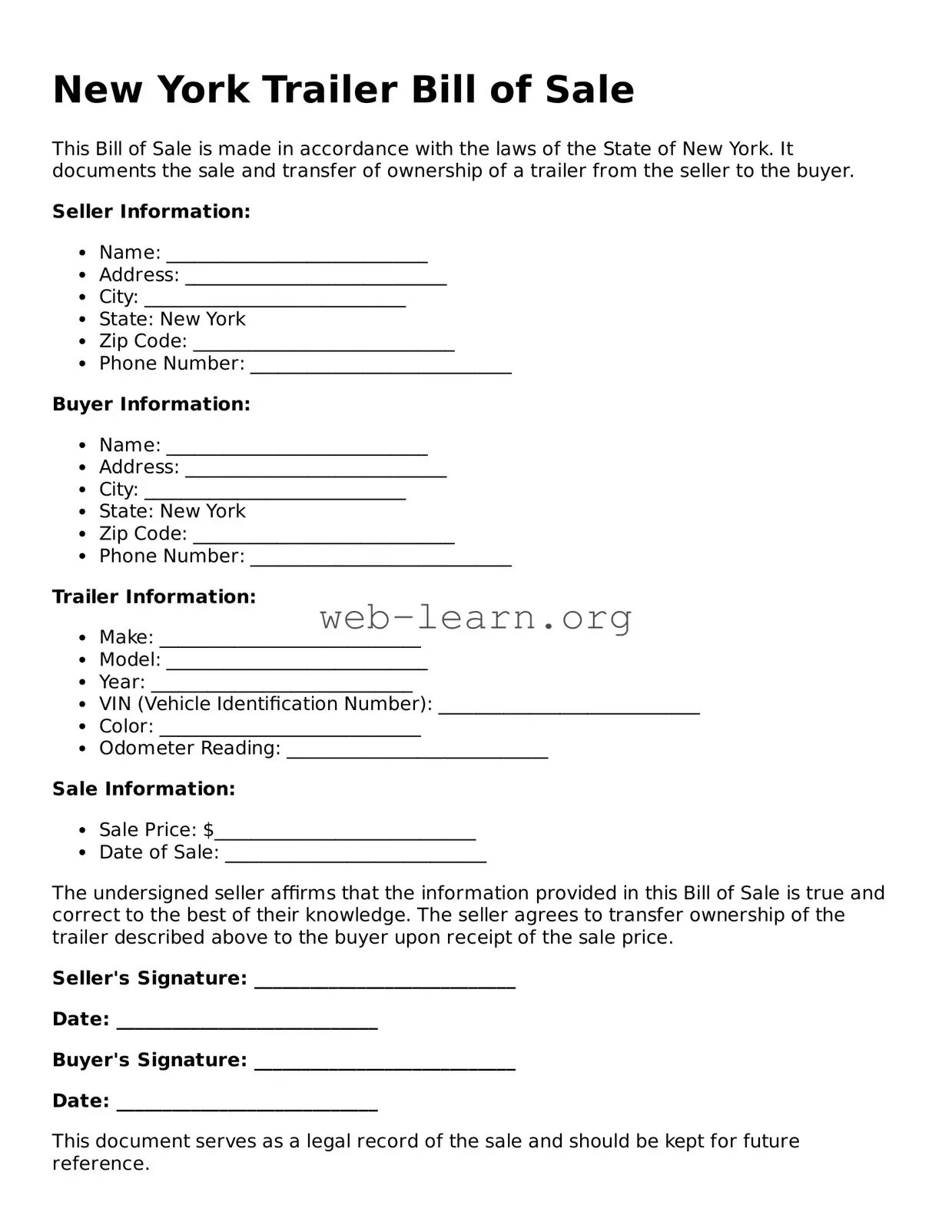
New York Trailer Bill of Sale
This Bill of Sale is made in accordance with the laws of the State of New York. It documents the sale and transfer of ownership of a trailer from the seller to the buyer.
Seller Information:
Buyer Information:
Trailer Information:
Sale Information:
The undersigned seller affirms that the information provided in this Bill of Sale is true and correct to the best of their knowledge. The seller agrees to transfer ownership of the trailer described above to the buyer upon receipt of the sale price.
Seller's Signature: ____________________________
Date: ____________________________
Buyer's Signature: ____________________________
Date: ____________________________
This document serves as a legal record of the sale and should be kept for future reference.
| Fact Name | Description |
|---|---|
| Purpose | The New York Trailer Bill of Sale form is used to document the sale of a trailer, providing proof of ownership transfer from the seller to the buyer. |
| Governing Law | This form is governed by the laws of the State of New York, specifically under the New York Vehicle and Traffic Law. |
| Required Information | Essential details must be included, such as the names and addresses of both the buyer and seller, trailer identification number, and sale price. |
| Signatures | Both parties are required to sign the form to validate the transaction, ensuring that the sale is legally recognized. |
| Notarization | While notarization is not mandatory, having the document notarized can provide additional legal protection and verification. |
| Use for Registration | The completed Bill of Sale can be used to register the trailer with the New York Department of Motor Vehicles (DMV). |
| Record Keeping | It is advisable for both parties to keep a copy of the Bill of Sale for their records, as it serves as proof of the transaction. |
After obtaining the New York Trailer Bill of Sale form, you will need to provide specific information about the transaction. This will include details about the buyer, seller, and the trailer itself. Once completed, both parties will sign the form to finalize the sale.
What is a Trailer Bill of Sale?
A Trailer Bill of Sale is a legal document that transfers ownership of a trailer from one party to another. This form serves as proof of the transaction and includes essential details about the trailer and the parties involved.
What information is required on the form?
The form typically requires the following information:
Do I need to notarize the Trailer Bill of Sale?
Notarization is not always required, but it is highly recommended. Having the document notarized adds an extra layer of authenticity and can help prevent disputes in the future.
Is a Trailer Bill of Sale necessary for registration?
Yes, a Trailer Bill of Sale is often required for registering the trailer with the Department of Motor Vehicles (DMV). The DMV may ask for this document to verify the transfer of ownership.
Can I create my own Trailer Bill of Sale?
Yes, you can create your own Trailer Bill of Sale as long as it includes all necessary information. However, using a standard form can ensure that you don’t miss any critical details.
What should I do after completing the form?
After completing the Trailer Bill of Sale, both the seller and buyer should keep a copy for their records. The seller should also provide the buyer with any additional documents required for registration, such as the title.
What if there are errors on the form?
If you find errors on the Trailer Bill of Sale, it is important to correct them before finalizing the sale. Both parties should initial any changes to ensure clarity and agreement on the modifications.
When filling out the New York Trailer Bill of Sale form, many individuals make common mistakes that can lead to complications down the road. One frequent error is failing to provide complete and accurate information about the trailer. This includes details like the trailer's Vehicle Identification Number (VIN), make, model, and year. Missing or incorrect information can cause issues when registering the trailer or transferring ownership.
Another mistake is neglecting to include the seller's and buyer's signatures. Both parties must sign the form to validate the sale. Without these signatures, the document may not be legally recognized, which can lead to disputes or difficulties in proving ownership later on.
People often overlook the importance of including the sale price. It's essential to clearly state the amount for which the trailer is being sold. Not only does this protect both parties, but it also helps with any potential tax implications. Leaving this section blank can raise red flags during a future inspection or registration process.
Additionally, individuals sometimes forget to date the form. A date is crucial for establishing when the sale took place. Without it, there may be confusion regarding ownership timelines, which can complicate matters if any issues arise in the future.
Lastly, many fail to keep a copy of the completed Bill of Sale for their records. It's always wise to retain a copy for personal reference. This can be invaluable if questions about the sale or ownership come up later. Keeping thorough records helps ensure a smooth experience when dealing with trailers in the future.
When purchasing or selling a trailer in New York, the Trailer Bill of Sale form is a crucial document. However, several other forms and documents may also be necessary to ensure a smooth transaction. Below is a list of commonly used documents that often accompany the Trailer Bill of Sale.
Having these documents ready can expedite the buying or selling process and help avoid potential legal issues. Ensure that all forms are accurately filled out and submitted to the appropriate authorities to facilitate a seamless transaction.
The Trailer Bill of Sale form serves a specific purpose in the transfer of ownership of a trailer. However, several other documents share similarities with it, particularly in the context of vehicle and property transactions. Below are six documents that are comparable to the Trailer Bill of Sale form, each fulfilling a similar role in facilitating ownership transfers.
Each of these documents plays a crucial role in ensuring that transactions are conducted smoothly and that both parties have a clear understanding of their rights and obligations. Understanding these similarities can help individuals navigate the process of buying or selling various types of property more effectively.
When filling out the New York Trailer Bill of Sale form, it’s important to follow certain guidelines to ensure everything is completed correctly. Here are some dos and don’ts to keep in mind:
The New York Trailer Bill of Sale form is an important document for anyone buying or selling a trailer. However, there are several misconceptions surrounding this form. Here are ten common misunderstandings:
Many people believe that a Bill of Sale is optional. In New York, having a Bill of Sale is essential for transferring ownership and ensuring a smooth transaction.
Some think that only new trailers require a Bill of Sale. However, this form is necessary for both new and used trailers.
While a simple agreement may seem sufficient, using the official New York Trailer Bill of Sale form ensures that all required information is included.
It is a common belief that only the buyer needs to sign. In reality, both parties must sign the Bill of Sale for it to be valid.
Some people think that a witness or notary is unnecessary. In New York, having a witness can help verify the transaction if disputes arise.
Many assume that filing is not required. However, the Bill of Sale may need to be submitted to the Department of Motor Vehicles (DMV) for registration purposes.
Some confuse the Bill of Sale with the title. The Bill of Sale is a record of the transaction, while the title proves ownership.
People often think they can complete the form later. It is best to fill it out at the time of the sale to avoid any misunderstandings.
Many believe only the buyer should keep a copy. Both the buyer and seller should retain a copy for their records.
Some people think the Bill of Sale holds no legal weight. In fact, it is a legally binding document that can be used in court if necessary.
Understanding these misconceptions can help ensure that the buying and selling process goes smoothly and legally.
When filling out and using the New York Trailer Bill of Sale form, it's important to keep several key points in mind. This document serves as proof of the sale and transfer of ownership of a trailer. Below are some essential takeaways to guide you through the process.
By following these guidelines, you can ensure a smooth transaction and a successful transfer of ownership for your trailer.
Bill of Sale for Car Colorado Template - Helps to ensure that both parties are aware of their rights and responsibilities.
Michigan Trailer Towing Laws - Important for buyers to have for insurance purposes.
How to Write a Bill of Sale for a Car in Idaho - The form can be created using templates available online or drafted from scratch.