In the bustling landscape of New York’s rental market, understanding the legal processes surrounding eviction is crucial for both landlords and tenants. One of the essential tools in this process is the Notice to Quit form, which serves as a formal communication from a landlord to a tenant, signaling the intent to terminate a lease agreement. This document is particularly important when a tenant has violated terms of their lease or failed to pay rent. By providing clear guidelines, the Notice to Quit helps to ensure that both parties are aware of their rights and responsibilities. It typically outlines the reasons for the eviction, the timeframe in which the tenant must vacate the property, and any necessary steps that need to be taken. Familiarity with this form can empower landlords to take appropriate action while also giving tenants a chance to rectify the situation or prepare for their next steps. Understanding the nuances of the Notice to Quit can lead to smoother transitions and less conflict in an already stressful situation.
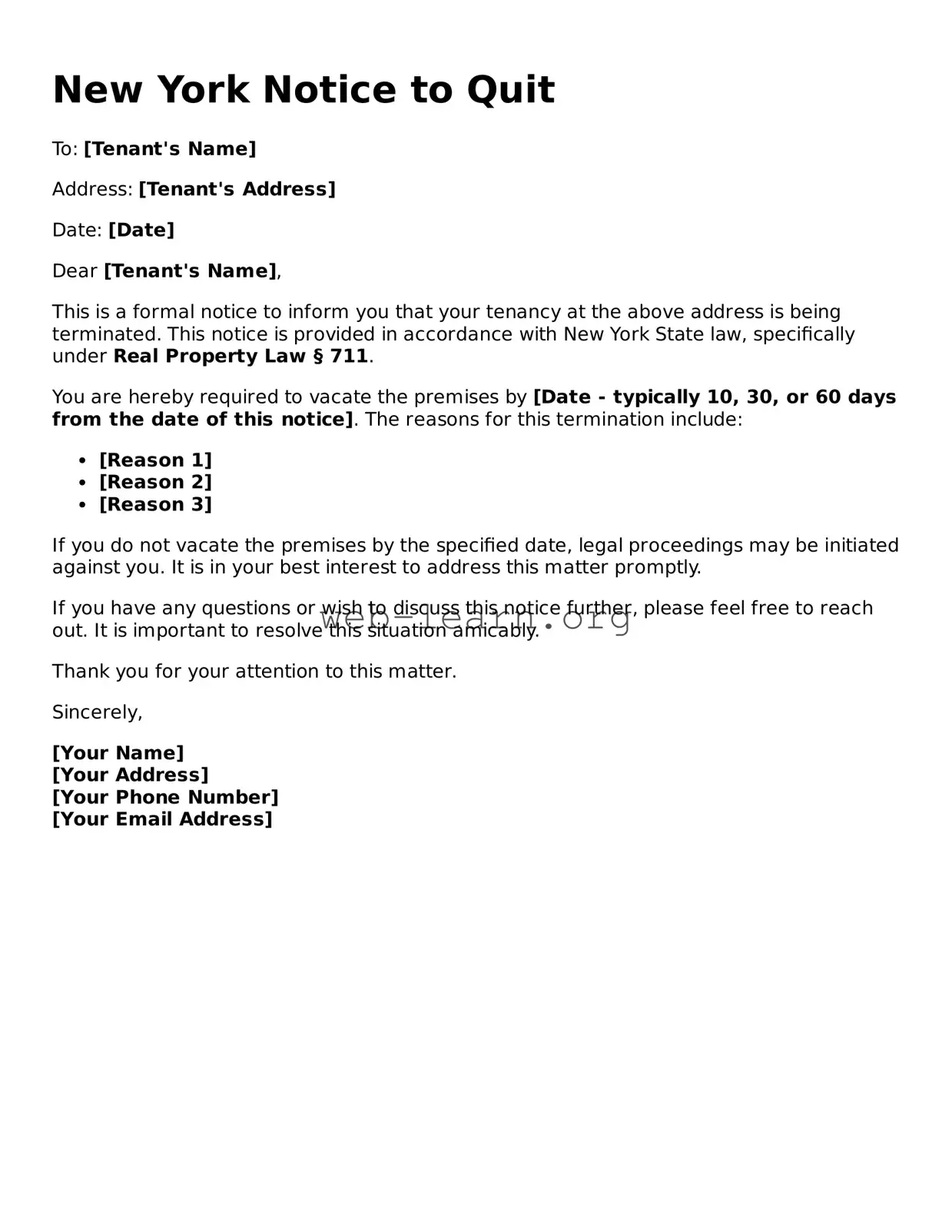
New York Notice to Quit
To: [Tenant's Name]
Address: [Tenant's Address]
Date: [Date]
Dear [Tenant's Name],
This is a formal notice to inform you that your tenancy at the above address is being terminated. This notice is provided in accordance with New York State law, specifically under Real Property Law § 711.
You are hereby required to vacate the premises by [Date - typically 10, 30, or 60 days from the date of this notice]. The reasons for this termination include:
If you do not vacate the premises by the specified date, legal proceedings may be initiated against you. It is in your best interest to address this matter promptly.
If you have any questions or wish to discuss this notice further, please feel free to reach out. It is important to resolve this situation amicably.
Thank you for your attention to this matter.
Sincerely,
[Your Name]
[Your Address]
[Your Phone Number]
[Your Email Address]
| Fact Name | Description |
|---|---|
| Purpose | The New York Notice to Quit form is used to inform a tenant that they must vacate the rental property. |
| Governing Law | This form is governed by New York Real Property Actions and Proceedings Law (RPAPL) § 711. |
| Delivery Method | The notice can be delivered in person, by mail, or by affixing it to the door of the rental property. |
| Notice Period | Typically, a 10-day notice period is required for non-payment of rent. |
| Contents | The form must clearly state the reason for eviction and the date by which the tenant must leave. |
| Signature Requirement | The landlord or their authorized agent must sign the notice to make it valid. |
| Legal Consequences | If the tenant does not comply, the landlord may initiate eviction proceedings in court. |
After you complete the New York Notice to Quit form, you will need to serve it to the tenant. This is a crucial step in the eviction process, as it formally notifies the tenant of your intention to terminate their lease. Ensure that you follow the proper procedures for serving the notice, as this can impact the next steps in your case.
A Notice to Quit is a formal document that a landlord sends to a tenant to inform them that they must vacate the rental property. This notice is typically issued when a tenant has violated the terms of their lease or has failed to pay rent. The Notice to Quit serves as the first step in the eviction process.
A Notice to Quit is required when a tenant is not complying with their lease agreement. Common reasons include non-payment of rent, lease violations, or illegal activity on the premises. Depending on the situation, the notice may allow the tenant a specific period to remedy the violation or to vacate the property.
The response time varies based on the reason for the Notice to Quit. For non-payment of rent, tenants generally have 14 days to pay the overdue rent or vacate the property. For lease violations, the time frame can range from 10 to 30 days, depending on the nature of the violation.
A Notice to Quit should include:
Yes, a tenant can dispute a Notice to Quit. If a tenant believes the notice is unjustified, they can respond to the landlord and explain their position. If the matter escalates to court, the tenant will have the opportunity to present their case before a judge.
If a tenant fails to comply with the Notice to Quit, the landlord can proceed with the eviction process. This typically involves filing a petition in court to obtain an eviction order. The court will then schedule a hearing where both parties can present their arguments.
No, a Notice to Quit is not the same as an eviction notice. The Notice to Quit is the initial step in the eviction process. If the tenant does not comply with the Notice to Quit, the landlord may then seek an eviction notice from the court, which is a legal order to remove the tenant from the property.
Yes, a tenant can receive a Notice to Quit for various reasons besides non-payment. These reasons may include lease violations, damage to the property, or illegal activities. Each situation will have its specific requirements and timelines for compliance.
Filling out the New York Notice to Quit form is a crucial step in the eviction process, yet many individuals make common mistakes that can jeopardize their case. Understanding these pitfalls can help ensure that the form is completed accurately and effectively.
One frequent error is failing to include the correct address of the rental property. It is essential to provide the complete and accurate address where the tenant resides. Omitting this detail can lead to confusion and may render the notice invalid.
Another mistake involves not specifying the reason for the eviction. While it may seem straightforward, clearly stating the grounds for the notice is critical. Whether it’s non-payment of rent or lease violations, a lack of clarity can weaken your position.
Some individuals neglect to include the date by which the tenant must vacate the premises. This date should be specific and comply with New York state laws regarding notice periods. Without a clear deadline, the notice may not fulfill legal requirements.
Additionally, many people forget to sign the form. A signature is a vital component, as it signifies that the notice is legitimate and has been issued by the landlord or their representative. An unsigned notice may be dismissed in court.
Another common oversight is not providing a copy of the notice to the tenant. Simply filling out the form is not enough; the tenant must receive their copy to ensure they are aware of the eviction process. Failing to deliver the notice can create complications down the line.
Some landlords also make the mistake of using outdated forms. Laws change, and so do the requirements for eviction notices. It is important to use the most current version of the Notice to Quit to avoid any legal issues.
Moreover, individuals sometimes fail to keep a record of the notice. Documentation is key in legal matters. Keeping a copy of the filled-out form and any correspondence related to the eviction can provide valuable evidence if disputes arise.
Lastly, many overlook the importance of checking local regulations. While New York state provides general guidelines, local municipalities may have additional rules regarding eviction notices. Ignoring these can lead to complications that could delay the process.
When dealing with tenant evictions in New York, the Notice to Quit form is just one piece of the puzzle. A variety of other documents may be needed to ensure the process is handled correctly and legally. Below is a list of commonly used forms and documents that often accompany the Notice to Quit.
Understanding these documents can help landlords navigate the eviction process more smoothly. Each form plays a crucial role in ensuring that both parties are treated fairly and that the legal requirements are met. Being informed can make a significant difference in the outcome of an eviction case.
The Notice to Quit form serves a specific purpose in landlord-tenant relationships, but there are several other documents that share similarities in function or intent. Here are eight documents that are comparable to the Notice to Quit form:
When filling out the New York Notice to Quit form, it's important to follow certain guidelines to ensure your notice is valid and effective. Here’s a list of things you should and shouldn’t do:
By adhering to these guidelines, you can help ensure that your Notice to Quit is properly executed and legally sound.
When it comes to the New York Notice to Quit form, several misconceptions can lead to confusion for both landlords and tenants. Understanding these misconceptions is crucial for navigating the eviction process effectively. Below are some common misunderstandings:
Understanding these misconceptions can help both landlords and tenants navigate the complexities of rental agreements and eviction processes more effectively. Awareness of the rights and responsibilities associated with the Notice to Quit is essential for maintaining a fair and lawful rental environment.
Filling out and using the New York Notice to Quit form is an important step in the eviction process. Understanding its nuances can help both landlords and tenants navigate their rights and responsibilities effectively. Here are some key takeaways to keep in mind:
By keeping these points in mind, both landlords and tenants can better navigate the complexities of the eviction process in New York.
Free Eviction Notice Alabama - It is essential for landlords to keep a copy of the Notice to Quit for their records.
Ky 30-day Eviction Notice - It is advisable for landlords to deliver the notice in person when possible.