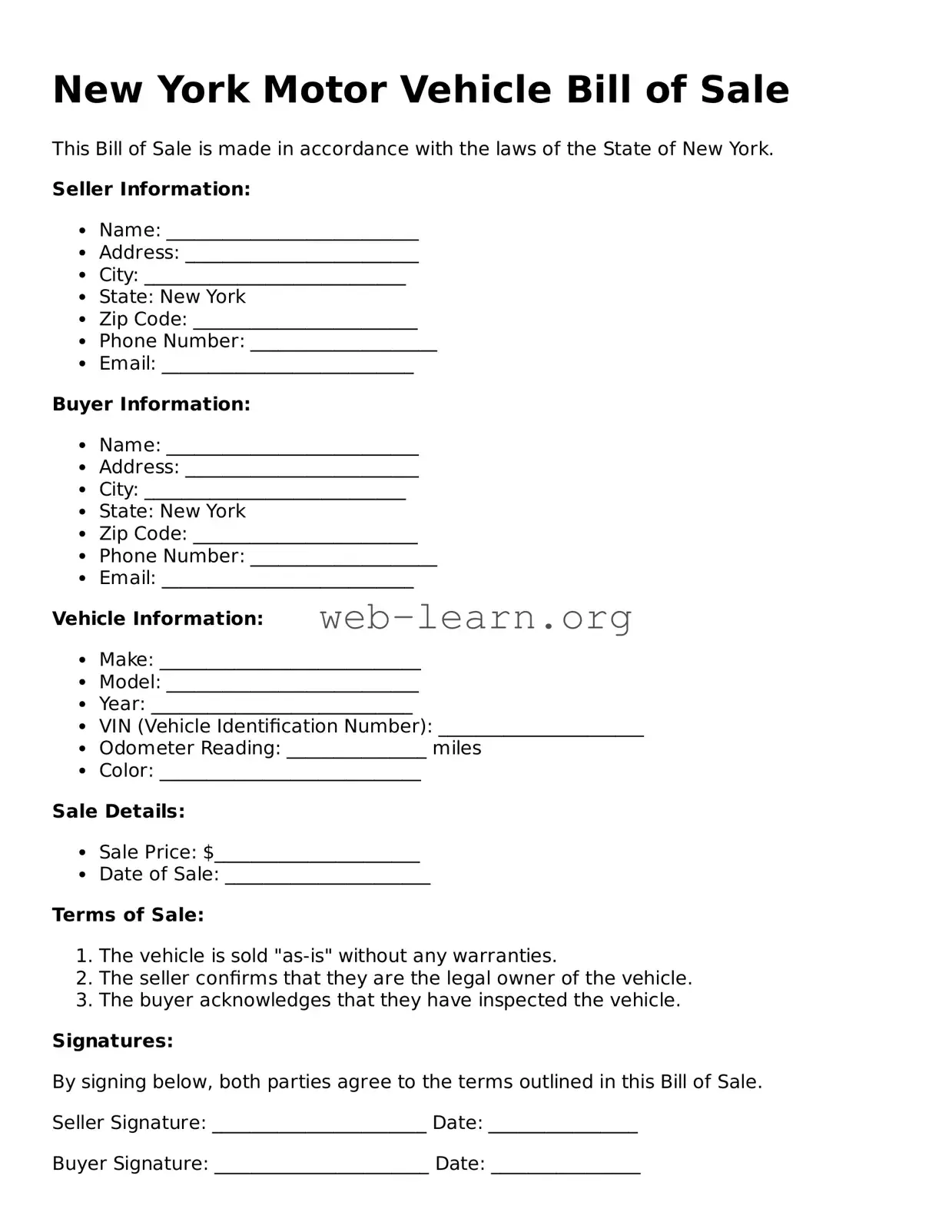
When it comes to buying or selling a vehicle in New York, a Motor Vehicle Bill of Sale form is an essential document that helps protect both the buyer and the seller. This form serves as a written record of the transaction, detailing important information such as the vehicle's make, model, year, and Vehicle Identification Number (VIN). It also outlines the sale price and specifies whether the vehicle is being sold "as is" or with any warranties. By providing both parties with a clear understanding of the terms of the sale, the Bill of Sale helps to prevent misunderstandings or disputes down the line. Additionally, this document can be useful for registration purposes and may be required by the Department of Motor Vehicles (DMV) when transferring ownership. In essence, the Motor Vehicle Bill of Sale is more than just a piece of paper; it is a vital tool that facilitates a smooth and transparent vehicle transaction.
New York Motor Vehicle Bill of Sale
This Bill of Sale is made in accordance with the laws of the State of New York.
Seller Information:
Buyer Information:
Vehicle Information:
Sale Details:
Terms of Sale:
Signatures:
By signing below, both parties agree to the terms outlined in this Bill of Sale.
Seller Signature: _______________________ Date: ________________
Buyer Signature: _______________________ Date: ________________
This document serves as a legal record of the transaction between the seller and buyer.
| Fact Name | Details |
|---|---|
| Purpose | The New York Motor Vehicle Bill of Sale serves as proof of the sale and transfer of ownership of a vehicle. |
| Governing Law | This form is governed by New York State Vehicle and Traffic Law. |
| Required Information | It must include details such as the vehicle's make, model, year, VIN, and sale price. |
| Signatures | Both the seller and buyer must sign the form to validate the transaction. |
| Notarization | While notarization is not required, it is recommended for added security. |
| Use in Registration | The completed Bill of Sale is often required when registering the vehicle with the DMV. |
| Tax Implications | Sales tax may apply based on the sale price listed on the form. |
| Duplicate Copies | It is advisable for both parties to keep a copy of the signed Bill of Sale for their records. |
| Availability | The form can be obtained online or at various DMV locations throughout New York. |
Once you have the New York Motor Vehicle Bill of Sale form, you can begin the process of filling it out. This document is essential for transferring ownership of a vehicle from one person to another. It’s important to provide accurate information to ensure a smooth transaction.
After completing the form, the next step involves ensuring that both parties have a copy for their records. This helps maintain clear communication and provides proof of the transaction if needed in the future.
What is a New York Motor Vehicle Bill of Sale?
A New York Motor Vehicle Bill of Sale is a legal document that records the sale of a vehicle from one party to another. It serves as proof of the transaction and outlines essential details such as the vehicle's make, model, year, and Vehicle Identification Number (VIN). This document is crucial for both buyers and sellers, as it helps establish ownership and can be used for registration purposes.
Why do I need a Bill of Sale when buying or selling a vehicle?
Having a Bill of Sale is important for several reasons:
Without this document, you may face challenges in proving ownership or resolving issues related to the vehicle in the future.
What information should be included in the Bill of Sale?
A comprehensive Bill of Sale should include the following details:
Including this information ensures clarity and can help prevent misunderstandings in the future.
Do I need to have the Bill of Sale notarized?
In New York, it is not a requirement to have the Bill of Sale notarized. However, getting it notarized can add an extra layer of security and legitimacy to the document. It can be especially beneficial in case of disputes, as a notary public verifies the identities of the parties involved and their signatures.
Where can I obtain a New York Motor Vehicle Bill of Sale form?
You can find a New York Motor Vehicle Bill of Sale form through various sources:
Make sure to use a reputable source to ensure that the form meets New York's legal requirements.
Filling out the New York Motor Vehicle Bill of Sale form can be straightforward, but several common mistakes can lead to complications. One frequent error is not including the correct vehicle identification number (VIN). The VIN is crucial for identifying the vehicle. Double-check this number to ensure it matches the one on the vehicle title and registration.
Another common mistake is omitting the seller's and buyer's information. Both parties must provide their full names and addresses. Leaving out any part of this information can cause issues during the transfer of ownership. Ensure that all details are accurate and complete.
People often forget to include the sale price of the vehicle. This amount is necessary for tax purposes and must be clearly stated. Not providing this information can lead to complications when registering the vehicle with the Department of Motor Vehicles (DMV).
Additionally, some individuals neglect to sign the form. The seller's signature is required to validate the transaction. Without this signature, the bill of sale is not legally binding. Both parties should also consider signing in the presence of a witness for added protection.
Another mistake involves not dating the document. The date of the sale is an important detail that must be included. Failing to provide a date can lead to confusion about when the transaction occurred, especially if disputes arise later.
People sometimes use incorrect or outdated forms. Always ensure that you are using the most current version of the New York Motor Vehicle Bill of Sale form. Using an outdated form can result in the DMV rejecting the document.
Some individuals also forget to include any relevant disclosures about the vehicle's condition. If there are any known issues, these should be clearly stated in the bill of sale. Transparency is key to preventing future disputes.
Lastly, neglecting to keep a copy of the completed bill of sale is a common oversight. Both the buyer and seller should retain a copy for their records. This document serves as proof of the transaction and may be necessary for future reference.
The New York Motor Vehicle Bill of Sale form serves as a critical document in the transfer of ownership for a vehicle. However, several other forms and documents often accompany this bill of sale to ensure a smooth transaction and compliance with legal requirements. Below is a list of commonly used forms that may be necessary during the process.
Each of these documents plays a vital role in the vehicle transaction process. Ensuring that all necessary paperwork is completed can help avoid complications and facilitate a successful transfer of ownership.
The Motor Vehicle Bill of Sale form serves as a crucial document in the transfer of ownership for vehicles. Its purpose and structure share similarities with several other important documents. Below is a list of eight such documents, each accompanied by a brief explanation of their similarities.
Understanding these documents can provide clarity in various transactions, helping individuals navigate the complexities of ownership transfers. Each document, while unique in its specifics, shares foundational elements that ensure legal protection and transparency for all parties involved.
When filling out the New York Motor Vehicle Bill of Sale form, attention to detail is crucial. Here are some important do's and don'ts to keep in mind:
By following these guidelines, the process can be smooth and efficient, ensuring both parties are protected in the transaction.
Misconception 1: A Bill of Sale is only necessary for private sales.
This is not true. While many people think that a Bill of Sale is only needed when buying or selling a vehicle privately, it is also important for transactions involving dealerships. A Bill of Sale serves as a record of the transaction, regardless of the seller's status.
Misconception 2: The Bill of Sale must be notarized.
Many believe that notarization is required for a Bill of Sale to be valid. In New York, notarization is not mandatory. However, having the document notarized can add an extra layer of authenticity and protection for both parties.
Misconception 3: You don’t need a Bill of Sale if you have a title.
Some people think that possessing the vehicle title eliminates the need for a Bill of Sale. However, the Bill of Sale provides additional details about the transaction, such as the sale price and date, which can be crucial for tax purposes and future reference.
Misconception 4: A Bill of Sale is only for cars.
This is misleading. While the term is often associated with automobiles, a Bill of Sale can be used for any type of vehicle, including motorcycles, boats, and trailers. It is a versatile document that applies to various forms of transportation.
Misconception 5: You don’t need a Bill of Sale if you’re transferring a vehicle as a gift.
Even if a vehicle is being given as a gift, a Bill of Sale is still advisable. It serves as a record of the transfer, which can help avoid disputes in the future and may be required for registration purposes.
When completing the New York Motor Vehicle Bill of Sale form, there are several important points to keep in mind. This form serves as a legal document that records the transfer of ownership of a vehicle. Below are key takeaways to ensure a smooth process.
Oahu Dmv - Encourages responsible selling practices among private sellers.
Free Printable Bill of Sale for Car Georgia - This form can help avoid future liability issues related to the vehicle.
Indiana Car Title - It is often recommended to keep a copy of the Bill of Sale for personal records after the transaction.