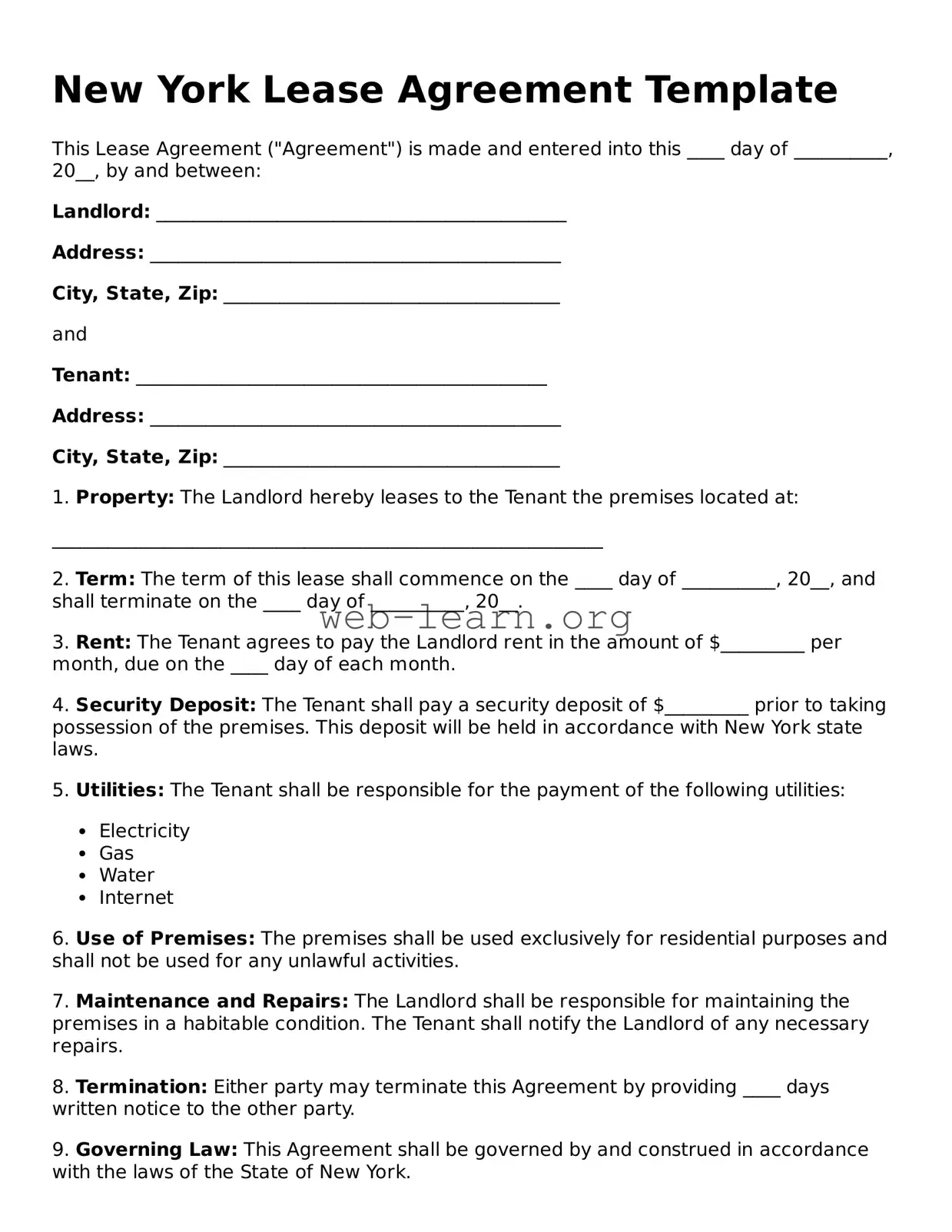
When entering into a rental arrangement in New York, understanding the New York Lease Agreement form is crucial for both landlords and tenants. This document outlines the terms and conditions governing the rental relationship, ensuring that both parties are on the same page. Key aspects of the form include the duration of the lease, the amount of rent, and the security deposit requirements. Additionally, it specifies the responsibilities of each party, such as maintenance obligations and rules regarding subletting. The lease also addresses issues like late payment fees, termination conditions, and procedures for resolving disputes. By clearly defining these elements, the New York Lease Agreement aims to protect the rights of both landlords and tenants, fostering a transparent and fair rental experience.
New York Lease Agreement Template
This Lease Agreement ("Agreement") is made and entered into this ____ day of __________, 20__, by and between:
Landlord: ____________________________________________
Address: ____________________________________________
City, State, Zip: ____________________________________
and
Tenant: ____________________________________________
Address: ____________________________________________
City, State, Zip: ____________________________________
1. Property: The Landlord hereby leases to the Tenant the premises located at:
___________________________________________________________
2. Term: The term of this lease shall commence on the ____ day of __________, 20__, and shall terminate on the ____ day of __________, 20__.
3. Rent: The Tenant agrees to pay the Landlord rent in the amount of $_________ per month, due on the ____ day of each month.
4. Security Deposit: The Tenant shall pay a security deposit of $_________ prior to taking possession of the premises. This deposit will be held in accordance with New York state laws.
5. Utilities: The Tenant shall be responsible for the payment of the following utilities:
6. Use of Premises: The premises shall be used exclusively for residential purposes and shall not be used for any unlawful activities.
7. Maintenance and Repairs: The Landlord shall be responsible for maintaining the premises in a habitable condition. The Tenant shall notify the Landlord of any necessary repairs.
8. Termination: Either party may terminate this Agreement by providing ____ days written notice to the other party.
9. Governing Law: This Agreement shall be governed by and construed in accordance with the laws of the State of New York.
IN WITNESS WHEREOF, the parties hereto have executed this Lease Agreement as of the date first above written.
Landlord Signature: _______________________________
Date: ___________________________________________
Tenant Signature: ________________________________
Date: ___________________________________________
| Fact Name | Description |
|---|---|
| Governing Law | The New York Lease Agreement is governed by New York State laws, particularly the Real Property Law. |
| Duration of Lease | Lease agreements can be for a fixed term, such as one year, or can be month-to-month. |
| Security Deposit | Landlords may require a security deposit, typically limited to one month's rent, to cover potential damages. |
| Notice Requirements | Both landlords and tenants must provide written notice for lease termination or eviction, typically 30 days in advance. |
| Rent Control | New York City has rent control and rent stabilization laws that may affect how much rent can be increased. |
| Habitability | Landlords are required to maintain rental properties in a habitable condition, ensuring basic living standards are met. |
| Subletting | Tenants may be allowed to sublet their apartments, but this typically requires written consent from the landlord. |
Completing the New York Lease Agreement form is an essential step in establishing a rental relationship. This document outlines the terms and conditions agreed upon by both the landlord and tenant. Below are the steps to effectively fill out this form.
Once the form is completed, both the landlord and tenant should review it carefully to ensure all information is accurate. Properly executed, this agreement serves as a binding document for both parties.
What is a New York Lease Agreement?
A New York Lease Agreement is a legally binding contract between a landlord and tenant. It outlines the terms under which a tenant can rent a property. This document specifies details such as the rental amount, duration of the lease, responsibilities of both parties, and other important terms.
What are the key components of a New York Lease Agreement?
Key components typically include:
How long is a typical lease term in New York?
Lease terms can vary widely. However, most residential leases in New York are either one year or month-to-month. A one-year lease provides stability for both the tenant and landlord, while a month-to-month lease offers flexibility for tenants who may need to move sooner.
Can a landlord increase the rent during the lease term?
Generally, a landlord cannot increase the rent during the lease term unless the lease specifically allows for it. Once the lease expires, the landlord may propose a new rental amount for the next term. Always check the lease for any clauses regarding rent increases.
What is a security deposit, and how is it handled?
A security deposit is an amount paid by the tenant to the landlord at the beginning of the lease. It serves as protection for the landlord against damages or unpaid rent. In New York, landlords must return the security deposit within 14 days after the tenant vacates the property, minus any deductions for damages or unpaid rent.
What happens if either party wants to terminate the lease early?
Early termination of a lease can be complicated. If a tenant wishes to leave before the lease ends, they may be responsible for paying rent until a new tenant is found. Landlords may also have specific procedures for lease termination outlined in the agreement. Always review the lease for any early termination clauses.
Are there any tenant rights in New York that I should know about?
Yes, tenants in New York have several rights, including:
It’s important for tenants to be aware of these rights to ensure they are protected throughout their lease term.
When filling out the New York Lease Agreement form, it's crucial to pay attention to detail. One common mistake is failing to include the correct names of all tenants. Omitting a tenant can lead to complications down the line, especially if disputes arise. Ensure that every person who will be living in the unit is listed clearly.
Another frequent error is neglecting to specify the lease term. Without a defined start and end date, both landlords and tenants may face confusion regarding their responsibilities. Always double-check that the lease term is clearly stated to avoid misunderstandings.
Many individuals also forget to include the security deposit amount. This information is essential for both parties. Landlords need to know how much to collect, and tenants should be aware of their financial obligations upfront. Failing to include this detail can lead to disputes later.
Additionally, some people overlook the importance of outlining the rent payment details. This includes the amount, due date, and acceptable payment methods. Clarity in these areas helps to prevent late payments and potential conflicts.
Another mistake involves not addressing maintenance responsibilities. It is vital to specify who is responsible for repairs and maintenance of the property. This can prevent misunderstandings and ensure that both parties are aware of their obligations.
Many individuals also make the mistake of not reviewing local laws regarding lease agreements. New York has specific regulations that must be followed. Ignoring these can result in an unenforceable lease or legal issues.
Furthermore, failing to include any agreed-upon rules or restrictions can lead to problems later. Whether it’s pet policies or noise regulations, these details should be documented in the lease to ensure all parties are on the same page.
Another common oversight is not signing the lease. A lease without signatures is not legally binding. Ensure that all parties involved sign and date the agreement to confirm their acceptance of the terms.
Lastly, many people forget to keep a copy of the signed lease. Having a copy for reference is essential for both landlords and tenants. It serves as a record of the agreed-upon terms and can be invaluable in case of disputes.
When entering into a lease agreement in New York, several other forms and documents often accompany the primary lease. These additional documents help clarify the terms of the lease, protect both parties, and ensure a smooth rental experience. Here’s a list of common forms that may be used alongside the New York Lease Agreement:
These documents work together to create a comprehensive framework for the landlord-tenant relationship. Understanding each form’s purpose can lead to better communication, fewer disputes, and a more positive rental experience overall.
Rental Agreement: Similar to a lease agreement, a rental agreement outlines the terms of renting a property. However, it typically covers a shorter time frame, often on a month-to-month basis, rather than a fixed term.
Sublease Agreement: This document allows a tenant to lease their rented space to another party. It contains similar terms regarding rent, duration, and responsibilities, but it involves an additional party.
Commercial Lease: A commercial lease is used for business properties. While it shares many terms with residential leases, it often includes clauses specific to business operations and tenant improvements.
Rent-to-Own Agreement: This type of agreement combines a lease with an option to purchase the property. It includes terms for renting and the potential for buying, providing a pathway to ownership.
Property Management Agreement: This document outlines the relationship between a property owner and a management company. It details the management company's responsibilities, which may include leasing the property.
Roommate Agreement: A roommate agreement is used among individuals sharing a rental unit. It specifies each person's responsibilities and rights, similar to a lease but tailored for multiple tenants.
Landlord-Tenant Agreement: This agreement establishes the relationship between a landlord and tenant, detailing rights and responsibilities. It is broader than a lease but includes many of the same elements.
Tenancy Agreement: A tenancy agreement is a legal document that outlines the terms of a tenant's stay in a rental property. It is similar to a lease but may be used in different jurisdictions with varying terms.
When filling out the New York Lease Agreement form, it's important to follow certain guidelines to ensure accuracy and compliance. Here are some dos and don'ts to consider:
By following these guidelines, you can help ensure that your lease agreement is filled out correctly and protects your rights as a tenant.
Understanding the New York Lease Agreement form is essential for both landlords and tenants. However, several misconceptions can lead to confusion. Below are some common misunderstandings about this important document.
When filling out and using the New York Lease Agreement form, keep these key takeaways in mind:
Using the New York Lease Agreement form correctly can help create a smooth rental experience for everyone involved.
Rental Agreement Paper - The Lease Agreement can provide guidelines for the use of the property for business purposes.
Free Rental Agreement Template - It is important for both parties to keep a copy of the signed Lease Agreement.
Downloadable Lease Agreement - This document may include provisions for regular rent reviews during the lease term.