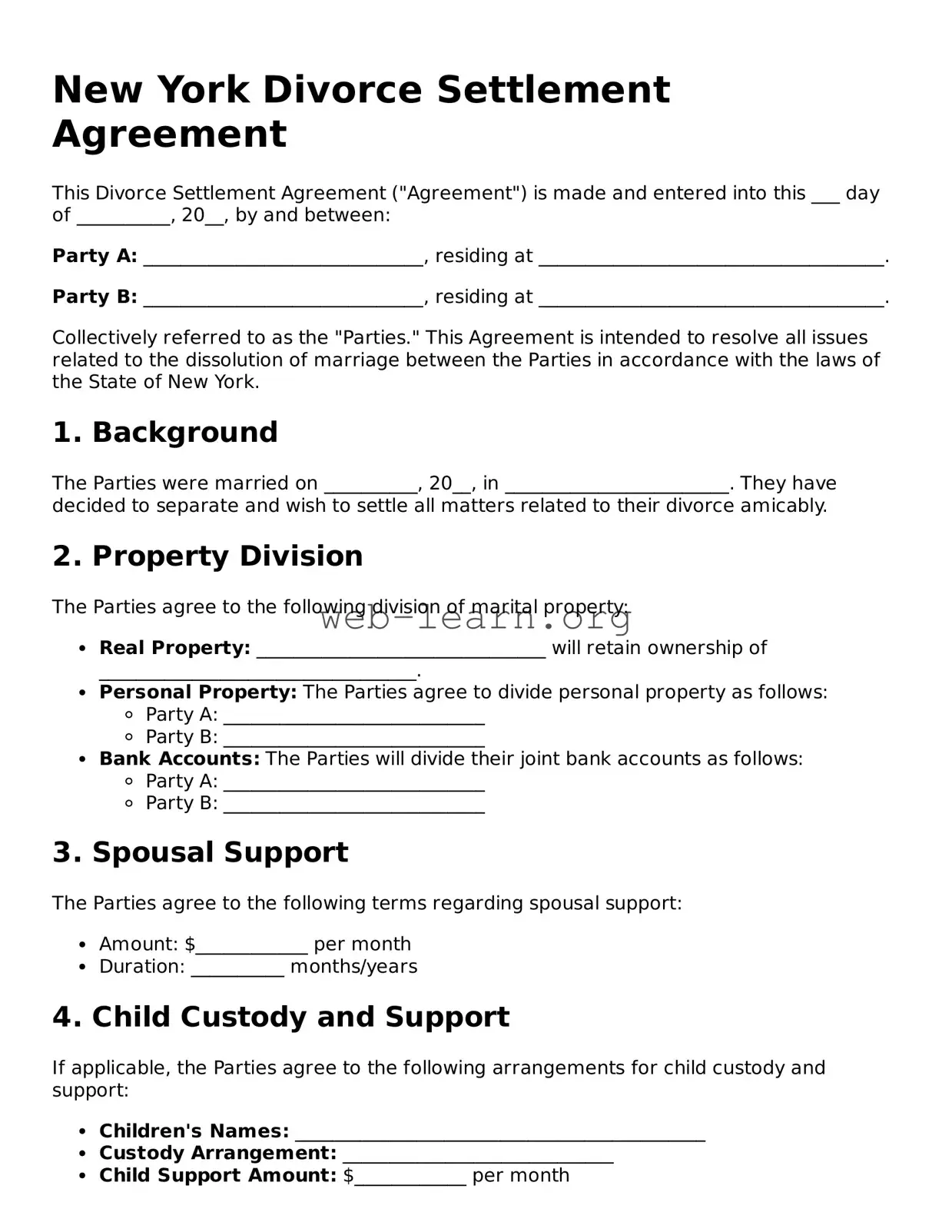
When navigating the complexities of divorce, understanding the New York Divorce Settlement Agreement form is essential for both parties involved. This document serves as a comprehensive outline of the terms agreed upon during the divorce process, addressing key issues such as property division, child custody, visitation rights, and spousal support. By clearly detailing the responsibilities and rights of each party, the form aims to minimize misunderstandings and future disputes. It reflects the mutual decisions made by both spouses, ensuring that each individual's needs and concerns are acknowledged. Additionally, the form may include provisions for the division of debts and other financial obligations, which can significantly impact both parties' post-divorce lives. Completing this agreement is a critical step toward achieving a fair and amicable resolution, allowing individuals to move forward with their lives with clarity and peace of mind.
New York Divorce Settlement Agreement
This Divorce Settlement Agreement ("Agreement") is made and entered into this ___ day of __________, 20__, by and between:
Party A: ______________________________, residing at _____________________________________.
Party B: ______________________________, residing at _____________________________________.
Collectively referred to as the "Parties." This Agreement is intended to resolve all issues related to the dissolution of marriage between the Parties in accordance with the laws of the State of New York.
1. Background
The Parties were married on __________, 20__, in ________________________. They have decided to separate and wish to settle all matters related to their divorce amicably.
2. Property Division
The Parties agree to the following division of marital property:
3. Spousal Support
The Parties agree to the following terms regarding spousal support:
4. Child Custody and Support
If applicable, the Parties agree to the following arrangements for child custody and support:
5. Miscellaneous
This Agreement constitutes the entire understanding between the Parties. It may only be modified in writing and signed by both Parties. The Parties acknowledge that they have had the opportunity to consult with independent legal counsel regarding this Agreement.
6. Governing Law
This Agreement shall be governed by and construed in accordance with the laws of the State of New York.
IN WITNESS WHEREOF, the Parties have executed this Divorce Settlement Agreement as of the date first above written.
______________________________
Party A
______________________________
Party B
______________________________
Date
| Fact Name | Description |
|---|---|
| Purpose | The New York Divorce Settlement Agreement form outlines the terms of a divorce settlement between spouses. |
| Governing Law | This form is governed by New York State law, specifically the Domestic Relations Law. |
| Mutual Agreement | Both parties must voluntarily agree to the terms included in the settlement. |
| Financial Disclosure | Each spouse is required to provide full financial disclosure to ensure transparency. |
| Child Custody | If applicable, the agreement must address child custody and visitation arrangements. |
| Property Division | The form details how marital property and debts will be divided between the spouses. |
| Spousal Support | It may include provisions for spousal support or alimony, if agreed upon. |
| Finality | Once signed, the agreement becomes a legally binding document, subject to court approval. |
Filling out the New York Divorce Settlement Agreement form is an important step in the divorce process. Once completed, this form will help outline the terms of your divorce, including asset division, child custody, and support arrangements. After you fill it out, you will be ready to submit it to the court for review.
What is a Divorce Settlement Agreement?
A Divorce Settlement Agreement is a legally binding document that outlines the terms and conditions agreed upon by both spouses during a divorce. This agreement typically addresses important issues such as property division, child custody, child support, and alimony. By creating this document, both parties can ensure that their rights and responsibilities are clearly defined and understood.
How do I create a Divorce Settlement Agreement in New York?
To create a Divorce Settlement Agreement in New York, both spouses should first discuss and negotiate the terms they wish to include. It is often beneficial to seek the assistance of a mediator or attorney to facilitate this process. Once the terms are agreed upon, the document should be drafted, ensuring it includes all relevant details. After both parties review and sign the agreement, it must be submitted to the court as part of the divorce proceedings.
Is a Divorce Settlement Agreement legally enforceable?
Yes, a Divorce Settlement Agreement is legally enforceable in New York, provided that it meets certain criteria. The agreement must be in writing, signed by both parties, and entered into voluntarily. If either party fails to comply with the terms outlined in the agreement, the other party may seek enforcement through the court system.
What happens if my circumstances change after the agreement is signed?
If circumstances change significantly after the Divorce Settlement Agreement has been signed, such as a change in income or relocation, it may be necessary to modify the agreement. Either party can request a modification through the court, but it is important to demonstrate that the change is substantial and warrants a revision of the original terms.
Can I represent myself when filing a Divorce Settlement Agreement?
Yes, individuals can represent themselves when filing a Divorce Settlement Agreement in New York. This is known as proceeding pro se. However, it is advisable to seek legal counsel or assistance, especially when navigating complex issues such as child custody or significant assets. Having professional guidance can help ensure that your rights are protected and that the agreement is comprehensive and fair.
Filling out the New York Divorce Settlement Agreement form can be a daunting task. Many people make common mistakes that can lead to complications down the line. One frequent error is failing to provide complete and accurate information. When individuals skip sections or provide vague responses, it can create confusion and delay the divorce process. It’s essential to read each question carefully and ensure that all relevant details are included.
Another mistake often seen is not fully understanding the implications of the agreements being made. For example, when deciding on child custody or financial support, individuals may agree to terms without fully grasping how these decisions will affect their future. It’s crucial to take the time to consider how each choice will impact both parties and any children involved.
Additionally, some individuals overlook the importance of consulting with a legal professional. While it may seem tempting to fill out the form independently to save on costs, this can lead to significant issues later. A lawyer can provide valuable insights and help clarify any confusing aspects of the agreement. They can also ensure that the settlement is fair and in compliance with New York law.
Finally, many people underestimate the importance of reviewing the completed form before submission. Errors in spelling, dates, or figures can lead to misunderstandings and may even result in the need to redo the entire process. Taking a moment to double-check the information can save time and prevent unnecessary stress.
When navigating the complexities of divorce in New York, various documents accompany the Divorce Settlement Agreement to ensure a comprehensive resolution of all issues. Each document serves a specific purpose, addressing different aspects of the divorce process. Below are some commonly used forms that complement the Divorce Settlement Agreement.
Each of these documents plays a vital role in the divorce process, helping to clarify expectations and responsibilities. By understanding and utilizing these forms, individuals can navigate their divorce more effectively, leading to a smoother transition into the next chapter of their lives.
The Divorce Settlement Agreement form shares similarities with several other legal documents. Below is a list of nine documents that are comparable, along with explanations of their similarities:
When filling out the New York Divorce Settlement Agreement form, it is essential to approach the task with care and attention. Here are seven important dos and don'ts to consider:
By following these guidelines, you can navigate the process more smoothly and ensure that your submission is both complete and accurate.
Understanding the New York Divorce Settlement Agreement form is crucial for anyone going through a divorce. However, several misconceptions can create confusion. Below are six common misunderstandings about this important document.
Addressing these misconceptions can help individuals approach their divorce with greater clarity and confidence. It is advisable to seek professional guidance to navigate the complexities of the Divorce Settlement Agreement effectively.
Filling out and utilizing the New York Divorce Settlement Agreement form is a significant step in the divorce process. Understanding its components and implications can ease the transition for all parties involved. Here are some key takeaways:
By keeping these points in mind, individuals can navigate the complexities of the divorce settlement process with greater confidence and clarity.
Typical Divorce Settlement Connecticut - Both parties must agree to the terms for the settlement to be valid.
How Much Is a Divorce in Arkansas - It can include provisions for retirement accounts and pensions.
How Long Do You Have to Be Married to Get Half of Everything in Florida - It is important to approach the agreement with a spirit of cooperation and fairness.