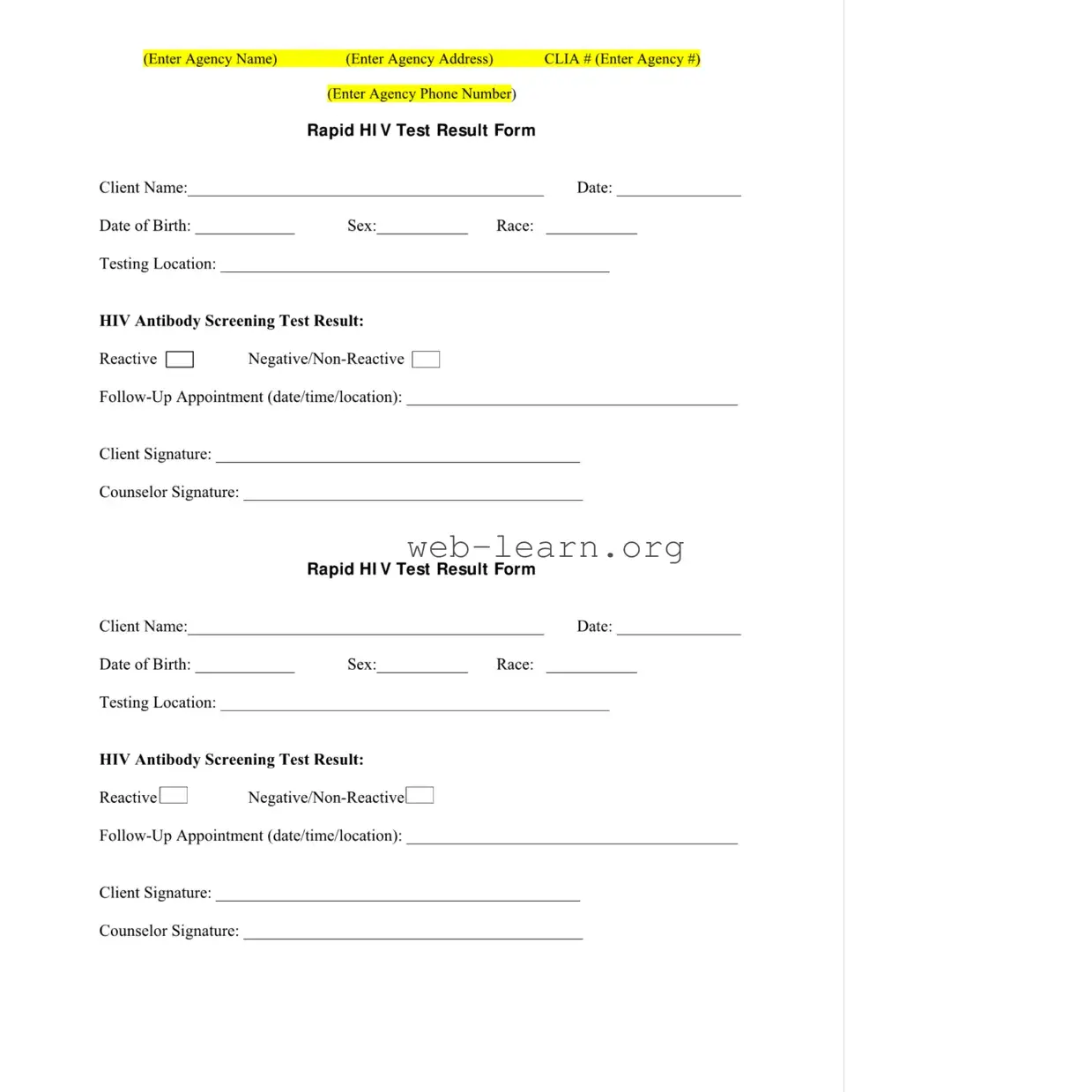
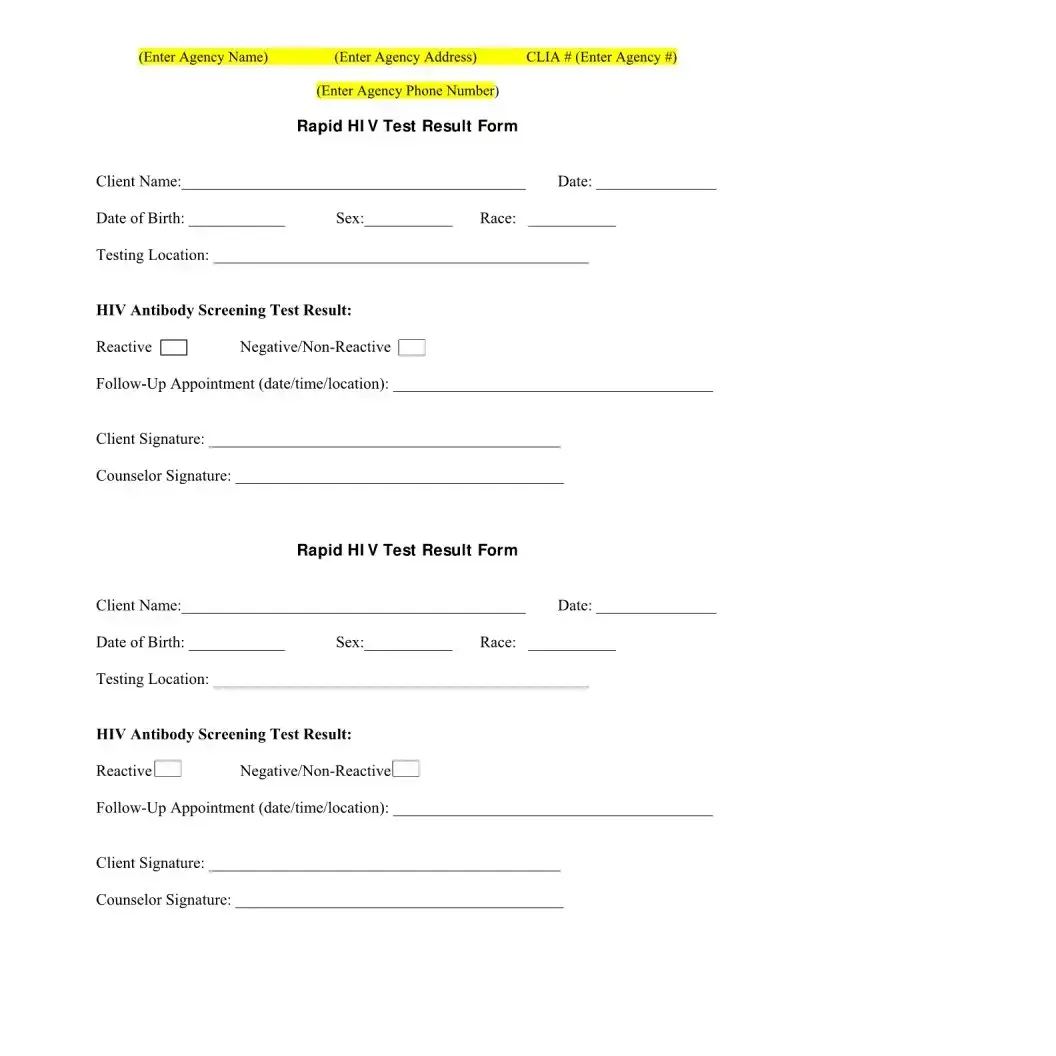
The Negative HIV Test form serves as a crucial document in the process of HIV testing, providing essential information to both clients and healthcare providers. This form includes the client's name, date of birth, race, and the specific testing location, ensuring that all pertinent demographic details are captured. The results of the HIV antibody screening test are clearly indicated as either reactive or negative/non-reactive, which is vital for determining the next steps in the client's healthcare journey. Additionally, the form outlines the date and time of a follow-up appointment, allowing for continuity of care. Both the client and counselor are required to sign the form, confirming that the information is accurate and understood. Beyond the test results, the form also includes sections for temperature logs related to the storage of rapid HIV test devices and controls, emphasizing the importance of proper handling and storage conditions to maintain test accuracy. This comprehensive approach ensures that clients receive reliable information and support throughout the testing process.

| Fact Name | Details |
|---|---|
| Agency Information | The form requires the agency name, address, CLIA number, and phone number to ensure proper identification and compliance. |
| Client Identification | Each form must include the client's name, date of birth, and race to maintain accurate records and provide personalized care. |
| Testing Location | The specific location where the HIV test is conducted must be documented for accountability and traceability. |
| Test Result | The form clearly indicates whether the HIV antibody screening test result is reactive or negative/non-reactive. |
| Follow-Up Appointment | A follow-up appointment must be scheduled and documented, ensuring clients receive necessary care after testing. |
| Client and Counselor Signatures | Both the client and counselor are required to sign the form, confirming that the information provided is accurate and understood. |
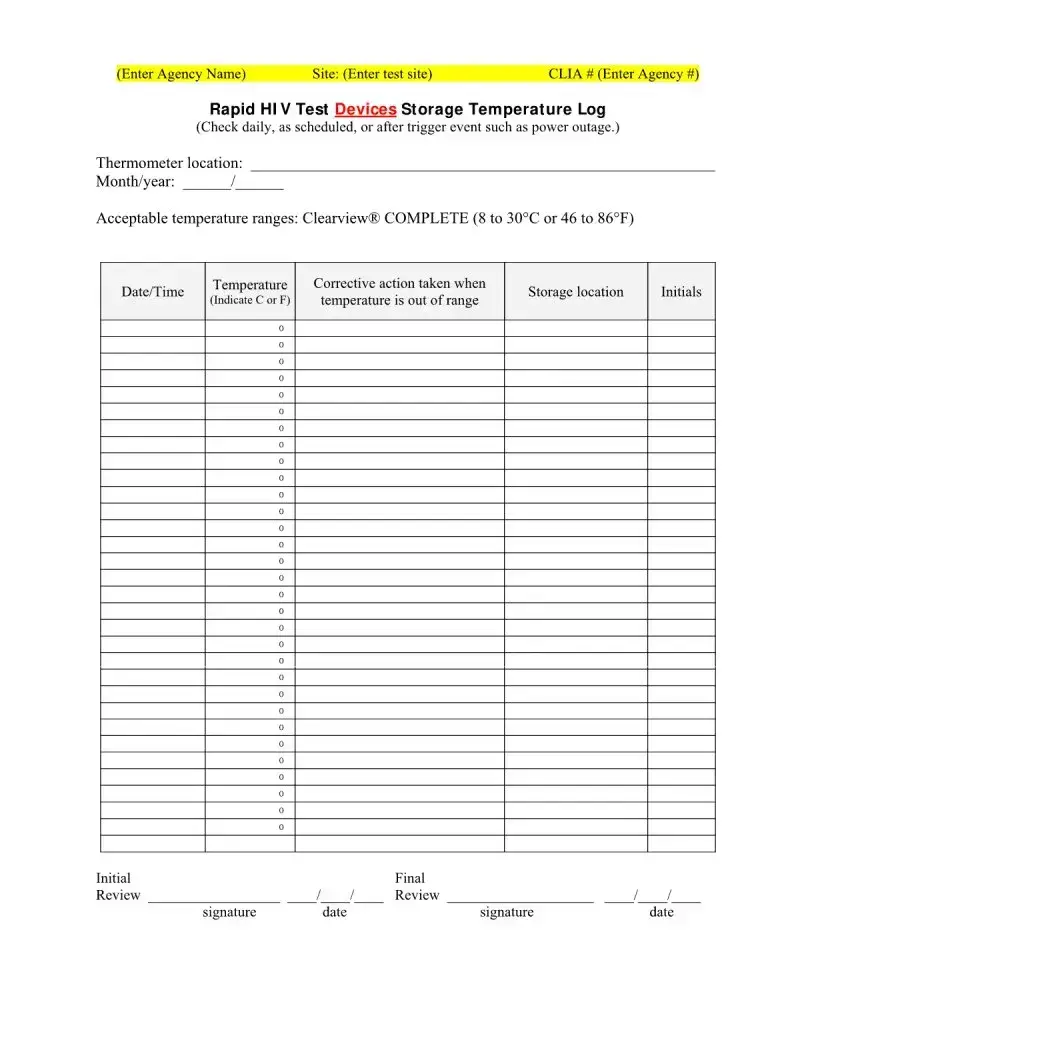
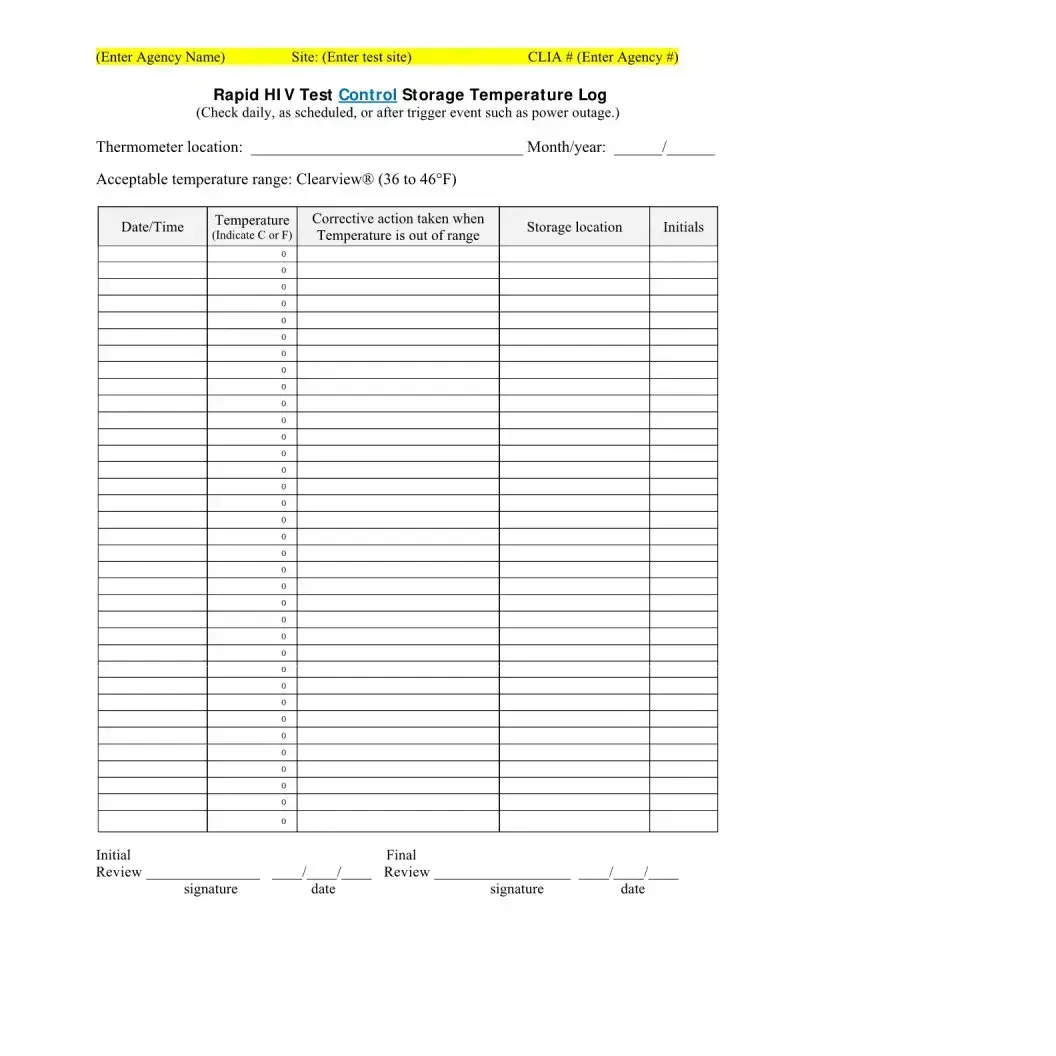
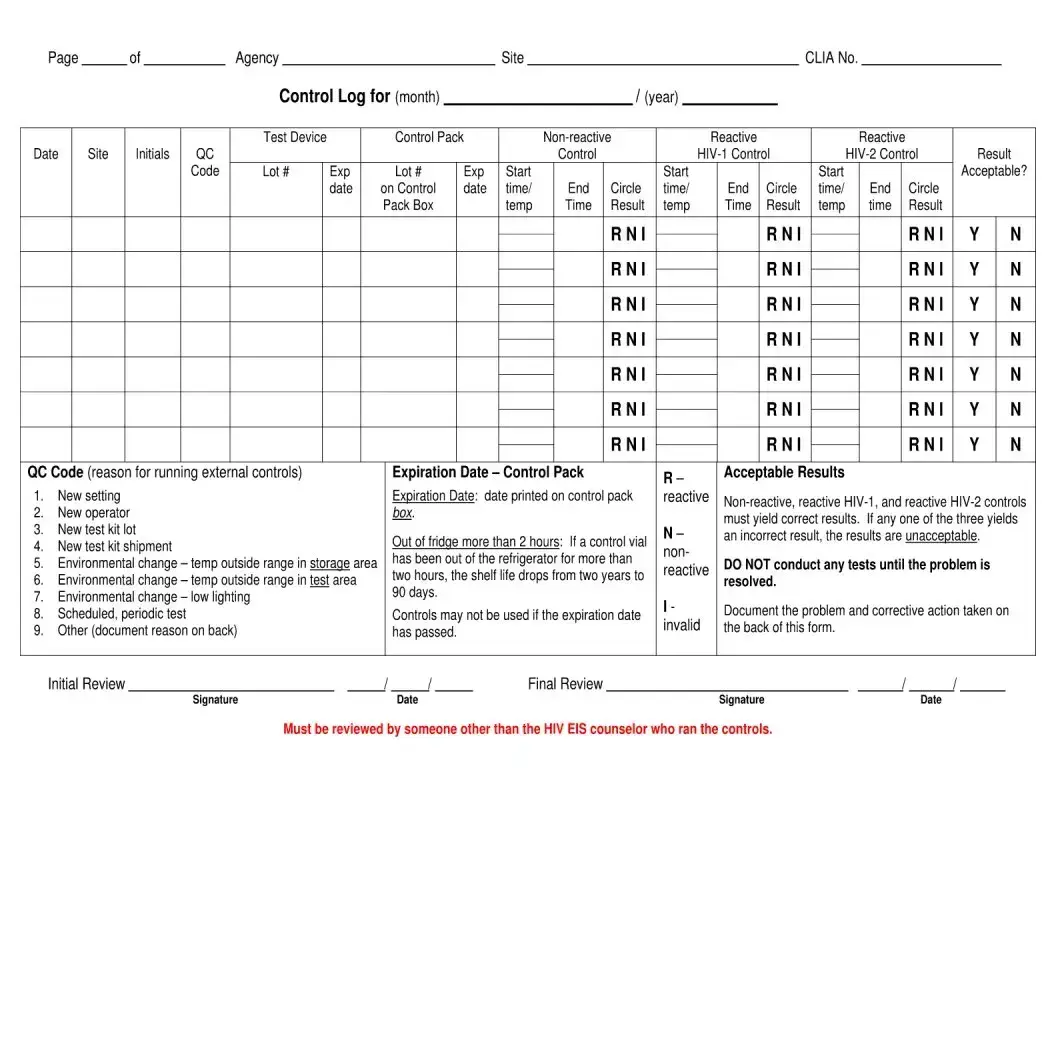
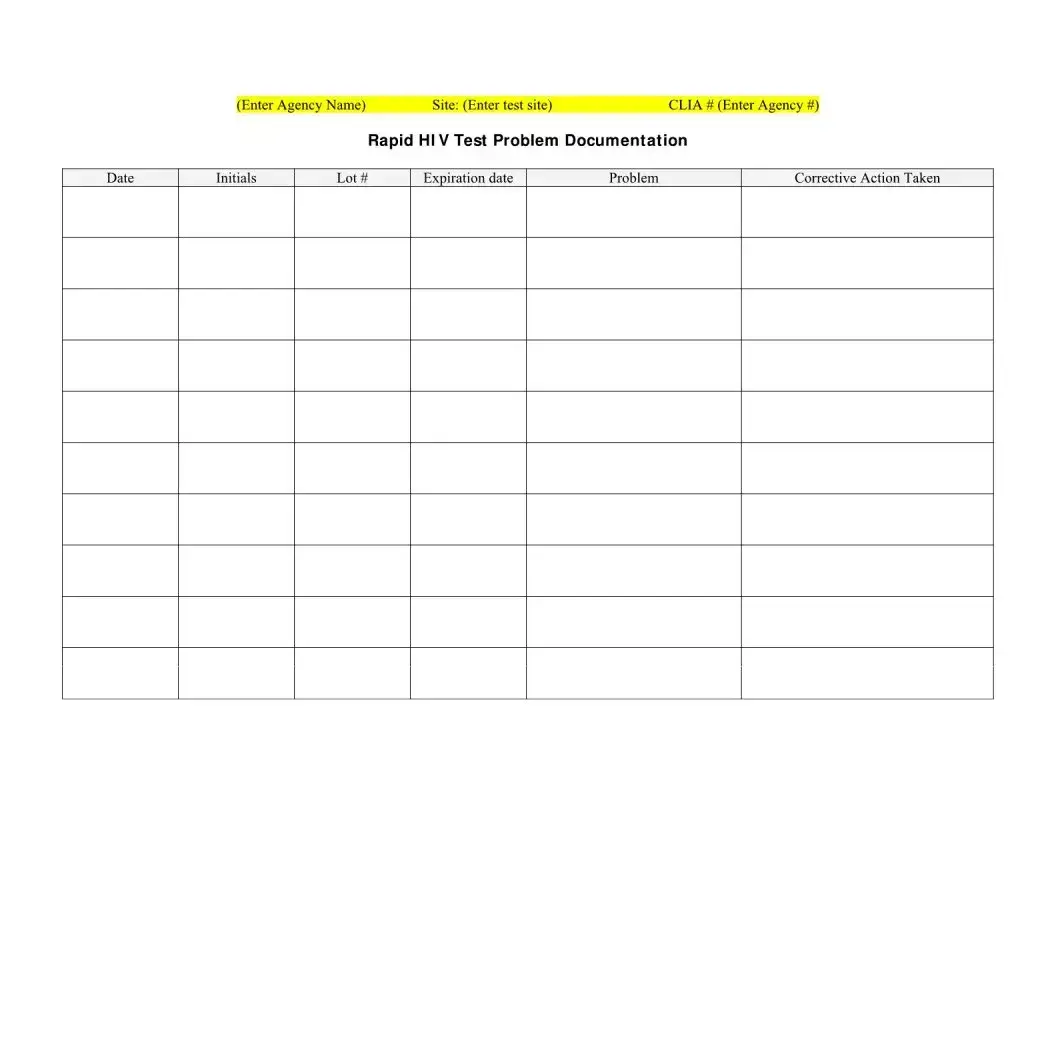
| Temperature Log | The storage temperature log for rapid HIV test devices must be checked daily to ensure tests are stored properly. |
| Corrective Actions | If temperatures are out of range, corrective actions must be documented to maintain the integrity of the testing process. |
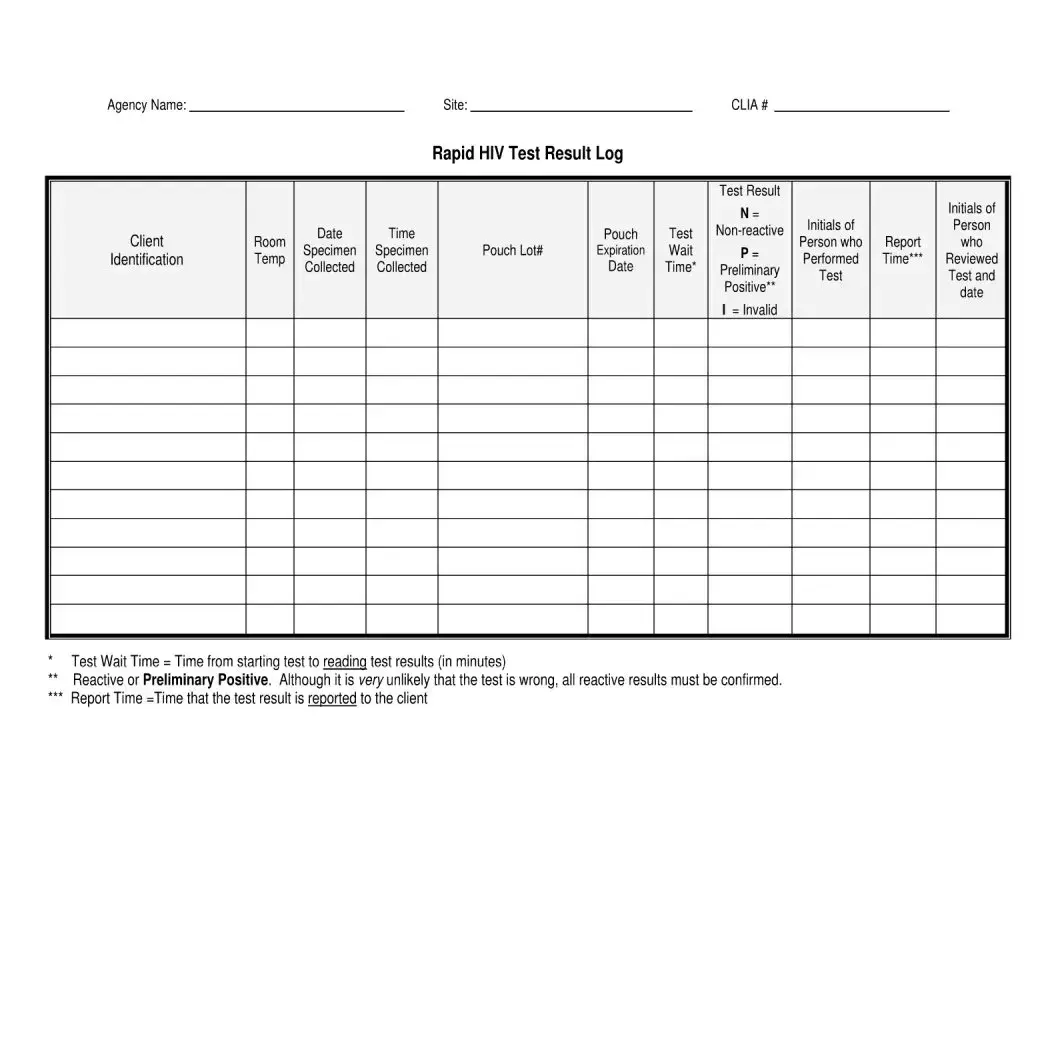
| Test Result Log | A log must be maintained for each test result, including the initials of the person performing the test and the time results are reported. |
| Governing Laws | State-specific forms must comply with local health department regulations and federal laws, including the Clinical Laboratory Improvement Amendments (CLIA). |
Completing the Negative HIV Test form is an important step in documenting your test results. Once the form is filled out accurately, it will be processed by the agency. This ensures that your results are recorded properly and that you receive any necessary follow-up information.
What is a Negative HIV Test form?
A Negative HIV Test form is a document that indicates the results of an HIV antibody screening test. It is used to report whether an individual tested negative or non-reactive for HIV. This form includes essential information such as the client's name, date of birth, race, testing location, and the result of the test.
What information is required on the form?
The form typically requires the following details:
What does a Negative result mean?
A Negative result indicates that no HIV antibodies were detected in the individual's blood at the time of testing. This generally suggests that the person is not infected with HIV. However, it is important to note that if exposure to HIV occurred recently, the test may not yet detect the virus, so follow-up testing may be recommended.
What should I do if I receive a Reactive result?
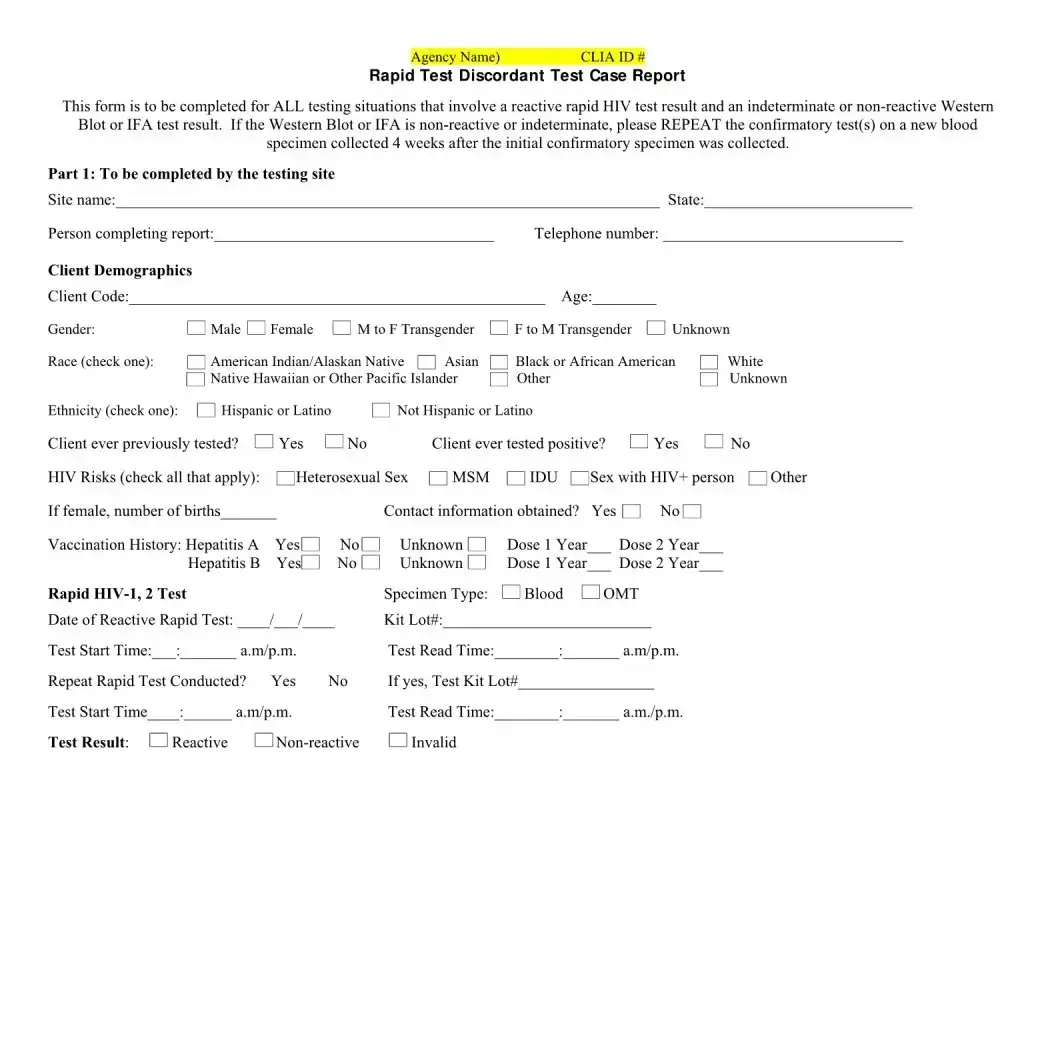
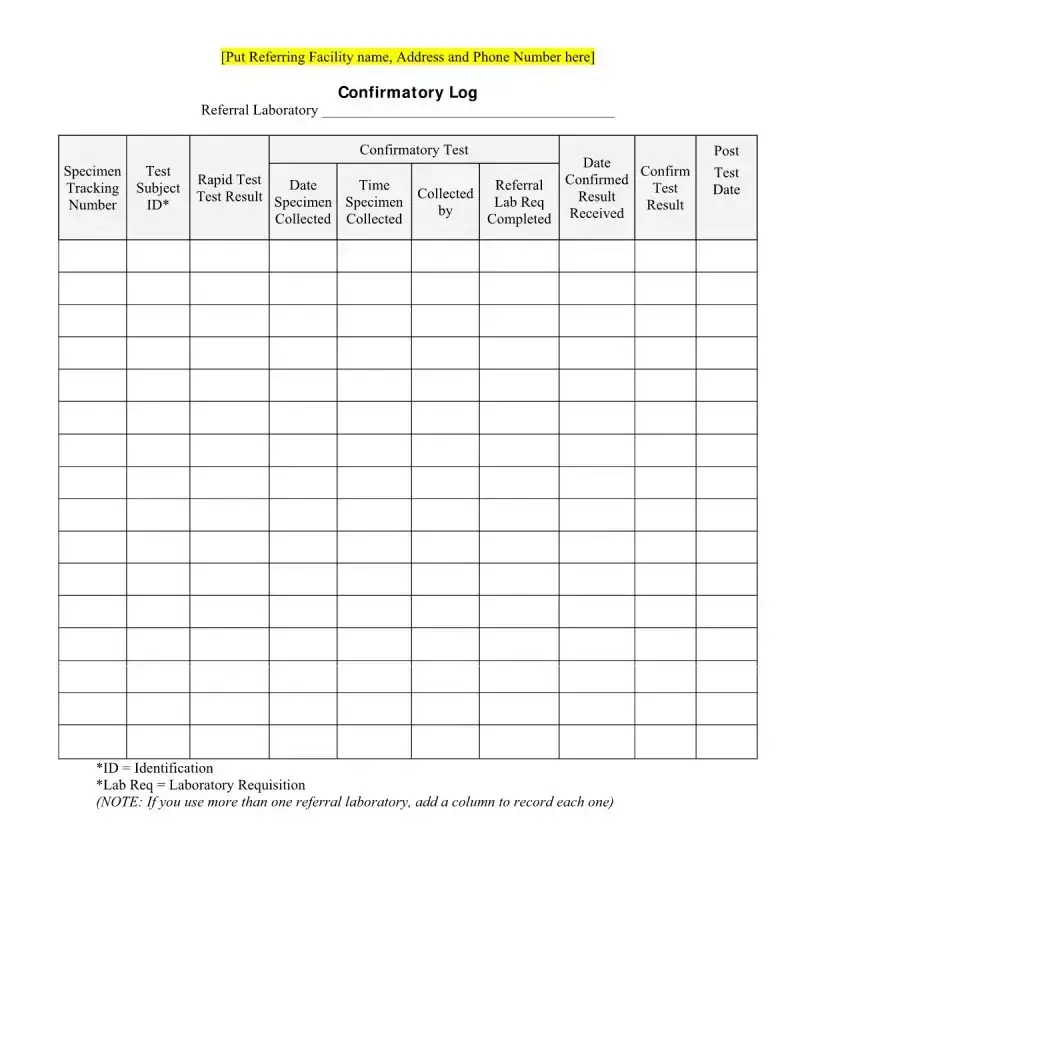
If you receive a Reactive result, it is crucial to understand that this does not confirm an HIV infection. Instead, it indicates that further testing is needed. A healthcare provider will usually recommend a confirmatory test to verify the result. It is essential to follow their guidance and schedule a follow-up appointment.
How is the form used in testing facilities?
Testing facilities use the Negative HIV Test form to document the results of the HIV tests they perform. The form ensures that all necessary information is recorded accurately and provides a reference for follow-up appointments. It also serves as an official record of the client's test results.
What is the importance of the Follow-Up Appointment?
The Follow-Up Appointment is important for several reasons. It allows healthcare providers to discuss the test results with the client, answer any questions, and provide necessary counseling. Additionally, if a Reactive result was obtained, this appointment is critical for arranging confirmatory testing.
How is the temperature log related to the test?
The temperature log is essential for ensuring that the testing devices are stored at the correct temperatures. Proper storage conditions are vital for maintaining the accuracy of the test results. The log records daily temperature checks and any corrective actions taken if the temperature falls outside the acceptable range.
What does the CLIA number signify?
The CLIA number, or Clinical Laboratory Improvement Amendments number, indicates that the testing facility meets federal standards for laboratory testing. This certification ensures that the facility is qualified to perform HIV tests and other laboratory procedures safely and accurately.
Who can access my Negative HIV Test form?
Your Negative HIV Test form contains sensitive health information and is typically protected under privacy laws. Access is usually limited to authorized personnel within the testing facility and may include healthcare providers involved in your care. You may also request a copy for your records.
When filling out the Negative HIV Test form, people often make several common mistakes that can lead to confusion or delays in processing. One of the most frequent errors is failing to provide complete information. For instance, not entering the client's name or date of birth can result in the form being rejected. Always ensure that all required fields are filled out accurately.
Another mistake is overlooking the testing location. This detail is crucial for tracking and verifying the test results. If this information is missing, it may complicate follow-up appointments or future testing. Double-check that the testing location is clearly stated.
Inaccurate selection of the HIV antibody screening test result is also a common issue. Clients sometimes mark the wrong box or fail to mark any box at all. This can lead to significant misunderstandings regarding their health status. It's essential to carefully review the results before signing the form.
Additionally, people often forget to sign the form. Both the client's signature and the counselor's signature are necessary for the form to be valid. Without these signatures, the form may not be accepted, causing delays in receiving results.
Another error is not noting the follow-up appointment details. This information is vital for ensuring that clients receive necessary care and counseling after testing. Be sure to include the date, time, and location of any follow-up appointments.
Clients sometimes neglect to check the temperature log for the storage of test devices. If the temperature is not within the acceptable range, it could affect the accuracy of the test results. Regular checks and documentation are essential for compliance and reliability.
Lastly, failing to review the test wait time can lead to miscommunication about when results will be available. This information is important for managing expectations. Always make sure to fill in the wait time accurately, reflecting the time from starting the test to reading the results.
When dealing with a Negative HIV Test form, several other documents often accompany it. These documents serve various purposes, from ensuring proper storage of testing materials to tracking results and follow-up appointments. Here’s a list of related forms that may be required:
These documents work together to ensure a comprehensive approach to HIV testing and client care. Proper management of these forms is vital for maintaining compliance and providing quality healthcare services.
The Negative HIV Test form shares similarities with several other important documents used in healthcare and testing environments. Each of these documents serves a unique purpose but often contains comparable elements such as client identification, test results, and follow-up information. Below is a list of ten documents that are similar to the Negative HIV Test form:
When filling out the Negative HIV Test form, it is crucial to follow specific guidelines to ensure accuracy and compliance. Below are six essential dos and don'ts.
Understanding the nuances of a Negative HIV Test form is crucial for anyone undergoing testing. However, several misconceptions can cloud this understanding. Here are ten common misconceptions explained:
By addressing these misconceptions, individuals can make informed decisions about their health and the importance of regular HIV testing.
Here are some important points to remember when filling out and using the Negative HIV Test form:
These steps ensure that the process is clear, organized, and compliant with necessary guidelines. Always double-check your entries to prevent errors.