The NC 242 form is an essential document for taxpayers in North Carolina who wish to formally contest a proposed assessment, denial of refund, or adjustment made by the Department of Revenue. This form serves as a request for departmental review, allowing individuals or entities to present their objections and seek a resolution. It requires detailed information, including personal and contact details, as well as specifics about the notices being contested, such as notice numbers and tax types. Taxpayers must clearly articulate their reasons for objection and provide supporting documentation. The NC 242 must be submitted within 45 days of receiving the notice in question, ensuring timely action in the appeals process. For joint returns, additional information regarding the spouse is also necessary. If a representative submits the form on behalf of the taxpayer, a Power of Attorney must accompany the request. Completing the NC 242 accurately and promptly is crucial for those looking to navigate the complexities of tax disputes effectively.
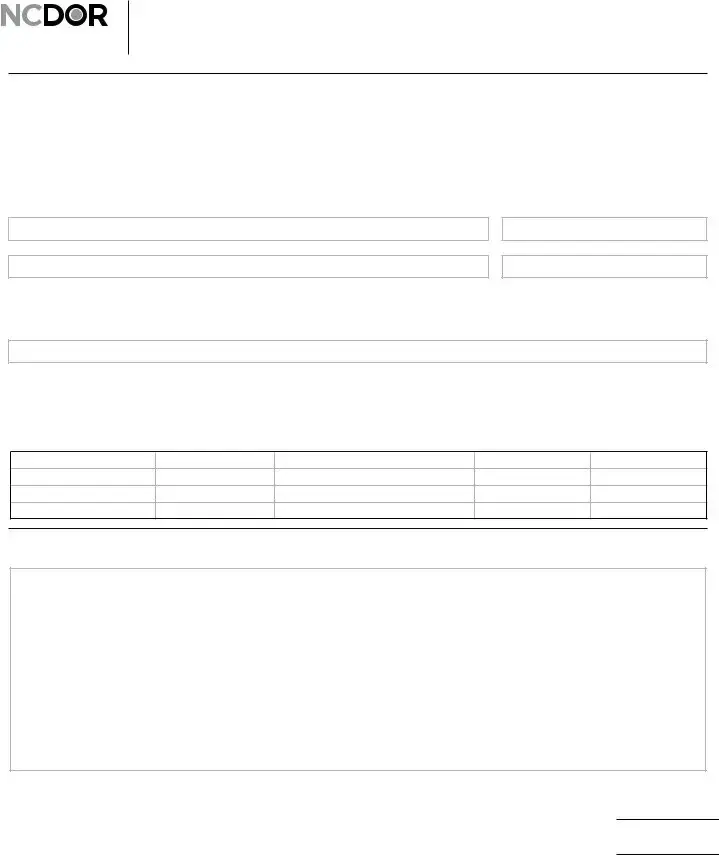
Objection and Request for Departmental Review
Individual’s First Name |
M.I. |
|
Individual’s Last Name |
|
Individual’s Social Security Number |
||
|
|
|
|
|
|
|
|
|
|
|
|
|
|
|
|
Spouse’s First Name (If joint return filed) |
M.I. |
|
Spouse’s Last Name (If joint return filed) |
|
Spouse’s Social Security Number (If joint return filed) |
||
|
|
|
|
|
|
|
|
Individual Phone Number |
|
|
|
|
|
|
|
|
|
|
|
|
|
|
|
|
|
|
|
|
|
|
|
|
|
|
|
|
|
|
|
Entity’s Legal Name
Entity’s Trade Name
Entity’s Federal Employer ID Number
Account Number/NCDOR ID
Entity Contact Person |
|
Entity Contact Person Phone Number |
|
|
|
|
|
|
|
|
|
Street Address
City |
|
State |
Zip Code |
|
|
|
|
|
|
|
|
|
|
|
|
|
|
|
|
Reason for Objection and Request for Departmental Review (Provide the requested information about the notice(s) that you are requesting the Department to review. Important: Attach a copy of the notice(s) of proposed assessment, proposed denial of refund, or proposed adjustment.)
Notice Number
Date of Notice
Tax Type
Period Beginning
Period Ending
Use the space below to state in detail your specific objections to the Notice of Proposed Assessment, Notice of Proposed Denial of Refund, or Notice of Proposed Adjustment. (Attach additional pages if necessary. Attach all supporting documentation to your request for Departmental review.)
Taxpayer Signature: |
|
Title: |
|
Date: |
|
Signature of |
|
|
|
||
Taxpayer’s Representative: |
|
|
|
Date: |
|
If a taxpayer’s representative signs this form, a Power of Attorney must accompany this request.
If you object to a proposed assessment, proposed adjustment, or proposed denial of refund, you must request a Departmental review of the proposed action as the first step in the appeals process. To request a review, complete this form and mail it, along with all supporting documentation, to the address shown below. This form may be used for any State or local tax administered by the Department of Revenue. The request for review must be filed with the Department within 45 days after the following: (1) the date the Notice of the Proposed Assessment, Proposed Denial of Refund, or Proposed Adjustment was mailed by the Department, or (2) the date the Notice of Proposed Assessment, Proposed Denial of Refund, or Proposed Adjustment was personally delivered by a Department employee.
MAIL TO: North Carolina Department of Revenue, Customer Interaction Center, P.O. Box 471, Raleigh, NC
| Fact Name | Description |
|---|---|
| Form Purpose | The NC 242 form is used to object to a proposed assessment, proposed denial of refund, or proposed adjustment by the North Carolina Department of Revenue. |
| Filing Deadline | Taxpayers must file this form within 45 days of receiving the notice from the Department. |
| Required Attachments | Supporting documentation and a copy of the notice must be attached when submitting the form. |
| Power of Attorney | If a representative signs the form, a Power of Attorney must accompany the request. |
| Governing Law | This form is governed by North Carolina tax laws, specifically those related to the Department of Revenue's administrative procedures. |
Filling out the NC 242 form is a crucial step in the appeals process for anyone who wishes to contest a proposed assessment, denial of refund, or adjustment by the Department of Revenue. It is essential to complete the form accurately and submit it within the specified timeframe to ensure your request is considered. Follow these steps carefully to fill out the form correctly.
Once the form is completed, it must be mailed along with any supporting documentation to the North Carolina Department of Revenue at the address provided. Ensure that it is sent within 45 days of receiving the notice to meet the deadline for your request for departmental review.
The NC 242 form, officially titled "Objection and Request for Departmental Review," is used by taxpayers in North Carolina to formally contest a proposed assessment, denial of refund, or adjustment made by the Department of Revenue. By submitting this form, individuals or entities can request a review of the Department's decision, which is the initial step in the appeals process.
This form should be completed by the individual taxpayer or an authorized representative. If a joint return was filed, the spouse's information must also be included. It is essential to provide accurate details, such as names, Social Security numbers, and contact information, to ensure proper processing of the request.
When filling out the NC 242 form, you will need to provide:
Additionally, it is crucial to attach any supporting documentation that substantiates your claims.
The request for a departmental review must be filed within 45 days of either the date the notice was mailed to you or the date it was personally delivered by a Department employee. Missing this deadline could result in the loss of your right to contest the proposed action.
Once you have completed the NC 242 form and gathered all necessary documentation, mail it to the following address:
North Carolina Department of Revenue,
Customer Interaction Center,
P.O. Box 471,
Raleigh, NC 27602-0471.
Ensure that you keep a copy of the form and all attachments for your records.
Filling out the NC 242 form can be a straightforward process, but many people stumble over common mistakes that can delay their requests for review. Understanding these pitfalls can save time and ensure that your objections are heard. Here are ten mistakes to avoid when completing the form.
First, failing to provide complete personal information is a frequent error. Many individuals forget to include their spouse’s name and Social Security number when filing a joint return. This omission can lead to confusion and delays in processing the request.
Another common mistake is neglecting to specify the reason for objection clearly. The form requires you to detail the grounds for your request, and vague explanations can hinder the review process. Be specific about the notice you are contesting and why you believe it is incorrect.
People often overlook the importance of attaching supporting documentation. When you state your objections, it’s crucial to include any relevant documents that back your claims. Without these attachments, your request may not be taken seriously or could be dismissed entirely.
Not including the correct notice number is another issue that arises frequently. Each notice you receive has a unique number, and failing to reference it accurately can lead to miscommunication with the Department of Revenue. Always double-check that you have entered this information correctly.
Many individuals also forget to sign the form. A missing signature can render the entire submission invalid. Remember, both the taxpayer and any representative must sign, so don’t overlook this critical step.
Another mistake is mailing the form to the wrong address. Ensure that you send your request to the specified address provided in the instructions. Sending it elsewhere can cause significant delays in processing your request.
Some people miscalculate the deadline for filing the form. The request for review must be submitted within 45 days of receiving the notice. Missing this deadline can result in losing your right to appeal, so keep track of the dates carefully.
Additionally, failing to provide a clear and detailed explanation of your objections can be detrimental. The space provided on the form should be used wisely to articulate your concerns. Leaving it blank or writing only a few sentences may not suffice.
Another common oversight is not including a Power of Attorney when a representative signs the form. If someone else is submitting the request on your behalf, you must attach the necessary documentation to validate their authority.
Lastly, people sometimes forget to keep copies of their submissions. It’s essential to retain a copy of the completed form and any documents sent. This way, you have a record of your request and can follow up if necessary.
By being mindful of these common mistakes, you can enhance your chances of a successful departmental review and ensure your objections are properly considered.
The NC 242 form is a vital document for individuals or entities wishing to formally object to a proposed assessment, denial of refund, or adjustment by the North Carolina Department of Revenue. Alongside this form, several other documents may be necessary to support your case or to facilitate the review process. Below is a list of commonly used forms and documents that complement the NC 242 form.
Gathering the appropriate forms and documents is essential for a successful objection process. Ensure that all necessary materials are complete and accurate before submitting your NC 242 form to the North Carolina Department of Revenue. This preparation can significantly impact the outcome of your review request.
The NC 242 form, titled "Objection and Request for Departmental Review," serves a specific purpose in the context of tax disputes. Several other documents share similarities with this form, primarily in their function of addressing tax-related issues. Below are four documents that are comparable to the NC 242 form:
When filling out the NC 242 form, it is important to be careful and thorough. Here are some guidelines to follow:
Following these guidelines will help ensure your NC 242 form is completed correctly and submitted on time.
There are several misconceptions surrounding the NC 242 form that can lead to confusion. Here are four common misunderstandings:
Understanding these points can help ensure that your objections are properly filed and considered. Take action promptly to avoid missing deadlines or submitting incomplete information.
Filling out and using the NC 242 form requires attention to detail and adherence to specific guidelines. Here are five key takeaways:
Adhering to these guidelines can facilitate a smoother review process and increase the likelihood of a favorable outcome.