Purchasing a mobile home can be an exciting yet complex process, and having the right documentation is essential to ensure a smooth transaction. One of the key documents involved in this process is the Mobile Home Purchase Agreement form. This form serves as a binding contract between the buyer and seller, outlining the terms and conditions of the sale. It typically includes important details such as the purchase price, payment methods, and any contingencies that must be met before the sale is finalized. Additionally, the agreement may cover aspects like the condition of the mobile home, any included warranties, and the responsibilities of both parties regarding inspections and repairs. Understanding the nuances of this form is crucial, as it not only protects the interests of both the buyer and seller but also helps to clarify expectations throughout the transaction. By carefully reviewing and completing the Mobile Home Purchase Agreement, individuals can navigate the complexities of mobile home ownership with greater confidence and peace of mind.
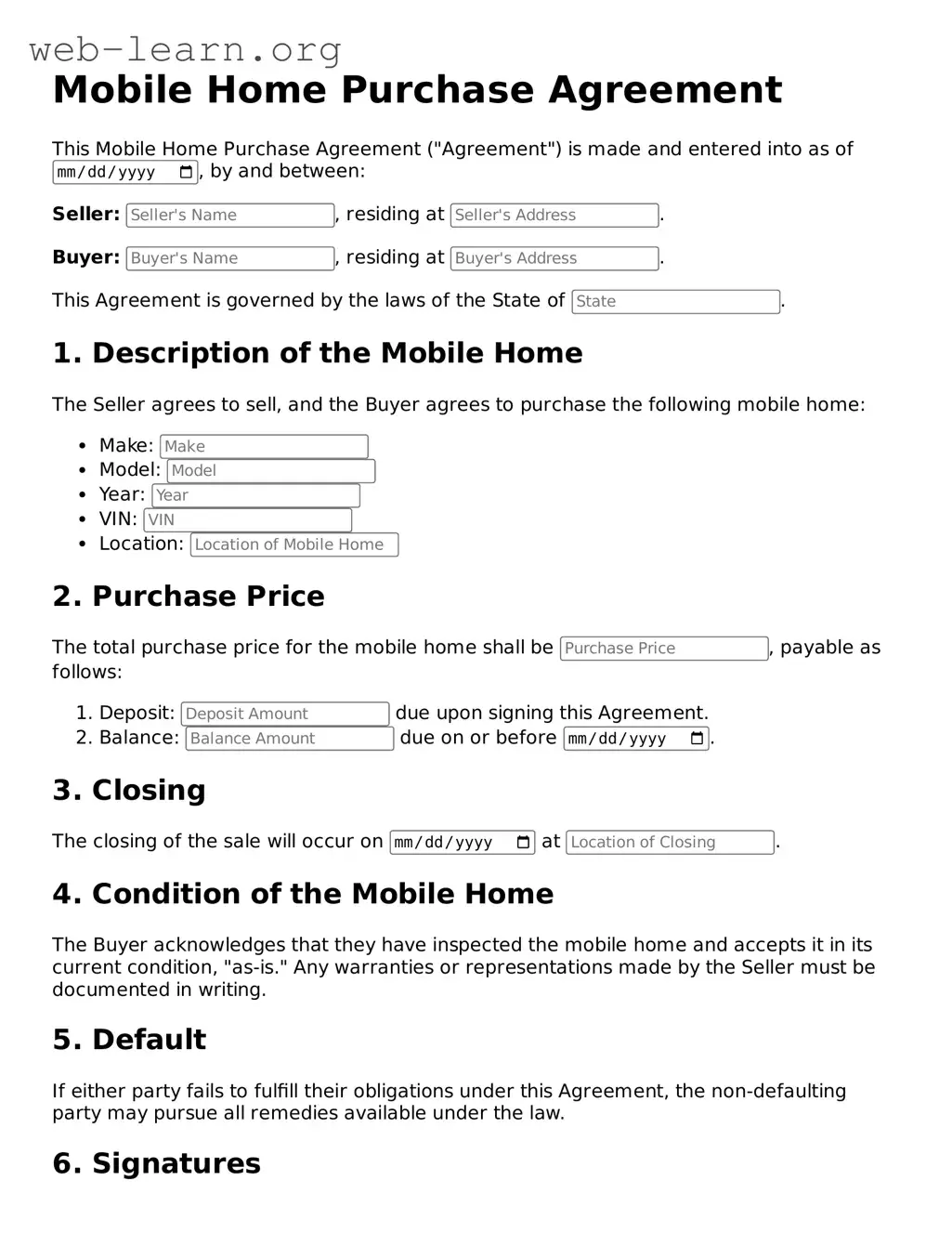
Mobile Home Purchase Agreement
This Mobile Home Purchase Agreement ("Agreement") is made and entered into as of , by and between:
Seller: , residing at .
Buyer: , residing at .
This Agreement is governed by the laws of the State of .
1. Description of the Mobile Home
The Seller agrees to sell, and the Buyer agrees to purchase the following mobile home:
2. Purchase Price
The total purchase price for the mobile home shall be , payable as follows:
3. Closing
The closing of the sale will occur on at .
4. Condition of the Mobile Home
The Buyer acknowledges that they have inspected the mobile home and accepts it in its current condition, "as-is." Any warranties or representations made by the Seller must be documented in writing.
5. Default
If either party fails to fulfill their obligations under this Agreement, the non-defaulting party may pursue all remedies available under the law.
6. Signatures
By signing below, both parties agree to the terms of this Mobile Home Purchase Agreement.
Seller's Signature: ________________________ Date:
Buyer's Signature: ________________________ Date:
This Agreement constitutes the entire understanding between the parties and supersedes all prior discussions or agreements.
| Fact Name | Description |
|---|---|
| Definition | A Mobile Home Purchase Agreement is a legal document outlining the terms and conditions of buying a mobile home. |
| Parties Involved | The agreement typically involves the buyer and the seller of the mobile home. |
| Governing Law | The laws governing mobile home purchases vary by state, often based on property and contract law. |
| Payment Terms | The agreement specifies the purchase price and payment schedule, including any down payment required. |
| Condition of the Home | Buyers may request disclosures regarding the condition of the mobile home, including any repairs needed. |
| Contingencies | The agreement may include contingencies, such as financing or inspections, that must be satisfied before the sale proceeds. |
| Transfer of Title | It outlines the process for transferring the title of the mobile home from the seller to the buyer. |
| Default Terms | The agreement addresses what happens if either party defaults on the terms outlined in the contract. |
| State-Specific Forms | Each state may have its own version of the Mobile Home Purchase Agreement, reflecting local laws and regulations. |
After obtaining the Mobile Home Purchase Agreement form, it's essential to complete it accurately to ensure a smooth transaction. The next steps will guide you through the process of filling out the form correctly.
What is a Mobile Home Purchase Agreement?
A Mobile Home Purchase Agreement is a legally binding document that outlines the terms and conditions of buying a mobile home. It serves as a contract between the buyer and the seller, detailing the price, payment terms, and other essential aspects of the sale.
What key elements should be included in the agreement?
When drafting a Mobile Home Purchase Agreement, make sure to include:
Is it necessary to have the agreement notarized?
While it’s not always required to notarize a Mobile Home Purchase Agreement, doing so can add an extra layer of security. Notarization helps verify the identities of both parties and can prevent disputes about the authenticity of the signatures.
What happens if one party breaches the agreement?
If either the buyer or seller fails to uphold their end of the agreement, it is considered a breach. The non-breaching party may have several options, such as seeking damages, requesting specific performance, or even terminating the agreement. It’s important to clearly outline the consequences of a breach within the agreement itself.
Can the agreement be modified after it is signed?
Yes, the Mobile Home Purchase Agreement can be modified after it is signed, but both parties must agree to the changes. Any modifications should be documented in writing and signed by both parties to ensure clarity and avoid future misunderstandings.
What should I do if I have questions about the agreement?
If you have questions or concerns about the Mobile Home Purchase Agreement, it’s best to consult with a real estate professional or an attorney who specializes in contracts. They can provide guidance tailored to your specific situation and help ensure that your interests are protected.
Are there any additional costs associated with purchasing a mobile home?
Yes, purchasing a mobile home may involve additional costs beyond the purchase price. These can include:
Being aware of these potential expenses can help you budget more effectively for your new mobile home.
Filling out a Mobile Home Purchase Agreement form can be straightforward, but many people make common mistakes that can lead to complications. One of the biggest errors is not providing accurate information about the buyer and seller. Ensure that all names, addresses, and contact details are correct. Incorrect information can cause delays in the transaction and may even lead to legal issues down the line.
Another frequent mistake is overlooking the details of the mobile home itself. Buyers often forget to include the vehicle identification number (VIN), which is essential for identifying the mobile home. Without this information, the purchase may not be legally recognized, leading to potential ownership disputes.
Additionally, people sometimes fail to specify the purchase price clearly. It is crucial to state the exact amount being paid for the mobile home. Leaving this section blank or writing an ambiguous figure can create confusion and disputes later. Clarity in the purchase price ensures that both parties are on the same page.
Not addressing contingencies is another common oversight. Buyers may neglect to include conditions that must be met before the sale can proceed, such as financing approval or inspections. Including these contingencies protects both parties and ensures that the agreement is fair.
Many individuals also forget to read the entire agreement before signing. Skimming through the document can lead to misunderstandings about the terms and conditions. It is essential to understand every section of the agreement to avoid surprises after the purchase is finalized.
Lastly, failing to have the agreement notarized or witnessed can invalidate the document. Some states require a notary public or witnesses to sign the agreement for it to be legally binding. Always check the local requirements to ensure that the agreement holds up in court.
The Mobile Home Purchase Agreement is a key document in the transaction of buying or selling a mobile home. However, several other forms and documents are often used in conjunction with this agreement to ensure a smooth and legally compliant process. Below is a list of these documents, each serving a specific purpose in the transaction.
Understanding these documents is crucial for both buyers and sellers in a mobile home transaction. Each document plays a role in protecting the rights of the parties involved and ensuring that the transaction adheres to legal requirements.
Real Estate Purchase Agreement: Similar to the Mobile Home Purchase Agreement, this document outlines the terms and conditions for buying a residential property. Both agreements specify the purchase price, payment terms, and any contingencies that must be met before closing.
Lease Agreement: This document governs the rental of a property, including mobile homes. While a lease agreement focuses on rental terms, both documents establish rights and responsibilities for the involved parties.
Sales Contract: A sales contract is a broader term that can apply to various types of transactions. Like the Mobile Home Purchase Agreement, it details the terms of sale, including price and delivery timelines.
Bill of Sale: This document serves as proof of transfer of ownership for personal property, including mobile homes. Both the Bill of Sale and the Mobile Home Purchase Agreement finalize the sale and confirm the buyer's ownership.
Financing Agreement: This document outlines the terms of a loan used to purchase a mobile home. Similar to the Mobile Home Purchase Agreement, it includes details about payment schedules and interest rates.
Title Transfer Document: This document officially transfers ownership of the mobile home from the seller to the buyer. Both it and the Mobile Home Purchase Agreement are essential for legal ownership.
Inspection Agreement: An inspection agreement may be part of the purchase process, allowing buyers to assess the condition of the mobile home before finalizing the sale. Both documents protect the buyer's interests.
Home Warranty Agreement: This document provides coverage for repairs and replacements of home systems and appliances. Similar to the Mobile Home Purchase Agreement, it offers peace of mind regarding the home's condition post-purchase.
Disclosure Statement: This document informs the buyer of any known issues with the property. Like the Mobile Home Purchase Agreement, it aims to ensure transparency and protect the buyer.
Closing Statement: This document summarizes the financial aspects of the transaction at closing. Both the Closing Statement and the Mobile Home Purchase Agreement are crucial for finalizing the sale and ensuring all parties understand the financial obligations.
When filling out the Mobile Home Purchase Agreement form, it's important to follow specific guidelines to ensure accuracy and clarity. Here are some dos and don'ts to consider:
Following these guidelines will help ensure that the Mobile Home Purchase Agreement is completed correctly and can prevent potential disputes later on.
When it comes to the Mobile Home Purchase Agreement form, several misconceptions often arise. Understanding these misconceptions can help buyers and sellers navigate the process more effectively.
This is incorrect. While both documents serve to outline the terms of a sale, a Mobile Home Purchase Agreement specifically addresses the unique aspects of mobile home transactions, such as the status of the home as personal property versus real property.
Many people believe that a Mobile Home Purchase Agreement is straightforward and does not need legal scrutiny. However, having a legal expert review the agreement can prevent potential disputes and ensure compliance with state laws.
This is a common misunderstanding. Mobile homes can be sold as personal property without the land, and the agreement must clearly specify whether the land is included in the sale.
Financing for mobile homes often differs from that of traditional homes. Many lenders have specific requirements and limitations, which should be outlined in the agreement.
Once both parties sign the Mobile Home Purchase Agreement, it becomes a binding contract. Any changes must be agreed upon by both parties and documented properly.
Signing the agreement does not automatically transfer ownership of the mobile home. Additional steps, such as title transfer and registration, are necessary to complete the sale legally.
Both buyers and sellers should recognize the importance of the agreement. It protects the interests of both parties and outlines their rights and responsibilities.
This is false. Mobile home purchases are subject to various state and federal laws, including regulations on disclosures and consumer protection, which should be reflected in the agreement.
Here are key takeaways about filling out and using the Mobile Home Purchase Agreement form: