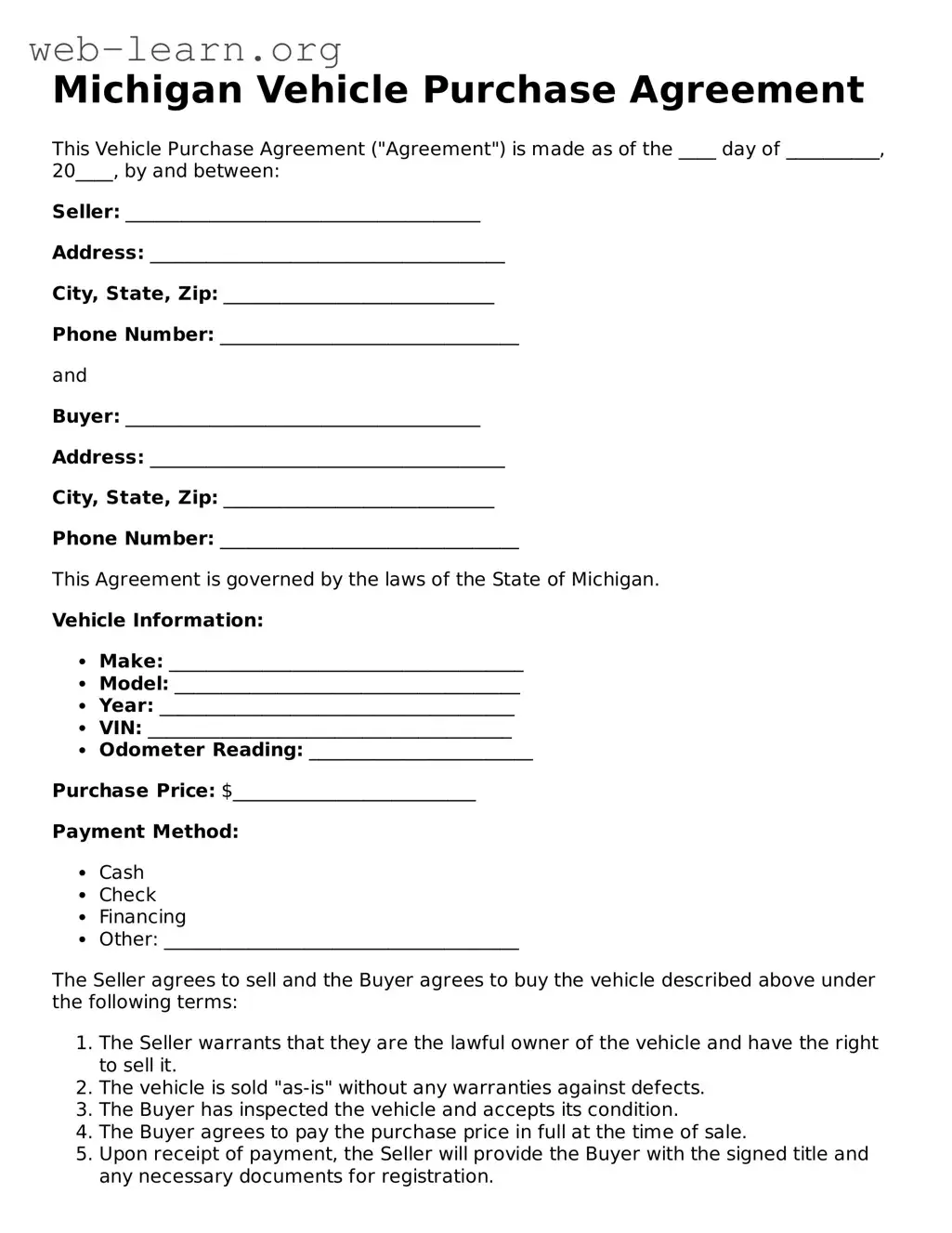
When buying a vehicle in Michigan, understanding the Vehicle Purchase Agreement form is essential for both buyers and sellers. This document serves as a binding contract that outlines the terms of the sale, ensuring clarity and protection for both parties involved. Key aspects of the form include details about the buyer and seller, a description of the vehicle being purchased, and the agreed-upon purchase price. Additionally, it often includes information about financing options, warranties, and any conditions that may affect the sale. By carefully reviewing this agreement, individuals can avoid misunderstandings and ensure a smooth transaction. Whether you’re a first-time buyer or a seasoned seller, familiarizing yourself with the intricacies of this form can significantly enhance your vehicle purchasing experience in Michigan.
Michigan Vehicle Purchase Agreement
This Vehicle Purchase Agreement ("Agreement") is made as of the ____ day of __________, 20____, by and between:
Seller: ______________________________________
Address: ______________________________________
City, State, Zip: _____________________________
Phone Number: ________________________________
and
Buyer: ______________________________________
Address: ______________________________________
City, State, Zip: _____________________________
Phone Number: ________________________________
This Agreement is governed by the laws of the State of Michigan.
Vehicle Information:
Purchase Price: $__________________________
Payment Method:
The Seller agrees to sell and the Buyer agrees to buy the vehicle described above under the following terms:
IN WITNESS WHEREOF, the parties have executed this Agreement as of the date first above written.
Seller's Signature: ___________________________
Date: ______________________________________
Buyer's Signature: ___________________________
Date: ______________________________________
| Fact Name | Details |
|---|---|
| Purpose | The Michigan Vehicle Purchase Agreement form is used to document the sale of a vehicle between a buyer and a seller. |
| Governing Law | This agreement is governed by Michigan state law, particularly the Michigan Vehicle Code. |
| Required Information | The form typically requires details such as the vehicle identification number (VIN), purchase price, and buyer/seller information. |
| Signature Requirement | Both the buyer and seller must sign the agreement for it to be legally binding. |
Filling out the Michigan Vehicle Purchase Agreement form is an important step in the vehicle buying process. This document outlines the terms of the sale between the buyer and the seller. Once completed, it will provide both parties with a clear understanding of their responsibilities and expectations regarding the vehicle transaction.
What is the Michigan Vehicle Purchase Agreement form?
The Michigan Vehicle Purchase Agreement form is a legal document that outlines the terms and conditions of a vehicle sale between a buyer and a seller. This form provides essential details such as the vehicle's description, purchase price, and any warranties or conditions that apply to the sale. It serves to protect both parties by clearly stating their rights and responsibilities.
Who needs to use this form?
Both private sellers and dealerships in Michigan should use the Vehicle Purchase Agreement form when selling a vehicle. Buyers also benefit from having this agreement, as it provides a clear record of the transaction. Using this form helps ensure that all necessary information is documented, reducing the risk of misunderstandings later on.
What information is included in the form?
The form typically includes:
All this information helps ensure that both parties are on the same page regarding the transaction.
Is the form legally binding?
Yes, once both parties sign the Michigan Vehicle Purchase Agreement form, it becomes a legally binding contract. This means that both the buyer and seller are obligated to adhere to the terms outlined in the agreement. If either party fails to fulfill their obligations, the other party may have legal recourse.
Can the form be modified?
Yes, the Vehicle Purchase Agreement form can be modified to suit the specific needs of the buyer and seller. However, any changes should be made before both parties sign the document. It’s essential that both parties agree to the modifications and initial any changes to avoid confusion later.
What happens if there is a dispute?
If a dispute arises regarding the Vehicle Purchase Agreement, both parties should first attempt to resolve the issue through communication. If that fails, they may need to seek mediation or legal advice. The signed agreement will serve as a key piece of evidence in any dispute resolution process.
Where can I obtain the form?
The Michigan Vehicle Purchase Agreement form can be obtained online through various legal document websites or directly from the Michigan Secretary of State's office. It’s important to ensure that you are using the most current version of the form to comply with state regulations.
Filling out the Michigan Vehicle Purchase Agreement form can seem straightforward, but many people make common mistakes that can lead to complications down the line. One frequent error occurs when buyers forget to include the correct vehicle identification number (VIN). The VIN is crucial for identifying the vehicle being purchased, and any discrepancies can cause issues with registration and title transfer.
Another mistake involves not providing accurate information about the buyer and seller. It’s important to ensure that names, addresses, and contact information are correct. Inaccuracies can lead to misunderstandings and potential legal disputes later on.
Many individuals overlook the importance of specifying the purchase price clearly. This figure should match what was agreed upon between the buyer and seller. If the price is left blank or filled in incorrectly, it can create confusion and may complicate the financing or registration process.
Buyers sometimes neglect to check the financing section of the form. If financing is involved, it’s essential to indicate this clearly. Failing to do so can lead to complications in securing loans or financing agreements.
Another common error is not signing the document. Both the buyer and seller must sign the Vehicle Purchase Agreement for it to be valid. Without signatures, the agreement may not hold up in legal situations.
Some people also forget to include the date of the transaction. This detail is important for record-keeping and can affect the timeline for registration and title transfer. Always ensure that the date is clearly indicated on the form.
Additionally, individuals often skip the section that details any warranties or guarantees associated with the vehicle. This information is vital for both parties, as it outlines any promises made regarding the vehicle's condition and performance.
Buyers may also fail to review the completed form before submission. Taking a moment to double-check all entries can prevent many of the mistakes listed above. A thorough review can catch errors that may otherwise lead to complications.
Finally, not keeping a copy of the signed agreement can be a significant oversight. Retaining a copy for personal records is essential, as it serves as proof of the transaction and can be useful for future reference.
The Michigan Vehicle Purchase Agreement form is a crucial document for anyone buying or selling a vehicle in Michigan. However, several other forms and documents often accompany this agreement to ensure a smooth transaction. Below is a list of related documents that may be necessary.
Having these documents prepared and organized can help facilitate the vehicle purchase process in Michigan. Each form plays a vital role in ensuring that the transaction is legal and that both parties are protected.
Bill of Sale: This document serves as proof of the transaction between the buyer and seller. It includes details about the vehicle, such as the make, model, and VIN, similar to the Vehicle Purchase Agreement.
Sales Contract: Like the Vehicle Purchase Agreement, a sales contract outlines the terms of the sale, including payment details and any warranties. Both documents protect the interests of the buyer and seller.
Lease Agreement: Although primarily for renting, a lease agreement shares similarities in that it specifies terms and conditions for the use of a vehicle. Both documents require signatures and outline responsibilities.
Financing Agreement: This document details the terms of any financing involved in the purchase. It includes payment schedules and interest rates, much like the financial obligations outlined in a Vehicle Purchase Agreement.
When filling out the Michigan Vehicle Purchase Agreement form, it's important to be careful and thorough. Here’s a list of things you should and shouldn't do:
The Michigan Vehicle Purchase Agreement form is an important document in the process of buying a vehicle. However, several misconceptions surround it. Below are some common misunderstandings about this form, along with clarifications.
This is not true. The Vehicle Purchase Agreement is required for both new and used vehicle transactions. It serves as a record of the sale regardless of the vehicle's age.
In fact, the Vehicle Purchase Agreement is a legally binding contract. Once both parties sign it, they are obligated to adhere to the terms outlined within.
Both the buyer and the seller must sign the Vehicle Purchase Agreement. This ensures that both parties agree to the terms of the sale.
This is incorrect. The Vehicle Purchase Agreement is used in both private sales and dealership transactions. It provides clarity and protection for all parties involved.
The form should be completed and signed at the time of the sale. Filling it out afterward can lead to disputes and complications down the line.
On the contrary, the Vehicle Purchase Agreement must include specific details such as the vehicle identification number (VIN), purchase price, and terms of the sale. This information is crucial for clarity and legal purposes.
While both documents serve similar purposes, they are not the same. The Vehicle Purchase Agreement is more comprehensive and includes terms and conditions that a simple bill of sale may not cover.
It is essential for both the buyer and seller to keep a copy of the Vehicle Purchase Agreement. This serves as proof of the transaction and can be important for future reference, especially in case of disputes.
When dealing with the Michigan Vehicle Purchase Agreement form, it is crucial to understand its importance and how to complete it correctly. Here are some key takeaways to keep in mind:
Completing the Michigan Vehicle Purchase Agreement accurately is not just a formality; it is a critical step in ensuring a smooth vehicle transaction. Take the time to review the form thoroughly before finalizing the deal.
Indiana Vehicle Bill of Sale - Documents the condition of the vehicle at the time of sale, including any defects.
Transfer Car Title - Can specify delivery or pickup arrangements.