In the realm of estate planning, the Michigan Transfer-on-Death Deed (TODD) form serves as a powerful tool for individuals looking to streamline the transfer of real estate upon their passing. This legal document allows property owners to designate beneficiaries who will automatically receive ownership of their property without the need for probate. By simply filling out the form and recording it with the appropriate county register of deeds, individuals can ensure that their loved ones inherit their property swiftly and efficiently. This deed can be revoked or altered at any time during the owner’s life, providing flexibility and peace of mind. Moreover, it is important to note that the TODD does not affect the owner’s rights to the property while they are alive; they retain full control, including the ability to sell or mortgage the property. Understanding the nuances of the Michigan Transfer-on-Death Deed form can empower individuals to make informed decisions about their estate planning, ultimately fostering a smoother transition for heirs and minimizing potential disputes among family members.
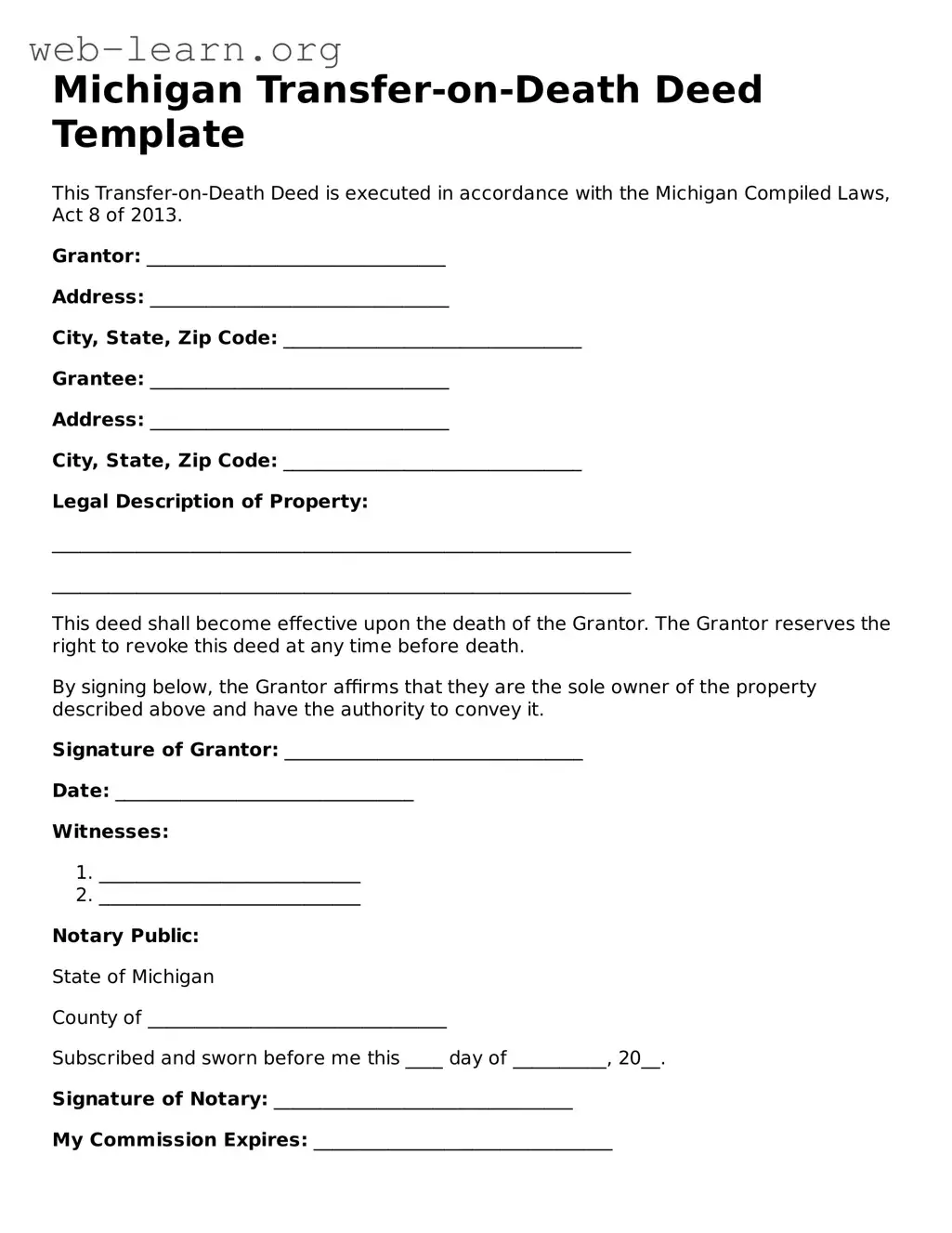
Michigan Transfer-on-Death Deed Template
This Transfer-on-Death Deed is executed in accordance with the Michigan Compiled Laws, Act 8 of 2013.
Grantor: ________________________________
Address: ________________________________
City, State, Zip Code: ________________________________
Grantee: ________________________________
Address: ________________________________
City, State, Zip Code: ________________________________
Legal Description of Property:
______________________________________________________________
______________________________________________________________
This deed shall become effective upon the death of the Grantor. The Grantor reserves the right to revoke this deed at any time before death.
By signing below, the Grantor affirms that they are the sole owner of the property described above and have the authority to convey it.
Signature of Grantor: ________________________________
Date: ________________________________
Witnesses:
Notary Public:
State of Michigan
County of ________________________________
Subscribed and sworn before me this ____ day of __________, 20__.
Signature of Notary: ________________________________
My Commission Expires: ________________________________
| Fact Name | Description |
|---|---|
| Definition | A Transfer-on-Death Deed allows property owners in Michigan to transfer their real estate to a beneficiary upon their death without going through probate. |
| Governing Law | The Michigan Transfer-on-Death Deed is governed by the Michigan Compiled Laws, specifically MCL 565.25. |
| Beneficiary Designation | Property owners can designate one or more beneficiaries. This flexibility allows for tailored estate planning. |
| Revocation | The deed can be revoked at any time during the property owner’s lifetime, ensuring control over the property until death. |
| Filing Requirement | To be effective, the deed must be recorded with the local register of deeds before the property owner’s death. |
Once the Michigan Transfer-on-Death Deed form is completed, it will need to be filed with the appropriate county register of deeds office. Ensure that all required signatures are obtained before submission. This will facilitate the proper transfer of property upon the designated individual's passing.
What is a Transfer-on-Death (TOD) Deed in Michigan?
A Transfer-on-Death Deed is a legal document that allows property owners in Michigan to transfer their real estate to a designated beneficiary upon their death. This deed helps avoid probate, making the transfer process smoother and more efficient for the beneficiaries.
Who can create a TOD Deed?
Any individual who is the owner of real estate in Michigan can create a TOD Deed. This includes single owners as well as multiple owners who hold the property as joint tenants or tenants in common.
What types of property can be transferred using a TOD Deed?
In Michigan, a TOD Deed can be used to transfer various types of real estate, including residential homes, commercial properties, and vacant land. However, it cannot be used for personal property, such as vehicles or bank accounts.
How do I fill out a TOD Deed?
Filling out a TOD Deed involves providing specific information, including:
It’s important to ensure that all information is accurate and complete to avoid any complications later on.
Do I need to have the TOD Deed notarized?
Yes, in Michigan, a TOD Deed must be signed in front of a notary public. This step is crucial to ensure the validity of the deed and to confirm that the property owner is signing voluntarily.
How do I record the TOD Deed?
After completing and notarizing the TOD Deed, you must record it with the county register of deeds where the property is located. Recording the deed is essential, as it makes the transfer official and protects the rights of the beneficiary.
Can I revoke or change a TOD Deed?
Yes, you can revoke or change a TOD Deed at any time before your death. To do so, you must create a new TOD Deed or a revocation document and record it with the county register of deeds. This ensures that your most current wishes are honored.
What happens if I don’t name a beneficiary in the TOD Deed?
If you do not name a beneficiary or if the named beneficiary predeceases you, the property will not automatically transfer as intended. Instead, it will become part of your estate and may go through probate, which can be a lengthy and costly process.
Are there any tax implications with a TOD Deed?
Generally, a TOD Deed does not trigger any immediate tax consequences. However, beneficiaries may be subject to capital gains tax when they sell the property. It's advisable to consult with a tax professional to understand any potential implications fully.
Is a TOD Deed the right choice for me?
A TOD Deed can be a beneficial tool for many property owners looking to simplify the transfer of their property upon death. However, it’s important to consider your individual circumstances and goals. Consulting with a legal professional can help you determine if this option aligns with your estate planning needs.
Filling out the Michigan Transfer-on-Death Deed form can be a straightforward process, but many individuals make common mistakes that could lead to complications later. Understanding these pitfalls can help ensure that the deed is completed correctly, providing peace of mind for all parties involved.
One frequent mistake is failing to include the correct legal description of the property. This description must be precise and can typically be found on the property’s deed. Omitting or inaccurately describing the property can result in legal disputes or the deed being deemed invalid.
Another error occurs when individuals do not sign the deed in the presence of a notary. The signature must be notarized to ensure that it is legally binding. Without this step, the deed may not be recognized by the state, leading to potential issues in transferring ownership after the property owner’s passing.
Some people neglect to include all intended beneficiaries on the form. It is essential to list everyone who will inherit the property to avoid confusion and possible conflicts among heirs. Failing to do so can result in unintended consequences, such as disputes over ownership.
Additionally, individuals sometimes forget to provide their own information accurately. Mistakes in the owner’s name or contact details can complicate the transfer process. Ensuring that all personal information is correct is crucial for the deed's validity.
Another common mistake is not updating the deed after significant life events. Changes such as marriage, divorce, or the death of a beneficiary should prompt a review and possible revision of the Transfer-on-Death Deed. Failing to make these updates can lead to outdated information being used during the transfer process.
People also often overlook the importance of keeping a copy of the completed deed in a safe place. Not having access to the deed when needed can delay the transfer of property and create unnecessary stress for loved ones.
Moreover, some individuals may not understand the implications of the Transfer-on-Death Deed. This form does not replace a will, and it is crucial to have a comprehensive estate plan in place. Relying solely on the deed can lead to gaps in estate planning.
Lastly, individuals may assume that once the deed is filed, no further action is necessary. However, it is essential to periodically review the deed and ensure it reflects current wishes and circumstances. Regular checks can prevent potential issues down the line.
By being aware of these common mistakes, individuals can take proactive steps to ensure that their Transfer-on-Death Deed is completed correctly, ultimately facilitating a smoother transition of property ownership.
The Michigan Transfer-on-Death Deed is a legal document that allows an individual to transfer real property to a beneficiary upon their death without the need for probate. This deed provides a straightforward way to ensure that property passes directly to the designated beneficiary. In addition to the Transfer-on-Death Deed, several other forms and documents are often utilized in conjunction with it to ensure a comprehensive estate plan.
Each of these documents plays a significant role in estate planning, ensuring that an individual's wishes are respected and that their assets are managed appropriately. By utilizing these forms alongside the Michigan Transfer-on-Death Deed, individuals can create a more robust and effective estate plan.
The Transfer-on-Death Deed (TOD) form is a useful tool for estate planning. It allows you to transfer property to a beneficiary without going through probate. Here are six documents that share similarities with the TOD form:
When filling out the Michigan Transfer-on-Death Deed form, it's important to approach the process with care. Here’s a list of things you should and shouldn’t do:
By following these guidelines, you can help ensure that your Transfer-on-Death Deed is completed correctly and effectively. Taking the time to do it right can save you and your loved ones potential complications in the future.
Many people have misunderstandings about the Michigan Transfer-on-Death Deed form. Here are five common misconceptions:
It automatically transfers property upon death. This is not true. The Transfer-on-Death Deed only takes effect when the property owner dies. Until that point, the owner retains full control over the property.
It bypasses probate completely. While a Transfer-on-Death Deed can avoid probate for the property listed, other assets may still go through probate. It's important to understand the entire estate plan.
Only certain types of property can be transferred. Many types of real estate can be transferred using this deed, but it does not apply to all property types, such as personal belongings or bank accounts.
It is irrevocable once signed. This is a misconception. The property owner can revoke or change the deed at any time before their death, as long as they follow the proper legal procedures.
It eliminates the need for a will. A Transfer-on-Death Deed does not replace the need for a will. It only addresses the transfer of specific real estate, while a will covers the entire estate.
Understanding these points can help clarify the purpose and limitations of the Michigan Transfer-on-Death Deed form.
When considering the Michigan Transfer-on-Death Deed form, there are several important aspects to keep in mind. Here are some key takeaways that can help you navigate the process effectively:
By keeping these key points in mind, you can better understand the Michigan Transfer-on-Death Deed and how it can serve your estate planning needs.
Arizona Beneficiary Deed - Once the deed is recorded, it becomes a public document.
Transfer on Death Deed Florida Form - It allows property owners to make decisions about their assets while still alive.
Problems With Transfer on Death Deeds in Indiana - This deed is effective immediately upon signing but does not transfer ownership until death occurs.