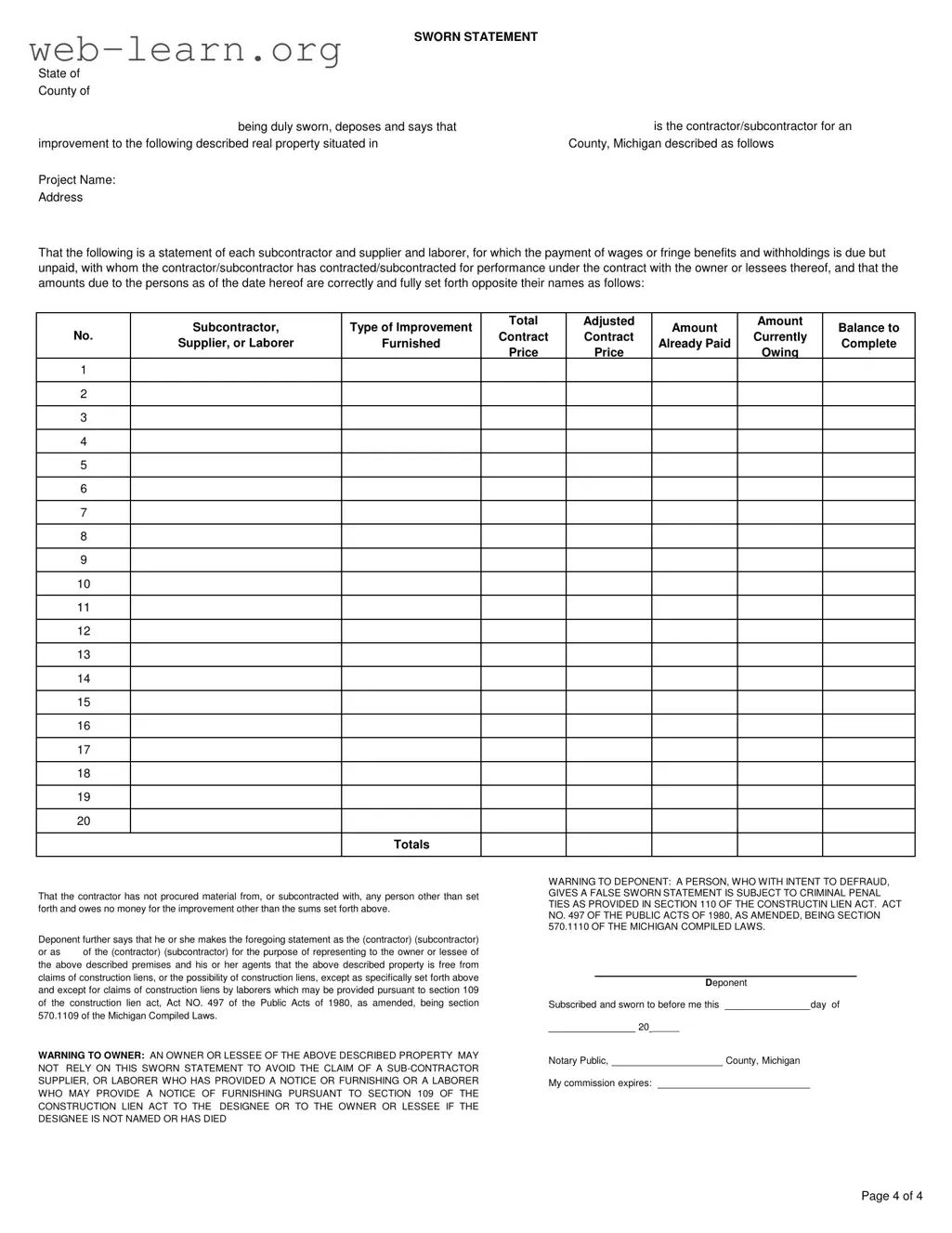
The Michigan Sworn form plays a crucial role in the construction industry by ensuring transparency and accountability among contractors, subcontractors, and property owners. This document serves as a sworn statement, where the contractor or subcontractor asserts their status regarding payments due to various laborers and suppliers involved in a project. Specifically, it details the project name and address, along with a comprehensive list of subcontractors and suppliers, including the amounts owed for services rendered. By providing this information, the contractor affirms that all financial obligations are accurately reported and that no additional claims exist beyond those listed. Notably, the form emphasizes the importance of protecting the property owner from potential construction liens, although it also includes a cautionary note about the limitations of its assurances. The legal ramifications of submitting false information are significant, underscoring the necessity for honesty in the completion of this form. Overall, the Michigan Sworn form is an essential tool for maintaining trust and clarity in construction transactions, safeguarding the interests of all parties involved.
SWORN STATEMENT |
|
State of |
|
County of |
|
being duly sworn, deposes and says that |
is the contractor/subcontractor for an |
improvement to the following described real property situated in |
County, Michigan described as follows |
Project Name: |
|
Address |
|
That the following is a statement of each subcontractor and supplier and laborer, for which the payment of wages or fringe benefits and withholdings is due but unpaid, with whom the contractor/subcontractor has contracted/subcontracted for performance under the contract with the owner or lessees thereof, and that the amounts due to the persons as of the date hereof are correctly and fully set forth opposite their names as follows:
|
Subcontractor, |
Type of Improvement |
Total |
Adjusted |
Amount |
Amount |
Balance to |
|
No. |
Contract |
Contract |
Currently |
|||||
Supplier, or Laborer |
Furnished |
Already Paid |
Complete |
|||||
|
Price |
Price |
Owing |
|||||
|
|
|
|
|
||||
1 |
|
|
|
|
|
|
|
|
|
|
|
|
|
|
|
|
|
2 |
|
|
|
|
|
|
|
|
|
|
|
|
|
|
|
|
|
3 |
|
|
|
|
|
|
|
|
|
|
|
|
|
|
|
|
|
4 |
|
|
|
|
|
|
|
|
|
|
|
|
|
|
|
|
|
5 |
|
|
|
|
|
|
|
|
|
|
|
|
|
|
|
|
|
6 |
|
|
|
|
|
|
|
|
|
|
|
|
|
|
|
|
|
7 |
|
|
|
|
|
|
|
|
|
|
|
|
|
|
|
|
|
8 |
|
|
|
|
|
|
|
|
|
|
|
|
|
|
|
|
|
9 |
|
|
|
|
|
|
|
|
|
|
|
|
|
|
|
|
|
10 |
|
|
|
|
|
|
|
|
|
|
|
|
|
|
|
|
|
11 |
|
|
|
|
|
|
|
|
|
|
|
|
|
|
|
|
|
12 |
|
|
|
|
|
|
|
|
|
|
|
|
|
|
|
|
|
13 |
|
|
|
|
|
|
|
|
|
|
|
|
|
|
|
|
|
14 |
|
|
|
|
|
|
|
|
|
|
|
|
|
|
|
|
|
15 |
|
|
|
|
|
|
|
|
|
|
|
|
|
|
|
|
|
16 |
|
|
|
|
|
|
|
|
|
|
|
|
|
|
|
|
|
17 |
|
|
|
|
|
|
|
|
|
|
|
|
|
|
|
|
|
18 |
|
|
|
|
|
|
|
|
|
|
|
|
|
|
|
|
|
19 |
|
|
|
|
|
|
|
|
|
|
|
|
|
|
|
|
|
20 |
|
|
|
|
|
|
|
|
|
|
|
|
|
|
|
|
|
|
|
Totals |
|
|
|
|
|
|
|
|
|
|
|
|
|
|
That the contractor has not procured material from, or subcontracted with, any person other than set forth and owes no money for the improvement other than the sums set forth above.
Deponent further says that he or she makes the foregoing statement as the (contractor) (subcontractor)
or as of the (contractor) (subcontractor) for the purpose of representing to the owner or lessee of the above described premises and his or her agents that the above described property is free from claims of construction liens, or the possibility of construction liens, except as specifically set forth above and except for claims of construction liens by laborers which may be provided pursuant to section 109 of the construction lien act, Act NO. 497 of the Public Acts of 1980, as amended, being section 570.1109 of the Michigan Compiled Laws.
WARNING TO OWNER: AN OWNER OR LESSEE OF THE ABOVE DESCRIBED PROPERTY MAY NOT RELY ON THIS SWORN STATEMENT TO AVOID THE CLAIM OF A
WARNING TO DEPONENT: A PERSON, WHO WITH INTENT TO DEFRAUD, GIVES A FALSE SWORN STATEMENT IS SUBJECT TO CRIMINAL PENAL TIES AS PROVIDED IN SECTION 110 OF THE CONSTRUCTIN LIEN ACT. ACT NO. 497 OF THE PUBLIC ACTS OF 1980, AS AMENDED, BEING SECTION 570.1110 OF THE MICHIGAN COMPILED LAWS.
|
|
|
Deponent |
||
Subscribed and sworn to before me this |
|
day of |
|||
|
20 _____ |
|
|
||
Notary Public, |
|
County, Michigan |
|||
My commission expires: |
|
|
|
||
Page 4 of 4
| Fact Name | Description |
|---|---|
| Purpose | The Michigan Sworn Statement is used by contractors and subcontractors to declare the status of payments owed to laborers, subcontractors, and suppliers for work performed on a property. |
| Governing Law | This form is governed by the Construction Lien Act, Act No. 497 of the Public Acts of 1980, specifically Section 570.1109 and Section 570.1110 of the Michigan Compiled Laws. |
| Warnings | The form includes warnings to both the owner and the deponent. Owners should not rely solely on this statement to avoid claims from subcontractors or laborers. Deponents must be aware that providing false information may lead to criminal penalties. |
| Content Requirements | The statement must include details of each subcontractor, supplier, and laborer, along with the amounts due, total adjusted amounts, and balances owed, ensuring accuracy and completeness. |
Filling out the Michigan Sworn form is an important step in ensuring that all parties involved in a construction project are aware of the financial obligations related to subcontractors, suppliers, and laborers. After completing the form, it will be submitted to the appropriate parties, often as part of a contract or payment process.
The Michigan Sworn form is a legal document used in construction projects. It serves as a statement from contractors or subcontractors regarding payments owed to laborers and suppliers. The form aims to ensure that all parties involved in a construction project are aware of any outstanding payments, thereby helping to prevent claims of construction liens.
Typically, the contractor or subcontractor responsible for the construction project must complete this form. It is essential for anyone who has contracted or subcontracted for work on a property in Michigan.
The form requires details about the project, including:
Providing false information on the Michigan Sworn form can lead to serious consequences. If a person intentionally misrepresents facts, they may face criminal penalties under the Construction Lien Act. This serves as a strong deterrent against fraudulent activity.
The Michigan Sworn form helps protect property owners by ensuring that they are informed about any outstanding claims from subcontractors, suppliers, or laborers. By requiring contractors to disclose this information, the form aims to prevent unexpected claims of construction liens against the property.
No, the form cannot be used to avoid all claims. It specifically warns that property owners cannot rely solely on the sworn statement to avoid claims from subcontractors or laborers who have provided notice of furnishing. This means that additional protections may still be necessary.
A notary public must witness the signing of the Michigan Sworn form. Their role is to verify the identity of the person signing the document and to ensure that the statement is made under oath. This adds an extra layer of authenticity to the sworn statement.
If discrepancies arise regarding payments owed, it is crucial to address them promptly. Parties should communicate directly to resolve any issues. If necessary, legal advice may be sought to ensure compliance with the Construction Lien Act and to protect rights under the law.
The Michigan Sworn form can typically be obtained from legal stationery stores, online legal resources, or through local government offices. It is important to ensure that the most current version of the form is used to comply with state regulations.
When filling out the Michigan Sworn form, one common mistake is failing to provide accurate information about the contractor or subcontractor. It is essential to ensure that the names listed are correct and match the legal documents. Any discrepancies can lead to confusion and potential legal issues down the line. Double-checking this information can save time and prevent complications.
Another frequent error occurs in the section detailing subcontractors, suppliers, and laborers. People often forget to list all individuals or entities that have worked on the project. Omitting any names can create problems, especially if claims arise later. It is crucial to include everyone involved and to ensure that their respective amounts due are accurately recorded. This transparency helps maintain trust and clarity among all parties involved.
Additionally, many individuals overlook the importance of providing the correct amounts in the financial sections. Each total and adjusted amount must be precise. If figures are miscalculated or entered incorrectly, it can lead to disputes over payments. Taking the time to review these numbers thoroughly can prevent misunderstandings and ensure that all parties are on the same page.
Lastly, people often fail to understand the legal implications of the sworn statement. This document serves as a declaration of truth, and any false information can result in serious consequences. It is vital to read the warnings carefully and to comprehend the responsibilities that come with signing the form. Understanding these aspects will help ensure that the document is filled out correctly and responsibly.
The Michigan Sworn form is often used in conjunction with several other documents to ensure compliance and clarity in construction-related matters. Below is a list of forms that may accompany the Michigan Sworn form, each serving a specific purpose in the construction process.
Using these documents together with the Michigan Sworn form can help ensure that all parties involved in a construction project are protected and informed. Each form plays a vital role in maintaining transparency and accountability throughout the process.
The Michigan Sworn form serves a specific purpose in construction and contracting, but there are several other documents that share similarities with it. Here’s a list of nine documents that are comparable, along with a brief explanation of how they relate to the Michigan Sworn form:
When filling out the Michigan Sworn form, it is essential to follow specific guidelines to ensure accuracy and compliance. Here are seven things you should and shouldn't do:
Following these guidelines will help ensure that your submission is correct and complete, minimizing potential issues down the line.
Misconception 1: The Michigan Sworn form guarantees payment to all subcontractors and suppliers.
This form does not guarantee payment. Instead, it serves as a declaration by the contractor or subcontractor that they have disclosed all outstanding debts related to the project. Owners should still verify payment status independently.
Misconception 2: Submitting the Michigan Sworn form is optional for contractors.
In many cases, submitting this form is a requirement. It is often necessary to protect the property owner from potential liens. Failing to provide it may expose the owner to claims from unpaid subcontractors or suppliers.
Misconception 3: The Michigan Sworn form protects the owner from all lien claims.
While the form does provide some level of protection, it does not eliminate all risks. Owners should be cautious, as certain claims may still arise, particularly from laborers who have provided notice under specific provisions of the law.
Misconception 4: The form can be completed by anyone involved in the project.
Only the contractor or subcontractor directly responsible for the work should complete the form. This ensures accuracy and accountability, as they are the ones who have the necessary information regarding payments and obligations.