When it comes to purchasing or selling a recreational vehicle (RV) in Michigan, having the right documentation is crucial for a smooth transaction. The Michigan RV Bill of Sale form serves as a vital tool in this process, providing both buyers and sellers with a clear record of the sale. This form includes important details such as the names and addresses of both parties, a description of the RV including its make, model, and vehicle identification number (VIN), and the sale price. Additionally, it often includes information about any warranties or conditions of the sale, ensuring that both parties are aware of their rights and responsibilities. By completing this form, individuals can protect themselves legally and facilitate the transfer of ownership in a transparent manner. Understanding the components of the Michigan RV Bill of Sale is essential for anyone looking to navigate the complexities of RV transactions effectively.
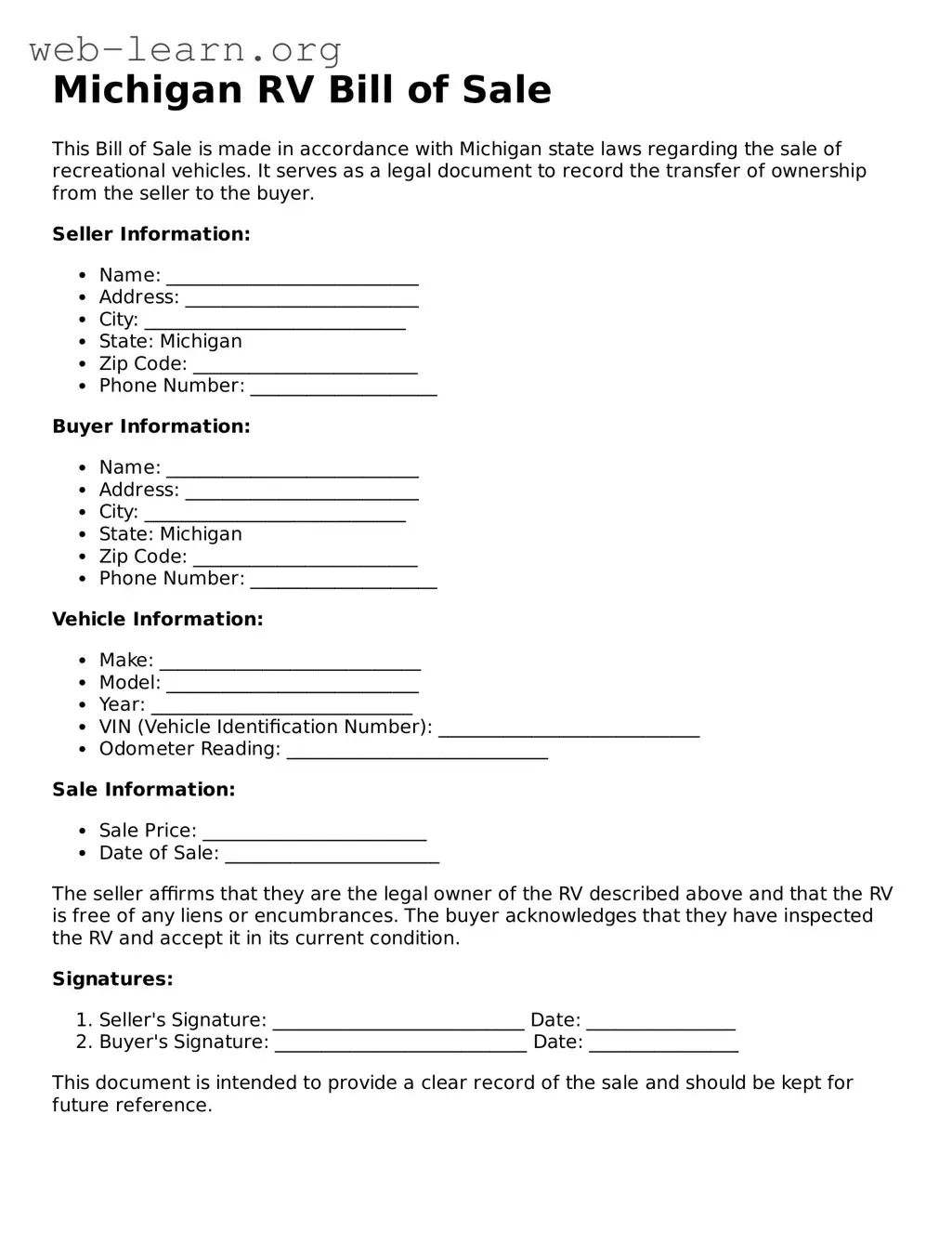
Michigan RV Bill of Sale
This Bill of Sale is made in accordance with Michigan state laws regarding the sale of recreational vehicles. It serves as a legal document to record the transfer of ownership from the seller to the buyer.
Seller Information:
Buyer Information:
Vehicle Information:
Sale Information:
The seller affirms that they are the legal owner of the RV described above and that the RV is free of any liens or encumbrances. The buyer acknowledges that they have inspected the RV and accept it in its current condition.
Signatures:
This document is intended to provide a clear record of the sale and should be kept for future reference.
| Fact Name | Description |
|---|---|
| Purpose | The Michigan RV Bill of Sale form serves as a legal document to transfer ownership of a recreational vehicle from one party to another. |
| Governing Law | This form is governed by Michigan state law, specifically the Michigan Vehicle Code (MCL 257.1 et seq.). |
| Required Information | Essential details include the names and addresses of the buyer and seller, vehicle description, and sale price. |
| Signatures | Both the buyer and seller must sign the form to validate the transaction. |
| Notarization | While notarization is not mandatory, it is recommended to enhance the document's credibility. |
| Record Keeping | It is advisable for both parties to keep a copy of the signed bill of sale for their records. |
| Use for Registration | The completed bill of sale can be used to register the vehicle with the Michigan Secretary of State. |
Filling out the Michigan RV Bill of Sale form is a straightforward process that requires accurate information about both the buyer and seller, as well as details about the recreational vehicle. Once completed, this form serves as a legal document to finalize the sale and transfer of ownership.
After completing the form, both parties should keep a copy for their records. This documentation will be useful for registration and any future transactions related to the RV.
What is an RV Bill of Sale in Michigan?
An RV Bill of Sale is a legal document that records the sale of a recreational vehicle (RV) between a buyer and a seller in Michigan. This document serves as proof of the transaction and includes important details such as the names of both parties, the vehicle's identification number (VIN), and the sale price. It is essential for both parties to have a copy for their records.
Why do I need an RV Bill of Sale?
The RV Bill of Sale is crucial for several reasons. First, it protects both the buyer and the seller by documenting the terms of the sale. Second, it is often required for registration and titling purposes at the Michigan Secretary of State's office. Without this document, you may face challenges in proving ownership or completing the registration process.
What information should be included in the RV Bill of Sale?
A comprehensive RV Bill of Sale should include:
Including all this information helps ensure clarity and prevents disputes later on.
Is the RV Bill of Sale required by law in Michigan?
While it is not legally mandated to have a Bill of Sale for every RV transaction in Michigan, it is highly recommended. Many buyers and sellers choose to use it to protect their interests. Additionally, if you plan to register the RV, the Secretary of State may require a Bill of Sale as part of the registration process.
Can I create my own RV Bill of Sale?
Yes, you can create your own RV Bill of Sale. There are many templates available online that you can customize to fit your needs. However, it is important to ensure that all necessary information is included and that it complies with Michigan laws. Alternatively, you may choose to use a standard form provided by the Michigan Secretary of State.
What should I do after completing the RV Bill of Sale?
Once the RV Bill of Sale is completed and signed by both parties, each should keep a copy for their records. The seller should also provide the buyer with any necessary documents, such as the title and maintenance records. The buyer will need the Bill of Sale when registering the RV with the Michigan Secretary of State.
When filling out the Michigan RV Bill of Sale form, many people make common mistakes that can lead to confusion or even legal issues. One frequent error is not providing complete information about the RV. Details like the Vehicle Identification Number (VIN), make, model, and year are crucial. Omitting any of these can create problems when registering the RV or transferring ownership.
Another mistake involves incorrect dates. Buyers and sellers must accurately record the date of the sale. If the date is wrong, it may affect the validity of the transaction. Always double-check the date before submitting the form to ensure it reflects when the sale actually took place.
People also often forget to include the purchase price. This amount is necessary for tax purposes and helps establish the value of the RV. Leaving it blank can cause delays or complications during the registration process. Be sure to write the exact amount clearly on the form.
Signatures are another area where mistakes commonly occur. Both the buyer and seller must sign the document. If either party forgets to sign, the form may be considered incomplete. Make it a point to verify that all required signatures are present before finalizing the document.
Another oversight is not providing proper identification. Each party should include their driver's license number or another form of ID. This information helps to verify the identities of both the buyer and seller, making the transaction more secure.
Lastly, people sometimes fail to keep a copy of the completed Bill of Sale. Retaining a copy is essential for both parties. It serves as proof of the transaction and can be useful for future reference. Always make sure to have a copy for your records.
When purchasing or selling an RV in Michigan, the RV Bill of Sale is a crucial document. However, it often works in tandem with several other forms and documents that help ensure a smooth transaction. Below are some essential documents you might encounter during this process.
Understanding these additional forms and documents is vital for anyone involved in an RV transaction in Michigan. By being prepared and informed, both buyers and sellers can navigate the process with confidence and clarity.
When filling out the Michigan RV Bill of Sale form, there are several important steps to keep in mind. Following these guidelines can help ensure a smooth transaction.
By adhering to these guidelines, you can help ensure that your RV sale is legally sound and free from complications.
Misconception 1: The Michigan RV Bill of Sale is not necessary.
Some people believe that a bill of sale is optional when buying or selling an RV. In reality, this document is essential for proving ownership and protecting both parties in the transaction.
Misconception 2: A handwritten bill of sale is not valid.
While it's best to use a standard form, a handwritten bill of sale can still be valid as long as it includes all necessary information and is signed by both parties.
Misconception 3: Only the seller needs to sign the bill of sale.
Both the buyer and the seller must sign the bill of sale. This ensures that both parties agree to the terms of the sale.
Misconception 4: The bill of sale is not required for trade-ins.
Even when trading in an RV, a bill of sale is still needed. It documents the transaction and helps clarify the value of the trade-in.
Misconception 5: The bill of sale does not need to be notarized.
While notarization is not always required, having the bill of sale notarized can provide an extra layer of protection and authenticity.
Misconception 6: The bill of sale is only for private sales.
Whether the sale is private or through a dealer, a bill of sale is still important. It serves as proof of the transaction regardless of the seller's status.
Misconception 7: The RV Bill of Sale is the same as the title.
The bill of sale and the title are different documents. The title proves ownership, while the bill of sale records the transaction details.
Misconception 8: You can use a bill of sale from another state.
Each state has its own requirements for a bill of sale. Using a Michigan-specific form is crucial to meet local regulations and ensure proper documentation.
Filling out and using the Michigan RV Bill of Sale form is an important step in the buying and selling process of recreational vehicles. Here are some key takeaways to keep in mind:
Travel Trailer Bill of Sale - May include a section for the seller’s contact information.
T-7 Bill of Sale - It is advisable to review the completed Bill of Sale carefully before signing.
Where Do I Get a Bill of Sale - May specify conditions for the RV's condition at the time of sale.
Do You Need a Bill of Sale in Florida - Essential for ensuring both parties have a clear understanding of the transaction.