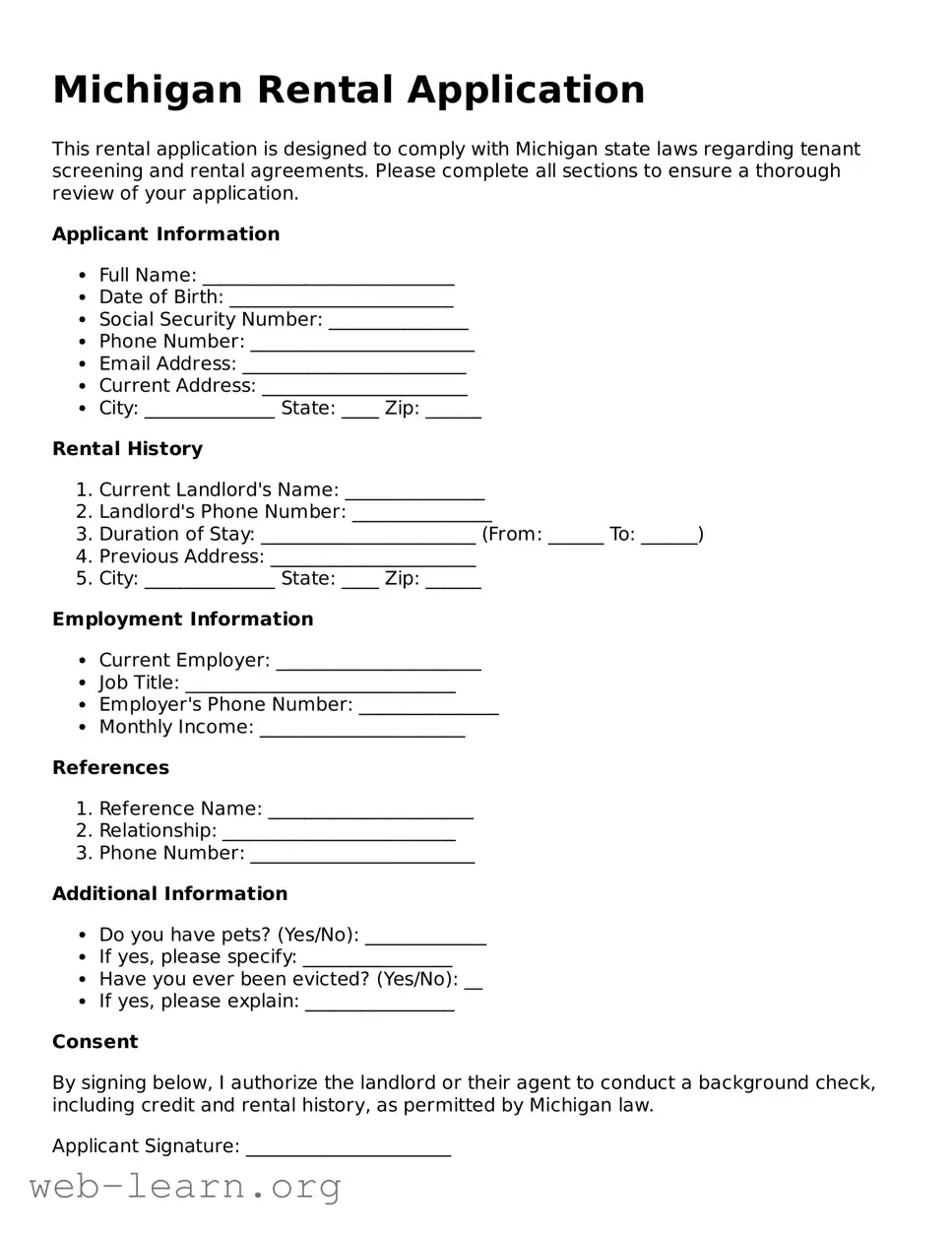
When looking for a rental property in Michigan, the rental application form plays a crucial role in the process. This document is designed to collect essential information from potential tenants, helping landlords make informed decisions. Typically, it includes sections for personal details, such as your name, contact information, and social security number. You'll also need to provide your employment history, income details, and references. Many landlords may ask for your rental history, including previous addresses and landlord contacts, to assess your reliability as a tenant. Additionally, the form often includes questions about pets, smoking habits, and any other preferences that may affect your application. Understanding what is required on this form can streamline your search for a new home and improve your chances of securing the rental you desire.
Michigan Rental Application
This rental application is designed to comply with Michigan state laws regarding tenant screening and rental agreements. Please complete all sections to ensure a thorough review of your application.
Applicant Information
Rental History
Employment Information
References
Additional Information
Consent
By signing below, I authorize the landlord or their agent to conduct a background check, including credit and rental history, as permitted by Michigan law.
Applicant Signature: ______________________
Date: ____________________________________
| Fact Name | Details |
|---|---|
| Purpose | The Michigan Rental Application form is used by landlords to screen potential tenants for rental properties. |
| Required Information | Applicants must provide personal information, employment history, and references. |
| Application Fee | Landlords may charge an application fee to cover the cost of background checks. |
| Governing Law | The form is governed by the Michigan Landlord-Tenant Law, specifically MCL 554.601. |
| Fair Housing Compliance | The application process must comply with the Fair Housing Act, prohibiting discrimination based on protected characteristics. |
Completing the Michigan Rental Application form is an important step in securing a rental property. Ensure that you have all necessary information ready before you begin. This process will involve providing personal details, rental history, and other relevant information that landlords typically require.
What is a Michigan Rental Application form?
The Michigan Rental Application form is a document used by landlords to collect information from potential tenants. This application typically includes personal details, rental history, employment information, and references. The purpose is to assess the applicant's suitability for renting a property.
What information is required on the application?
Applicants usually need to provide:
Is there a fee associated with the application?
Many landlords charge a non-refundable application fee. This fee typically covers the cost of background checks and processing the application. The amount can vary, so it’s important to ask the landlord or property manager about the specific fee before applying.
Can a landlord deny my application?
Yes, a landlord can deny an application for various reasons. Common reasons include poor credit history, insufficient income, or negative rental history. Landlords must comply with fair housing laws and cannot discriminate based on race, color, religion, sex, national origin, familial status, or disability.
How long does it take to process a rental application?
The processing time can vary. Generally, landlords may take anywhere from a few hours to several days to review applications. Factors influencing the timeline include the number of applications received and the thoroughness of background checks.
What is included in a background check?
A background check often includes:
This information helps landlords make informed decisions about potential tenants.
Do I need to provide references?
Yes, most rental applications require references. These can be from previous landlords, employers, or personal contacts who can vouch for your reliability and character. Providing strong references can enhance your chances of approval.
What happens after I submit my application?
After submission, the landlord will review your application and may contact your references and perform a background check. Once they have all the necessary information, they will inform you of their decision, typically via phone or email.
Can I appeal a denial of my application?
If your application is denied, you can inquire about the reasons for the decision. While there is no formal appeal process, understanding the landlord's concerns may help you address any issues or improve your application for future rentals.
Filling out a rental application can seem straightforward, but many applicants make common mistakes that can hinder their chances of securing a rental property. One frequent error is failing to provide complete and accurate information. Landlords rely on the details provided to assess an applicant's suitability. Omitting crucial details such as previous addresses or employment history can raise red flags. It’s essential to double-check that every section of the application is filled out thoroughly.
Another common mistake involves misrepresenting income or employment status. Some individuals may feel tempted to exaggerate their earnings to appear more attractive to landlords. However, doing so can backfire. When a landlord conducts a background check or contacts employers, discrepancies can surface. Honesty is the best policy; providing accurate information fosters trust and can lead to a smoother rental process.
Applicants often overlook the importance of references. Many people either forget to include references or fail to choose appropriate ones. Selecting the right references can make a significant difference in how an application is perceived. Ideally, references should be individuals who can vouch for an applicant's reliability and character, such as previous landlords or employers. Not providing references, or choosing irrelevant ones, can weaken an application.
Lastly, neglecting to proofread the application can lead to avoidable mistakes. Simple typos or errors can create misunderstandings or give the impression of carelessness. Before submitting the application, take a moment to review it for any mistakes. Ensuring that all information is clear and correct can enhance the overall presentation of the application and improve the chances of approval.
When applying for a rental property in Michigan, the rental application form is just one piece of the puzzle. There are several other documents that landlords may require to ensure a smooth application process. Each of these documents serves a specific purpose and helps both parties understand their responsibilities and expectations.
Having these documents ready can streamline the rental application process. They provide essential information that helps landlords and tenants establish a positive relationship from the start.
Lease Agreement: This document outlines the terms and conditions of renting a property. Like the rental application, it requires personal information, rental history, and references to ensure the tenant is suitable for the landlord's property.
Background Check Authorization: Similar to a rental application, this document collects personal information for screening purposes. It allows landlords to verify a tenant's credit history, criminal background, and rental history.
Employment Verification Form: This form gathers information about a tenant's job status and income. It parallels the rental application in that it seeks to confirm the tenant's ability to pay rent consistently.
Tenant Screening Report: This report compiles various checks, including credit and rental history. It serves a similar purpose to the rental application by providing landlords with a comprehensive view of a potential tenant's background.
Guarantor Application: This document is used when a tenant needs a guarantor to co-sign the lease. It shares similarities with the rental application, as it collects personal and financial information about the guarantor to assess their ability to cover the tenant's obligations.
When filling out the Michigan Rental Application form, attention to detail is crucial. Here are five things to keep in mind:
Following these guidelines can enhance your chances of securing the rental property you desire.
Understanding the Michigan Rental Application form is crucial for both landlords and tenants. However, several misconceptions can lead to confusion. Here are eight common misconceptions about the form:
Many believe that rental applications follow a universal template. In reality, each landlord or property management company may have their own specific requirements and formats.
Some applicants think they can skip sections of personal information. However, landlords typically require complete details to assess the application properly.
While there are regulations regarding application fees, landlords can charge them. However, the fee must be reasonable and disclosed upfront.
Some applicants underestimate the significance of rental history. In fact, landlords often use this information to gauge reliability and responsibility.
Many believe that landlords can choose to skip credit checks. However, most landlords conduct credit checks to evaluate an applicant's financial history.
Applicants may think that simply submitting a rental application ensures they will be approved. Approval depends on various factors, including creditworthiness and rental history.
It is a common belief that landlords are required to provide reasons for rejecting an application. While they may choose to share this information, they are not legally obligated to do so.
Some individuals assume that all information on a rental application is kept private. However, certain details may be shared with credit reporting agencies and other relevant parties during the screening process.
Understanding these misconceptions can help both landlords and tenants navigate the rental application process more effectively.
When filling out and using the Michigan Rental Application form, several important considerations come into play. Here are key takeaways to ensure a smooth application process:
By keeping these takeaways in mind, applicants can navigate the Michigan Rental Application process more effectively.