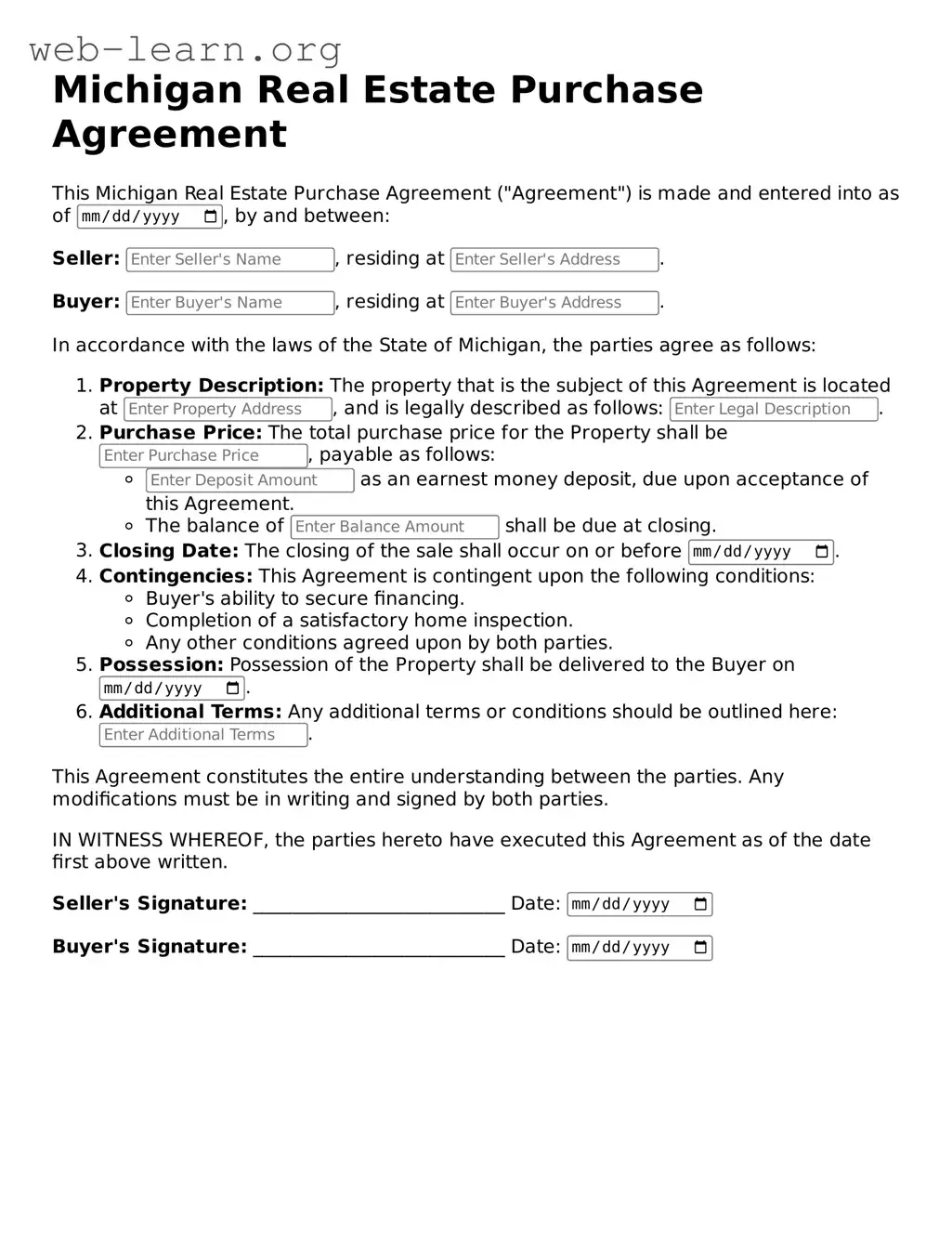
In the dynamic world of real estate transactions, the Michigan Real Estate Purchase Agreement form plays a crucial role in facilitating smooth and legally binding agreements between buyers and sellers. This form outlines essential details such as the purchase price, property description, and closing date, serving as the foundation for the entire transaction. It also includes provisions for earnest money deposits, contingencies, and disclosures, ensuring that both parties understand their rights and responsibilities. Additionally, the agreement addresses potential issues such as inspections, financing, and title transfers, providing a comprehensive framework that helps mitigate risks. By clearly delineating the terms of the sale, this form fosters transparency and trust, paving the way for a successful transfer of property ownership in Michigan.
Michigan Real Estate Purchase Agreement
This Michigan Real Estate Purchase Agreement ("Agreement") is made and entered into as of , by and between:
Seller: , residing at .
Buyer: , residing at .
In accordance with the laws of the State of Michigan, the parties agree as follows:
This Agreement constitutes the entire understanding between the parties. Any modifications must be in writing and signed by both parties.
IN WITNESS WHEREOF, the parties hereto have executed this Agreement as of the date first above written.
Seller's Signature: ___________________________ Date:
Buyer's Signature: ___________________________ Date:
| Fact Name | Description |
|---|---|
| Governing Law | The Michigan Real Estate Purchase Agreement is governed by the laws of the State of Michigan. |
| Purpose | This form is used to outline the terms and conditions of a real estate transaction between a buyer and a seller. |
| Parties Involved | The agreement identifies the buyer and the seller, including their legal names and contact information. |
| Property Description | A detailed description of the property being sold is included, including the address and any relevant parcel numbers. |
| Purchase Price | The total purchase price for the property is clearly stated, along with the method of payment. |
| Contingencies | Common contingencies, such as financing and inspection, may be included to protect the buyer's interests. |
| Closing Date | The agreement specifies the anticipated closing date, which is when the transfer of ownership will occur. |
| Earnest Money | A section for earnest money is included, outlining the amount and terms of the deposit made by the buyer. |
| Signatures | Both parties must sign the agreement for it to be legally binding, indicating their acceptance of the terms. |
Filling out the Michigan Real Estate Purchase Agreement form is a crucial step in the home buying process. Once you complete the form, you will be ready to present your offer to the seller, and this will set the stage for negotiations and, hopefully, a successful transaction.
After completing the form, review it carefully for accuracy. It's a good idea to have a real estate professional or attorney look it over before submitting it to the seller. This will help ensure that your offer is clear and comprehensive, paving the way for a smooth negotiation process.
A Michigan Real Estate Purchase Agreement is a legal document that outlines the terms and conditions of a real estate transaction between a buyer and a seller. This agreement specifies the details of the property being sold, the purchase price, and the responsibilities of both parties. It serves as a binding contract once signed by both parties.
The agreement typically includes:
While it is not legally required to use a formal purchase agreement, it is highly recommended. Having a written agreement protects both the buyer and seller by clearly outlining the terms of the sale. This can prevent misunderstandings and disputes down the line.
Yes, the agreement can be modified, but any changes must be agreed upon by both parties. It’s important to document any modifications in writing and have both parties sign off on them to ensure clarity and enforceability.
If one party fails to uphold their end of the agreement, the other party may have legal recourse. This could include seeking damages or specific performance, which means asking the court to enforce the terms of the agreement. It’s essential to consult with a legal professional to understand the options available in such situations.
The agreement remains valid until the transaction is completed, or until one of the parties cancels it according to the terms outlined in the document. If the sale does not go through, the agreement may specify conditions under which it can be terminated.
You can obtain a Michigan Real Estate Purchase Agreement from various sources, including real estate agents, legal professionals, and online legal document services. It is advisable to use a form that is compliant with Michigan laws and regulations to ensure its validity.
Filling out the Michigan Real Estate Purchase Agreement form can be a complex process. Many individuals make common mistakes that can lead to complications down the line. Understanding these pitfalls can help ensure a smoother transaction.
One frequent error is the omission of essential details about the property. Buyers and sellers sometimes forget to include the complete legal description of the property. This description is crucial as it precisely identifies the location and boundaries of the property being sold. Without it, the agreement may be considered incomplete.
Another common mistake involves the purchase price. It is vital to double-check that the correct amount is written clearly and accurately. Misstating the purchase price can lead to misunderstandings and disputes later in the process. Always confirm that the numbers match throughout the document.
Buyers often neglect to include contingencies in the agreement. Contingencies protect the buyer's interests by allowing them to back out of the deal under specific circumstances, such as failing to secure financing or discovering significant issues during a home inspection. Without these provisions, buyers may find themselves locked into an unfavorable situation.
Additionally, failing to specify the closing date can create confusion. Both parties should agree on a timeline for the transaction to proceed smoothly. A vague or missing closing date can lead to delays and frustration for everyone involved.
Misunderstanding the terms of earnest money is another mistake people make. Earnest money is a deposit made to demonstrate a buyer's serious intent to purchase. If the agreement does not clearly state the amount and conditions for returning this deposit, disputes may arise if the deal falls through.
Another error involves not including all necessary signatures. All parties involved in the transaction must sign the agreement for it to be legally binding. A missing signature can render the agreement invalid, causing delays and complications in the sale process.
Lastly, overlooking the importance of reviewing the entire document before submission is a critical mistake. It is essential to read through the agreement carefully, ensuring that all terms are understood and agreed upon. Rushing through this step can lead to unintended consequences and issues that may have been easily avoided.
When engaging in a real estate transaction in Michigan, several forms and documents complement the Real Estate Purchase Agreement. These documents help clarify terms, protect the interests of the parties involved, and ensure compliance with state laws.
Understanding these additional documents is crucial for a smooth real estate transaction. They provide essential information and protections for both buyers and sellers, ensuring that all parties are informed and their interests are safeguarded.
The Real Estate Purchase Agreement is a crucial document in the process of buying and selling property. Several other documents share similarities with it, serving important roles in real estate transactions. Below is a list of seven documents that are similar to the Real Estate Purchase Agreement, along with explanations of how they relate.
Understanding these documents can help clarify the real estate transaction process and ensure all parties are adequately informed and protected.
When filling out the Michigan Real Estate Purchase Agreement form, it's essential to be careful and thorough. Here are some important dos and don'ts to consider:
When it comes to the Michigan Real Estate Purchase Agreement (REPA), there are several misconceptions that can lead to confusion for buyers and sellers alike. Understanding these misconceptions can help you navigate the process more effectively.
By addressing these misconceptions, buyers and sellers can approach the Michigan Real Estate Purchase Agreement with a clearer understanding and greater confidence.
When filling out and using the Michigan Real Estate Purchase Agreement form, keep these key takeaways in mind:
Following these steps will help ensure a smooth transaction when using the Michigan Real Estate Purchase Agreement form.
Residential Purchase Agreement - It can outline penalties for not following through with the sale.
How to Write a Purchase Agreement - The document may require the buyer to obtain financing before the sale can proceed.
Agreement of Sale Hawaii - Clarifies the buyer's right to access the property before closing.
Real Estate Purchase Agreement Kentucky - It may outline the seller’s obligations for property maintenance before closing.