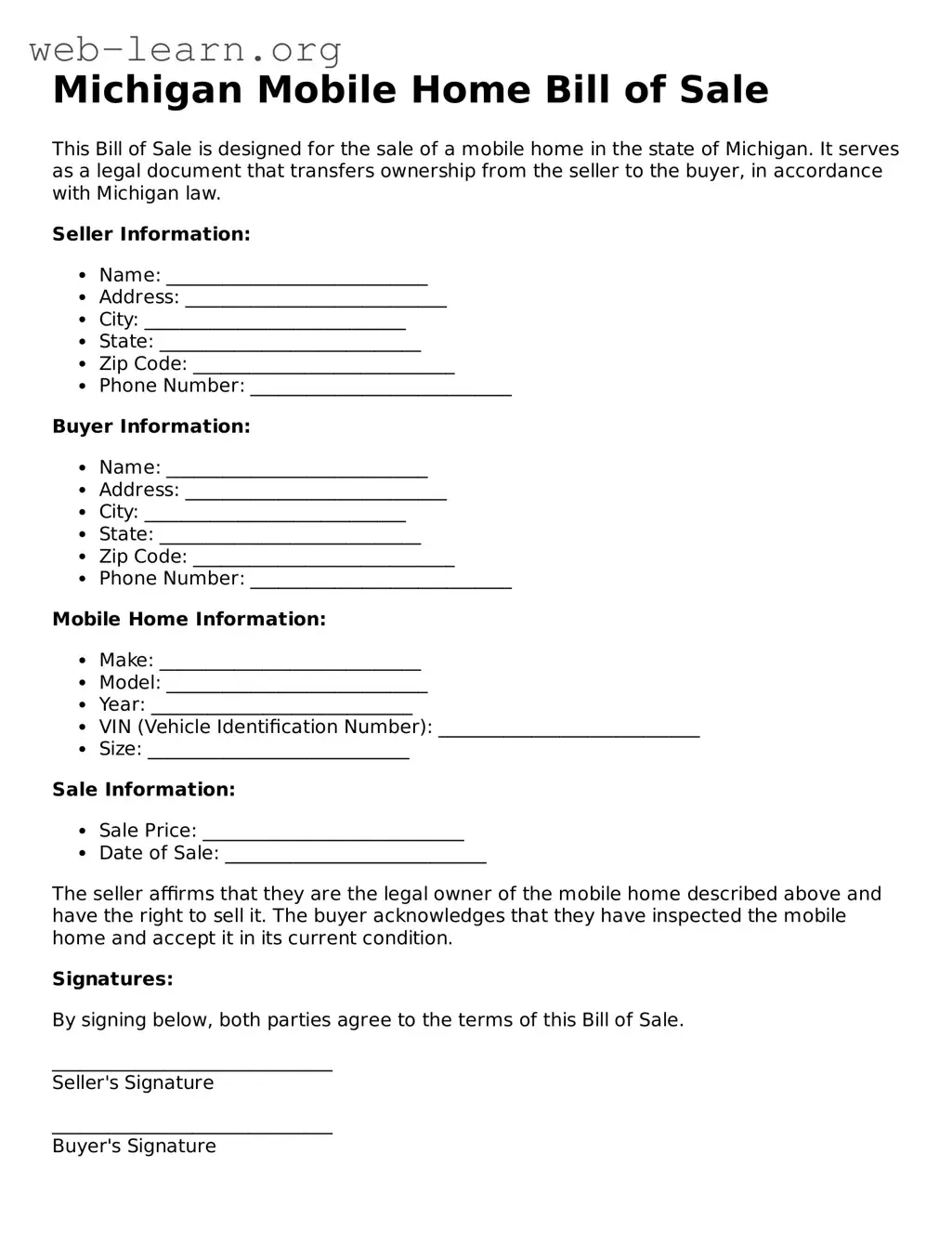
The Michigan Mobile Home Bill of Sale form serves as a crucial document in the transaction of mobile homes, ensuring a clear and legal transfer of ownership between the seller and the buyer. This form typically includes essential information such as the names and addresses of both parties, a detailed description of the mobile home being sold, and the agreed-upon sale price. Additionally, it often requires the seller to affirm that they hold legal title to the mobile home and that it is free from liens or encumbrances. To safeguard both parties, the form may also incorporate a section for signatures, thereby formalizing the agreement. By utilizing this document, individuals can mitigate potential disputes and establish a transparent record of the sale, which is particularly important given the unique nature of mobile home ownership and the regulations surrounding it in Michigan.
Michigan Mobile Home Bill of Sale
This Bill of Sale is designed for the sale of a mobile home in the state of Michigan. It serves as a legal document that transfers ownership from the seller to the buyer, in accordance with Michigan law.
Seller Information:
Buyer Information:
Mobile Home Information:
Sale Information:
The seller affirms that they are the legal owner of the mobile home described above and have the right to sell it. The buyer acknowledges that they have inspected the mobile home and accept it in its current condition.
Signatures:
By signing below, both parties agree to the terms of this Bill of Sale.
______________________________
Seller's Signature
______________________________
Buyer's Signature
Date: ____________________________
| Fact Name | Description |
|---|---|
| Purpose | The Michigan Mobile Home Bill of Sale form is used to transfer ownership of a mobile home from one party to another. |
| Governing Law | This form is governed by Michigan Compiled Laws, specifically Act 96 of 1987. |
| Required Information | The form requires details such as the names of the buyer and seller, the mobile home’s identification number, and the sale price. |
| Signatures | Both the buyer and seller must sign the form to validate the transaction. |
| Notarization | While notarization is not mandatory, it is recommended to add an extra layer of authenticity. |
| Delivery | The completed form should be delivered to the buyer for their records and to the local tax assessor’s office. |
| Record Keeping | It is important for both parties to keep a copy of the Bill of Sale for future reference. |
| State Requirements | Michigan law requires that the mobile home must be titled before the sale can be finalized. |
| Use for Transactions | This form is applicable for both private sales and sales through dealers. |
After obtaining the Michigan Mobile Home Bill of Sale form, you will need to provide specific information to complete it accurately. This document is essential for transferring ownership of a mobile home from one party to another. Follow the steps below to ensure all necessary details are included.
What is a Michigan Mobile Home Bill of Sale?
A Michigan Mobile Home Bill of Sale is a legal document that records the sale of a mobile home from one party to another. It serves as proof of the transaction and includes important details about the mobile home, the buyer, and the seller.
Why do I need a Bill of Sale for my mobile home?
A Bill of Sale is essential for establishing ownership. It protects both the buyer and the seller by documenting the terms of the sale. This document may be required for registration, financing, or insurance purposes.
What information is included in the Bill of Sale?
The Bill of Sale typically includes:
Is the Bill of Sale required to transfer ownership?
Yes, a Bill of Sale is generally required to legally transfer ownership of a mobile home. It provides evidence of the transaction and is often needed for registration with the state.
Do I need to have the Bill of Sale notarized?
Notarization is not typically required for a Michigan Mobile Home Bill of Sale. However, having it notarized can add an extra layer of authenticity and may be beneficial in certain situations.
Can I create my own Bill of Sale?
Yes, you can create your own Bill of Sale. Ensure it includes all necessary information and complies with Michigan state laws. Alternatively, you can use a template to simplify the process.
What happens if I lose the Bill of Sale?
If you lose the Bill of Sale, you may face challenges in proving ownership. It is advisable to keep multiple copies in a safe place. If necessary, you can create a duplicate with the same details and have it signed again by both parties.
How do I file the Bill of Sale?
The Bill of Sale does not need to be filed with any government agency. However, it should be kept in a secure location. The buyer may need it for registration or insurance purposes.
What if the mobile home has a lien?
If there is a lien on the mobile home, it is crucial to address it before the sale. The seller should disclose any liens to the buyer. The Bill of Sale should indicate that the mobile home is being sold free of any liens, unless otherwise agreed upon.
Can I use the Bill of Sale for a mobile home that is not titled?
Yes, a Bill of Sale can still be used for mobile homes that are not titled. However, it is important to check local regulations regarding the sale of untitled mobile homes, as additional documentation may be required.
Completing the Michigan Mobile Home Bill of Sale form can seem straightforward, but several common mistakes can lead to complications down the line. One frequent error occurs when individuals fail to provide accurate identification information. It's essential to include the correct names, addresses, and contact details for both the buyer and seller. Missing or incorrect information can create confusion and may even invalidate the sale.
Another mistake often made is neglecting to include the vehicle identification number (VIN) of the mobile home. The VIN is crucial for identifying the specific mobile home being sold. Without it, the transaction may not be properly recorded, which can cause issues with registration or future ownership transfers. Ensuring that the VIN is clearly stated helps protect both parties involved in the sale.
People sometimes overlook the importance of detailing the sale price and payment terms. Failing to specify these details can lead to misunderstandings later. It's important to clearly outline the total amount paid, any deposits made, and the agreed-upon method of payment. This clarity helps to avoid disputes and ensures that both parties have the same understanding of the transaction.
Finally, many individuals forget to sign and date the form. A signature is a critical component that confirms both parties agree to the terms outlined in the bill of sale. Without signatures, the document may not hold up as proof of the transaction. Taking the time to ensure all required signatures are present before finalizing the sale is vital for protecting both the buyer and seller.
The Michigan Mobile Home Bill of Sale form serves as a crucial document for the transfer of ownership of a mobile home. However, several other forms and documents may accompany this transaction to ensure legal compliance and protect the interests of both the buyer and the seller. Below is a list of these documents, each playing a significant role in the process.
These documents collectively ensure a smooth transaction and help mitigate potential disputes. Understanding each form's purpose can significantly benefit both buyers and sellers in navigating the complexities of mobile home sales in Michigan.
The Mobile Home Bill of Sale form is an important document that serves as a record of the sale of a mobile home. Several other documents share similar characteristics, providing important details about ownership transfer and sales transactions. Here are eight documents that are comparable to the Mobile Home Bill of Sale:
Each of these documents serves to protect the interests of both the buyer and seller, ensuring a clear record of the transaction.
When filling out the Michigan Mobile Home Bill of Sale form, it's important to follow certain guidelines to ensure accuracy and legality. Here are some key dos and don'ts:
Understanding the Michigan Mobile Home Bill of Sale form can be challenging due to various misconceptions. Here are seven common misunderstandings:
Clarifying these misconceptions can help ensure a smoother transaction when dealing with mobile homes in Michigan.
When dealing with the Michigan Mobile Home Bill of Sale form, it's important to understand how to properly fill it out and use it. Here are some key takeaways to keep in mind:
Understanding these key points can help ensure a smooth transaction when buying or selling a mobile home in Michigan.
Bill of Sale Examples - This form serves as proof of the sale and includes essential details about the mobile home and the parties involved.
Is a Bill of Sale Required in Kansas - It is advisable to have witnesses sign the document to further validate the transaction.