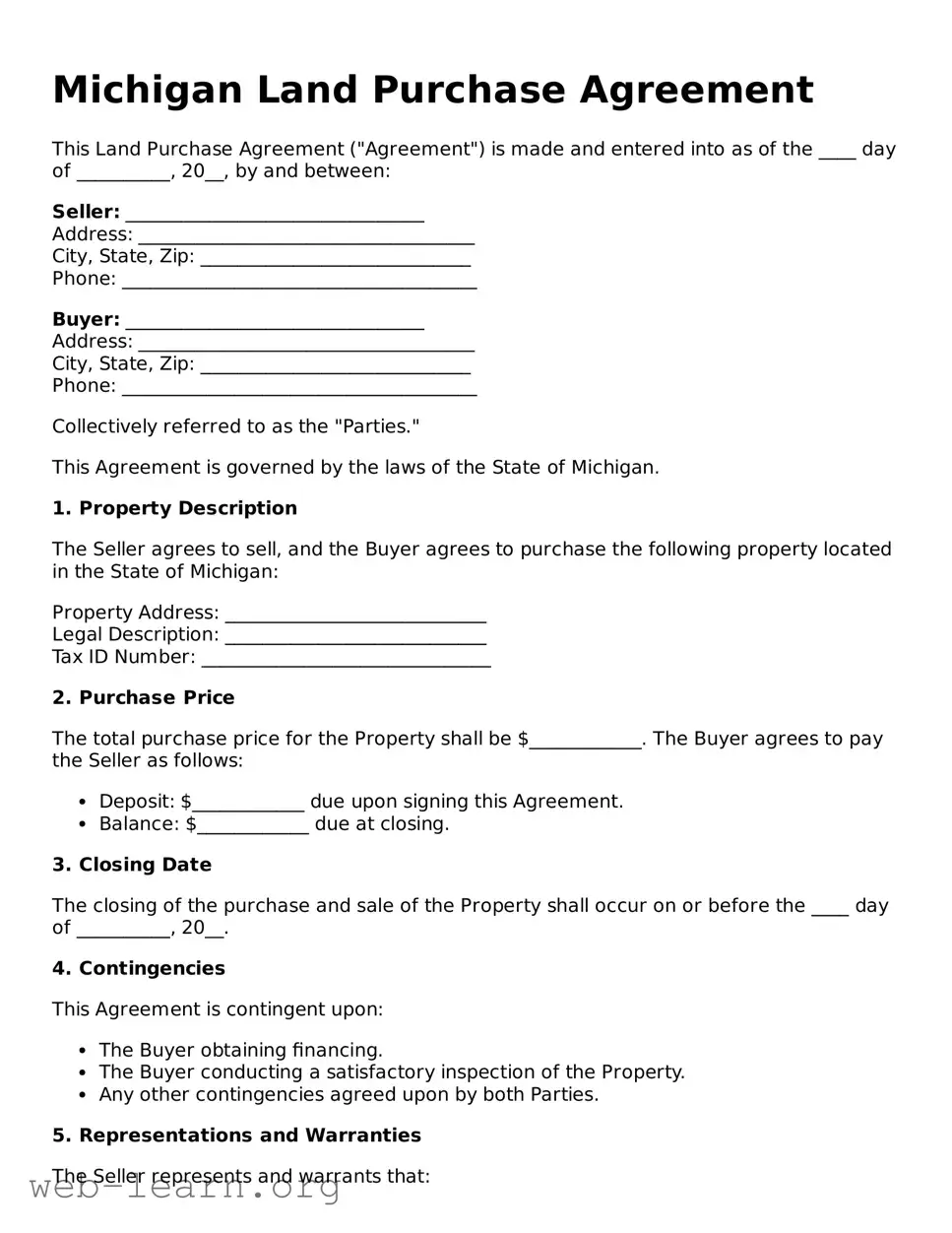
When it comes to buying or selling land in Michigan, having a well-structured Land Purchase Agreement is essential. This document serves as a formal contract between the buyer and seller, outlining the terms and conditions of the transaction. Key aspects of the agreement include the purchase price, payment terms, and a detailed description of the property being sold. Additionally, it addresses contingencies, such as financing or inspections, which protect both parties during the process. The agreement also stipulates the closing date and any obligations that either party must fulfill prior to the transfer of ownership. By clearly defining these elements, the Michigan Land Purchase Agreement helps ensure a smooth and transparent transaction, fostering trust and understanding between both the buyer and the seller.
Michigan Land Purchase Agreement
This Land Purchase Agreement ("Agreement") is made and entered into as of the ____ day of __________, 20__, by and between:
Seller: ________________________________
Address: ____________________________________
City, State, Zip: _____________________________
Phone: ______________________________________
Buyer: ________________________________
Address: ____________________________________
City, State, Zip: _____________________________
Phone: ______________________________________
Collectively referred to as the "Parties."
This Agreement is governed by the laws of the State of Michigan.
1. Property Description
The Seller agrees to sell, and the Buyer agrees to purchase the following property located in the State of Michigan:
Property Address: ____________________________
Legal Description: ____________________________
Tax ID Number: _______________________________
2. Purchase Price
The total purchase price for the Property shall be $____________. The Buyer agrees to pay the Seller as follows:
3. Closing Date
The closing of the purchase and sale of the Property shall occur on or before the ____ day of __________, 20__.
4. Contingencies
This Agreement is contingent upon:
5. Representations and Warranties
The Seller represents and warrants that:
6. Governing Law
This Agreement shall be governed by and construed in accordance with the laws of the State of Michigan.
7. Signatures
IN WITNESS WHEREOF, the Parties have executed this Agreement as of the date first above written.
______________________________
Seller's Signature
______________________________
Buyer's Signature
| Fact Name | Details |
|---|---|
| Document Type | Michigan Land Purchase Agreement |
| Purpose | This form is used for the sale and purchase of real estate in Michigan. |
| Governing Law | The agreement is governed by the laws of the State of Michigan. |
| Parties Involved | The agreement typically involves a buyer and a seller. |
| Property Description | A detailed description of the property being sold is included in the form. |
| Purchase Price | The total purchase price must be clearly stated within the agreement. |
| Contingencies | Buyers may include contingencies such as financing or inspections. |
| Signatures Required | Both parties must sign the agreement for it to be legally binding. |
After obtaining the Michigan Land Purchase Agreement form, the next step is to accurately fill it out to ensure a smooth transaction. This involves providing necessary details about the buyer, seller, and property involved in the sale. Careful attention to each section will help avoid potential issues later on.
Once the form is filled out, it is advisable to review it for accuracy before proceeding with any further steps in the property transaction process.
A Michigan Land Purchase Agreement is a legal document that outlines the terms and conditions under which a buyer agrees to purchase a piece of real estate from a seller in Michigan. This agreement includes details such as the purchase price, payment terms, and contingencies that must be met before the sale can be finalized.
Both buyers and sellers of real estate in Michigan should use a Land Purchase Agreement. It protects the interests of both parties by clearly defining their obligations and rights throughout the transaction process.
The key components typically include:
Yes, once both parties sign the agreement, it becomes a legally binding contract. This means that both the buyer and seller are obligated to adhere to the terms outlined in the document.
Yes, the agreement can be modified, but both parties must agree to the changes. Any modifications should be documented in writing and signed by both parties to ensure they are enforceable.
If one party fails to fulfill their obligations under the agreement, the other party may have the right to seek legal remedies. This could include specific performance (forcing the sale) or monetary damages.
Common contingencies include:
These contingencies protect the buyer's interests and allow them to back out of the deal if certain conditions are not met.
While it is not legally required to have a lawyer, it is highly recommended. A lawyer can help ensure that the agreement is properly drafted and that all legal requirements are met.
Michigan Land Purchase Agreement forms can be obtained from various sources, including real estate agents, legal websites, or local government offices. Ensure that you use a current and valid version of the form.
After both parties have signed the agreement, it is important to keep a copy for your records. Additionally, follow through with any contingencies and prepare for the closing process as outlined in the agreement.
Filling out the Michigan Land Purchase Agreement form can be a daunting task. Many individuals make common mistakes that can lead to complications later on. One frequent error is failing to include all necessary parties in the agreement. If both the buyer and seller are not clearly identified, it can create confusion and potential legal issues down the line.
Another mistake is neglecting to provide accurate property descriptions. A vague or incorrect description can lead to disputes over what is being sold. It's crucial to include the full legal description of the property, as well as any relevant parcel numbers. This helps ensure that both parties are clear about the property being transferred.
Additionally, many people overlook the importance of specifying the purchase price. Leaving this section blank or writing an ambiguous figure can lead to misunderstandings. The purchase price should be clearly stated, and any contingencies related to financing or inspections should be included as well.
Buyers often forget to check the financing terms. If the agreement does not specify how the purchase will be financed, it can lead to complications. Clear terms regarding down payments, loan contingencies, and payment schedules should be outlined to avoid any confusion.
Another common oversight is the lack of signatures. Both parties must sign the agreement for it to be legally binding. Failing to do so can render the entire document ineffective. It’s essential to ensure that all required signatures are present before submitting the form.
Many individuals also fail to include important dates, such as the closing date. Without a specified timeline, both parties may have different expectations regarding when the transaction will be completed. Including clear deadlines helps keep the process on track.
People sometimes underestimate the need for additional clauses that protect their interests. For example, including contingencies for inspections or repairs can safeguard buyers from unexpected issues. Not addressing these concerns in the agreement can lead to disputes after the sale.
Another mistake is ignoring local laws and regulations. Each municipality may have specific requirements that need to be followed. Failing to comply with these regulations can jeopardize the agreement and lead to legal challenges.
Some individuals may not seek legal advice before filling out the form. Navigating the complexities of a land purchase can be overwhelming. Consulting with a real estate attorney can help clarify any uncertainties and ensure that the agreement is legally sound.
Lastly, many people rush through the process without thoroughly reviewing the entire document. Taking the time to read through the agreement carefully can prevent many of the mistakes mentioned above. Attention to detail is crucial in creating a solid and enforceable Land Purchase Agreement.
When engaging in a real estate transaction in Michigan, several key documents accompany the Land Purchase Agreement. Each of these documents plays a crucial role in ensuring that the transaction proceeds smoothly and legally. Below is a list of common forms and documents that are often used alongside the Michigan Land Purchase Agreement.
Understanding these documents is essential for anyone involved in a property transaction. Each plays a vital role in protecting the interests of both buyers and sellers, ensuring that the process is transparent and legally sound.
The Land Purchase Agreement is an essential document in real estate transactions, outlining the terms of a sale between a buyer and a seller. Several other documents serve similar purposes in various contexts. Here are nine documents that share similarities with the Land Purchase Agreement:
Understanding these documents can help individuals navigate real estate transactions more effectively. Each document plays a vital role in ensuring clarity and protection for all parties involved.
When completing the Michigan Land Purchase Agreement form, it's important to follow certain guidelines to ensure accuracy and compliance. Here’s a list of things you should and shouldn’t do:
Following these guidelines will help ensure that your Land Purchase Agreement is completed correctly and efficiently.
Understanding the Michigan Land Purchase Agreement form is crucial for anyone involved in real estate transactions. However, several misconceptions exist about this document. Here are four common misunderstandings:
This form can be used for various types of properties, including commercial and agricultural land. It is not limited to residential transactions.
While the agreement is binding, parties can negotiate amendments before closing. Changes can be made if both parties agree.
Closing costs can be shared or negotiated between the buyer and seller. It is essential to discuss these costs in advance.
The agreement does not automatically ensure clear title. Buyers should conduct a title search to confirm ownership and identify any liens.
When filling out and using the Michigan Land Purchase Agreement form, several key points are important to keep in mind.
By keeping these takeaways in mind, individuals can navigate the Michigan Land Purchase Agreement process more effectively.