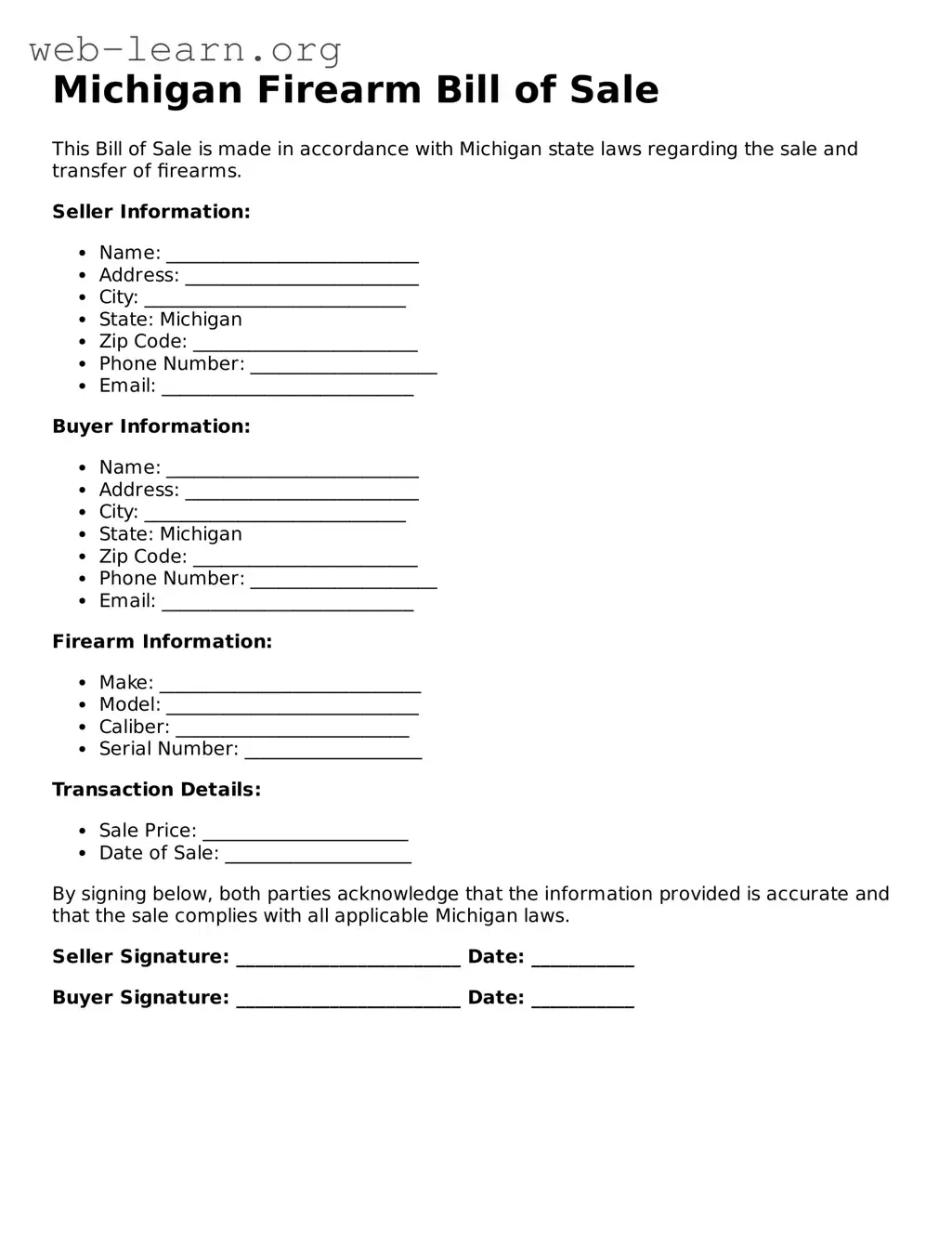
The Michigan Firearm Bill of Sale form serves as a crucial document for individuals engaging in the private sale or transfer of firearms within the state. This form not only provides a record of the transaction but also helps to ensure compliance with state laws governing firearm ownership and transfers. Essential details such as the names and addresses of both the seller and buyer, the make and model of the firearm, and the serial number must be accurately recorded. Additionally, the form may include information regarding the condition of the firearm at the time of sale, which can be vital for both parties. By utilizing this form, individuals can protect themselves legally and maintain transparency in the transfer process. Furthermore, it serves as a safeguard, helping to prevent potential disputes or misunderstandings that may arise after the sale is completed. Understanding the significance of this form is essential for anyone involved in the sale or purchase of firearms in Michigan.
Michigan Firearm Bill of Sale
This Bill of Sale is made in accordance with Michigan state laws regarding the sale and transfer of firearms.
Seller Information:
Buyer Information:
Firearm Information:
Transaction Details:
By signing below, both parties acknowledge that the information provided is accurate and that the sale complies with all applicable Michigan laws.
Seller Signature: ________________________ Date: ___________
Buyer Signature: ________________________ Date: ___________
| Fact Name | Description |
|---|---|
| Purpose | The Michigan Firearm Bill of Sale form is used to document the sale or transfer of firearms between private parties. |
| Governing Law | This form is governed by Michigan Compiled Laws, specifically Act 372 of 1927. |
| Parties Involved | The form requires information from both the seller and the buyer, including names and addresses. |
| Firearm Details | It must include specific details about the firearm, such as make, model, and serial number. |
| Signature Requirement | Both parties must sign the form to validate the transaction and acknowledge the transfer. |
| Record Keeping | It is advisable for both parties to keep a copy of the completed bill of sale for their records. |
| Legal Implications | Completing this form does not exempt either party from complying with federal or state firearm laws. |
After obtaining the Michigan Firearm Bill of Sale form, it's important to accurately complete it to ensure proper documentation of the transaction. This form will facilitate the transfer of ownership of a firearm between the seller and the buyer.
What is a Firearm Bill of Sale in Michigan?
A Firearm Bill of Sale is a legal document that records the sale or transfer of a firearm from one individual to another. In Michigan, while not required by law, it is highly recommended to create a bill of sale to provide proof of the transaction. This document can protect both the buyer and the seller by establishing ownership and ensuring that the firearm is being transferred legally.
Is a Firearm Bill of Sale required in Michigan?
No, a Firearm Bill of Sale is not legally required in Michigan. However, it is a good practice to use one. Having a written record of the sale can help prevent disputes regarding ownership and can serve as evidence if legal issues arise in the future. It also demonstrates that the seller has complied with all state and federal laws regarding the transfer of firearms.
What information should be included in the Firearm Bill of Sale?
A comprehensive Firearm Bill of Sale should include the following details:
Including this information helps ensure clarity and can be crucial if any legal questions arise later.
Do I need to have the Bill of Sale notarized?
In Michigan, notarization of the Firearm Bill of Sale is not a requirement. However, having the document notarized can add an extra layer of legitimacy and security to the transaction. A notary public can verify the identities of both parties and confirm that they are entering into the agreement voluntarily, which can be beneficial if disputes arise.
Can I use a Firearm Bill of Sale from another state?
While you can use a Firearm Bill of Sale from another state, it is advisable to ensure that it complies with Michigan's requirements. Each state may have different laws governing firearm sales, and using a form that is not tailored to Michigan might lead to confusion or legal issues. It is best to use a form specifically designed for Michigan transactions to avoid any complications.
What should I do with the Firearm Bill of Sale after the transaction?
After completing the transaction, both the buyer and the seller should keep a copy of the Firearm Bill of Sale for their records. This document can serve as proof of ownership for the buyer and as evidence of the sale for the seller. It is advisable to store it in a safe place, as it may be needed for future reference or in case of legal inquiries.
Filling out the Michigan Firearm Bill of Sale form can seem straightforward, but many people make common mistakes that can lead to complications. One frequent error is not including all required information. Both the buyer and seller need to provide their full names, addresses, and signatures. Omitting any of these details can render the document invalid.
Another mistake is failing to accurately describe the firearm being sold. It's essential to include the make, model, caliber, and serial number. If any of this information is incorrect or missing, it can create confusion and legal issues down the line.
Some individuals forget to date the form. A date is crucial for establishing when the transaction occurred. Without it, disputes may arise regarding ownership and the timeline of the sale.
People often overlook the importance of keeping a copy of the completed Bill of Sale. After signing, both parties should retain a copy for their records. This serves as proof of the transaction and can be vital if questions about ownership arise in the future.
Another common error is not verifying the buyer's eligibility to own a firearm. Sellers should take the time to ensure that the buyer meets all legal requirements. This includes checking for any disqualifying factors, such as felony convictions.
In some cases, individuals may sign the form without understanding its implications. It’s essential to read the entire document before signing. Ignorance of the terms can lead to unintentional agreements or liabilities.
Some people fail to witness the signing of the form. While not always required, having a witness can provide an additional layer of protection for both parties. A witness can help verify the legitimacy of the transaction if any disputes arise later.
Another mistake is using outdated forms. Laws and regulations can change, so it’s crucial to use the most current version of the Bill of Sale. Using an old form may lead to issues with compliance.
Additionally, people sometimes rush through the process. Taking the time to fill out the form carefully can prevent mistakes. Rushed transactions often lead to overlooked details that can create problems later.
Lastly, some individuals do not seek legal advice when needed. If there are any uncertainties about the transaction or the form itself, consulting a legal expert can provide clarity and peace of mind. It’s always better to be informed than to make assumptions that could lead to complications.
The Michigan Firearm Bill of Sale form is a crucial document for recording the transfer of firearm ownership. Alongside this form, several other documents may be necessary to ensure compliance with state and federal regulations. Below is a list of related forms and documents that are commonly used in conjunction with the Michigan Firearm Bill of Sale.
These documents collectively facilitate a transparent and legally compliant transfer of firearm ownership. Properly completing and retaining these forms can help both buyers and sellers avoid potential legal issues in the future.
The Firearm Bill of Sale form serves as a crucial document in the sale and transfer of firearms. It shares similarities with several other documents that facilitate the transfer of ownership or rights. Here’s a list of eight documents that are similar to the Firearm Bill of Sale form, along with explanations of how they relate:
When filling out the Michigan Firearm Bill of Sale form, it's important to ensure accuracy and compliance with state regulations. Here are ten things to keep in mind:
By following these guidelines, you can help ensure a smooth and lawful transaction.
Understanding the Michigan Firearm Bill of Sale form is essential for anyone involved in the buying or selling of firearms in the state. However, several misconceptions often cloud people's understanding of this important document. Here are six common myths, along with clarifications to help set the record straight:
While it may not be legally required in all cases, having a Bill of Sale is highly recommended. It provides proof of the transaction and can protect both the buyer and seller in case of future disputes.
In Michigan, notarization is not a requirement for the Bill of Sale. However, having it notarized can add an extra layer of legitimacy to the document.
The Bill of Sale itself does not need to include a background check. However, it is the responsibility of the seller to ensure that the buyer is legally allowed to purchase a firearm.
This form can be used for all types of firearms, including rifles and shotguns. It is not limited to just handguns.
Even transactions between friends or family members can benefit from a Bill of Sale. It helps clarify ownership and can prevent misunderstandings later on.
The seller should always ensure that the firearm is legally transferred and that the buyer is compliant with all local and federal laws. The Bill of Sale is just one part of the process.
By dispelling these misconceptions, individuals can better navigate the complexities of firearm transactions in Michigan. A clear understanding of the Bill of Sale can lead to smoother and more secure transactions for everyone involved.
When dealing with the Michigan Firearm Bill of Sale form, it is essential to understand its purpose and how to complete it properly. Here are some key takeaways:
Understanding these points can help ensure a smooth and compliant firearm sale process in Michigan.
Gun Bill of Sale Template - The Bill of Sale can be used to document the sale of handguns, rifles, and shotguns.
Arkansas Firearm Bill of Sale - Can assist law enforcement in tracing firearms if needed.