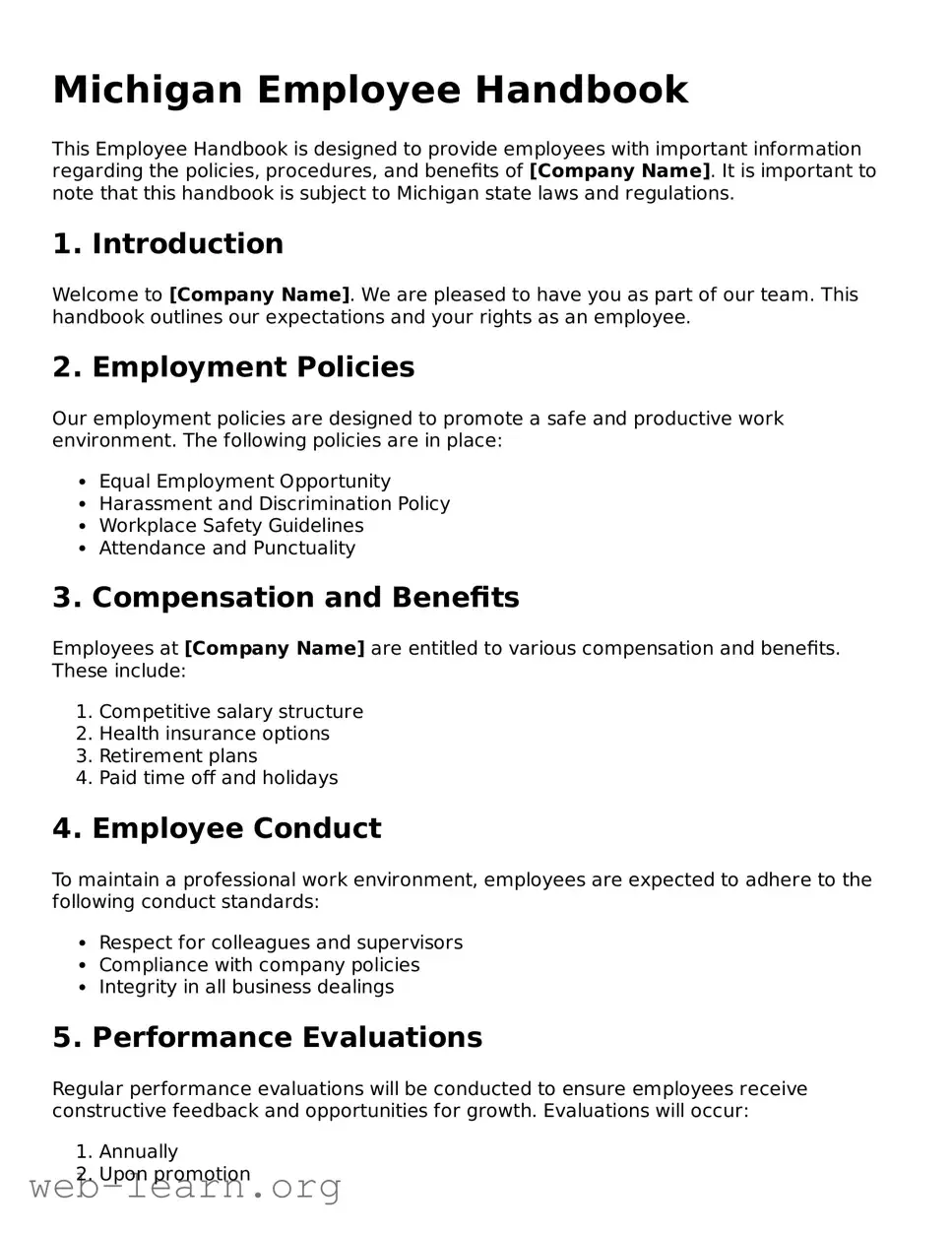
Creating a comprehensive employee handbook is essential for any business operating in Michigan. This document serves as a vital resource for both employers and employees, outlining workplace policies, procedures, and expectations. The Michigan Employee Handbook form covers key topics such as employee rights, workplace conduct, benefits, and safety protocols. It also addresses important issues like anti-discrimination policies, harassment prevention, and disciplinary procedures. By clearly defining these elements, the handbook helps foster a positive work environment and ensures compliance with state and federal laws. This form not only protects the employer from potential legal disputes but also empowers employees by providing them with a clear understanding of their roles and responsibilities within the organization.
Michigan Employee Handbook
This Employee Handbook is designed to provide employees with important information regarding the policies, procedures, and benefits of [Company Name]. It is important to note that this handbook is subject to Michigan state laws and regulations.
1. Introduction
Welcome to [Company Name]. We are pleased to have you as part of our team. This handbook outlines our expectations and your rights as an employee.
2. Employment Policies
Our employment policies are designed to promote a safe and productive work environment. The following policies are in place:
3. Compensation and Benefits
Employees at [Company Name] are entitled to various compensation and benefits. These include:
4. Employee Conduct
To maintain a professional work environment, employees are expected to adhere to the following conduct standards:
5. Performance Evaluations
Regular performance evaluations will be conducted to ensure employees receive constructive feedback and opportunities for growth. Evaluations will occur:
6. Employee Acknowledgment
By signing below, you acknowledge that you have received, read, and understood the policies outlined in this Employee Handbook.
Employee Name: [Employee Name]
Signature: [Employee Signature]
Date: [Date]
7. Contact Information
If you have any questions or need further clarification about the policies in this handbook, please contact:
HR Department: [HR Contact Name]
Email: [HR Email]
Phone: [HR Phone Number]
| Fact Name | Details |
|---|---|
| Purpose | The Michigan Employee Handbook serves as a guide for employees regarding company policies and procedures. |
| Legal Requirement | While not mandated by law, having an employee handbook is recommended to clarify workplace expectations. |
| Governing Law | Various labor laws, including the Michigan Employment Security Act, influence the contents of the handbook. |
| Content Guidelines | It should include sections on workplace conduct, benefits, and disciplinary procedures. |
| Distribution | Employers should provide the handbook to all employees, ensuring they acknowledge receipt. |
| Updates | The handbook must be reviewed regularly and updated as laws or company policies change. |
| Legal Protection | A well-drafted handbook can help protect employers from legal disputes by setting clear expectations. |
Completing the Michigan Employee Handbook form is an essential task that requires careful attention to detail. This process ensures that you have the necessary information recorded accurately. Follow these steps to ensure you fill out the form correctly.
After submission, keep a copy of the completed form for your records. This will be important for future reference regarding your employment policies and procedures.
What is the Michigan Employee Handbook form?
The Michigan Employee Handbook form is a document that outlines the policies, procedures, and expectations for employees within a company operating in Michigan. It serves as a guide for both employers and employees, ensuring everyone understands their rights and responsibilities in the workplace.
Who needs to complete the Employee Handbook form?
Typically, employers in Michigan should create and distribute an Employee Handbook to all employees. This document is essential for new hires but should also be made available to current employees to ensure they are informed about workplace policies.
What should be included in the Employee Handbook?
The Employee Handbook should cover various topics, including:
Including these topics helps ensure clarity and consistency in the workplace.
Is the Employee Handbook legally required?
While Michigan law does not specifically require an Employee Handbook, having one is highly recommended. It helps protect both the employer and employees by clearly outlining expectations and procedures. Additionally, it can serve as a reference in case of disputes.
How often should the Employee Handbook be updated?
It is advisable to review and update the Employee Handbook at least annually. Changes in laws, company policies, or workplace practices may necessitate updates. Keeping the handbook current ensures that employees have the latest information.
How should the Employee Handbook be distributed?
The Employee Handbook can be distributed in several ways. It can be provided in print form during onboarding or made available electronically through the company’s intranet. Regardless of the method, it is important to ensure that all employees have access to it.
What if an employee has questions about the Employee Handbook?
Employees should feel encouraged to ask questions about the Employee Handbook. Employers should provide a point of contact, such as a human resources representative, who can address any concerns or clarify policies outlined in the handbook.
Can an Employee Handbook be used in legal disputes?
Yes, an Employee Handbook can be used in legal disputes. If a conflict arises, the handbook may serve as evidence of the company’s policies and the expectations set for employees. This is why it is crucial for the handbook to be clear and well-documented.
What should an employer do if they need to change a policy in the Employee Handbook?
If a policy needs to be changed, the employer should update the Employee Handbook accordingly and communicate the changes to all employees. It is important to provide training or information sessions if the changes are significant.
Are there any specific state laws that should be included in the Employee Handbook?
Yes, Michigan has specific laws that may need to be addressed in the Employee Handbook. These include laws related to employee rights, workplace safety, and anti-discrimination policies. Consulting with a legal expert can help ensure compliance with state regulations.
Filling out the Michigan Employee Handbook form can be a straightforward process, but many individuals encounter common pitfalls that can lead to confusion or delays. One of the most frequent mistakes is neglecting to read the entire handbook before signing. Understanding the policies and procedures outlined in the handbook is crucial. By skipping this step, employees may inadvertently agree to terms they do not fully understand.
Another common error is failing to provide accurate personal information. This includes names, addresses, and contact details. Inaccurate information can lead to miscommunication and issues with payroll or benefits. It is always wise to double-check the information provided before submitting the form.
Some individuals overlook the importance of initialing or signing in all the required places. Each section of the handbook may have specific areas that require acknowledgment. Missing a signature or initial can result in the form being considered incomplete, which can delay the onboarding process.
Additionally, many people forget to update their information when changes occur. Life events such as marriage, divorce, or relocation can impact personal details. Keeping the handbook form current ensures that the employer has the most accurate information on file.
Another mistake is not asking questions when something is unclear. Employees should feel empowered to seek clarification on any policies or procedures that they do not understand. Ignoring confusion can lead to misunderstandings later on.
Some individuals may also fail to keep a copy of the signed handbook for their records. Retaining a personal copy is essential for reference in the future. It serves as a reminder of the policies and expectations set forth by the employer.
Moreover, neglecting to adhere to deadlines can be a significant oversight. Employers often set specific time frames for submitting forms. Missing these deadlines can result in delays in starting work or accessing benefits.
Another mistake is assuming that the handbook is static. Policies can change, and employees should stay informed about any updates. Regularly reviewing the handbook ensures that individuals are aware of the latest policies that may affect their employment.
Lastly, some employees fail to consider the implications of the handbook's content. Understanding how the policies apply to one's role and responsibilities can prevent future issues. Engaging with the material fosters a better work environment and promotes compliance with company standards.
When managing employee relations and organizational policies, several key documents complement the Michigan Employee Handbook. Each of these forms plays a critical role in ensuring clear communication and compliance within the workplace.
These documents work together to create a structured framework for managing employment relationships. They help establish clear guidelines, facilitate communication, and protect both the organization and its employees.
The Employee Handbook is an important document for any organization, serving as a guide for employees on company policies, procedures, and expectations. Here are nine other documents that share similarities with the Employee Handbook:
When filling out the Michigan Employee Handbook form, it’s important to approach the task with care and attention. Here’s a list of things you should and shouldn’t do to ensure a smooth process.
By following these guidelines, you’ll help ensure that your experience with the Employee Handbook form is both efficient and effective. Remember, this document is important for understanding your rights and responsibilities as an employee.
Understanding the Michigan Employee Handbook form is crucial for both employers and employees. However, several misconceptions can lead to confusion. Below are five common misconceptions about this form, along with clarifications.
In reality, while not legally required, having an Employee Handbook is highly recommended. It serves as a vital resource for outlining company policies and expectations.
Many believe that a comprehensive handbook must be extensive. However, a clear and concise handbook can effectively communicate essential policies without overwhelming employees.
This is incorrect. Policies and laws change over time. Regularly reviewing and updating the handbook ensures it remains relevant and compliant with current regulations.
While it is beneficial to have employees acknowledge receipt of the handbook, it is not mandatory for them to sign it. However, documentation of receipt can help clarify understanding.
It is a common belief that the handbook can address all potential workplace situations. In truth, while it provides guidelines, it cannot cover every unique circumstance. Flexibility and communication remain key.
By addressing these misconceptions, both employers and employees can better navigate the expectations and policies set forth in the Michigan Employee Handbook form.
When filling out and using the Michigan Employee Handbook form, keep the following key takeaways in mind:
These steps will help create a clear and effective employee handbook that serves both the employer and the employees well.