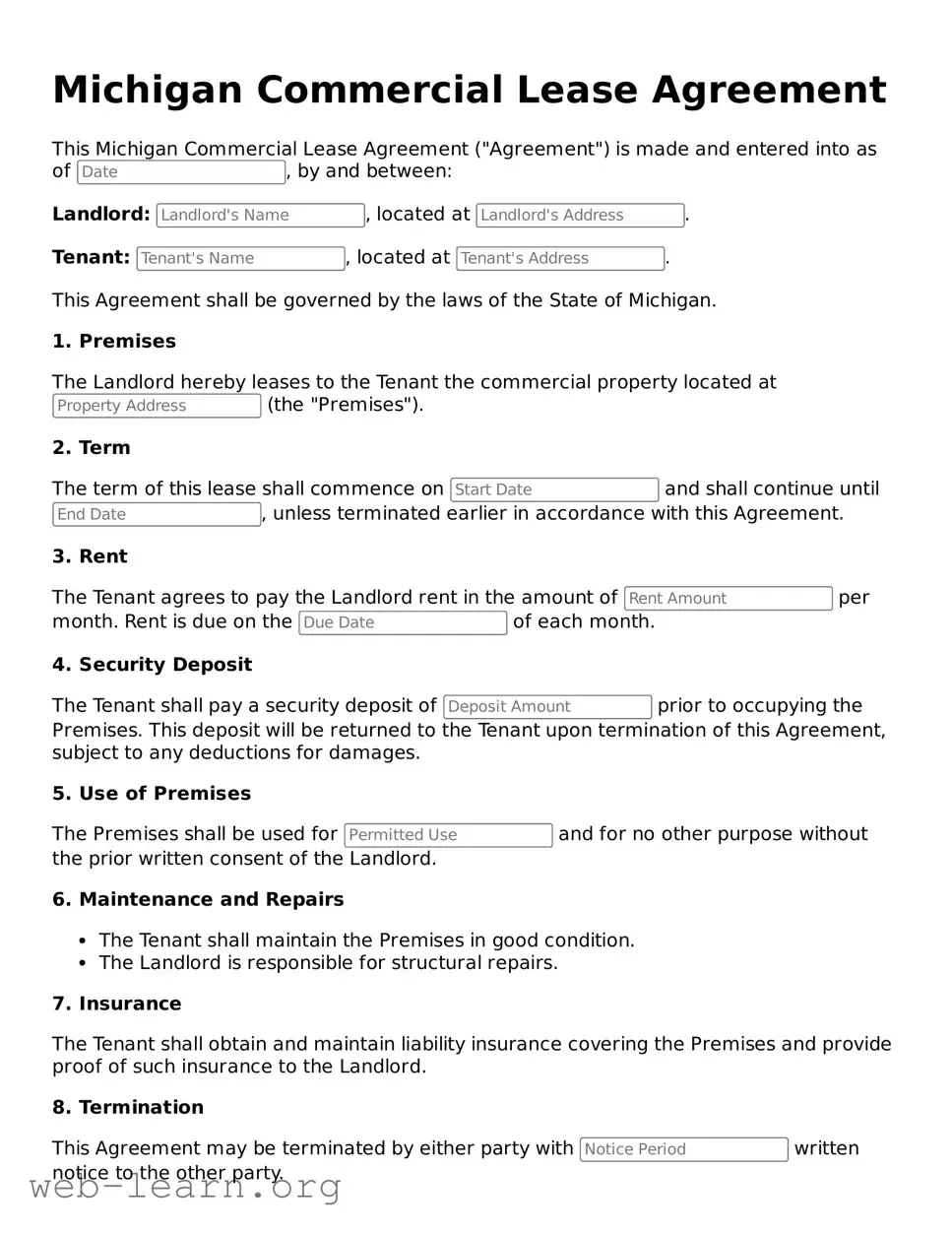
When entering into a commercial lease agreement in Michigan, it is crucial to understand the essential components that make up this legally binding document. The Michigan Commercial Lease Agreement form outlines the responsibilities and rights of both landlords and tenants, ensuring a clear understanding of the terms of occupancy. Key aspects include the lease duration, rental amount, and payment schedule, which provide clarity on financial obligations. Additionally, the agreement covers maintenance responsibilities, outlining who is accountable for repairs and upkeep of the property. Security deposits, use of the premises, and options for renewal or termination are also addressed, giving both parties a comprehensive view of their commitments. By familiarizing yourself with these elements, you can navigate the leasing process with confidence and protect your interests effectively.
Michigan Commercial Lease Agreement
This Michigan Commercial Lease Agreement ("Agreement") is made and entered into as of , by and between:
Landlord: , located at .
Tenant: , located at .
This Agreement shall be governed by the laws of the State of Michigan.
1. Premises
The Landlord hereby leases to the Tenant the commercial property located at (the "Premises").
2. Term
The term of this lease shall commence on and shall continue until , unless terminated earlier in accordance with this Agreement.
3. Rent
The Tenant agrees to pay the Landlord rent in the amount of per month. Rent is due on the of each month.
4. Security Deposit
The Tenant shall pay a security deposit of prior to occupying the Premises. This deposit will be returned to the Tenant upon termination of this Agreement, subject to any deductions for damages.
5. Use of Premises
The Premises shall be used for and for no other purpose without the prior written consent of the Landlord.
6. Maintenance and Repairs
7. Insurance
The Tenant shall obtain and maintain liability insurance covering the Premises and provide proof of such insurance to the Landlord.
8. Termination
This Agreement may be terminated by either party with written notice to the other party.
9. Governing Law
This Agreement shall be governed by and construed in accordance with the laws of the State of Michigan.
IN WITNESS WHEREOF, the parties have executed this Agreement as of the date first above written.
Landlord Signature: ___________________________
Date: ___________________________
Tenant Signature: ___________________________
Date: ___________________________
| Fact Name | Description |
|---|---|
| Governing Law | The Michigan Commercial Lease Agreement is governed by the laws of the State of Michigan. |
| Parties Involved | The agreement involves a landlord (lessor) and a tenant (lessee). |
| Property Description | The form requires a detailed description of the leased commercial property. |
| Lease Term | The duration of the lease must be specified, including start and end dates. |
| Rent Payment | The agreement outlines the rent amount, payment schedule, and accepted payment methods. |
| Security Deposit | Details regarding the security deposit, including amount and conditions for return, are included. |
| Maintenance Responsibilities | The responsibilities for property maintenance and repairs are clearly defined. |
| Default and Termination | Conditions under which the lease may be terminated or defaulted are specified. |
| Signatures Required | Both parties must sign the agreement for it to be legally binding. |
Filling out the Michigan Commercial Lease Agreement form is an important step in securing a rental space for your business. This process involves providing key information about both the landlord and the tenant, as well as details about the property and the terms of the lease. Follow these steps carefully to ensure that you complete the form accurately.
Once the form is completed, both parties should keep a copy for their records. This ensures that everyone has access to the agreed-upon terms and can refer back to them as needed.
A Michigan Commercial Lease Agreement is a legal document that outlines the terms and conditions under which a landlord rents commercial property to a tenant. This agreement specifies the rights and responsibilities of both parties, including rental amounts, lease duration, and maintenance obligations. It is crucial for both landlords and tenants to understand the terms clearly to avoid disputes in the future.
The agreement should contain several essential elements:
Yes, Michigan has specific laws that govern commercial leases. While commercial leases are generally less regulated than residential leases, certain state laws still apply. For example, the Michigan Uniform Commercial Code may influence lease agreements related to goods and services. Additionally, local zoning laws can affect how a property can be used. It's essential for both landlords and tenants to be aware of these laws to ensure compliance.
If a dispute arises, the first step is to review the lease agreement to understand the terms related to dispute resolution. Many agreements include clauses that specify how disputes should be handled, such as mediation or arbitration. If the issue cannot be resolved amicably, seeking legal advice is advisable. A qualified attorney can provide guidance on the best course of action based on the specifics of the situation.
Filling out a Michigan Commercial Lease Agreement can be a daunting task. Many individuals and businesses make common mistakes that can lead to misunderstandings or even legal disputes down the line. Awareness of these pitfalls can help ensure that the lease agreement is completed accurately and effectively.
One frequent mistake is neglecting to read the entire lease agreement before signing. It’s easy to skim through the document, but every clause has implications. Taking the time to understand the terms can prevent future conflicts. Another common error involves failing to specify the duration of the lease. Without clear start and end dates, both parties may have different expectations about the length of the tenancy.
Many tenants also overlook the importance of clearly defining the rental amount and payment terms. Simply stating a monthly rent without detailing when it is due or how it should be paid can lead to confusion. Additionally, some individuals forget to include information about security deposits. Not specifying the amount or conditions for its return can result in disputes at the end of the lease.
Another mistake is not addressing maintenance responsibilities. The lease should clearly outline who is responsible for repairs and maintenance. Failing to do so can lead to disagreements over who pays for necessary repairs. Similarly, tenants often forget to clarify the use of the property. If the lease does not specify the permitted uses, landlords may have grounds to terminate the lease if they believe the property is being misused.
Some people also make the error of not including provisions for renewal or termination. Without these clauses, both parties may find themselves in a difficult position if they want to end the lease or extend it. Additionally, many individuals do not consider the implications of subleasing. If a tenant wishes to sublease the property, it is essential to ensure that the lease allows for it and outlines any conditions.
Lastly, a common oversight involves neglecting to consult with a legal professional. While it may seem unnecessary, having an attorney review the lease can provide peace of mind and ensure that all terms are fair and legally sound. By avoiding these ten mistakes, individuals can create a more effective and harmonious leasing arrangement.
When entering into a commercial lease agreement in Michigan, there are several other forms and documents that can be useful. These documents help clarify the terms of the lease, protect the interests of both parties, and ensure a smooth leasing process. Here’s a list of some commonly used forms alongside the Michigan Commercial Lease Agreement.
Having these documents prepared and organized can make the leasing process smoother and help both landlords and tenants understand their rights and responsibilities. It’s always a good idea to review these forms carefully to ensure clarity and compliance with Michigan law.
Residential Lease Agreement: Similar to a commercial lease, a residential lease agreement outlines the terms and conditions under which a tenant can occupy a residential property. Both documents specify the duration of the lease, rent amount, and responsibilities of both the landlord and tenant.
Sublease Agreement: This document allows a tenant to rent out a portion or all of their leased space to another party. Like a commercial lease, it includes terms about rent, duration, and obligations, but it also requires the original landlord's consent.
Rental Agreement: A rental agreement is often used for short-term leases and can apply to both residential and commercial properties. It details the rental terms, including payment schedules and property maintenance responsibilities, similar to a commercial lease.
Lease Option Agreement: This document provides a tenant the option to purchase the property at a later date. While it shares similarities with a commercial lease regarding rental terms, it also includes specific clauses about the purchase option, making it unique.
When filling out the Michigan Commercial Lease Agreement form, careful attention to detail is essential. This document outlines the terms between the landlord and tenant, and inaccuracies can lead to misunderstandings or legal complications. Here are ten important dos and don'ts to consider:
By following these guidelines, you can help ensure a smoother leasing process and protect your rights as a tenant or landlord in Michigan.
When it comes to commercial leases in Michigan, misunderstandings can lead to significant issues for both landlords and tenants. Here are six common misconceptions about the Michigan Commercial Lease Agreement form that you should be aware of:
Understanding these misconceptions can help both landlords and tenants navigate the complexities of commercial leases in Michigan. Clarity and communication are essential in creating a successful leasing relationship.
When filling out and using the Michigan Commercial Lease Agreement form, there are several important points to keep in mind. Here are some key takeaways:
By paying attention to these key areas, both landlords and tenants can create a clear and effective lease agreement that protects their interests.