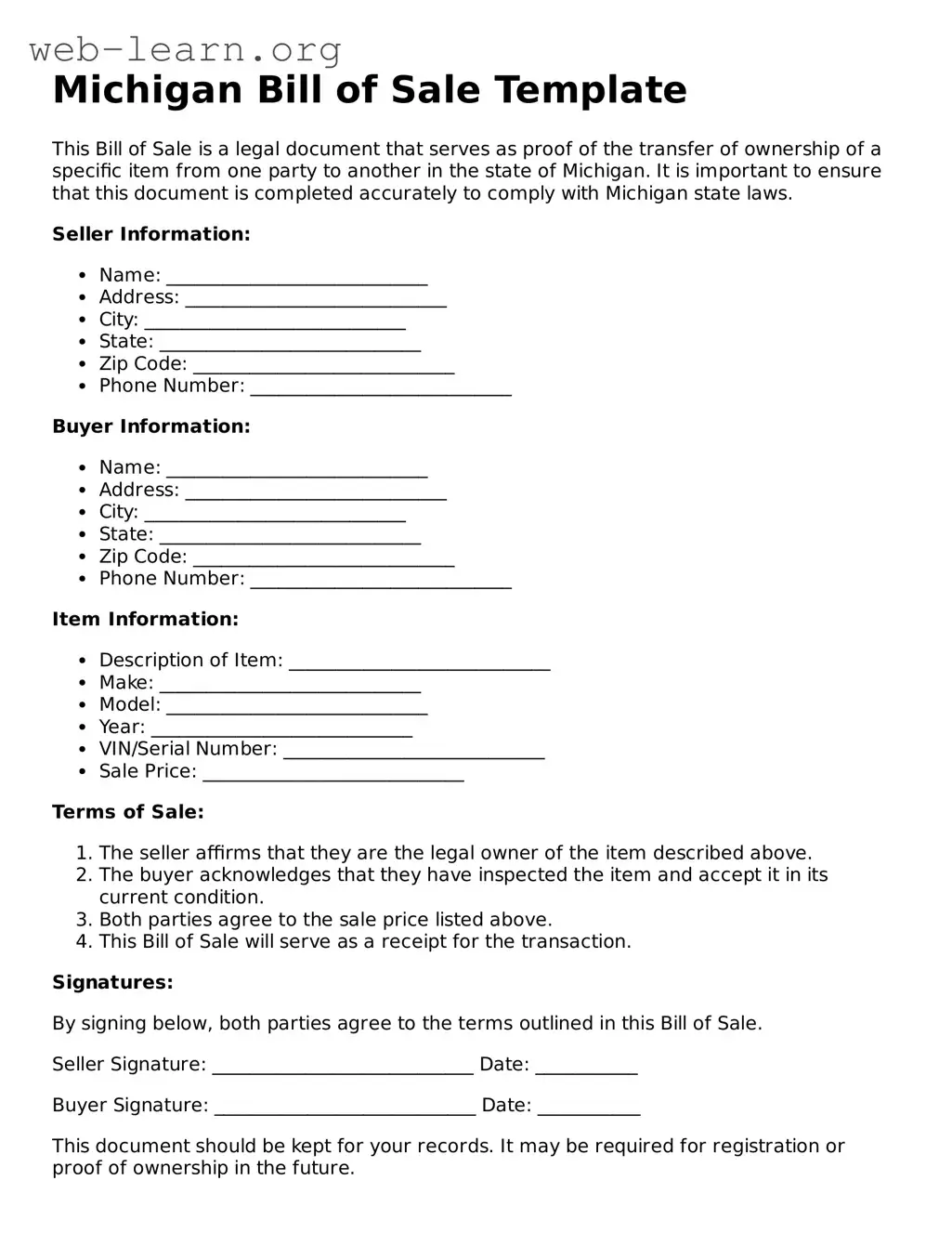
When engaging in the buying or selling of personal property in Michigan, understanding the Bill of Sale form is crucial for both parties involved. This document serves as a written record of the transaction, detailing essential information such as the names and addresses of the buyer and seller, a description of the item being sold, and the agreed-upon purchase price. It acts as proof of ownership transfer and can be invaluable in case of disputes or future claims. Additionally, the form may include specific terms and conditions, such as warranties or guarantees, which can protect both parties. Having a properly completed Bill of Sale not only ensures a smooth transaction but also provides peace of mind, making it an indispensable tool in Michigan's vibrant marketplace.
Michigan Bill of Sale Template
This Bill of Sale is a legal document that serves as proof of the transfer of ownership of a specific item from one party to another in the state of Michigan. It is important to ensure that this document is completed accurately to comply with Michigan state laws.
Seller Information:
Buyer Information:
Item Information:
Terms of Sale:
Signatures:
By signing below, both parties agree to the terms outlined in this Bill of Sale.
Seller Signature: ____________________________ Date: ___________
Buyer Signature: ____________________________ Date: ___________
This document should be kept for your records. It may be required for registration or proof of ownership in the future.
| Fact Name | Description |
|---|---|
| Purpose | The Michigan Bill of Sale form is used to document the sale of personal property between a buyer and a seller. |
| Governing Law | This form is governed by Michigan state law, specifically the Uniform Commercial Code (UCC) as it applies to the sale of goods. |
| Required Information | The form typically requires the names and addresses of both parties, a description of the item sold, and the sale price. |
| Notarization | While notarization is not mandatory, it is recommended to provide an extra layer of authenticity. |
| Transfer of Ownership | The Bill of Sale serves as proof of transfer of ownership from the seller to the buyer. |
| Record Keeping | Both parties should retain a copy of the Bill of Sale for their records, as it may be needed for future reference or disputes. |
After obtaining the Michigan Bill of Sale form, you can begin filling it out. This document is essential for recording the sale of a vehicle or personal property. Ensure you have all the necessary information at hand before starting.
Once completed, ensure that both parties retain a copy of the signed Bill of Sale for their records. This document serves as proof of the transaction and can be useful for future reference.
A Michigan Bill of Sale is a legal document that serves as proof of the transfer of ownership of personal property from one party to another. This document outlines the details of the transaction, including the parties involved, a description of the item being sold, and the sale price.
While a Bill of Sale is not always legally required for every transaction, it is highly recommended for significant purchases such as vehicles, boats, or other valuable items. It provides a clear record of the sale, which can be useful for both the buyer and seller in case of disputes or for future reference.
A comprehensive Michigan Bill of Sale should include the following information:
Yes, individuals can create their own Bill of Sale. There are no strict formatting requirements, but it is important to ensure that all necessary information is included. Many templates are available online, which can help streamline the process.
Notarization is not required for a Bill of Sale in Michigan. However, having the document notarized can add an extra layer of authenticity and may be beneficial in case of future disputes. It is advisable to check with local authorities or legal advisors for specific requirements.
Both the buyer and seller should keep a copy of the Bill of Sale for their records. This document can be important for tax purposes, registration, and as proof of ownership. If the item is a vehicle, the buyer may need to present the Bill of Sale when registering the vehicle with the state.
Yes, a Bill of Sale can serve as a receipt for the transaction. It provides evidence of the sale and the agreed-upon price. Both parties should sign the document to confirm their agreement to the terms outlined within.
If issues arise after the sale, such as disputes regarding the condition of the item or payment, the Bill of Sale can serve as a critical piece of evidence. It is advisable to resolve disputes amicably, but if necessary, the document may be used in legal proceedings to support either party's claims.
Michigan law does not impose specific requirements for Bills of Sale, but it does require that certain transactions, like vehicle sales, be documented properly for registration purposes. Familiarity with local laws and regulations is important to ensure compliance.
When completing the Michigan Bill of Sale form, many individuals inadvertently make mistakes that can lead to complications down the line. One common error is failing to provide accurate information about the vehicle or item being sold. It’s crucial to include the correct make, model, year, and Vehicle Identification Number (VIN) for vehicles. An incorrect VIN can create issues with registration and ownership transfer.
Another frequent mistake is neglecting to include the full names and addresses of both the buyer and the seller. This information is essential for establishing clear ownership and can prevent disputes later. If either party’s details are missing or incorrect, it could create confusion regarding who is legally responsible for the transaction.
Many people also overlook the importance of signatures. The Bill of Sale must be signed by both the buyer and the seller to be valid. Without these signatures, the document lacks legal standing, which can complicate matters if any disputes arise in the future. Always ensure that both parties sign the document in the appropriate places.
Lastly, some individuals forget to include the date of the sale. This might seem minor, but the date is significant for legal and tax purposes. It establishes when the ownership transfer occurred, which can affect registration deadlines and liability. Including the date helps clarify the timeline of the transaction, making it easier to resolve any potential issues later.
The Michigan Bill of Sale form is an essential document for transferring ownership of personal property. However, it is often accompanied by other forms that can help clarify the transaction and protect the interests of both parties. Below are some common documents used alongside the Bill of Sale.
Using these documents together with the Michigan Bill of Sale can help facilitate a smooth transaction. They provide clarity and legal backing, ensuring that both parties are protected throughout the process.
The Bill of Sale form shares similarities with several other documents used in transactions. Each document serves a unique purpose but often contains comparable elements. Below is a list of eight documents that are similar to the Bill of Sale:
When filling out the Michigan Bill of Sale form, it is important to follow certain guidelines to ensure accuracy and compliance. Below is a list of things you should and shouldn't do.
Following these guidelines will help ensure that the Bill of Sale is valid and serves its purpose effectively.
Understanding the Michigan Bill of Sale form can be challenging. Here are ten common misconceptions about this document, along with clarifications to help clear up any confusion.
This is incorrect. While it is commonly used for vehicles, a Bill of Sale can also be used for various types of personal property, including boats, trailers, and even furniture.
In Michigan, a properly completed Bill of Sale is a legally binding document that can serve as proof of ownership and the terms of the sale.
While a title is essential for vehicle transfers, a Bill of Sale provides additional documentation of the transaction and can be useful for tax purposes.
Both the buyer and the seller should sign the Bill of Sale to validate the transaction and protect both parties’ interests.
In many cases, a Bill of Sale is highly recommended. It can help prevent disputes by clearly outlining the terms of the sale.
In Michigan, notarization is not required for a Bill of Sale, but having it notarized can add an extra layer of authenticity.
While there are templates available, the form can be customized to fit the specific details of the transaction, as long as it includes essential information.
This is not true. Businesses can also use a Bill of Sale for transactions, especially for inventory and equipment sales.
A Bill of Sale can be used to document a gift, providing proof of transfer, even if no money changes hands.
While many transactions occur locally, a Bill of Sale can be used for online purchases or sales conducted across state lines.
When using the Michigan Bill of Sale form, there are several important points to keep in mind. Here are the key takeaways:
Using the Michigan Bill of Sale form correctly can help ensure a smooth transfer of ownership. Take your time to fill it out accurately.
Free Bill of Sale Georgia - The form may require signatures from both parties to validate the transaction.
Automobile Bill of Sale - The document may require signatures from both the buyer and seller to be valid.