When starting a business in Michigan, one of the first critical steps is the completion of the Articles of Incorporation form. This document serves as the foundation for establishing a corporation in the state and outlines essential information about the business. Key aspects of the form include the corporation's name, which must be unique and compliant with state regulations, as well as the purpose of the corporation, which should clearly articulate its intended business activities. Additionally, the form requires the designation of a registered agent, an individual or business entity responsible for receiving legal documents on behalf of the corporation. The Articles of Incorporation also necessitate the inclusion of the corporation's duration, which can be perpetual or for a specified period, and the number of shares the corporation is authorized to issue. By carefully addressing each of these components, entrepreneurs can ensure that their business is properly established and positioned for future growth within Michigan's regulatory framework.
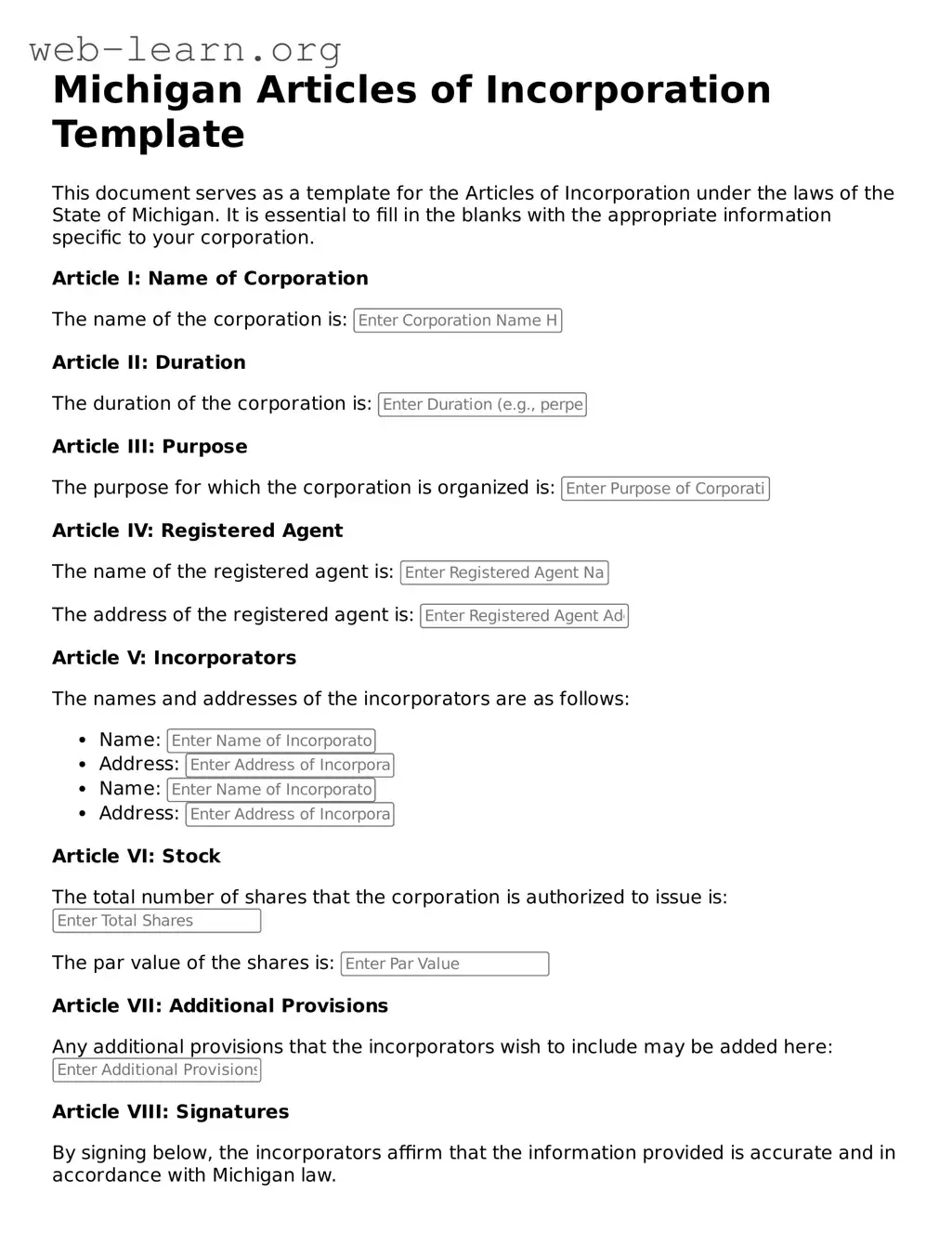
Michigan Articles of Incorporation Template
This document serves as a template for the Articles of Incorporation under the laws of the State of Michigan. It is essential to fill in the blanks with the appropriate information specific to your corporation.
Article I: Name of Corporation
The name of the corporation is:
Article II: Duration
The duration of the corporation is:
Article III: Purpose
The purpose for which the corporation is organized is:
Article IV: Registered Agent
The name of the registered agent is:
The address of the registered agent is:
Article V: Incorporators
The names and addresses of the incorporators are as follows:
Article VI: Stock
The total number of shares that the corporation is authorized to issue is:
The par value of the shares is:
Article VII: Additional Provisions
Any additional provisions that the incorporators wish to include may be added here:
Article VIII: Signatures
By signing below, the incorporators affirm that the information provided is accurate and in accordance with Michigan law.
This template is a starting point for creating your Articles of Incorporation. Ensure that you review it carefully and consider consulting with a legal professional to ensure compliance with all relevant laws.
| Fact Name | Description |
|---|---|
| Purpose | The Michigan Articles of Incorporation form is used to legally create a corporation in the state of Michigan. |
| Governing Law | This form is governed by the Michigan Business Corporation Act, specifically MCL 450.1101 et seq. |
| Filing Requirement | To officially incorporate, the form must be filed with the Michigan Department of Licensing and Regulatory Affairs (LARA). |
| Information Needed | Key details required include the corporation's name, purpose, registered office address, and the names of the incorporators. |
| Filing Fee | A filing fee is associated with the submission of the Articles of Incorporation, which is subject to change, so check current rates. |
| Processing Time | Typically, the processing time for the Articles of Incorporation can vary, but it often takes several business days. |
After gathering the necessary information, you are ready to complete the Michigan Articles of Incorporation form. This document is essential for establishing your corporation in Michigan. Follow these steps to ensure you fill out the form correctly.
What are the Articles of Incorporation?
The Articles of Incorporation is a legal document that establishes a corporation in Michigan. It outlines key details about the corporation, including its name, purpose, registered agent, and the number of shares authorized. This document must be filed with the Michigan Department of Licensing and Regulatory Affairs (LARA) to legally form the corporation.
Who needs to file Articles of Incorporation?
Any individual or group looking to create a corporation in Michigan must file Articles of Incorporation. This includes businesses of all types, whether for-profit or nonprofit. If you plan to operate as a corporation, completing this step is essential.
What information is required on the Articles of Incorporation form?
The form requires several key pieces of information, including:
Providing accurate and complete information is crucial to avoid delays in processing.
How do I file the Articles of Incorporation?
To file the Articles of Incorporation, you can submit the form online through the Michigan LARA website or send a paper form by mail. If filing online, ensure you have all required information readily available. For paper submissions, include the appropriate filing fee, which can vary based on the type of corporation.
Is there a fee to file the Articles of Incorporation?
Yes, there is a filing fee associated with the Articles of Incorporation. As of October 2023, the fee for filing a standard corporation is $50. Nonprofit corporations may have a different fee structure. It’s important to check the latest fee schedule on the Michigan LARA website, as fees can change.
How long does it take to process the Articles of Incorporation?
The processing time can vary. Typically, online filings are processed faster, often within a few business days. Paper filings may take longer, sometimes up to several weeks. If you need expedited service, inquire about available options when submitting your application.
What happens after I file the Articles of Incorporation?
Once your Articles of Incorporation are approved, you will receive a certificate of incorporation from LARA. This document serves as proof that your corporation is officially recognized by the state. You should keep this certificate in your corporate records and use it for various business activities, such as opening a bank account or applying for permits.
Filing the Michigan Articles of Incorporation is a crucial step for anyone looking to establish a corporation in the state. However, many individuals make common mistakes that can lead to delays or even rejections. Understanding these pitfalls can help ensure a smoother filing process.
One frequent error is failing to choose an appropriate name for the corporation. The name must be unique and not too similar to existing businesses. Additionally, it must include a corporate identifier, such as “Incorporated” or “Corporation.” Omitting this detail can result in the application being denied.
Another mistake involves the designation of a registered agent. Every corporation in Michigan must have a registered agent who is responsible for receiving legal documents. Some individuals neglect to include this information, or they list an individual who does not reside in Michigan, which can complicate legal notifications.
Many people also overlook the importance of specifying the purpose of the corporation. While it may seem straightforward, a vague or overly broad purpose can lead to confusion. The form requires a clear statement of the business activities the corporation will engage in.
Errors in providing the correct number of shares can also be problematic. The Articles of Incorporation must specify the total number of shares the corporation is authorized to issue. Failing to indicate this or entering an incorrect number can delay the approval process.
Inaccurate or incomplete information about the incorporators is another common issue. The form requires the names and addresses of all incorporators. Omitting any of this information, or providing incorrect details, can lead to complications during the review process.
Individuals sometimes neglect to sign the form or fail to include the required signatures of all incorporators. Each signature is essential for validating the document. A missing signature can halt the filing process and necessitate resubmission.
Finally, many applicants forget to include the necessary filing fee. Each state has specific fees associated with the filing of Articles of Incorporation, and Michigan is no exception. Not including the fee will result in the application being rejected outright.
By avoiding these common mistakes, individuals can increase their chances of successfully filing their Articles of Incorporation in Michigan. Taking the time to carefully review the form and ensuring all required information is accurate can save significant time and effort in the long run.
When starting a business in Michigan, filing the Articles of Incorporation is just one step in the process. Along with this form, there are several other documents that you may need to prepare and submit to ensure your corporation is established properly. Below is a list of common forms and documents that are often used in conjunction with the Articles of Incorporation.
Each of these documents plays a vital role in ensuring your corporation operates smoothly and remains compliant with state and federal regulations. By preparing these forms alongside your Articles of Incorporation, you set a solid foundation for your business's future.
The Articles of Incorporation form serves as a foundational document for establishing a corporation. It shares similarities with several other important documents in the realm of business formation and governance. Below are six documents that are comparable to the Articles of Incorporation, along with explanations of their similarities:
When filling out the Michigan Articles of Incorporation form, it’s important to be thorough and accurate. Here are some essential do's and don'ts to guide you through the process.
By following these guidelines, you can help ensure that your Articles of Incorporation are filled out correctly, paving the way for a smoother incorporation process.
Understanding the Michigan Articles of Incorporation form is crucial for anyone looking to establish a business in the state. However, several misconceptions can lead to confusion. Here are nine common misconceptions:
Being informed about these misconceptions can help individuals navigate the incorporation process more effectively.
When filling out and using the Michigan Articles of Incorporation form, consider the following key takeaways:
Illinois Articles of Incorporation - The articles can help define the vision and mission of the corporation.
California Articles of Incorporation - Incorporators must sign the Articles, indicating their intent to form the corporation.
Kansas Llc Requirements - It helps define the corporation's purpose and activities.