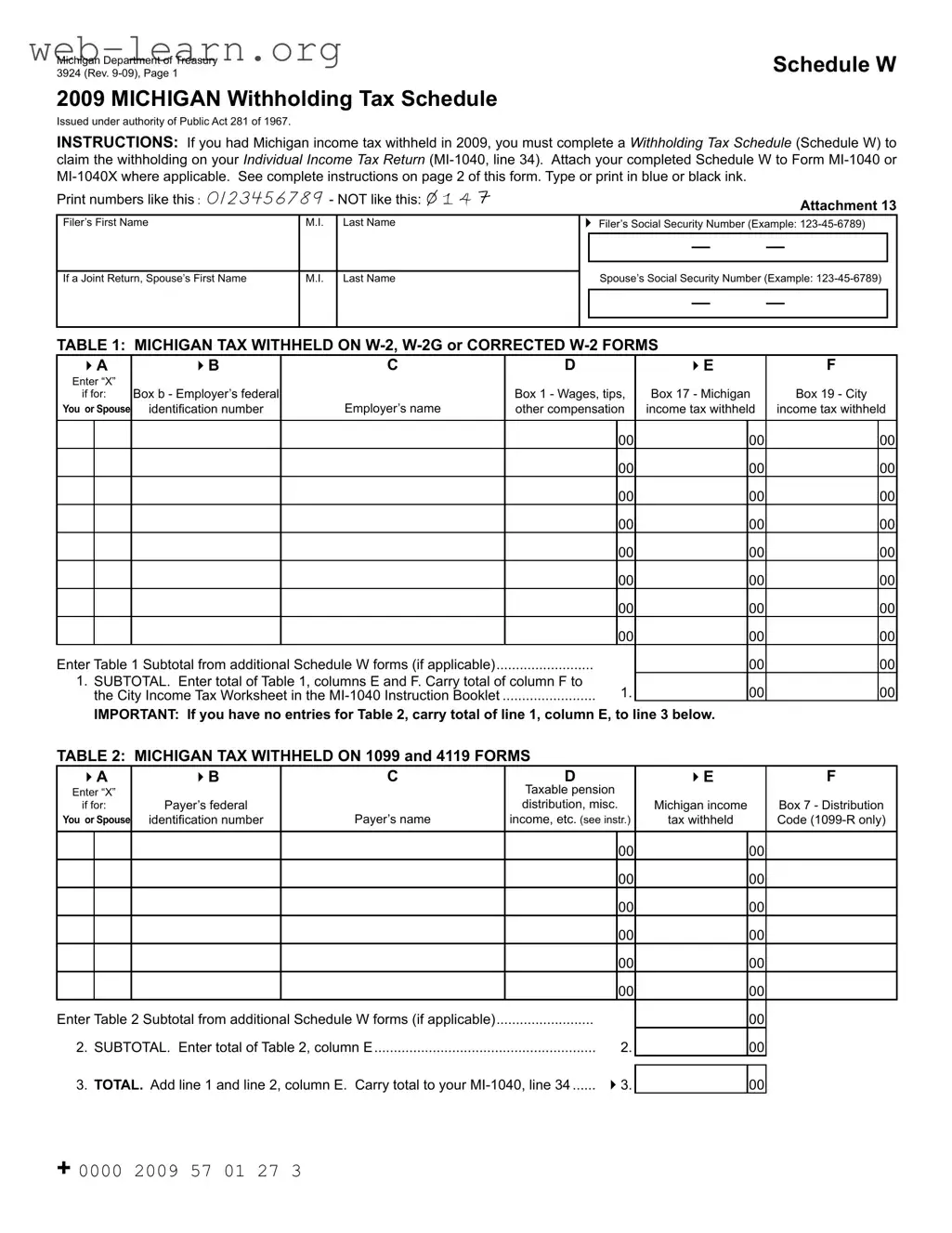
The Michigan 3924 form, also known as the Withholding Tax Schedule, plays a crucial role for individuals who had Michigan income tax withheld during the tax year. This form is necessary for claiming the withheld amount on the Individual Income Tax Return, specifically on line 34 of the MI-1040. To complete the form, individuals must provide personal information, including their name and Social Security number, and if filing jointly, the same details for their spouse. The form includes tables to report Michigan tax withheld from various sources, such as W-2s and 1099s. In these tables, filers will enter details about their income and the corresponding tax withheld. It is important to attach the completed Schedule W to the MI-1040 or MI-1040X to avoid delays in processing the return. Additional instructions guide users on how to fill out the form accurately and what to do if they need more space. Overall, the Michigan 3924 form is essential for ensuring that individuals receive proper credit for taxes withheld from their earnings.

Michigan Department of Treasury |
Schedule W |
|
3924 (Rev. |
||
|
||
2009 MICHIGAN Withholding Tax Schedule |
|
|
Issued under authority of Public Act 281 of 1967. |
|
INSTRUCTIONS: If you had Michigan income tax withheld in 2009, you must complete a Withholding Tax Schedule (Schedule W) to claim the withholding on your Individual Income Tax Return
Print numbers like this : 0123456789 - NOT like this: |
1 4 |
|
|
|
|
|
|
|
|
|
Attachment 13 |
|||||||
|
|
|
|
|
|
|
|
|
|
|
|
|
|
|
|
|||
Filer’s First Name |
M.I. |
Last Name |
|
|
4Filer’s Social Security Number (Example: |
|||||||||||||
|
|
|
|
|
|
|
|
|
|
|
|
|
|
|
|
|
|
|
|
|
|
|
|
|
|
|
|
|
|
|
|
|
|
|
|
|
|
|
|
|
|
|
|
|
|
|
|
|
|
|
|
|
|
|
|
|
If a Joint Return, Spouse’s First Name |
M.I. |
Last Name |
|
|
|
Spouse’s Social Security Number (Example: |
||||||||||||
|
|
|
|
|
|
|
|
|
|
|
|
|
|
|
|
|
|
|
|
|
|
|
|
|
|
|
|
|
|
|
|
|
|
|
|
|
|
|
|
|
|
|
|
|
|
|
|
|
|
|
|
|
|
|
|
|
|
|
|
|
|
|
|
|
|
|
|
|
|
|
|
|
|
|
|
TABLE 1: MICHIGAN TAX WITHHELD ON |
|
|
|
|
||||||||||||||
4A |
4B |
|
|
C |
|
D |
4E |
|
F |
|||||||||
Enter “X” |
|
|
|
|
|
|
|
|
|
|
|
|
|
|
|
|
|
|
if for: |
Box b - Employer’s federal |
|
|
|
|
Box 1 - Wages, tips, |
Box 17 - Michigan |
|
Box 19 - City |
|||||||||
You or Spouse |
identiication number |
|
|
Employer’s name |
|
other compensation |
income tax withheld |
income tax withheld |
||||||||||
|
|
|
|
|
|
|
|
|
|
|
|
|
||||||
|
|
|
|
|
|
|
|
|
|
00 |
|
|
|
00 |
|
|
00 |
|
|
|
|
|
|
|
|
|
00 |
|
00 |
|
00 |
||||||
|
|
|
|
|
|
|
|
00 |
|
00 |
|
00 |
||||||
|
|
|
|
|
|
|
|
00 |
|
00 |
|
00 |
||||||
|
|
|
|
|
|
|
|
00 |
|
00 |
|
00 |
||||||
|
|
|
|
|
|
|
|
00 |
|
00 |
|
00 |
||||||
|
|
|
|
|
|
|
|
00 |
|
00 |
|
00 |
||||||
|
|
|
|
|
|
|
|
|
|
00 |
|
00 |
|
00 |
||||
Enter Table 1 Subtotal from additional Schedule W forms (if applicable) |
|
00 |
|
00 |
||||||||||||||
1. SUBTOTAL. Enter total of Table 1, columns E and F. Carry total of column F to |
|
|
|
|
|
|
|
|
||||||||||
|
the City Income Tax Worksheet in the |
|
00 |
|
00 |
|||||||||||||
IMPORTANT: If you have no entries for Table 2, carry total of line 1, column E, to line 3 below.
TABLE 2: MICHIGAN TAX WITHHELD ON 1099 and 4119 FORMS
4A |
4B |
C |
D |
4E |
|
F |
||
Enter “X” |
|
|
Taxable pension |
|
|
|
||
if for: |
Payer’s federal |
|
distribution, misc. |
Michigan income |
|
Box 7 - Distribution |
||
You or Spouse |
identiication number |
Payer’s name |
income, etc. (see instr.) |
tax withheld |
|
Code |
||
|
|
|
|
|
|
|
|
|
|
|
|
|
|
00 |
|
00 |
|
|
|
|
|
|
00 |
|
00 |
|
|
|
|
|
|
00 |
|
00 |
|
|
|
|
|
|
00 |
|
00 |
|
|
|
|
|
|
00 |
|
00 |
|
|
|
|
|
|
00 |
|
00 |
|
Enter Table 2 Subtotal from additional Schedule W forms (if applicable) |
|
|
|
00 |
|
|||
2. SUBTOTAL. Enter total of Table 2, column E |
2. |
|
00 |
|
||||
3. TOTAL. Add line 1 and line 2, column E. Carry total to your |
43. |
00
+ 0000 2009 57 01 27 3
2009 Schedule W, Page 2
Instructions for Schedule W
Withholding Tax Schedule
Schedule W is designed to report State of Michigan and Michigan city income tax withholding. Schedule W is
imaged to enable us to process your individual income tax return more eficiently.
Attach the completed Schedule to your return.An attachment number is listed in the upper right corner to help you assemble your form in the correct order behind your
attached when required, the processing of your return
may be delayed. Do not submit
W.Keep copies of your
Michigan Residents. If you paid income tax to a governmental unit outside of Michigan, see instructions for
Schedule 2, line 5.
Completing the Withholding Tables
Lines not listed are explained on the form.
Complete the withholding tables using information from your
that contain Michigan tax withheld. If you need additional space, attach another Schedule W.
Column D
Table 1: From
Table 2: From 1099 or 4119 forms, or other withholding documents, enter unemployment compensation, taxable interest, ordinary dividends, miscellaneous income, bartering, taxable pension distributions in excess of contributions, state and local income tax refunds, credits or offsets, rents, royalties, and/or other taxable income from which Michigan tax was withheld.
Column F
Table 1: Enter city income tax withheld from Michigan
cities only.
Table 2: Enter Distribution Code from your
applicable).
Line 1: Subtotal. Enter the total of Table 1, columns E and
F.Carry total from Table 1, column F, to the City Income Tax Worksheet in the
Line 3: Total. Enter total of line 1 from Table 1 and line 2 from Table 2 on line 3 and carry total to Form
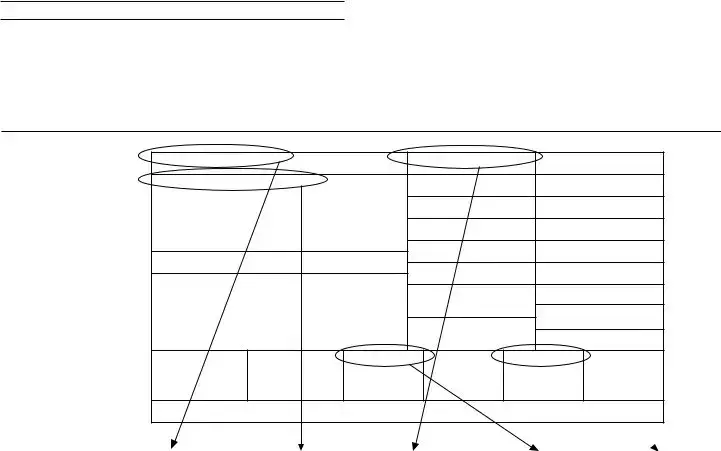
Sample
b. Employer Identiication Number |
1. Wages, tips, other comp. |
c. Employer’s name, address and ZIP code |
|
|
|
17. State income tax |
19. Local income tax |
Form |
2009 |
OMB No. |
Copy C for EMPLOYEE’S RECORDS |
Department of Treasury - Internal Revenue Service |
4A |
4B |
C |
D |
4E |
F |
Enter “X” |
|
|
|
|
|
if for: |
Box b - Employer’s federal |
|
Box 1 - Wages, tips, |
Box 17 - Michigan |
Box 19 - City |
You or Spouse |
identiication number |
Employer’s Name |
other compensation |
income tax withheld |
income tax withheld |
| Fact Name | Description |
|---|---|
| Form Title | Michigan Withholding Tax Schedule (Schedule W 3924) |
| Revision Date | Revised September 2009 |
| Governing Law | Issued under authority of Public Act 281 of 1967 |
| Purpose | To report Michigan income tax withheld for the year 2009 |
| Filing Requirement | Must be completed if Michigan income tax was withheld in 2009 |
| Attachment Requirement | Attach Schedule W to Form MI-1040 or MI-1040X |
| Instructions | Type or print in blue or black ink; follow specific formatting for numbers |
| Table 1 | Used for reporting Michigan tax withheld on W-2, W-2G, or corrected W-2 forms |
| Table 2 | Used for reporting Michigan tax withheld on 1099 and 4119 forms |
| Record Keeping | Keep copies of W-2s for six years for tax record purposes |
After gathering all necessary documents, proceed to complete the Michigan 3924 form. This form is essential for reporting any Michigan income tax withheld. Follow the steps outlined below to ensure accurate completion.
What is the Michigan 3924 form?
The Michigan 3924 form, also known as Schedule W, is used to report Michigan income tax withholding. If you had any Michigan income tax withheld during the year, you need to complete this schedule to claim the withholding on your Individual Income Tax Return (Form MI-1040 or MI-1040X).
Who needs to fill out the Michigan 3924 form?
Any individual who had Michigan income tax withheld from their wages, pensions, or other income sources during the tax year must fill out this form. This includes those who received W-2, 1099, or 4119 forms indicating tax withholding.
How do I complete the Michigan 3924 form?
To complete the form, you will need to gather information from your W-2 and 1099 forms. Enter the required details in the appropriate sections, including your name, Social Security number, and the amounts withheld. Make sure to follow the instructions carefully, especially when filling out the withholding tables.
What if I have multiple W-2 or 1099 forms?
If you have multiple W-2 or 1099 forms, you can report the total amounts on the Michigan 3924 form. If necessary, attach additional Schedule W forms to report all withholding amounts accurately.
Where do I send the completed Michigan 3924 form?
The completed Michigan 3924 form must be attached to your MI-1040 or MI-1040X when you file your state income tax return. Ensure that it is submitted to the Michigan Department of Treasury along with your return to avoid processing delays.
What happens if I do not attach the Michigan 3924 form?
If you fail to attach the Michigan 3924 form when required, it may delay the processing of your tax return. It is essential to include this form to ensure that your withholding is properly credited.
Can I file the Michigan 3924 form electronically?
Yes, you can file your Michigan tax return electronically, which often includes the ability to submit the Michigan 3924 form as part of the electronic filing process. Check with your tax software or tax professional for specific instructions on electronic submissions.
How long should I keep copies of my W-2 and 1099 forms?
It is recommended to keep copies of your W-2 and 1099 forms for at least six years. This is important in case the Michigan Department of Treasury requests these documents for verification or if you need them for future reference.
What if I paid income tax to another state?
If you paid income tax to a governmental unit outside of Michigan, you should refer to the instructions for Schedule 2, line 5 of the MI-1040 form. This will guide you on how to report and possibly claim a credit for those taxes.
When filling out the Michigan 3924 form, individuals often make several common mistakes that can lead to delays or complications in processing their tax returns. Understanding these errors can help ensure a smoother experience.
One frequent mistake is failing to include the required Schedule W with the MI-1040 or MI-1040X forms. If this schedule is not attached when necessary, it may cause delays in the processing of the return. Always double-check that all required documents are included before submission.
Another common error is incorrect information in the personal details section. People sometimes miswrite their names or Social Security numbers. It is crucial to type or print clearly in blue or black ink, ensuring that all details match the official documents.
Many individuals also overlook the importance of completing the withholding tables accurately. Errors can occur when transferring figures from W-2 or 1099 forms. It is essential to double-check the numbers entered in columns E and F to avoid discrepancies.
Some filers forget to mark the appropriate boxes indicating whether the form is for themselves or their spouse. This oversight can lead to confusion and potential issues with the return. Always ensure that the correct box is checked to indicate the correct taxpayer.
Another mistake involves the subtotal calculations. Filers may fail to add the totals from the withholding tables correctly. This can result in an incorrect total on line 3, which must be carried over to the MI-1040. Careful addition and verification of totals are necessary to prevent errors.
Additionally, individuals sometimes neglect to keep copies of their W-2s and 1099s for their records. These documents should be retained for at least six years, as they may be requested by the Department of Treasury. Keeping organized records can alleviate stress if questions arise later.
Some people also mistakenly submit W-2 or 1099 forms along with their returns. The instructions clearly state that these forms should not be included. Instead, only the completed Schedule W should be attached, so it's important to follow the guidelines closely.
Lastly, filers often fail to review the instructions thoroughly. Each section of the Michigan 3924 form has specific guidelines that can help prevent errors. Taking the time to read the instructions can provide clarity and help ensure that the form is completed correctly.
By being aware of these common mistakes and taking steps to avoid them, individuals can ensure a smoother filing process and minimize the risk of delays or complications with their tax returns.
The Michigan 3924 form, also known as the Withholding Tax Schedule, is an essential document for individuals who have had state income tax withheld. It allows taxpayers to claim the amount withheld on their individual income tax return. However, it is often accompanied by several other forms and documents that can help clarify and support your tax filing. Here’s a brief overview of six commonly used forms alongside the Michigan 3924.
Understanding these forms can significantly ease the tax filing process. Each document plays a vital role in ensuring that your tax return is accurate and complete. Always double-check to ensure all necessary forms are attached to avoid delays in processing your return. Being prepared with the right documents can lead to a smoother experience during tax season.
When filling out the Michigan 3924 form, there are important steps to follow to ensure accuracy and compliance. Here are some things you should and shouldn't do:
By following these guidelines, you can help ensure that your form is completed correctly and efficiently.
Understanding the Michigan 3924 form, also known as the Withholding Tax Schedule, is essential for residents who wish to accurately report their income tax withholding. However, several misconceptions about this form can lead to confusion. Here are nine common misunderstandings:
This form is not limited to employees. It is also applicable to individuals receiving income from various sources, such as pensions or unemployment benefits, where Michigan tax was withheld.
In fact, you should not submit W-2 or 1099 forms with your return. Instead, you must complete the Michigan 3924 using the information from these forms.
It is mandatory to complete the Michigan 3924 if you had Michigan income tax withheld. Failing to do so can result in processing delays for your tax return.
The instructions specify that you should use blue or black ink only. Using other colors may lead to processing issues.
While Table 1 is for W-2 income, Table 2 must also be completed if you have income reported on 1099 or 4119 forms. Both tables are essential for an accurate report.
It is crucial to retain copies of your W-2s for at least six years. These documents may be requested by the Michigan Department of Treasury for verification purposes.
This form also addresses city income tax withholding. If you live in a Michigan city that imposes an income tax, you must report that as well.
The Michigan 3924 is specifically designed for Michigan state and city taxes, while federal forms serve a different purpose. Each has its own set of rules and requirements.
If you are filing an amended return (MI-1040X) due to a corrected W-2, you must still complete a Michigan 3924. This ensures that any withholding adjustments are accurately reflected.
By clarifying these misconceptions, individuals can better navigate the requirements of the Michigan 3924 form and ensure compliance with state tax regulations.
Filling out the Michigan 3924 form, also known as the Withholding Tax Schedule, is an important step in accurately reporting your income tax withheld. Here are some key takeaways to keep in mind:
By following these guidelines, you can ensure that your Michigan 3924 form is filled out correctly and submitted on time, helping to streamline the tax filing process.