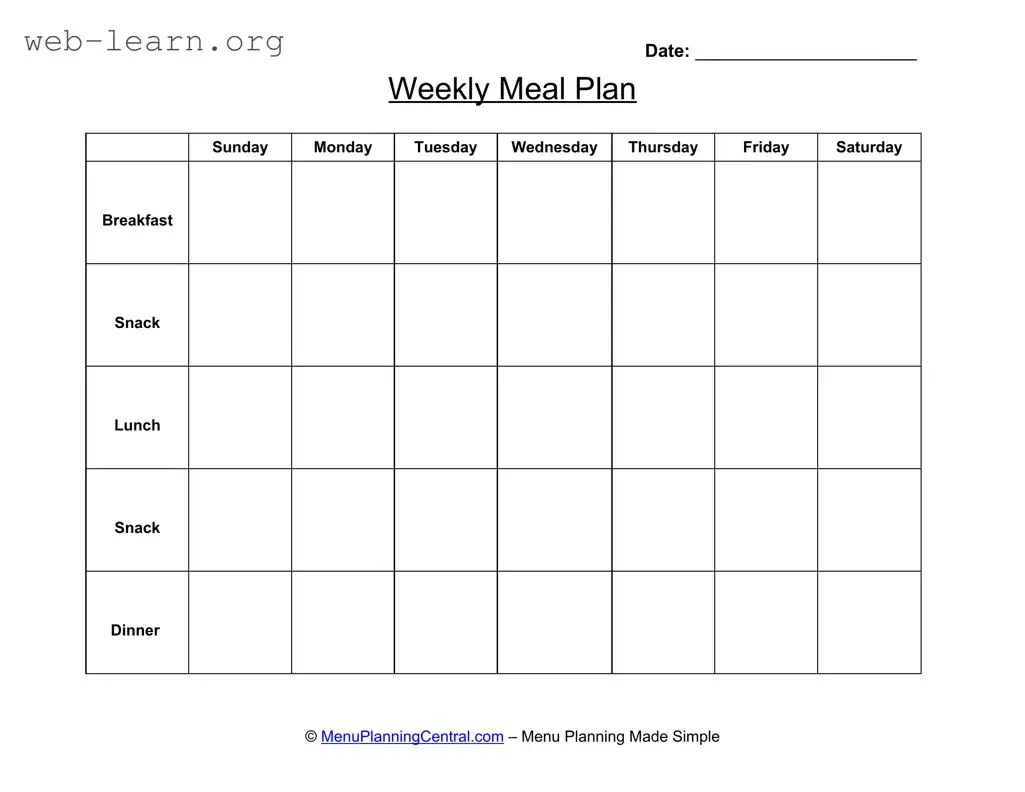
The Menu Planner form serves as a vital tool for individuals and families seeking to organize their weekly meals efficiently. This structured document allows users to outline their meal plans for each day of the week, from Sunday through Saturday. It includes designated spaces for breakfast, lunch, dinner, and snacks, ensuring that all meals are thoughtfully considered and balanced. By providing a clear framework, the form simplifies the process of meal planning, making it accessible for everyone, regardless of culinary expertise. The inclusion of a date field encourages users to stay organized and accountable, while the overall design promotes a systematic approach to nutrition and grocery shopping. This form not only aids in meal preparation but also fosters healthier eating habits by encouraging individuals to plan ahead and make informed choices.

Date: ______________________
Weekly Meal Plan
Sunday
Monday
Tuesday
Wednesday
Thursday
Friday
Saturday
Breakfast
Snack
Lunch
Snack
Dinner
©MenuPlanningCentral.com – Menu Planning Made Simple
| Fact Name | Description |
|---|---|
| Date | The form requires the user to fill in the date, ensuring that meal planning is organized and timely. |
| Weekly Meal Plan | This section is divided into days of the week, allowing for structured meal planning from Sunday to Saturday. |
| Meal Categories | Each day includes designated slots for breakfast, lunch, dinner, and snacks, promoting balanced nutrition throughout the week. |
| Menu Planning Made Simple | The form emphasizes simplicity in menu planning, making it accessible for anyone looking to organize their meals. |
| Governing Laws | State-specific forms may be governed by local health and nutrition regulations, ensuring compliance with dietary standards. |
Once you have the Menu Planner form ready, you can start filling it out to organize your meals for the week. Follow the steps below to ensure that you complete the form accurately and efficiently.
With the form filled out, you can now refer back to it as you prepare your meals. This will help you stay organized and make meal preparation easier.
What is the purpose of the Menu Planner form?
The Menu Planner form is designed to help individuals and families organize their meals for the week. By planning meals in advance, users can save time, reduce food waste, and make healthier eating choices. The form allows for structured meal planning across different days of the week, including designated slots for breakfast, lunch, dinner, and snacks.
How do I fill out the Menu Planner form?
To fill out the Menu Planner form, begin by writing the date at the top. Then, for each day of the week, list your planned meals in the appropriate sections for breakfast, lunch, dinner, and snacks. Consider your dietary preferences and any special occasions during the week. This structured approach can help ensure a balanced diet and accommodate any busy days.
Can I use the Menu Planner form for special diets?
Yes, the Menu Planner form can be customized to fit various dietary needs. Whether you are following a vegetarian, vegan, gluten-free, or any other specific diet, you can adapt the meal choices accordingly. By planning ahead, you can ensure that your meals align with your dietary restrictions while still being enjoyable and nutritious.
Is the Menu Planner form suitable for families?
Absolutely. The Menu Planner form is particularly beneficial for families. It allows for collaborative meal planning, where family members can contribute their preferences and dietary needs. This can enhance family meals and ensure that everyone has something they enjoy throughout the week.
How can I make the most of the Menu Planner form?
To maximize the effectiveness of the Menu Planner form, consider the following tips:
By taking these steps, you can create a practical and enjoyable meal plan for the week.
Where can I access the Menu Planner form?
The Menu Planner form can typically be found on various websites dedicated to meal planning, nutrition, or family resources. It may also be available at local community centers or health organizations. If you are unable to find a physical copy, consider creating a digital version using a word processor or spreadsheet application to suit your needs.
Completing the Menu Planner form can be straightforward, but several common mistakes can lead to confusion or incomplete meal planning. One frequent error is leaving the date section blank. This date is crucial for organizing meals and ensuring that the plan aligns with specific dietary needs for that week.
Another mistake is failing to fill in all meal slots. Each day has designated spaces for breakfast, lunch, dinner, and snacks. Omitting any of these can result in an unbalanced diet and missed opportunities for healthy eating. It is essential to use all available slots for a comprehensive meal plan.
People often overlook the importance of variety. Sticking to the same meals week after week can lead to boredom and decreased motivation to eat healthily. It's advisable to rotate meals and try new recipes to keep the menu exciting.
Additionally, some individuals forget to consider dietary restrictions or preferences. Whether it’s allergies, intolerances, or personal choices, accounting for these factors is vital. A well-thought-out plan should cater to everyone’s needs to promote inclusivity and health.
Another common oversight is not planning for leftovers. Leftovers can save time and reduce food waste. If a meal is particularly large, it should be noted in the planner for future consumption.
People also sometimes miscalculate portion sizes. Estimating the amount of food needed for each meal can be tricky. It’s important to be realistic about how much will be consumed to avoid over-preparing or under-preparing meals.
Lastly, failing to review the completed form before submission is a significant mistake. A quick check can catch errors or omissions, ensuring that the meal plan is accurate and ready for implementation. Taking a moment to review can make all the difference in effective meal planning.
The Menu Planner form is a valuable tool for organizing meals throughout the week. However, there are several other forms and documents that can complement it, making meal planning even more efficient. Here’s a list of related documents that you might find helpful.
Using these forms alongside the Menu Planner can streamline your meal preparation process. They promote organization, efficiency, and a little creativity in the kitchen, making mealtime more enjoyable for everyone involved.
The Menu Planner form is a helpful tool for organizing meals throughout the week. It shares similarities with several other documents that assist in meal planning and dietary management. Here are four documents that are comparable to the Menu Planner form:
When filling out the Menu Planner form, it's essential to keep a few key points in mind. Here’s a list of things you should and shouldn’t do:
Following these guidelines will help create an effective and organized meal plan for the week.
Many people have misconceptions about the Menu Planner form, which can lead to confusion or improper use. Here are seven common misunderstandings:
Understanding these misconceptions can help individuals make the most of the Menu Planner form, ultimately leading to better meal organization and planning.
Filling out the Menu Planner form can help streamline your meal preparation. Here are some key takeaways to keep in mind:
By following these tips, you can make the most of your Menu Planner form and enjoy more organized meal times.