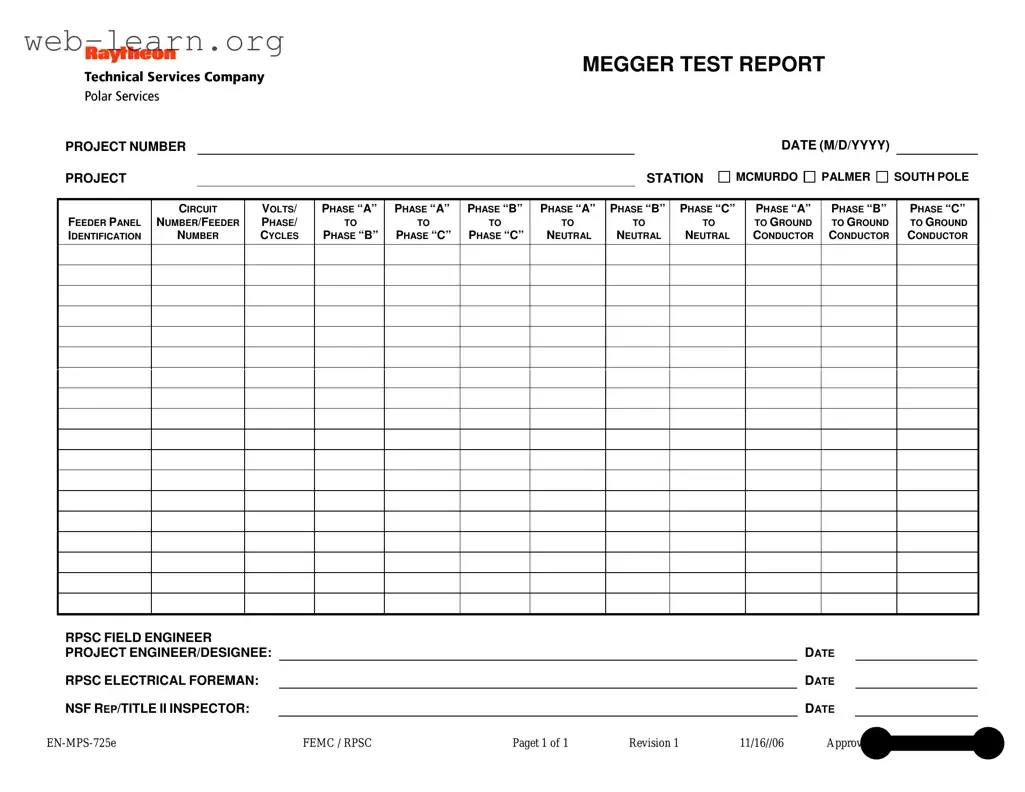
The Megger Test form is a crucial document used in electrical testing to assess insulation resistance and ensure the safety and reliability of electrical systems. This form captures essential information related to the testing process, including the project number, project station, and the date of the test. Specific details about the feeder panel identification and circuit numbers are also recorded. The form provides a comprehensive overview of voltage measurements across different phases, including Phase A to Phase B, Phase A to Phase C, and Phase B to Phase C. Additionally, it includes readings from each phase to neutral and phase to ground, which are vital for diagnosing potential electrical faults. The roles of various personnel involved in the testing process are documented, with spaces allocated for signatures from the RPSC field engineer, project engineer or designee, RPSC electrical foreman, and the NSF representative or title II inspector. This structured approach ensures accountability and traceability in the testing process, ultimately contributing to the integrity of electrical installations.
MEGGER TEST REPORT
PROJECT NUMBER
PROJECT |
|
STATION |
DATE (M/D/YYYY)
MCMURDO PALMER SOUTH POLE
FEEDER PANEL IDENTIFICATION
CIRCUIT
NUMBER/FEEDER
NUMBER
VOLTS/
PHASE/
CYCLES
PHASE “A”
TO
PHASE “B”
PHASE “A”
TO
PHASE “C”
PHASE “B”
TO
PHASE “C”
PHASE “A”
TO
NEUTRAL
PHASE “B”
TO
NEUTRAL
PHASE “C”
TO
NEUTRAL
PHASE “A”
TO GROUND CONDUCTOR
PHASE “B”
TO GROUND CONDUCTOR
PHASE “C”
TO GROUND CONDUCTOR
RPSC FIELD ENGINEER |
|
|
|
|
|
|
PROJECT ENGINEER/DESIGNEE: |
|
|
|
|
DATE |
|
RPSC ELECTRICAL FOREMAN: |
|
|
|
|
DATE |
|
NSF REP/TITLE II INSPECTOR: |
|
|
|
|
DATE |
|
FEMC / RPSC |
Paget 1 of 1 |
Revision 1 |
11/16//06 |
Approved by Wayne L. Cornell |
||
| Fact Name | Description |
|---|---|
| Project Number | This unique identifier is assigned to each Megger test report, allowing for easy tracking and reference. |
| Project Station | The specific location where the Megger test is conducted, which can include sites like McMurdo, Palmer, or South Pole. |
| Date | The date on which the Megger test is performed, formatted as month/day/year. |
| Feeder Panel Identification | This section identifies the specific feeder panel being tested, ensuring clarity in documentation. |
| Circuit Number/Feeder Number | This number indicates the specific circuit or feeder being evaluated, essential for accurate reporting. |
| Voltage and Phase Information | Details about voltage levels, phases, and cycles are recorded to assess the electrical characteristics being tested. |
| Ground Conductor Measurements | Measurements taken between various phases and ground conductors provide insights into the electrical safety and integrity. |
| Field Engineer and Project Engineer | Signatures from the RPSC field engineer and project engineer/designee indicate that the test was conducted and reviewed. |
| Approval | The report must be approved by a designated authority, ensuring compliance with established standards. |
Completing the Megger Test form is essential for documenting the results of electrical tests conducted at various project locations. The following steps outline how to accurately fill out this form to ensure all necessary information is captured correctly.
What is a Megger Test?
A Megger Test, also known as insulation resistance testing, is a method used to measure the insulation resistance of electrical circuits and equipment. This test helps ensure that electrical systems are safe and functioning properly by identifying any potential insulation failures or weaknesses.
Why is the Megger Test important?
The importance of the Megger Test lies in its ability to prevent electrical failures and accidents. By assessing the insulation quality, it helps protect both equipment and personnel from electrical shocks and fires. Regular testing can also extend the lifespan of electrical components.
What information is typically included in a Megger Test report?
A Megger Test report usually contains several key pieces of information, including:
How are the results of the Megger Test interpreted?
The results are interpreted based on the insulation resistance values obtained during the test. Generally, higher resistance values indicate better insulation quality. Values below certain thresholds may signal potential issues that require further investigation or immediate corrective action.
Who conducts the Megger Test?
The Megger Test is typically conducted by qualified electrical engineers or technicians. These professionals have the necessary training and expertise to perform the test safely and accurately. It is essential that the test is conducted under proper safety protocols to protect both the tester and the equipment.
How often should Megger Tests be performed?
The frequency of Megger Tests can vary depending on several factors, including the type of equipment, its usage, and regulatory requirements. Generally, it is advisable to conduct these tests during routine maintenance checks, after significant electrical work, or when equipment shows signs of insulation deterioration.
What should be done if the Megger Test results are unsatisfactory?
If the results indicate low insulation resistance, it is crucial to address the issue promptly. Possible actions include conducting further diagnostic tests, repairing or replacing faulty components, and ensuring that all electrical connections are secure and properly insulated. Consulting with a qualified electrical professional is recommended for guidance on the next steps.
Is there any special preparation needed before conducting a Megger Test?
Yes, some preparation is necessary before conducting a Megger Test. This includes ensuring that the equipment is de-energized, properly isolating the circuit, and verifying that all personnel are aware of the testing process. Additionally, it is important to check that the Megger device is functioning correctly and calibrated as needed.
Filling out the Megger Test form accurately is crucial for ensuring that electrical systems are tested properly. However, many people make common mistakes that can lead to confusion or incorrect results. One frequent error is failing to include the project number. This number is essential for tracking the test results back to a specific project. Without it, the data may not be easily referenced later, leading to potential issues in documentation and accountability.
Another mistake often made is neglecting to specify the circuit number or feeder number. This information is vital for identifying which specific circuit was tested. If this section is left blank, it can create ambiguity regarding the results. Testers should take the time to ensure that all necessary identifiers are filled out correctly.
People also frequently overlook the importance of documenting the date of the test accurately. The date helps establish a timeline for the electrical system's performance and maintenance. An incorrect or missing date can complicate future inspections or maintenance schedules, making it harder to track the system's history.
Lastly, many individuals forget to sign the form or provide the necessary signatures from the field engineer, project engineer, and other relevant personnel. Signatures validate the test results and indicate that the appropriate parties have reviewed the information. Without these signatures, the report may lack credibility and could be questioned in future evaluations.
When conducting electrical tests, several documents accompany the Megger Test form to ensure a comprehensive assessment of the system's integrity. Each of these forms serves a unique purpose, helping to provide a complete picture of the electrical environment. Below are some commonly used documents alongside the Megger Test form.
These documents work together to enhance the reliability and safety of electrical testing processes. Having a complete set of forms ensures that all aspects of the testing are documented and reviewed, promoting a thorough understanding of the electrical system's performance.
The Megger Test form is an important document used in electrical testing, but it shares similarities with several other forms. Below are six documents that are comparable to the Megger Test form, highlighting their similarities.
When filling out the Megger Test form, it's essential to ensure accuracy and clarity. Here are some guidelines to follow:
The Megger Test is an important procedure used to assess the insulation resistance of electrical systems. However, several misconceptions surround this test. Below are six common misunderstandings:
Understanding these misconceptions can help ensure that the Megger Test is used effectively and safely in various electrical applications.
Filling out the Megger Test form accurately is crucial for ensuring the safety and reliability of electrical systems. Here are key takeaways to keep in mind:
By following these guidelines, the Megger Test form can be filled out effectively, ensuring that all necessary information is captured for future reference and compliance.