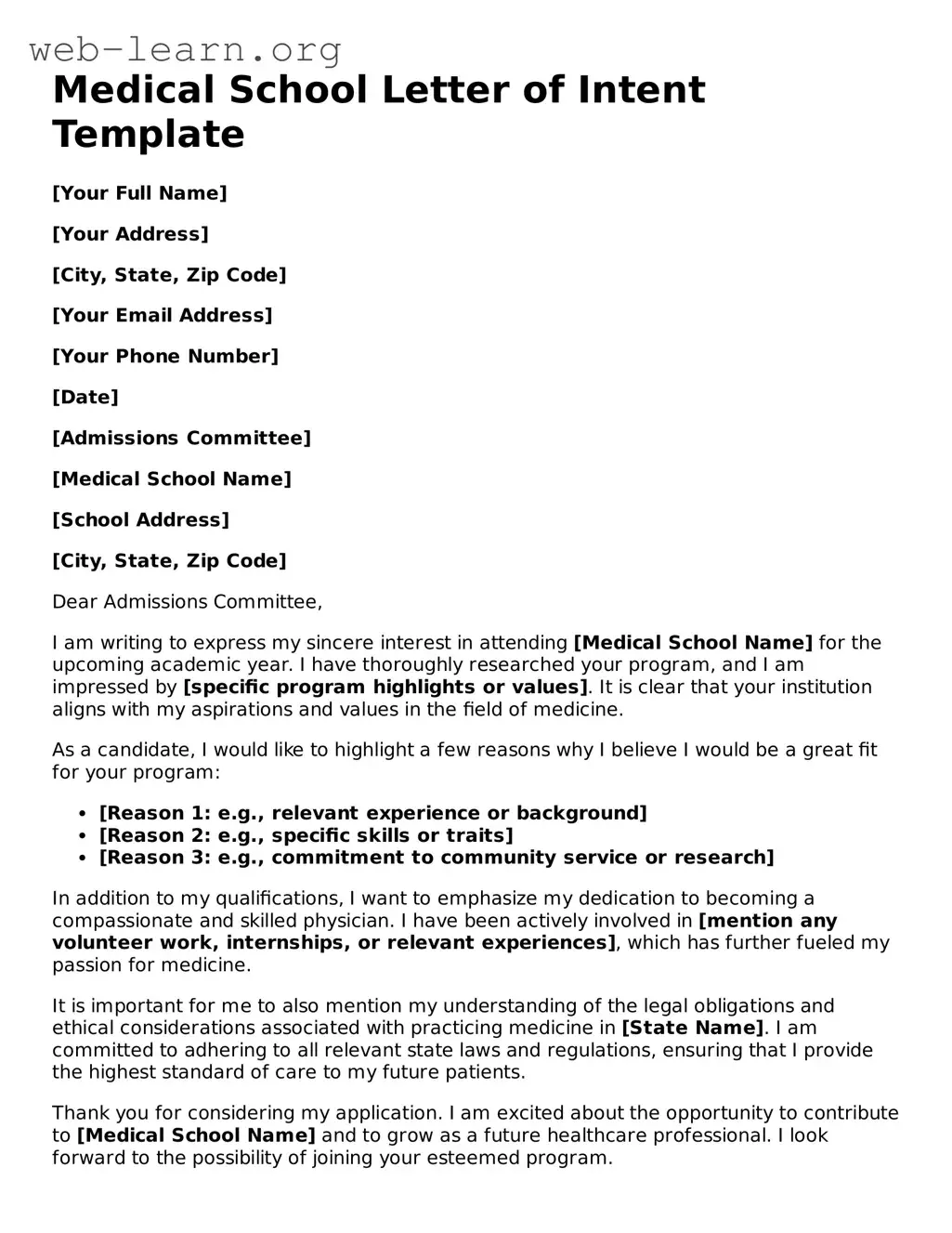
Applying to medical school is an exciting yet challenging journey, and one essential component of this process is the Medical School Letter of Intent form. This document serves as a formal expression of your desire to attend a particular medical school, showcasing not only your enthusiasm but also your commitment to becoming a part of their academic community. Within the letter, applicants typically outline their qualifications, relevant experiences, and personal motivations for pursuing a career in medicine. It's an opportunity to reinforce your candidacy after submitting your application, highlighting any new achievements or insights gained since your initial submission. Crafting a compelling letter can make a significant difference, as it allows you to connect with the admissions committee on a personal level and demonstrate your alignment with the school’s values and mission. Understanding the key components of this form, including how to structure your thoughts and articulate your passion for medicine, can set you apart in a competitive applicant pool.
Medical School Letter of Intent Template
[Your Full Name]
[Your Address]
[City, State, Zip Code]
[Your Email Address]
[Your Phone Number]
[Date]
[Admissions Committee]
[Medical School Name]
[School Address]
[City, State, Zip Code]
Dear Admissions Committee,
I am writing to express my sincere interest in attending [Medical School Name] for the upcoming academic year. I have thoroughly researched your program, and I am impressed by [specific program highlights or values]. It is clear that your institution aligns with my aspirations and values in the field of medicine.
As a candidate, I would like to highlight a few reasons why I believe I would be a great fit for your program:
In addition to my qualifications, I want to emphasize my dedication to becoming a compassionate and skilled physician. I have been actively involved in [mention any volunteer work, internships, or relevant experiences], which has further fueled my passion for medicine.
It is important for me to also mention my understanding of the legal obligations and ethical considerations associated with practicing medicine in [State Name]. I am committed to adhering to all relevant state laws and regulations, ensuring that I provide the highest standard of care to my future patients.
Thank you for considering my application. I am excited about the opportunity to contribute to [Medical School Name] and to grow as a future healthcare professional. I look forward to the possibility of joining your esteemed program.
Sincerely,
[Your Full Name]
| Fact Name | Details |
|---|---|
| Purpose | The Medical School Letter of Intent form is used by applicants to express their strong interest in a specific medical school. |
| Timing | It is typically submitted after an interview or when an applicant wishes to reinforce their commitment to a school. |
| Content Requirements | The letter should include reasons for interest, updates on achievements, and a clear statement of intent to enroll if accepted. |
| State-Specific Forms | While the letter format may vary by institution, applicants should check each school's requirements as they may be governed by their admissions policies. |
After obtaining the Medical School Letter of Intent form, you will need to complete it accurately to ensure your intentions are clearly communicated. Follow the steps below to fill out the form correctly.
A Medical School Letter of Intent is a formal communication from an applicant to a medical school, expressing their strong interest in attending that particular institution. It serves to reaffirm the applicant's commitment and can be an important factor in the admissions process.
It is advisable to submit your Letter of Intent after you have received an acceptance offer from the school, or if you are on a waitlist. Timing can vary, but generally, it should be sent as soon as you are certain that the school is your top choice.
Your Letter of Intent should include the following elements:
Typically, a Letter of Intent should be concise, ideally one page in length. It should be long enough to convey your message effectively but short enough to maintain the reader's attention. Aim for clarity and focus.
While it is possible to express interest in multiple schools, it is generally recommended to send a Letter of Intent to only one school at a time. This demonstrates genuine interest and commitment, which can positively influence the admissions committee.
Following up is not mandatory, but it can be beneficial. If you do choose to follow up, wait a few weeks after sending your Letter of Intent. A brief email expressing your continued interest can reinforce your commitment without appearing overly persistent.
If you decide to change your top choice after sending a Letter of Intent, it is advisable to communicate this to the previous school. Acknowledge your change of heart and express your gratitude for their consideration. Honesty and transparency are key in these situations.
Filling out the Medical School Letter of Intent form can be a crucial step in your application process. However, many applicants make common mistakes that can hinder their chances of acceptance. Understanding these pitfalls can help you present your best self to the admissions committee.
One frequent mistake is not being specific about your interest in the school. Admissions committees want to know why you are drawn to their program. Simply stating that you want to attend medical school is not enough. Instead, mention particular aspects of the school that resonate with you, such as specific programs, faculty, or research opportunities.
Another common error is failing to express enthusiasm. A Letter of Intent should convey your passion for medicine and your commitment to the school. A lack of enthusiasm can come across as indifference, which may raise concerns about your motivation. Make sure your excitement shines through in your writing.
Many applicants also neglect to proofread their letters. Spelling and grammatical errors can detract from your professionalism. Take the time to review your letter carefully. Consider asking a friend or mentor to read it as well, as they might catch mistakes you overlooked.
Some people make the mistake of being too vague. Instead of general statements, provide specific examples of your experiences and achievements. This helps to create a more compelling narrative about who you are and what you bring to the table.
Another issue is failing to follow the guidelines provided by the medical school. Each institution may have specific requirements for the Letter of Intent, including length, format, and submission process. Ignoring these guidelines can lead to your letter being dismissed or overlooked.
Additionally, applicants sometimes forget to mention any updates or new achievements since submitting their application. If you’ve gained new experiences or accolades, include them in your letter. This demonstrates your ongoing commitment to your goals and can strengthen your case for acceptance.
Being overly formal is another mistake. While professionalism is important, your letter should also reflect your personality. Admissions committees appreciate authenticity. Write in a way that feels true to you while maintaining a respectful tone.
Some candidates also fail to address why they are a good fit for the school. Highlight how your values align with the school's mission. This helps to create a connection and shows that you have thoughtfully considered your choice.
Finally, avoid writing a generic letter. Each Letter of Intent should be tailored to the specific school you are addressing. A one-size-fits-all approach can be easily spotted and may not make a strong impression. Personalization can significantly enhance the effectiveness of your letter.
When applying to medical school, several important documents accompany the Medical School Letter of Intent form. Each of these documents plays a crucial role in presenting your qualifications and intentions to the admissions committee. Below is a list of commonly used forms and documents that you may need to prepare.
Each of these documents complements the Medical School Letter of Intent form, together creating a comprehensive picture of your qualifications and commitment to a career in medicine. Preparing these materials thoughtfully can enhance your application and improve your chances of admission.
The Medical School Letter of Intent form serves a specific purpose in the application process, but it shares similarities with several other important documents. Each of these documents plays a role in communication and intent within educational or professional contexts. Below are ten documents that are similar to the Medical School Letter of Intent form, along with explanations of their similarities:
Filling out the Medical School Letter of Intent form is a critical step in your application process. Here are some important dos and don'ts to consider:
Taking these steps seriously can make a significant difference in your application. Make sure your letter reflects your best self and your commitment to a medical career.
When it comes to the Medical School Letter of Intent form, many applicants hold misconceptions that can lead to confusion and mistakes. Here’s a look at some of the most common misunderstandings:
Understanding these misconceptions can help you craft a more effective Medical School Letter of Intent. Be clear, genuine, and strategic in your approach.
When filling out and using the Medical School Letter of Intent form, keep these key takeaways in mind:
When to Send Letter of Intent Residency - Motivated to explore the integration of technology in pharmacy practice for improved patient outcomes.