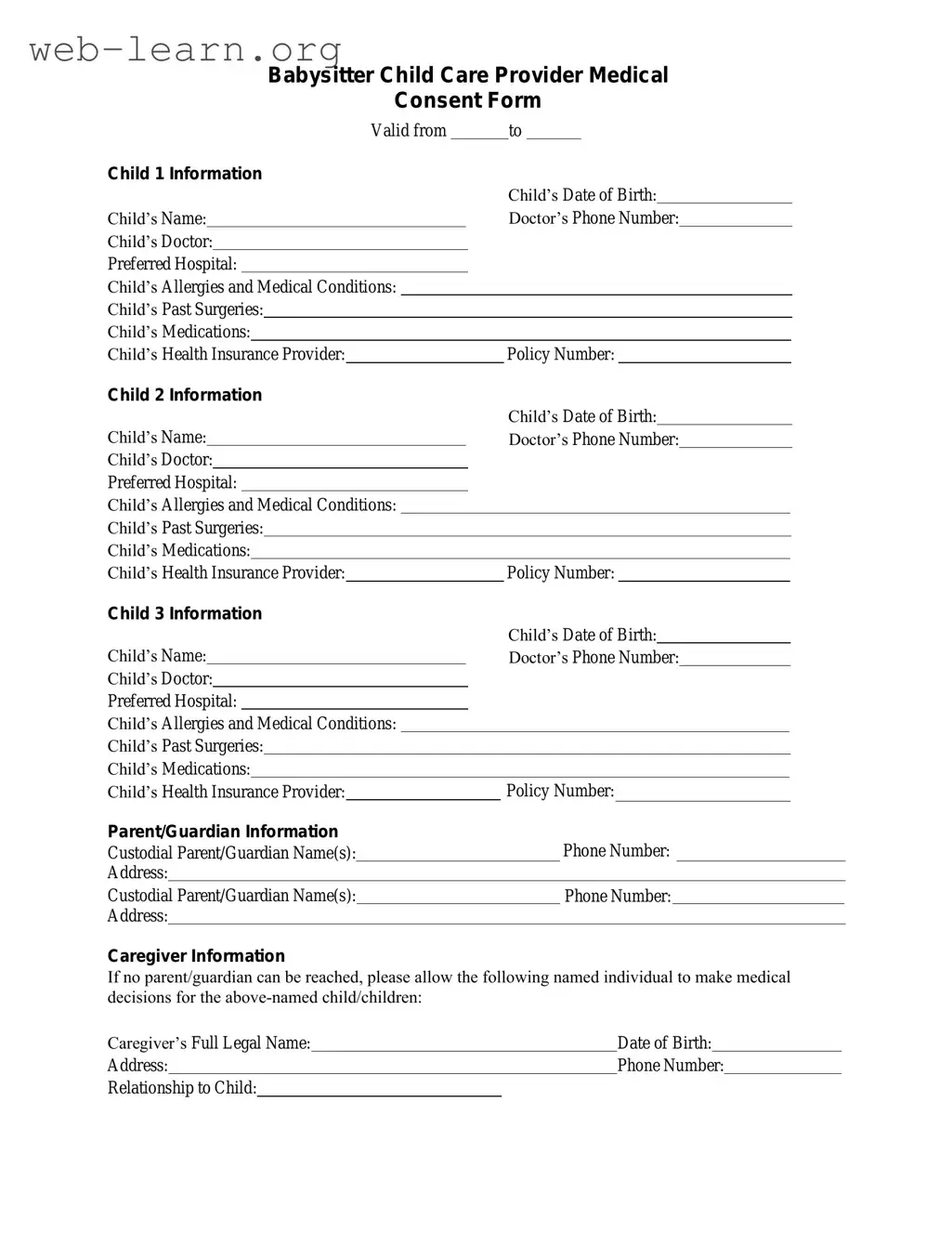
The Medical Consent Babysitter form serves as a vital document for parents and caregivers, ensuring that children receive appropriate medical attention in the event of an emergency. This form captures essential information about each child, including their name, date of birth, and medical history. It provides space to detail any allergies, medical conditions, past surgeries, and current medications. Furthermore, it includes contact information for the child’s doctor and preferred hospital, which can expedite care during critical situations. The form also requires details about the custodial parent or guardian, allowing babysitters to know whom to contact in case of an emergency. In instances where a parent or guardian cannot be reached, the form designates a caregiver who is authorized to make medical decisions on behalf of the child. This includes sharing personal information with emergency personnel, authorizing the use of life-saving medical devices, and arranging for ambulance transport if necessary. By filling out this form, parents can feel more at ease knowing that their babysitter has the necessary information to act quickly and effectively if a medical situation arises.
|
|
|
|
|
|
|
|
Babysitter Child Care Provider Medical |
|
||||||||||||||||||||
|
|
|
|
|
|
|
|
|
|
Consent Form |
|
||||||||||||||||||
|
|
|
|
|
|
|
|
|
|
Valid from |
|
|
|
to |
|
|
|
||||||||||||
Child 1 Information |
|
|
|
|
|
|
|
|
|
|
|
|
|
||||||||||||||||
|
|
|
|
|
|
|
|
|
|
|
|
|
|
|
|
|
|
Child’s Date of Birth: |
|
|
|||||||||
Child’s Name: |
|
|
Doctor’s Phone Number: |
|
|||||||||||||||||||||||||
|
|
|
|
|
|
|
|
|
|
|
|
|
|
|
|
|
|||||||||||||
Child’s Doctor: |
|
|
|
|
|
|
|
|
|
|
|
|
|
|
|
||||||||||||||
Preferred Hospital: |
|
|
|
|
|
|
|
|
|
|
|
|
|
|
|
||||||||||||||
Child’s Allergies and Medical Conditions: |
|
|
|
|
|
|
|
|
|
|
|
|
|
|
|||||||||||||||
Child’s Past Surgeries: |
|
|
|
|
|
|
|
|
|
|
|
|
|
|
|||||||||||||||
Child’s Medications: |
|
|
|
|
|
|
|
|
|
|
|
|
|
|
|||||||||||||||
Child’s Health Insurance Provider: |
|
|
Policy Number: |
|
|
||||||||||||||||||||||||
Child 2 Information |
|
|
|
|
|
|
|
|
|
|
|
|
|
||||||||||||||||
|
|
|
|
|
|
|
|
|
|
|
|
|
|
|
|
|
|
Child’s Date of Birth: |
|
|
|||||||||
Child’s Name: |
|
|
|
|
|
|
|
Doctor’s Phone Number: |
|
||||||||||||||||||||
Child’s Doctor: |
|
|
|
|
|
|
|
|
|
|
|
|
|
|
|
||||||||||||||
|
|
|
|
|
|
|
|
|
|
|
|
|
|||||||||||||||||
Preferred Hospital: |
|
|
|
|
|
|
|
|
|
|
|
|
|
|
|
||||||||||||||
Child’s Allergies and Medical Conditions: |
|
|
|
|
|
|
|
|
|
|
|
|
|
|
|||||||||||||||
Child’s Past Surgeries: |
|
|
|
|
|
|
|
|
|
|
|
|
|
|
|||||||||||||||
Child’s Medications: |
|
|
|
|
|
|
|
|
|
|
|
|
|
|
|||||||||||||||
Child’s Health Insurance Provider: |
|
|
Policy Number: |
|
|
||||||||||||||||||||||||
Child 3 Information |
|
|
|
|
|
|
|
|
|
|
|
|
|
||||||||||||||||
|
|
|
|
|
|
|
|
|
|
|
|
|
|
|
|
|
|
Child’s Date of Birth: |
|
|
|||||||||
Child’s Name: |
|
|
Doctor’s Phone Number: |
|
|||||||||||||||||||||||||
|
|
|
|
|
|
|
|
|
|
|
|
|
|
|
|
|
|
|
|
|
|
|
|
|
|||||
Child’s Doctor: |
|
|
|
|
|
|
|
|
|
|
|
|
|
|
|
||||||||||||||
|
|
|
|
|
|
|
|
|
|
|
|
|
|||||||||||||||||
Preferred Hospital: |
|
|
|
|
|
|
|
|
|
|
|
|
|
|
|
||||||||||||||
Child’s Allergies and Medical Conditions: |
|
|
|
|
|
|
|
|
|
|
|
|
|
|
|||||||||||||||
Child’s Past Surgeries: |
|
|
|
|
|
|
|
|
|
|
|
|
|
||||||||||||||||
Child’s Medications: |
|
|
|
|
|
|
|
|
|
|
|
|
|
|
|
||||||||||||||
Child’s Health Insurance Provider: |
|
|
Policy Number: |
|
|||||||||||||||||||||||||
Parent/Guardian Information |
|
|
|
|
|
|
|
|
|
|
|
|
|
||||||||||||||||
Custodial Parent/Guardian Name(s): |
|
|
|
|
Phone Number: |
|
|||||||||||||||||||||||
Address: |
|
|
|
|
|
|
|
|
|
|
|
|
|
|
|
||||||||||||||
Custodial Parent/Guardian Name(s): |
|
|
|
|
Phone Number: |
|
|||||||||||||||||||||||
Address: |
|
|
|
|
|
|
|
|
|
|
|
|
|
|
|
||||||||||||||
Caregiver Information
If no parent/guardian can be reached, please allow the following named individual to make medical decisions for the
Caregiver’s Full Legal Name: |
|
|
Date of Birth: |
|
|||
Address: |
|
|
Phone Number: |
||||
|
|
|
|
|
|
|
|
Relationship to Child: |
|
|
|
|
|
||

Minor Medical Consent |
|
In case of an emergency, I grant permission to |
to make medical decisions |
for my child/children until one parent/guardian can be reached. Medical decisions I authorize the above named individual to make include:
□ Sharing personal information about my child/children with emergency personnel. □ Authorizing use of
□ Authorizing use of an ambulance for transport. □ Other:
Parent/Guardian Name: |
|
Signature: |
|
Date: |
|
|
Witness Name: |
|
Signature: |
|
Date: |
|
|
Parent/Guardian Name: |
|
Signature: |
|
Date: |
|
|
Witness Name: |
|
Signature: |
|
Date: |
|
|
In case of an emergency, I agree to make medical decisions for the above named child/children until one parent/guardian can be reached.
Caregiver Name: |
|
Signature: |
Date: |
|
Witness: |
||
|
|
|
|
|
|
|
|
Witness Name: |
|
|
Signature: |
Date: |
|
|
|
|
|
|
|
|
|
|
|
| Fact Name | Details |
|---|---|
| Purpose | The Medical Consent Babysitter form allows designated caregivers to make medical decisions for children in the absence of parents or guardians. |
| Child Information | Information for up to three children can be included, covering essential medical details such as allergies, medications, and doctor contact information. |
| Parent/Guardian Details | It requires the names, phone numbers, and addresses of custodial parents or guardians to ensure proper communication. |
| Caregiver Designation | A specific caregiver can be appointed to make medical decisions if parents cannot be reached during an emergency. |
| Emergency Permissions | The form grants permission for the caregiver to share personal information with emergency personnel and authorize life-saving measures. |
| State-Specific Regulations | Different states may have specific laws governing medical consent forms, including requirements for signatures and witness statements. |
| Signature Requirements | Both parents or guardians must sign the form, along with witnesses, to validate the consent provided. |
| Health Insurance Information | Details about the child’s health insurance provider and policy number are necessary for quick access to medical care. |
| Validity Period | The form should specify the valid dates during which the consent is effective, ensuring clarity for caregivers and medical personnel. |
Filling out the Medical Consent Babysitter form is an important step in ensuring your child's safety when you are away. This form provides essential information to caregivers in case of a medical emergency. Follow these steps to complete the form accurately.
Once completed, keep a copy for your records and provide the original to the caregiver. This will help ensure that your child receives the necessary care in your absence.
What is the Medical Consent Babysitter form?
The Medical Consent Babysitter form is a document that allows a babysitter or caregiver to make medical decisions for your child in case of an emergency. It includes important information about your child's health and allows for quick action if needed.
Why do I need this form?
This form is essential for ensuring that your babysitter has the authority to act in your child's best interest during emergencies. It provides them with the necessary medical information to make informed decisions if you are unavailable.
What information do I need to provide?
You will need to fill out details for each child, including:
Who should I designate as the caregiver?
The caregiver should be someone you trust to make medical decisions for your child if you cannot be reached. This person should be familiar with your child’s medical history and comfortable handling emergencies.
What if my child has allergies or medical conditions?
Make sure to list all allergies and medical conditions on the form. This information is critical for the caregiver and medical personnel to know in case of an emergency.
Can I update the form later?
Yes, you can update the form whenever necessary. Just make sure to provide the most current information to ensure your child's safety.
What happens if my child needs medical attention?
If your child needs medical attention and you are not reachable, the caregiver can use the information provided in the form to make decisions. They can share your child's medical history with emergency personnel and authorize necessary treatments.
How long is the form valid?
The form is valid for the duration specified on it. Be sure to fill in the start and end dates to clarify how long the caregiver has the authority to act on your behalf.
Do I need witnesses to sign the form?
Yes, having witnesses sign the form adds an extra layer of credibility. It ensures that the consent is legitimate and can be trusted by medical personnel if needed.
What if I have more than three children?
If you have more than three children, you can make additional copies of the form to include all necessary information. Just ensure that each child’s details are clearly documented.
Filling out a Medical Consent Babysitter form can seem straightforward, but there are several common mistakes that people often make. These errors can lead to complications in emergency situations, so it’s essential to be thorough and accurate.
One frequent mistake is failing to provide complete child information. Each child's section must be filled out with details such as their name, date of birth, and medical history. Omitting information like allergies or past surgeries can hinder a caregiver's ability to make informed decisions in a crisis.
Another common error is neglecting to include emergency contact information. It's crucial to list not only the custodial parent or guardian but also an alternative contact who can make decisions if the primary contacts are unavailable. Without this, caregivers may struggle to reach someone who can authorize necessary medical care.
People also often overlook updating medical information. If a child has recently changed doctors, medications, or health insurance providers, these updates must be reflected in the form. An outdated form can lead to delays in treatment or miscommunication with healthcare providers.
Additionally, many individuals forget to sign the form or have witnesses sign it. Signatures are vital for validating the consent and ensuring that the caregiver has the authority to act in an emergency. Without these signatures, the form may not hold up legally.
Another mistake is not specifying the scope of medical decisions that the caregiver is authorized to make. Parents should clearly indicate what actions the caregiver can take in an emergency, such as authorizing the use of an ambulance or life-saving devices. Failing to do this can lead to confusion during critical moments.
Lastly, some people use vague language in the 'Other' section when listing additional medical decisions. It's essential to be as specific as possible to avoid any ambiguity. Clear instructions help ensure that caregivers understand their responsibilities and can act swiftly when necessary.
By being mindful of these common mistakes, parents and guardians can ensure that their Medical Consent Babysitter form is complete and effective, providing peace of mind for both themselves and their caregivers.
The Medical Consent Babysitter form is an essential document for parents or guardians when entrusting their children to a babysitter. However, several other forms and documents often accompany it to ensure comprehensive care and communication. Here are some commonly used forms:
Using these forms in conjunction with the Medical Consent Babysitter form creates a safer and more organized environment for children in care. Parents and caregivers can work together effectively, ensuring the well-being of the child at all times.
The Medical Consent Babysitter form serves a crucial role in ensuring that caregivers can make informed medical decisions for children in the absence of a parent or guardian. Several other documents share similarities with this form, each designed to facilitate medical decision-making or to provide necessary health information. Below are seven such documents:
Filling out a Medical Consent Babysitter form is an important task that ensures your child receives the right care in case of an emergency. Here’s a list of things to keep in mind while completing the form:
Here are ten common misconceptions about the Medical Consent Babysitter form, along with clarifications for each:
Filling out the Medical Consent Babysitter form is an important step in ensuring your child's safety while under the care of a babysitter. Here are some key takeaways to keep in mind:
Taking the time to fill out this form accurately can provide peace of mind, knowing that your child will receive the necessary care in an emergency.