The Media Release form is an essential document that allows individuals to give permission for their image, voice, or other personal information to be used in various media formats. This form is commonly utilized in settings such as photography sessions, video recordings, and promotional materials. By signing this document, individuals grant organizations or media outlets the right to publish their likeness or personal details without further consent. Key components of the form include the individual's name, contact information, and a clear statement of consent. Additionally, it often outlines the scope of use, specifying where and how the media may be distributed. Understanding the implications of this form is crucial, as it protects both the individual’s rights and the organization’s ability to use the content legally. Whether for a school event, a corporate project, or a community initiative, the Media Release form plays a vital role in ensuring that all parties are informed and in agreement about the use of personal images and information.
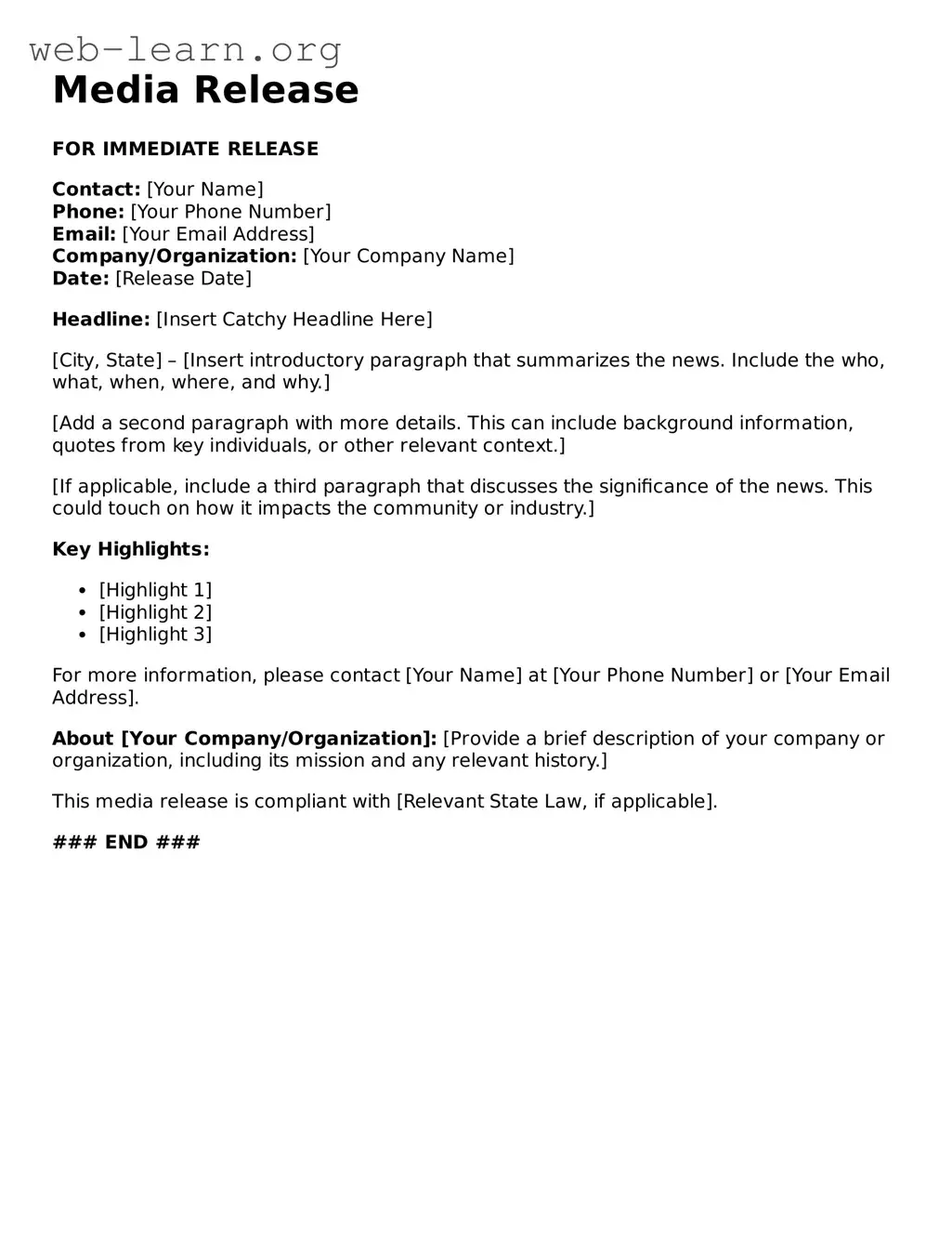
Media Release
FOR IMMEDIATE RELEASE
Contact: [Your Name]
Phone: [Your Phone Number]
Email: [Your Email Address]
Company/Organization: [Your Company Name]
Date: [Release Date]
Headline: [Insert Catchy Headline Here]
[City, State] – [Insert introductory paragraph that summarizes the news. Include the who, what, when, where, and why.]
[Add a second paragraph with more details. This can include background information, quotes from key individuals, or other relevant context.]
[If applicable, include a third paragraph that discusses the significance of the news. This could touch on how it impacts the community or industry.]
Key Highlights:
For more information, please contact [Your Name] at [Your Phone Number] or [Your Email Address].
About [Your Company/Organization]: [Provide a brief description of your company or organization, including its mission and any relevant history.]
This media release is compliant with [Relevant State Law, if applicable].
### END ###
| Fact Name | Description |
|---|---|
| Purpose | The Media Release form allows individuals to grant permission for their image, voice, or likeness to be used in media productions. |
| Consent | By signing the form, individuals provide explicit consent, ensuring that their rights are respected in any media usage. |
| State-Specific Regulations | In California, the form is governed by Civil Code Section 3344, which protects individuals' rights to their likeness. |
| Duration | The consent granted through the Media Release form typically remains in effect indefinitely unless otherwise specified. |
Filling out the Media Release form is an important step in the process. It ensures that all necessary information is collected accurately. Once completed, the form will be submitted for review and processing.
What is a Media Release form?
A Media Release form is a document that allows individuals to give permission for their image, voice, or other personal information to be used in various media formats. This can include photographs, videos, interviews, or any promotional materials. By signing this form, you grant the organization or individual the right to use your likeness for specified purposes.
Why do I need to sign a Media Release form?
Signing a Media Release form is important for protecting both your rights and the rights of the organization using your image or information. It ensures that you understand how your likeness will be used and provides the organization with legal permission to use it. This helps prevent any misunderstandings in the future.
Who should sign the Media Release form?
Typically, anyone whose image or personal information will be used in media should sign the form. This includes participants in events, performers, or anyone featured in promotional materials. If the individual is a minor, a parent or guardian must sign on their behalf.
What happens if I do not sign the Media Release form?
If you choose not to sign the Media Release form, the organization will not have permission to use your image or personal information. This may result in your exclusion from certain events or promotional activities where photography or videography is involved.
Can I revoke my consent after signing the Media Release form?
Once you sign the Media Release form, it is generally considered a binding agreement. However, some organizations may allow you to revoke your consent under certain circumstances. It is essential to discuss this with the organization directly to understand their policy on revocation.
What types of media can my likeness be used in?
Your likeness can be used in various types of media, including but not limited to:
Is there any compensation for signing the Media Release form?
Compensation for signing a Media Release form varies by organization and project. Some may offer payment or other incentives, while others may not provide any compensation. It is advisable to inquire about this before signing the form.
How long is the Media Release form valid?
The validity of a Media Release form can depend on the terms outlined within the document itself. Some releases may be for a specific project, while others may grant permission for an indefinite period. Always read the form carefully to understand the duration of your consent.
What should I do if I have questions about the Media Release form?
If you have questions or concerns about the Media Release form, it is important to reach out to the organization or individual requesting your signature. They should be able to provide clarity on the form's purpose, usage, and any specific terms that may apply.
Can I request changes to the Media Release form?
Yes, you can request changes to the Media Release form. However, whether those changes will be accepted is up to the organization. Be clear about your concerns and discuss them openly. Open communication can often lead to a satisfactory agreement for both parties.
Filling out a Media Release form is an important task that can significantly impact how personal images or information are used in various media. However, many individuals make common mistakes that can lead to confusion or even legal issues. Understanding these pitfalls can help ensure that the form is completed accurately and effectively.
One frequent mistake is not reading the entire form before signing. Many people rush through the process, overlooking crucial details that explain how their information will be used. This can lead to unintended consent for uses they may not agree with. Taking the time to thoroughly review the form is essential.
Another common error is failing to provide complete contact information. If a media outlet needs to reach out for clarification or additional permissions, having accurate contact details is vital. Incomplete information can delay the process or result in missed opportunities.
Some individuals neglect to specify the scope of the release. They might not indicate whether the release applies to specific events, projects, or timeframes. Without clear parameters, the release could be interpreted more broadly than intended, leading to potential misuse of the media.
Additionally, people often overlook the importance of understanding the implications of granting rights. Many do not realize that signing a Media Release can transfer significant rights to the media outlet, including the right to edit or alter the content. It’s crucial to be aware of what rights are being given away.
Another mistake is not discussing the release with all involved parties. For instance, if a group is being photographed, every individual may need to sign a release. Failing to obtain consent from everyone can create complications later on, especially if someone objects to the use of their image.
Some individuals also forget to check for expiration clauses in the release. If the form does not specify a duration for the consent, it may lead to indefinite use of the media. Understanding how long the release is valid can help prevent future misunderstandings.
Moreover, people sometimes ignore the need for a witness or notary, depending on the context of the release. Certain situations may require additional verification to ensure the legitimacy of the consent. Skipping this step can weaken the enforceability of the release.
Lastly, many individuals fail to keep a copy of the signed Media Release form. Without a record of what was agreed upon, disputes may arise later regarding the terms of the release. Keeping a personal copy is a simple yet effective way to safeguard one’s rights.
By being aware of these common mistakes, individuals can navigate the Media Release process more effectively. Careful attention to detail not only protects personal interests but also fosters clear communication with media outlets.
When working with a Media Release form, several other documents and forms may be necessary to ensure a comprehensive understanding and agreement regarding the use of media and personal information. Each of these documents plays a crucial role in protecting the rights and interests of individuals involved. Below is a list of commonly used forms that often accompany a Media Release form.
Understanding these additional documents can help create a smoother process when working with media and personal information. Each form serves a specific purpose, ultimately protecting the rights and interests of all parties involved. Ensuring that all necessary forms are in place fosters transparency and trust, which are essential in any media-related endeavor.
When filling out the Media Release form, it’s important to follow certain guidelines to ensure everything goes smoothly. Here’s a helpful list of what to do and what to avoid:
Things You Should Do:
Things You Shouldn't Do:
When it comes to media release forms, there are several misconceptions that can lead to confusion. Here are eight common misunderstandings:
This is not true. Anyone who is photographed or filmed can be asked to sign a media release form. It’s a way to protect both the creator and the individual being recorded.
While signing a release does grant permission for specific uses of your image, it doesn’t mean you lose all rights. You can still control how your image is used, depending on the terms outlined in the release.
This is a misconception. Even non-commercial projects, such as school events or community gatherings, may require a media release to ensure everyone’s rights are respected.
While it can be difficult to retract permission after signing, it’s not impossible. Communication is key, and depending on the circumstances, you might be able to negotiate a withdrawal.
Media release forms can vary significantly based on the context and the specific rights being granted. It’s important to read each form carefully, as they may contain different terms.
In fact, a parent or guardian must sign a media release for minors. Protecting children’s rights is crucial, and consent must come from an adult.
This is misleading. Media releases are also important for video recordings, audio recordings, and any other form of media that captures a person’s likeness or voice.
In reality, many aspects of a media release can be negotiated. If you have concerns, it’s perfectly acceptable to discuss them before signing.
Understanding these misconceptions can help you navigate the world of media releases more confidently. Always read the fine print and don’t hesitate to ask questions if something isn’t clear.
When it comes to filling out and utilizing a Media Release form, understanding its purpose and implications is crucial. Here are some key takeaways to consider:
By keeping these points in mind, individuals can navigate the Media Release process with greater confidence and awareness.