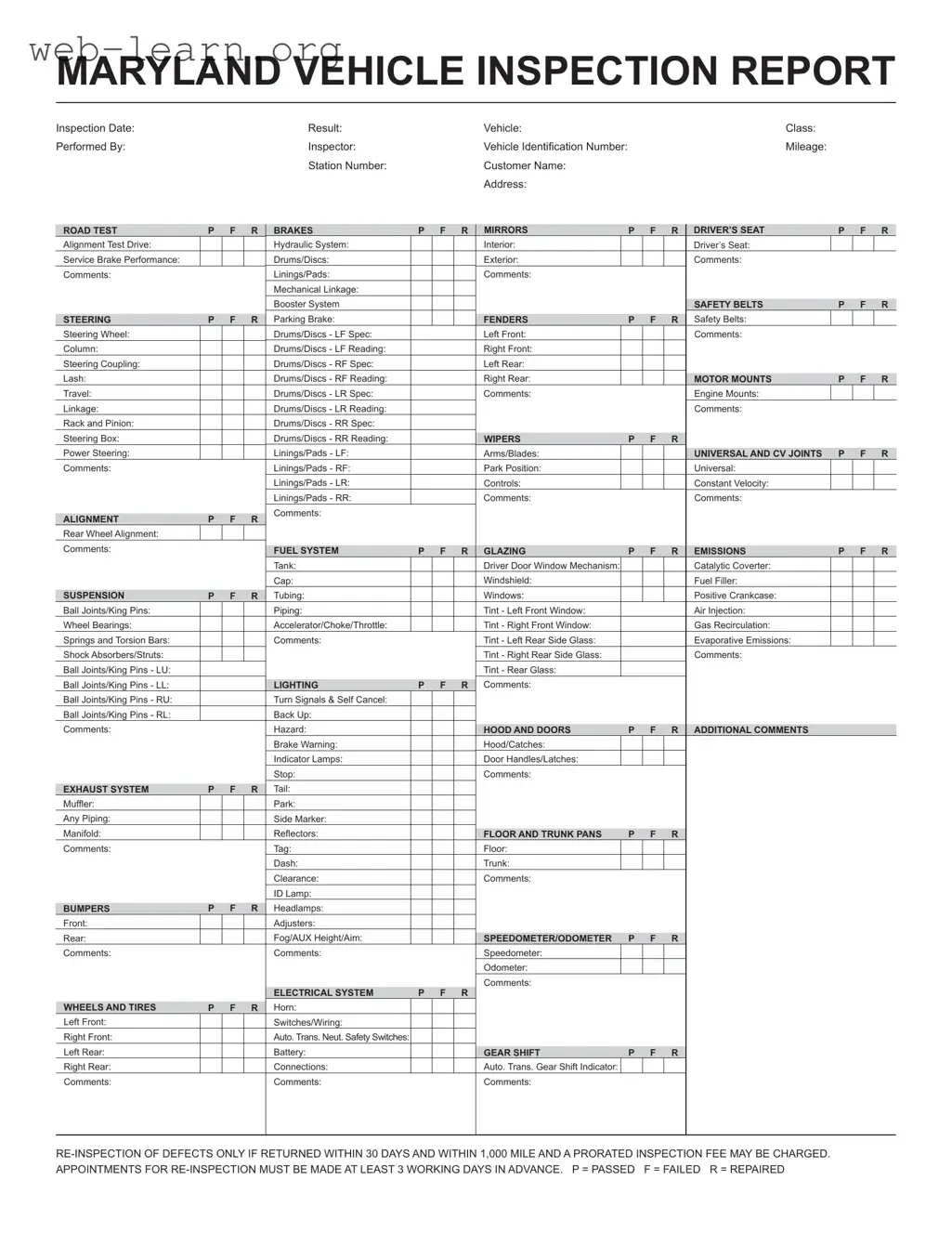
The Maryland Vehicle Inspection Report is an essential document for vehicle owners in the state, ensuring that cars meet safety and emissions standards. This form captures various details about the vehicle, including the inspection date, vehicle identification number, and the inspector's information. It outlines the results of multiple tests, such as brakes, lights, and emissions, which are categorized as passed, failed, or repaired. The report also includes sections for comments on specific components, allowing inspectors to provide additional insights. Key areas of inspection include the vehicle's alignment, suspension, fuel system, and electrical system. Each section is designed to ensure that the vehicle is safe for operation and compliant with state regulations. The form also addresses re-inspection procedures for vehicles that may have failed initial assessments, emphasizing the importance of timely follow-up. Overall, the Maryland Vehicle Inspection Report serves as a comprehensive checklist for maintaining vehicle safety and performance.

MARYLAND VEHICLE INSPECTION REPORT
Inspection Date: |
|
|
|
Result: |
|
|
|
Vehicle: |
|
|
|
|
|
Class: |
|
|
|
|
||||||
Performed By: |
|
|
|
Inspector: |
|
|
|
Vehicle Identification Number: |
|
|
|
|
|
Mileage: |
|
|
|
|
||||||
|
|
|
|
|
|
Station Number: |
|
|
|
Customer Name: |
|
|
|
|
|
|
|
|
|
|
||||
|
|
|
|
|
|
|
|
|
|
|
Address: |
|
|
|
|
|
|
|
|
|
|
|||
|
|
|
|
|
|
|
|
|
|
|
|
|
|
|
|
|
|
|
|
|
|
|||
ROAD TEST |
P |
F |
R |
BRAKES |
P |
F |
R |
MIRRORS |
P |
F |
R |
DRIVER’S SEAT |
P |
F |
R |
|
||||||||
Alignment Test Drive: |
|
|
|
Hydraulic System: |
|
|
|
Interior: |
|
|
|
|
Driver’s Seat: |
|
|
|
|
|||||||
Service Brake Performance: |
|
|
|
Drums/Discs: |
|
|
|
Exterior: |
|
|
|
|
Comments: |
|
|
|
|
|
||||||
Comments: |
|
|
|
|
|
Linings/Pads: |
|
|
|
Comments: |
|
|
|
|
|
|
|
|
|
|
|
|||
|
|
|
|
|
|
Mechanical Linkage: |
|
|
|
|
|
|
|
|
|
|
|
|
|
|
|
|
|
|
|
|
|
|
|
|
Booster System |
|
|
|
|
|
|
|
|
|
|
|
|
|
|
|
|
||
|
|
|
|
|
|
|
|
|
|
|
|
|
|
|
|
SAFETY BELTS |
P |
F |
R |
|
||||
STEERING |
P |
F |
R |
Parking Brake: |
|
|
|
FENDERS |
|
P |
F |
R |
Safety Belts: |
|
|
|
|
|||||||
Steering Wheel: |
|
|
|
Drums/Discs - LF Spec: |
|
|
|
Left Front: |
|
|
|
|
Comments: |
|
|
|
|
|
|
|||||
Column: |
|
|
|
Drums/Discs - LF Reading: |
|
|
|
Right Front: |
|
|
|
|
|
|
|
|
|
|
|
|||||
Steering Coupling: |
|
|
|
Drums/Discs - RF Spec: |
|
|
|
Left Rear: |
|
|
|
|
|
|
|
|
|
|
|
|||||
Lash: |
|
|
|
Drums/Discs - RF Reading: |
|
|
|
Right Rear: |
|
|
|
|
|
|
|
|
|
|
|
|||||
|
|
|
|
|
|
|
|
|
|
MOTOR MOUNTS |
P |
F |
R |
|
||||||||||
Travel: |
|
|
|
Drums/Discs - LR Spec: |
|
|
|
Comments: |
|
|
|
|
Engine Mounts: |
|
|
|
|
|||||||
Linkage: |
|
|
|
Drums/Discs - LR Reading: |
|
|
|
|
|
|
|
|
|
|
Comments: |
|
|
|
|
|
|
|||
Rack and Pinion: |
|
|
|
Drums/Discs - RR Spec: |
|
|
|
|
|
|
|
|
|
|
|
|
|
|
|
|
|
|||
Steering Box: |
|
|
|
Drums/Discs - RR Reading: |
|
|
|
|
|
|
|
|
|
|
|
|
|
|
|
|||||
|
|
|
|
|
|
WIPERS |
P |
F |
R |
|
|
|
|
|
|
|
||||||||
Power Steering: |
|
|
|
Linings/Pads - LF: |
|
|
|
Arms/Blades: |
|
|
|
|
UNIVERSAL AND CV JOINTS |
P |
F |
R |
|
|||||||
Comments: |
|
|
|
|
|
Linings/Pads - RF: |
|
|
|
Park Position: |
|
|
|
|
Universal: |
|
|
|
|
|||||
|
|
|
|
|
|
Linings/Pads - LR: |
|
|
|
Controls: |
|
|
|
|
Constant Velocity: |
|
|
|
|
|||||
|
|
|
|
|
|
Linings/Pads - RR: |
|
|
|
Comments: |
|
|
|
|
Comments: |
|
|
|
|
|
|
|||
|
|
|
|
|
|
Comments: |
|
|
|
|
|
|
|
|
|
|
|
|
|
|
|
|
|
|
ALIGNMENT |
P |
F |
R |
|
|
|
|
|
|
|
|
|
|
|
|
|
|
|
|
|
|
|
||
Rear Wheel Alignment: |
|
|
|
|
|
|
|
|
|
|
|
|
|
|
|
|
|
|
|
|
|
|
||
Comments: |
|
|
|
|
|
|
|
|
|
|
|
|
|
|
|
|
|
|
|
|
|
|
||
|
|
|
|
|
FUEL SYSTEM |
P |
F |
R |
GLAZING |
|
P |
F |
R |
EMISSIONS |
|
|
P |
F |
R |
|
||||
|
|
|
|
|
|
Tank: |
|
|
|
Driver Door Window Mechanism: |
|
|
|
|
Catalytic Coverter: |
|
|
|
|
|||||
|
|
|
|
|
|
Cap: |
|
|
|
Windshield: |
|
|
|
|
Fuel Filler: |
|
|
|
|
|||||
|
|
|
|
|
|
|
|
|
|
|
Windows: |
|
|
|
|
|
|
|
|
|
|
|
||
SUSPENSION |
P |
F |
R |
Tubing: |
|
|
|
|
|
|
|
Positive Crankcase: |
|
|
|
|
||||||||
Ball Joints/King Pins: |
|
|
|
Piping: |
|
|
|
Tint - Left Front Window: |
|
|
|
|
Air Injection: |
|
|
|
|
|||||||
Wheel Bearings: |
|
|
|
Accelerator/Choke/Throttle: |
|
|
|
Tint - Right Front Window: |
|
|
|
|
Gas Recirculation: |
|
|
|
|
|||||||
Springs and Torsion Bars: |
|
|
|
Comments: |
|
|
|
|
Tint - Left Rear Side Glass: |
|
|
|
|
Evaporative Emissions: |
|
|
|
|
||||||
Shock Absorbers/Struts: |
|
|
|
|
|
|
|
|
Tint - Right Rear Side Glass: |
|
|
|
|
Comments: |
|
|
|
|
|
|
||||
Ball Joints/King Pins - LU: |
|
|
|
|
|
|
|
|
Tint - Rear Glass: |
|
|
|
|
|
|
|
|
|
|
|
||||
Ball Joints/King Pins - LL: |
|
|
|
|
|
|
|
|
Comments: |
|
|
|
|
|
|
|
|
|
|
|
|
|||
|
|
|
LIGHTING |
P |
F |
R |
|
|
|
|
|
|
|
|
|
|
|
|||||||
Ball Joints/King Pins - RU: |
|
|
|
Turn Signals & Self Cancel: |
|
|
|
|
|
|
|
|
|
|
|
|
|
|
|
|
|
|||
Ball Joints/King Pins - RL: |
|
|
|
Back Up: |
|
|
|
|
|
|
|
|
|
|
|
|
|
|
|
|
|
|||
Comments: |
|
|
|
|
|
Hazard: |
|
|
|
|
|
|
|
|
|
|
|
|
|
|
|
|||
|
|
|
|
|
|
|
|
HOOD AND DOORS |
P |
F |
R |
ADDITIONAL COMMENTS |
|
|
|
|
||||||||
|
|
|
|
|
|
Brake Warning: |
|
|
|
Hood/Catches: |
|
|
|
|
|
|
|
|
|
|
|
|||
|
|
|
|
|
|
Indicator Lamps: |
|
|
|
Door Handles/Latches: |
|
|
|
|
|
|
|
|
|
|
|
|||
|
|
|
|
|
|
Stop: |
|
|
|
Comments: |
|
|
|
|
|
|
|
|
|
|
|
|||
|
|
|
|
|
|
Tail: |
|
|
|
|
|
|
|
|
|
|
|
|
|
|
|
|
|
|
EXHAUST SYSTEM |
P |
F |
R |
|
|
|
|
|
|
|
|
|
|
|
|
|
|
|
|
|
||||
Muffler: |
|
|
|
Park: |
|
|
|
|
|
|
|
|
|
|
|
|
|
|
|
|
|
|||
Any Piping: |
|
|
|
Side Marker: |
|
|
|
|
|
|
|
|
|
|
|
|
|
|
|
|
|
|||
Manifold: |
|
|
|
Reflectors: |
|
|
|
|
|
|
|
|
|
|
|
|
|
|
|
|||||
|
|
|
|
|
|
FLOOR AND |
TRUNK PANS |
P |
F |
R |
|
|
|
|
|
|
|
|||||||
Comments: |
|
|
|
|
|
Tag: |
|
|
|
Floor: |
|
|
|
|
|
|
|
|
|
|
|
|||
|
|
|
|
|
|
Dash: |
|
|
|
Trunk: |
|
|
|
|
|
|
|
|
|
|
|
|||
|
|
|
|
|
|
Clearance: |
|
|
|
Comments: |
|
|
|
|
|
|
|
|
|
|
|
|||
|
|
|
|
|
|
ID Lamp: |
|
|
|
|
|
|
|
|
|
|
|
|
|
|
|
|
|
|
|
|
|
|
|
|
Headlamps: |
|
|
|
|
|
|
|
|
|
|
|
|
|
|
|
|
|
|
BUMPERS |
P |
F |
R |
|
|
|
|
|
|
|
|
|
|
|
|
|
|
|
|
|
||||
Front: |
|
|
|
Adjusters: |
|
|
|
|
|
|
|
|
|
|
|
|
|
|
|
|
|
|||
Rear: |
|
|
|
Fog/AUX Height/Aim: |
|
|
|
|
|
|
|
|
|
|
|
|
|
|
|
|||||
|
|
|
|
|
|
SPEEDOMETER/ODOMETER |
P |
F |
R |
|
|
|
|
|
|
|
||||||||
Comments: |
|
|
|
|
|
Comments: |
|
|
|
|
Speedometer: |
|
|
|
|
|
|
|
|
|
|
|
||
|
|
|
|
|
|
|
|
|
|
|
Odometer: |
|
|
|
|
|
|
|
|
|
|
|
||
|
|
|
|
|
|
|
|
|
|
|
Comments: |
|
|
|
|
|
|
|
|
|
|
|
||
|
|
|
|
|
|
ELECTRICAL |
SYSTEM |
P |
F |
R |
|
|
|
|
|
|
|
|
|
|
|
|
|
|
WHEELS AND TIRES |
P |
F |
R |
Horn: |
|
|
|
|
|
|
|
|
|
|
|
|
|
|
|
|
|
|||
Left Front: |
|
|
|
Switches/Wiring: |
|
|
|
|
|
|
|
|
|
|
|
|
|
|
|
|
|
|||
Right Front: |
|
|
|
Auto. Trans. Neut. Safety Switches: |
|
|
|
|
|
|
|
|
|
|
|
|
|
|
|
|
|
|||
Left Rear: |
|
|
|
Battery: |
|
|
|
|
|
|
|
|
|
|
|
|
|
|
|
|||||
|
|
|
|
|
|
GEAR SHIFT |
|
P |
F |
R |
|
|
|
|
|
|
|
|||||||
Right Rear: |
|
|
|
Connections: |
|
|
|
Auto. Trans. Gear Shift Indicator: |
|
|
|
|
|
|
|
|
|
|
|
|||||
Comments: |
|
|
|
|
Comments: |
|
|
|
|
Comments: |
|
|
|
|
|
|
|
|
|
|
|
|||
|
|
|
|
|
|
|
|
|
|
|
|
|
|
|
|
|
|
|
|
|
|
|
|
|
|
|
|
|
|
|
|
|
|
|
|
|
|
|
|
|
|
|
|
|
|
|
|
|
|
| Fact Name | Details |
|---|---|
| Inspection Date | The date when the vehicle inspection is performed. |
| Result | The outcome of the inspection, indicating if the vehicle passed, failed, or was repaired. |
| Governing Law | Maryland Vehicle Safety Inspection Regulations govern the inspection process. |
| Vehicle Identification Number | Each vehicle has a unique VIN, which is recorded on the inspection report. |
| Re-inspection Policy | Defects must be re-inspected within 30 days and within 1,000 miles. |
| Inspection Fee | A prorated inspection fee may apply for re-inspections. |
| Appointment Requirement | Re-inspection appointments must be made at least 3 working days in advance. |
| Safety Features | The report assesses critical safety features like brakes, lights, and steering. |
| Inspection Categories | Categories include emissions, fuel system, and suspension, among others. |
Once you have gathered all necessary information, you can begin filling out the Maryland Vehicle Inspection Report form. This report is essential for documenting the results of the vehicle inspection. Make sure to provide accurate details to ensure compliance with regulations and facilitate a smooth inspection process.
What is the Maryland Vehicle Inspection Report?
The Maryland Vehicle Inspection Report is a document that records the results of a vehicle inspection performed in the state of Maryland. This report includes details about the vehicle's condition, safety features, and compliance with state regulations. It serves as a vital tool for ensuring that vehicles on the road meet necessary safety standards.
What information is included in the report?
The report contains several key pieces of information, including:
How is the inspection conducted?
The inspection is performed by a certified inspector who evaluates the vehicle against a checklist of safety and emissions criteria. The inspector checks critical components, including brakes, lights, steering, and the exhaust system. Each component is marked as Passed (P), Failed (F), or Repaired (R), indicating its condition.
What happens if a vehicle fails inspection?
If a vehicle fails inspection, the owner will receive a detailed report outlining the specific issues that need to be addressed. The vehicle must be repaired, and a re-inspection is required to ensure compliance. If returned within 30 days and within 1,000 miles, a prorated inspection fee may apply.
Can I schedule a re-inspection?
Yes, re-inspections can be scheduled. However, appointments must be made at least three working days in advance. It is crucial to ensure that the vehicle has been repaired before scheduling this appointment.
What should I do if I have questions about the report?
If you have questions regarding the Maryland Vehicle Inspection Report, you should contact the inspection station where the inspection was performed. The inspector can provide clarification on any specific findings or recommendations noted in the report.
Is the inspection report required for all vehicles?
Yes, most vehicles in Maryland are required to undergo a safety inspection before they can be registered or titled. However, certain exceptions may apply, such as for new vehicles or those that are exempt under specific conditions. Always check with the Maryland Department of Transportation for the latest requirements.
Filling out the Maryland Vehicle Inspection Report form accurately is crucial for ensuring compliance and safety. However, many individuals make common mistakes that can lead to delays or complications. Understanding these pitfalls can help streamline the process.
One frequent error is incomplete information. Many people forget to fill out essential sections such as the Vehicle Identification Number (VIN) or the customer’s address. Missing details can cause significant delays in processing the report. Ensure that all fields are completed before submitting the form.
Another common mistake is failing to check the inspection results properly. Some individuals do not verify whether the vehicle passed, failed, or required repairs. It is important to accurately mark the results for each component to reflect the vehicle's condition correctly. Misrepresentation can lead to legal issues or safety concerns.
Additionally, people often neglect to provide specific comments where required. Comments are essential for clarifying issues with the vehicle or explaining the condition of certain components. Without these notes, it may be difficult for others to understand the context of the inspection findings.
Some individuals also make the mistake of not signing the form. The inspector's signature is a necessary part of the document, confirming that the inspection was completed. Omitting this step can render the report invalid.
Another mistake is using incorrect abbreviations or markings. The form has specific codes for passing, failing, or repairing components (P, F, R). Misusing these codes can lead to confusion and misinterpretation of the inspection results.
People sometimes overlook the date of inspection. This date is crucial for tracking the vehicle’s inspection history and ensuring compliance with state regulations. Always double-check that the inspection date is filled out correctly.
Lastly, individuals may fail to schedule a re-inspection properly if needed. If a vehicle fails inspection, it must be re-inspected within 30 days and 1,000 miles. Not adhering to this timeframe can result in additional fees or complications.
The Maryland Vehicle Inspection Report is a critical document for ensuring vehicle safety and compliance with state regulations. However, it is often accompanied by other forms and documents that provide additional context or fulfill legal requirements. Below are a few key documents frequently used alongside the Maryland Inspection Report.
These documents work together with the Maryland Vehicle Inspection Report to provide a comprehensive overview of a vehicle's legal status and safety compliance. Understanding each form's purpose can help streamline the process of vehicle ownership and maintenance.
Vehicle Safety Inspection Checklist: This document outlines the safety features and conditions of a vehicle, similar to the Maryland Inspection Report. It includes checks for brakes, lights, and other critical components.
Pre-Purchase Vehicle Inspection Report: Often used by buyers before purchasing a vehicle, this report assesses the overall condition of the vehicle, including mechanical and safety aspects, much like the Maryland Inspection Report.
State Emissions Inspection Report: This document verifies that a vehicle meets state emissions standards. It includes similar assessments of the fuel system and exhaust components.
Annual Vehicle Inspection Report: Required in many states, this report checks the vehicle's safety and operational features annually, paralleling the Maryland Inspection Report's comprehensive evaluation.
Commercial Vehicle Inspection Report: Used for trucks and buses, this report covers safety and compliance checks specific to commercial vehicles, mirroring the thoroughness of the Maryland Inspection Report.
Motorcycle Inspection Report: This document assesses the safety and functionality of motorcycles, similar to how the Maryland Inspection Report evaluates vehicles.
Post-Accident Vehicle Inspection Report: After an accident, this report evaluates the vehicle's condition and safety features, akin to the Maryland Inspection Report's detailed assessments.
Vehicle Maintenance Report: This document tracks the maintenance history and condition of a vehicle, providing insights similar to those found in the Maryland Inspection Report.
Vehicle Recall Inspection Report: This report documents inspections related to safety recalls, ensuring that recalled components are addressed, similar to the inspections in the Maryland Inspection Report.
Fleet Vehicle Inspection Report: Used for companies managing multiple vehicles, this report assesses each vehicle's safety and compliance, similar to the Maryland Inspection Report's focus on thorough evaluations.
When filling out the Maryland Vehicle Inspection Report form, consider the following guidelines:
Misconceptions about the Maryland Vehicle Inspection Report form can lead to confusion among vehicle owners and inspectors. Here are ten common misconceptions explained:
The Maryland Vehicle Inspection Report form serves as a crucial document in the vehicle inspection process. Understanding its components and usage is essential for both inspectors and vehicle owners. Below are key takeaways regarding the form: