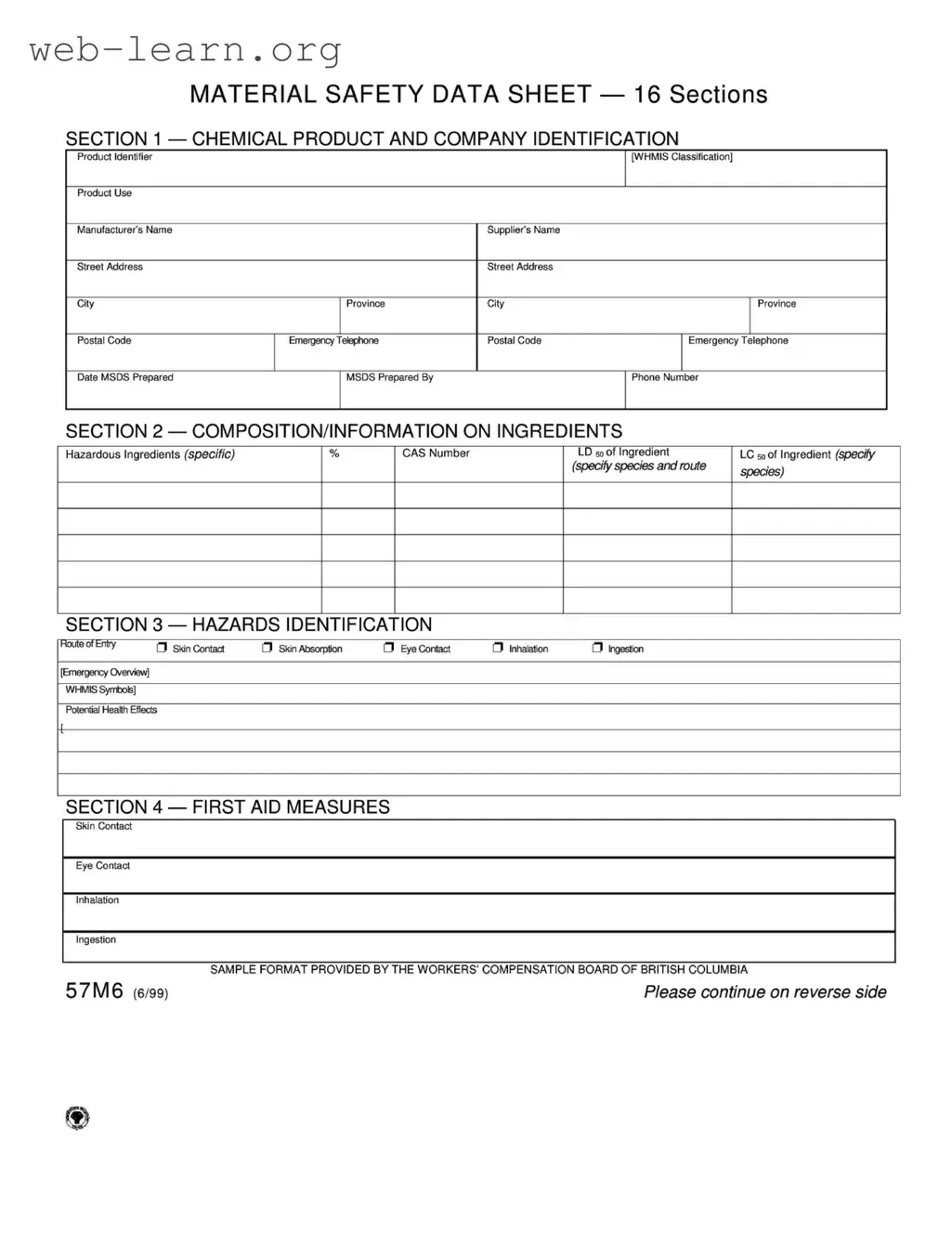
The Material Safety Data Sheet (MSDS) is a vital document designed to provide essential information about hazardous substances used in various industries. It serves as a comprehensive resource that outlines the chemical product's identity, its uses, and the manufacturer’s details, ensuring that users have immediate access to critical safety information. The form is structured into 16 sections, each addressing specific aspects of the chemical, including its composition, potential hazards, and first aid measures. For example, Section 2 details the hazardous ingredients along with their concentrations and associated risks. In addition, the sheet includes guidelines for handling, storage, and emergency procedures, making it an indispensable tool for workplace safety. Firefighting measures, exposure controls, and ecological information are also covered, offering a well-rounded view of the product's safety profile. By understanding the MSDS, employees and employers alike can make informed decisions about the safe use and management of chemicals, ultimately fostering a safer work environment.
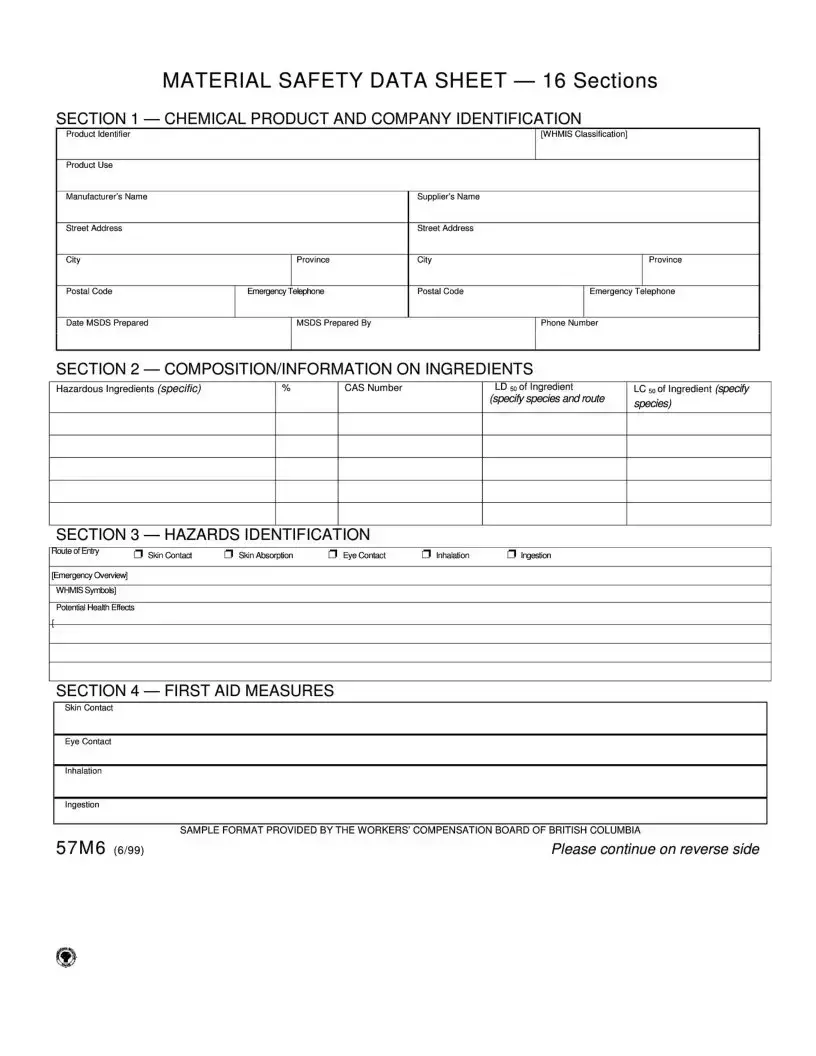
MATERIAL SAFETY DATA SHEET — 16 Sections |
||||
SECTION 1 — CHEMICAL PRODUCT AND COMPANY IDENTIFICATION |
|
|||
Product Identifier |
|
|
[WHMIS Classification] |
|
Product Use |
|
|
|
|
Manufacturer's Name |
|
Supplier’s Name |
|
|
Street Address |
|
Street Address |
|
|
City |
Province |
City |
|
Province |
Postal Code |
Emergency Telephone |
Postal Code |
Emergency Telephone |
|
Date MSDS Prepared |
MSDS Prepared By |
Phone Number |
|
|
SECTION 2 — COMPOSITION/INFORMATION ON INGREDIENTS |
|
|||
Hazardous Ingredients (specific) |
% |
CAS Number |
LD so of Ingredient |
LC so of Ingredient (specify |
|
|
|
(specify species and route |
species) |
|
|
|
|
|
SECTION 3 — HAZARDS IDENTIFICA1RON
О Skin Contact |
П Skin Absorption |
П Eye Contact |
П Inhalation |
П Ingestion |
[Emergency Overview]
WHMIS Symbols]
Potential Health Effects
SECTION 4 — FIRST AID MEASURES
5 7 M 6 (6/99) |
Please continue on reverse side |
Product
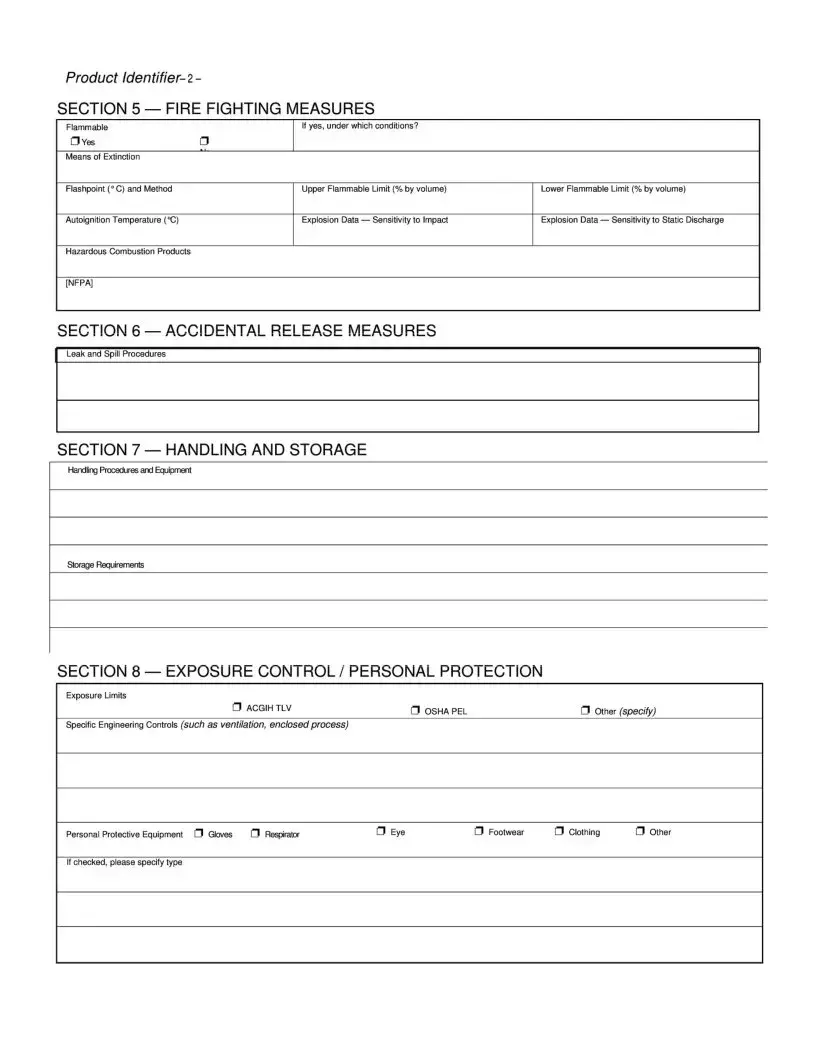
SECTION 5 — FIRE FIGHTING MEASURES
Flammable |
If yes, under which conditions? |
|
Yes |
|
|
Means of Extinction |
|
|
Flashpoint (°C) and Method |
Upper Flammable Limit (% by volume) |
Lower Flammable Limit (% by volume) |
Autoignition Temperature (°C) |
Explosion Data — Sensitivity to Impact |
Explosion Data — Sensitivity to Static Discharge |
Hazardous Combustion Products |
|
|
[NFPA] |
|
|
SECTION 6 — ACCIDENTAL RELEASE MEASURES
Leak and Spill Procedures
SECTION 7 — HANDLING AND STORAGE
SECTION 8 — EXPOSURE CONTROL / PERSONAL PROTECTION
Exposure Limits
ACGIH TLV |
0SHA pEL |
Д Other (Specify) |
Specific Engineering Controls (such as ventilation, enclosed process)
Personal Protective Equipment |
Gloves |
Respirator |
Eye |
Footwear |
Clothing |
Other |
If checked, please specify type
Product Identifiers -
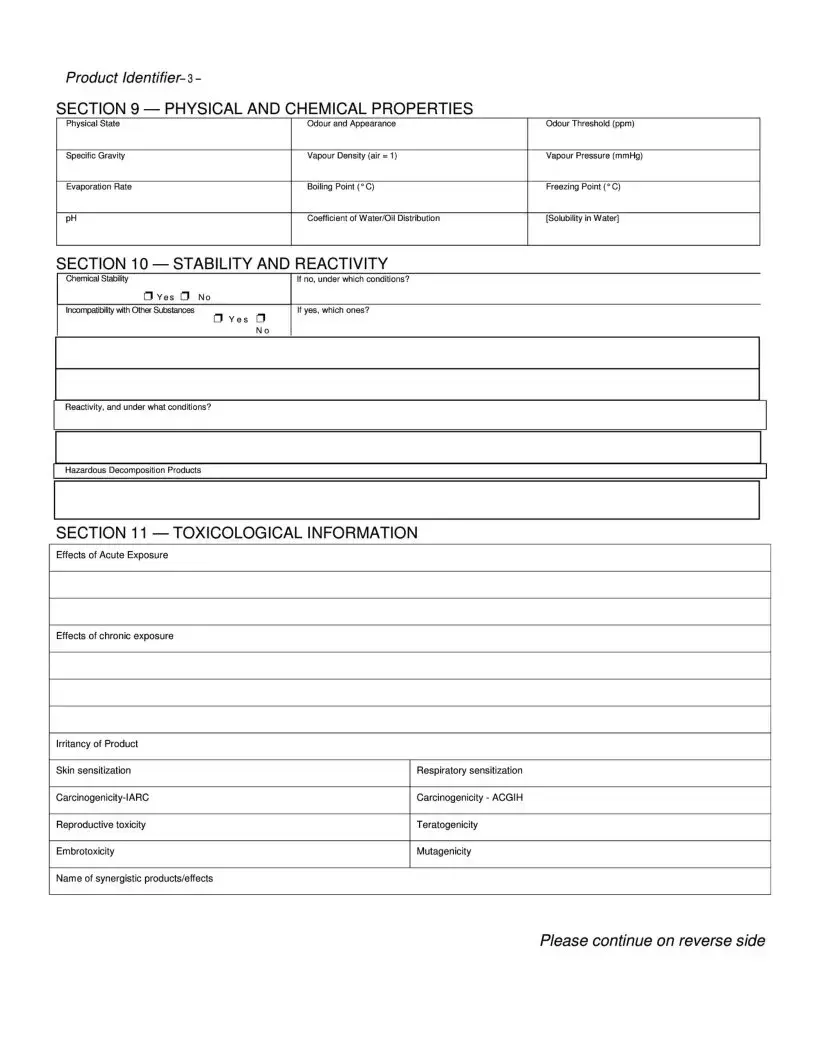
SECTION 9 — PHYSICAL AND CHEMICAL PROPERTIES
Physical State |
Odour and Appearance |
Odour Threshold (ppm) |
Specific Gravity |
Vapour Density (air = 1) |
Vapour Pressure (mmHg) |
Evaporation Rate |
Boiling Point (°C) |
Freezing Point (°C) |
pH |
Coefficient of Water/Oil Distribution |
[Solubility in Water] |
SECTION 10 — STABILITY AND REACTIVITY
Chemical Stability |
If no, under which conditions? |
О Yes П No
Incompatibility with Other Substances |
If yes, which ones? |
|
Yes |
|
N о |
Reactivity, and under what conditions?
Hazardous Decomposition Products |
| |
SECTION 11 — TOXICOLOGICAL INFORMATION
Effects of Acute Exposure
Effects of chronic exposure
Irritancy of Product |
|
Skin sensitization |
Respiratory sensitization |
Carcinogenicity - ACGIH |
|
Reproductive toxicity |
Teratogenicity |
Embrotoxicity |
Mutagenicity |
Name of synergistic products/effects |
|
Please continue on reverse side
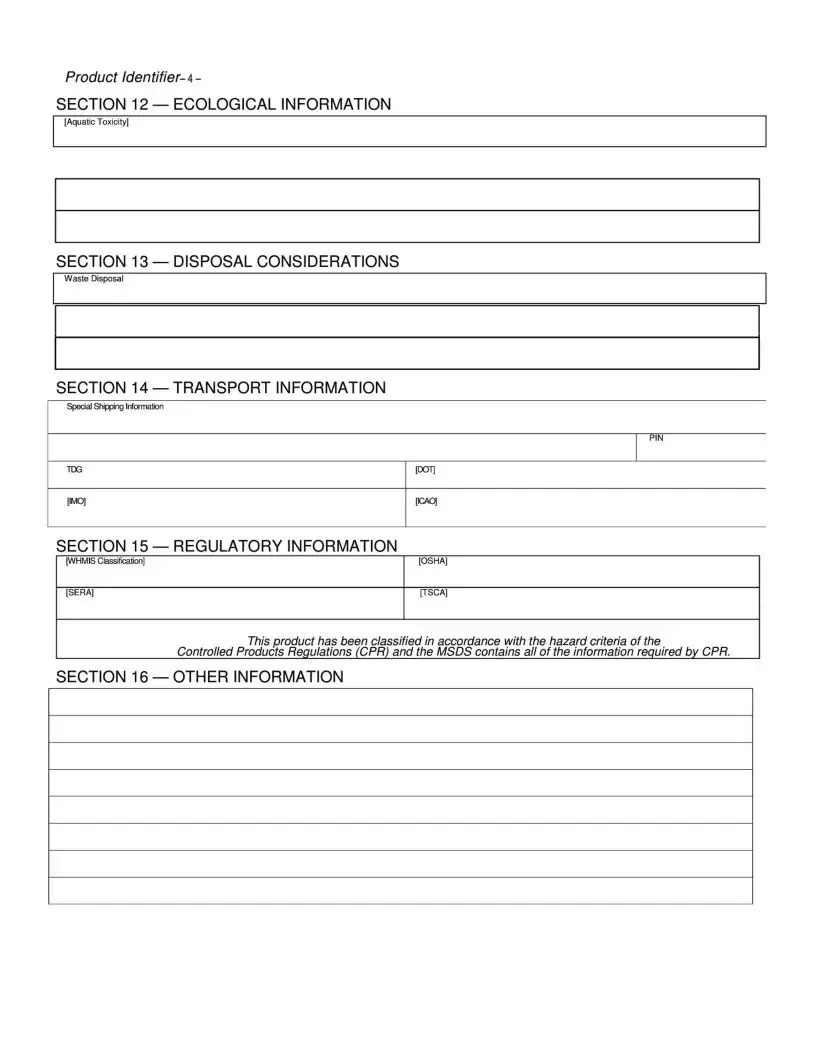
Product Identifier- 4-
SECTION 12 — ECOLOGICAL INFORMATION
[Aquatic Toxicity]
SECTION 13 — DISPOSAL CONSIDERATIONS
Waste Disposal
SECTION 14
Special Shipping Information
TOG
[IMO]
PIN
[DOT]
[CAO]
SECTION 15 — REGULATORY INFORMATION
[WHMIS Classification] |
[OSHA] |
[SERA] |
[TSCA] |
This product has been classified in accordance with the hazard criteria of the
Controlled Products Regulations (CPR) and the MSDS contains all of the information required by CPR.
SECTION 16
| Fact Name | Description |
|---|---|
| Purpose | The Material Safety Data Sheet (MSDS) provides essential information about the properties and hazards of a chemical product. |
| Structure | It consists of 16 sections, each detailing different aspects of the chemical, including identification, hazards, and safety measures. |
| Section 1 | This section includes the chemical product's identification, including the manufacturer’s details and emergency contact information. |
| Section 2 | It provides information on the composition of the product, listing hazardous ingredients along with their concentrations and CAS numbers. |
| State-Specific Forms | Some states may have specific requirements for MSDS forms, governed by laws such as California's Proposition 65 and OSHA regulations. |
| First Aid Measures | Section 4 outlines first aid procedures for exposure to the chemical, ensuring quick and effective responses to incidents. |
| Fire Safety | Section 5 discusses fire-fighting measures, including flammability, flashpoints, and suitable extinguishing methods. |
| Regulatory Compliance | MSDS must comply with various regulations, including the Hazard Communication Standard (HCS) and the Controlled Products Regulations (CPR). |
| Environmental Impact | Section 12 addresses ecological information, detailing the product's potential effects on aquatic life and disposal considerations. |
Completing the Material Safety Data Sheet (MSDS) form is a crucial task that ensures safety and compliance. The following steps will guide you through the process of filling out the form accurately. Each section is important and requires careful attention to detail.
What is a Material Safety Data Sheet (MSDS)?
A Material Safety Data Sheet is a document that provides detailed information about a chemical product. It includes essential data such as the product's identity, its hazards, safe handling instructions, and emergency measures. The primary purpose of the MSDS is to ensure that users understand the potential risks associated with the chemical and how to use it safely.
Why is an MSDS important?
The MSDS is crucial for maintaining workplace safety. It helps employees and emergency responders understand the potential hazards of a chemical product. By providing information on safe handling, storage, and disposal, the MSDS plays a vital role in preventing accidents and ensuring compliance with health and safety regulations.
What information is typically found in an MSDS?
An MSDS generally contains 16 sections, including:
How often should an MSDS be updated?
An MSDS should be reviewed and updated regularly. Changes in regulations, new research findings, or modifications to the product itself may necessitate an update. It is advisable to check the MSDS at least once a year or whenever there is a significant change in the product or its usage.
Who is responsible for providing an MSDS?
The manufacturer or supplier of the chemical product is responsible for providing an MSDS. They must ensure that the document is accurate, up-to-date, and compliant with applicable regulations. Employers are also responsible for making sure that their employees have access to the MSDS for any hazardous materials they may encounter in the workplace.
How can I access an MSDS?
MSDSs can often be obtained directly from the manufacturer or supplier of the chemical product. Many companies also provide MSDSs on their websites. Additionally, safety data sheets may be available through workplace safety programs or databases that compile MSDSs for various products.
What should I do if I have questions about an MSDS?
If you have questions about an MSDS, it is important to reach out to your supervisor or safety officer. They can provide guidance and clarify any concerns you may have regarding the information contained in the MSDS. Additionally, contacting the manufacturer or supplier for further clarification is also an option.
Filling out a Material Safety Data Sheet (MSDS) can be a meticulous process, and mistakes can lead to serious consequences. One common error is failing to provide complete information in the Product Identifier section. This section should clearly state the name of the chemical product. Incomplete or vague identifiers can lead to confusion and miscommunication, especially in emergency situations.
Another frequent mistake involves neglecting to include accurate hazardous ingredients details in Section 2. It is crucial to list all hazardous components along with their respective percentages and CAS numbers. Omitting this information can prevent individuals from understanding the risks associated with the product.
People often overlook the importance of detailing first aid measures in Section 4. This section should specify the necessary actions to take in case of exposure. Without clear instructions, individuals may not know how to respond appropriately, which could exacerbate health issues.
In Section 5, the fire fighting measures are sometimes inadequately addressed. Failing to mention the flashpoint, means of extinction, and hazardous combustion products can put responders at risk during a fire. Providing thorough information is essential for ensuring safety during emergencies.
Another common oversight occurs in Section 8, where individuals may not specify the required personal protective equipment (PPE). It is important to indicate the type of gloves, respirators, and other protective gear needed. Incomplete PPE information can lead to unsafe handling practices.
Section 10, which covers stability and reactivity, is often filled out too briefly. It is vital to detail any potential reactions the chemical may have under various conditions. This information helps prevent accidents and ensures safe storage and handling.
Lastly, many individuals fail to include necessary disposal considerations in Section 13. Proper disposal methods are essential for environmental safety and compliance with regulations. Omitting this information can lead to improper disposal practices, which may harm the environment and violate laws.
The Material Safety Data Sheet (MSDS) is a crucial document in ensuring workplace safety and compliance with regulations regarding hazardous materials. However, it is often accompanied by other forms and documents that further enhance safety protocols and procedures. Below is a list of some of these documents, each serving a distinct purpose in the management of chemical safety.
These documents work in tandem with the MSDS to create a comprehensive safety framework. Together, they help organizations manage chemical hazards effectively, ensuring a safer working environment for all employees.
The Material Safety Data Sheet (MSDS) shares similarities with several other important documents. Here are four documents that are comparable to the MSDS, along with their specific similarities:
When filling out the Material Safety Data Sheet (MSDS), attention to detail is crucial. This document serves to inform about the hazards associated with a chemical product and provides essential safety information. Here are ten important dos and don’ts to consider:
By adhering to these guidelines, individuals can help ensure that the MSDS is both informative and compliant with safety regulations. This not only protects those who handle the materials but also contributes to a safer workplace overall.
Understanding the Material Safety Data Sheet (MSDS) is essential for ensuring safety in the workplace. However, several misconceptions can lead to confusion. Here are five common misconceptions:
When filling out and using the Material Safety Data Sheet (MSDS), there are several key points to keep in mind. These takeaways will help ensure that the form is completed accurately and used effectively.
By keeping these takeaways in mind, individuals can effectively fill out and utilize the Material Safety Data Sheet, contributing to a safer workplace environment.