In Louisiana, planning for the future often involves considering how to transfer your property upon your passing. One effective tool for this purpose is the Transfer-on-Death Deed (TODD). This legal instrument allows property owners to designate a beneficiary who will automatically inherit the property without the need for probate. The TODD form simplifies the transfer process, ensuring that your loved ones can access the property quickly and with minimal complications. It’s important to note that the deed must be executed in accordance with state laws to be valid. Additionally, property owners can retain full control of their property during their lifetime, as the transfer only takes effect after death. Understanding the intricacies of the TODD form can help you make informed decisions that align with your estate planning goals, ultimately providing peace of mind for both you and your beneficiaries.
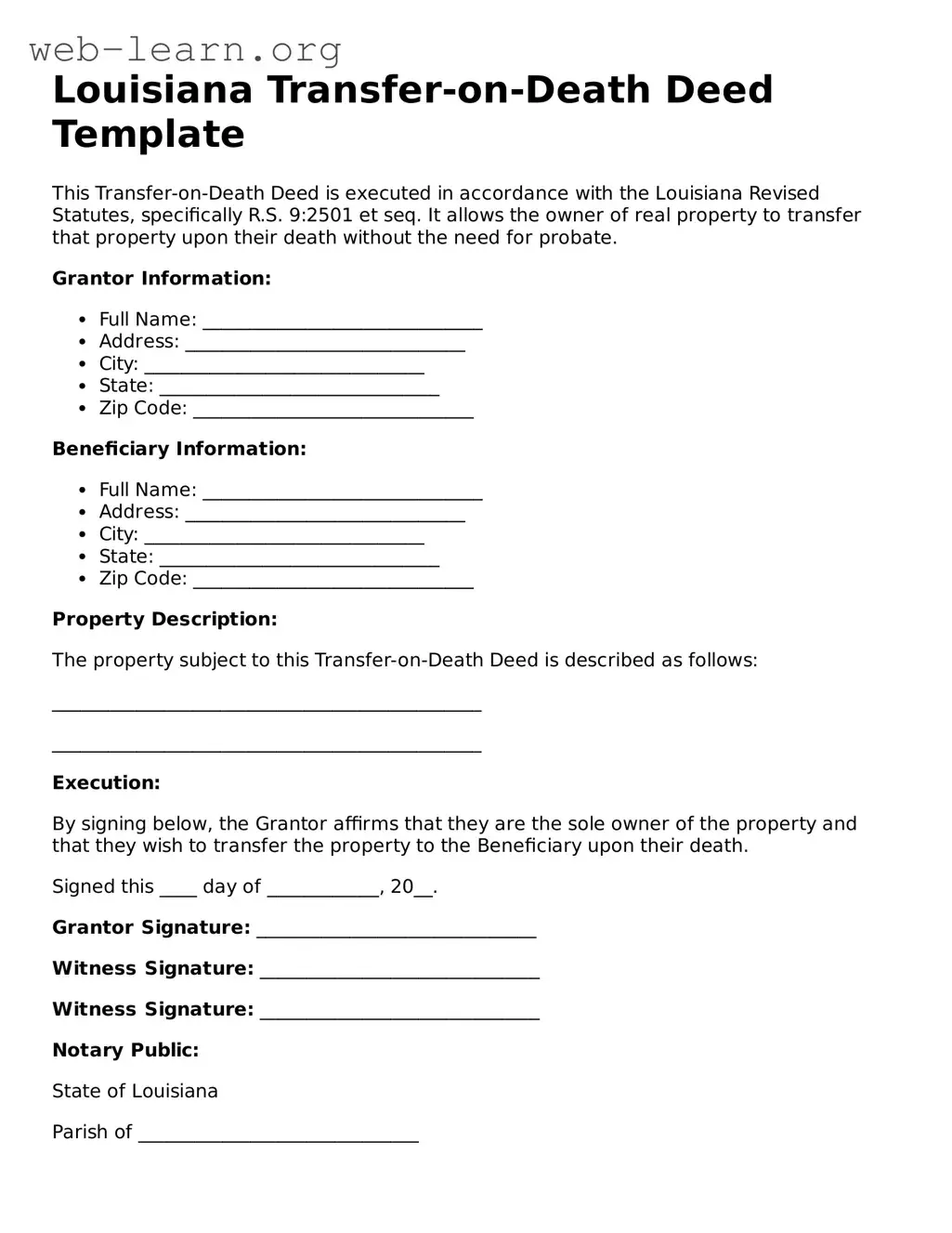
Louisiana Transfer-on-Death Deed Template
This Transfer-on-Death Deed is executed in accordance with the Louisiana Revised Statutes, specifically R.S. 9:2501 et seq. It allows the owner of real property to transfer that property upon their death without the need for probate.
Grantor Information:
Beneficiary Information:
Property Description:
The property subject to this Transfer-on-Death Deed is described as follows:
______________________________________________
______________________________________________
Execution:
By signing below, the Grantor affirms that they are the sole owner of the property and that they wish to transfer the property to the Beneficiary upon their death.
Signed this ____ day of ____________, 20__.
Grantor Signature: ______________________________
Witness Signature: ______________________________
Witness Signature: ______________________________
Notary Public:
State of Louisiana
Parish of ______________________________
On this ____ day of ____________, 20__, before me, a Notary Public, personally appeared ______________________________, known to me to be the person whose name is subscribed to this instrument, and acknowledged that they executed the same for the purposes therein contained.
Notary Public Signature: ______________________________
Notary Public Name (Printed): ______________________________
My Commission Expires: ______________________________
| Fact Name | Details |
|---|---|
| Definition | A Transfer-on-Death Deed allows an individual to transfer real estate to a beneficiary upon their death without going through probate. |
| Governing Law | The Louisiana Transfer-on-Death Deed is governed by Louisiana Revised Statutes, specifically RS 9:2501 to 2509. |
| Eligibility | Only individuals can create a Transfer-on-Death Deed; it cannot be executed by corporations or other entities. |
| Revocation | The deed can be revoked at any time by the grantor, provided that the revocation is executed in writing and recorded. |
| Beneficiary Rights | The beneficiary does not have any rights to the property until the death of the grantor. |
| Filing Requirements | The Transfer-on-Death Deed must be recorded in the parish where the property is located to be effective. |
After obtaining the Louisiana Transfer-on-Death Deed form, you'll need to fill it out carefully to ensure that all necessary information is provided. This will help facilitate the transfer of property upon your passing without the need for probate. Follow these steps to complete the form accurately.
What is a Transfer-on-Death Deed (TODD) in Louisiana?
A Transfer-on-Death Deed is a legal document that allows a property owner in Louisiana to designate a beneficiary who will receive the property upon the owner’s death. This deed effectively bypasses the probate process, allowing for a smoother and quicker transfer of ownership. The property owner retains full control of the property during their lifetime and can revoke or change the deed at any time before their death.
How do I create a Transfer-on-Death Deed in Louisiana?
Creating a TODD involves several steps:
It is advisable to consult with a legal professional to ensure that the deed is executed correctly and meets all legal requirements.
Can I change or revoke a Transfer-on-Death Deed after it has been executed?
Yes, a Transfer-on-Death Deed can be changed or revoked at any time during the property owner’s lifetime. To do this, the owner must execute a new TODD that explicitly revokes the previous one or record a revocation form with the same parish office where the original deed was recorded. It’s important to follow the legal procedures to ensure that the revocation is valid and recognized.
What happens if the beneficiary predeceases the property owner?
If the designated beneficiary dies before the property owner, the Transfer-on-Death Deed typically becomes void. The property owner may want to consider designating an alternate beneficiary to ensure that the property still transfers as intended. If no alternate beneficiary is named, the property will be distributed according to the owner's will or, if there is no will, according to Louisiana’s intestacy laws.
Filling out the Louisiana Transfer-on-Death Deed form can be a straightforward process, but several common mistakes can lead to complications. One of the most frequent errors is failing to clearly identify the property. It is essential to provide a complete legal description of the property, including the address and any relevant parcel numbers. Omitting this information can create confusion and may invalidate the deed.
Another common mistake involves not properly naming the beneficiaries. It is crucial to ensure that the names of the beneficiaries are spelled correctly and that their relationship to the property owner is clear. Inaccurate or incomplete names can lead to disputes and delays in transferring the property after the owner's passing.
People often overlook the importance of signing the deed in the presence of a notary. In Louisiana, the law requires that the Transfer-on-Death Deed be notarized to be valid. Failing to have the deed notarized can render it ineffective, meaning that the intended transfer will not occur as planned.
Additionally, many individuals neglect to record the deed with the appropriate parish clerk of court. Even if the deed is filled out correctly and notarized, it must be recorded to ensure that it is legally recognized. This step is vital for protecting the interests of the beneficiaries and avoiding potential disputes.
Another mistake is not considering the implications of the transfer. Some people may not fully understand how a Transfer-on-Death Deed affects their estate and tax situation. It is advisable to consult with a professional to ensure that this decision aligns with overall estate planning goals.
Moreover, failing to update the deed when circumstances change can lead to issues. Life events such as marriage, divorce, or the birth of children may necessitate changes to the beneficiaries listed on the deed. Keeping the deed current is essential for ensuring that it reflects the owner’s wishes.
Lastly, individuals sometimes forget to communicate their intentions with family members. Transparency about the existence of the Transfer-on-Death Deed and its details can prevent misunderstandings and disputes among heirs. Open communication fosters a smoother transition and helps to honor the wishes of the property owner.
The Louisiana Transfer-on-Death Deed form allows individuals to designate beneficiaries for their property upon their death, avoiding the probate process. Alongside this form, several other documents may be necessary to ensure a smooth transfer of assets. Below is a list of commonly used forms and documents that complement the Transfer-on-Death Deed.
Utilizing these documents in conjunction with the Louisiana Transfer-on-Death Deed can help streamline the estate planning process and ensure that an individual’s wishes are honored. Proper documentation is essential for a smooth transition of assets and to prevent potential disputes among beneficiaries.
The Transfer-on-Death Deed (TOD) allows individuals to transfer property to beneficiaries upon their death without going through probate. Several other documents serve similar purposes in estate planning. Here are eight documents that share similarities with the TOD Deed:
When filling out the Louisiana Transfer-on-Death Deed form, it is crucial to follow specific guidelines to ensure the process goes smoothly. Here are six important do's and don'ts to keep in mind:
The Louisiana Transfer-on-Death Deed (TODD) form is a useful estate planning tool, but several misconceptions can lead to confusion. Here are six common misconceptions about this form:
Understanding these misconceptions can help individuals make informed decisions about their estate planning needs. A well-executed Transfer-on-Death Deed can provide peace of mind and clarity for property transfer after death.
Filling out and using the Louisiana Transfer-on-Death Deed form can be a straightforward process if you keep a few key points in mind. This deed allows property owners to transfer their property to a designated beneficiary upon their death, avoiding the probate process. Here are some essential takeaways to consider:
By keeping these takeaways in mind, you can navigate the process of filling out and using the Louisiana Transfer-on-Death Deed form more effectively. Proper planning can lead to a smoother transition of property to your loved ones.
Problems With Transfer on Death Deeds in Virginia - It is a valuable tool for anyone looking to manage their estate effectively.
Arkansas Beneficiary Deed Pdf - The deed must be executed in accordance with state laws to be enforceable.