Homepage Attorney-Approved Real Estate Purchase Agreement Template Attorney-Approved Real Estate Purchase Agreement Document for the State of Louisiana
Outline

When embarking on the journey of buying or selling property in Louisiana, understanding the Louisiana Real Estate Purchase Agreement form is crucial. This document serves as a foundational element in real estate transactions, outlining the terms and conditions agreed upon by both the buyer and the seller. Key aspects of the form include the purchase price, financing details, and a clear description of the property being sold. Additionally, it specifies important dates, such as the closing date, and includes contingencies that may affect the sale, such as inspections or financing approvals. By clearly delineating the rights and responsibilities of each party, this agreement helps to mitigate misunderstandings and disputes, ensuring a smoother transaction process. It is essential for both parties to review and comprehend every section of the agreement, as it not only protects their interests but also lays the groundwork for a successful real estate deal.

Sample - Louisiana Real Estate Purchase Agreement Form

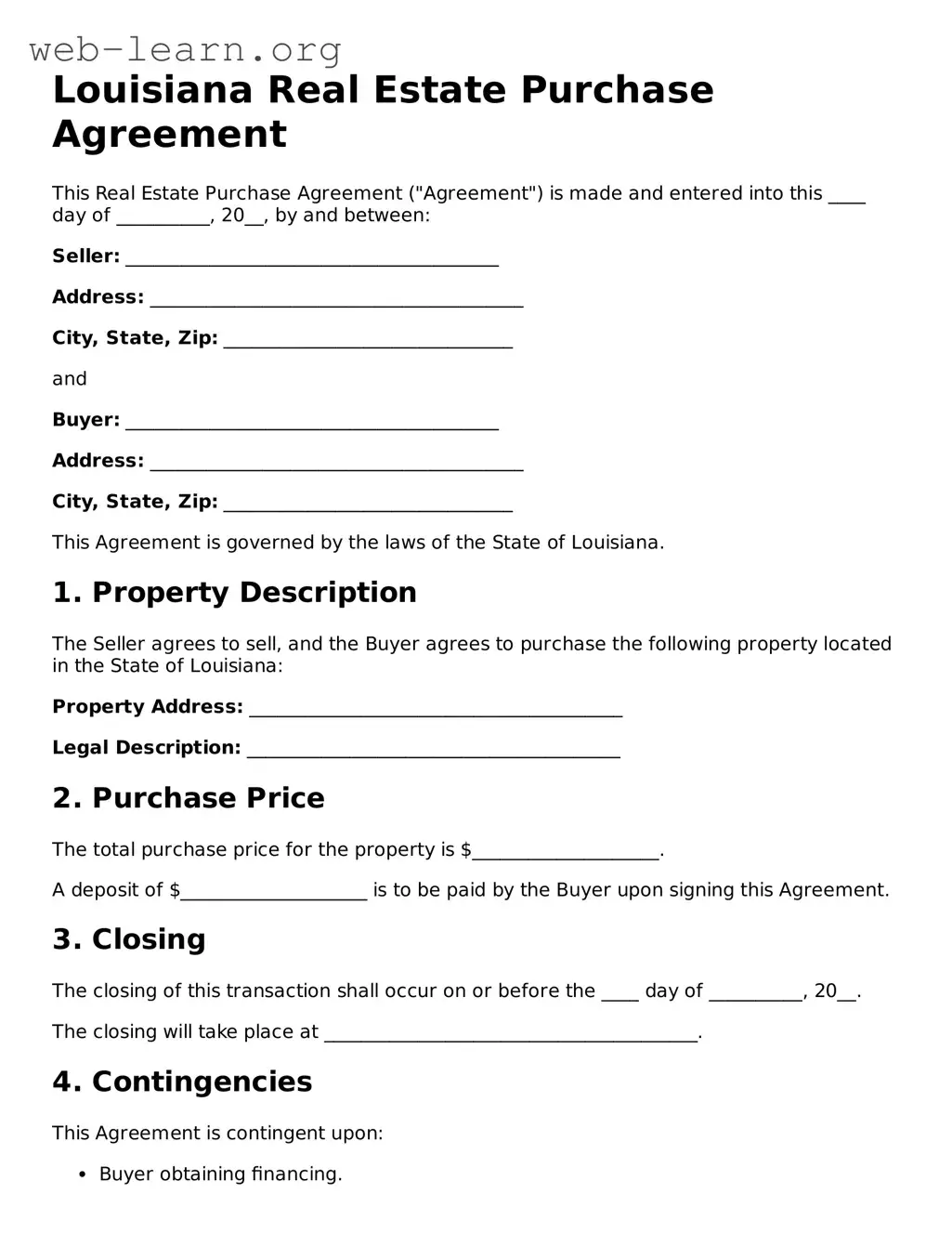
Louisiana Real Estate Purchase Agreement

This Real Estate Purchase Agreement ("Agreement") is made and entered into this ____ day of __________, 20__, by and between:

Seller: ________________________________________

Address: ________________________________________

City, State, Zip: _______________________________

and

Buyer: ________________________________________

Address: ________________________________________

City, State, Zip: _______________________________

This Agreement is governed by the laws of the State of Louisiana.

1. Property Description

The Seller agrees to sell, and the Buyer agrees to purchase the following property located in the State of Louisiana:

Property Address: ________________________________________

Legal Description: ________________________________________

2. Purchase Price

The total purchase price for the property is $____________________.

A deposit of $____________________ is to be paid by the Buyer upon signing this Agreement.

3. Closing

The closing of this transaction shall occur on or before the ____ day of __________, 20__.

The closing will take place at ________________________________________.

4. Contingencies

This Agreement is contingent upon:

  • Buyer obtaining financing.
  • Home inspection satisfactory to Buyer.
  • Clear title to the property.

5. Additional Terms

Any additional terms and conditions agreed upon by both parties shall be outlined here:

____________________________________________________________________

6. Signatures

By signing below, both parties agree to the terms of this Agreement:

Seller's Signature: ____________________________ Date: __________

Buyer's Signature: ____________________________ Date: __________

This Agreement constitutes the entire understanding between the parties and supersedes all prior negotiations or agreements.

File Characteristics

Fact Name Description
Governing Law The Louisiana Real Estate Purchase Agreement is governed by the laws of the State of Louisiana.
Parties Involved The agreement typically involves a buyer and a seller, each of whom must be legally capable of entering into a contract.
Property Description A clear and detailed description of the property being sold is required, including its address and legal description.
Purchase Price The agreement specifies the total purchase price and outlines how it will be paid, including any deposits.
Contingencies Common contingencies may include financing, inspection, and appraisal, allowing buyers to back out under certain conditions.
Closing Date The agreement sets a closing date, which is the date when the ownership of the property is officially transferred.
Disclosures Louisiana law requires sellers to provide specific disclosures about the property, including known defects or issues.

Detailed Guide for Filling Out Louisiana Real Estate Purchase Agreement

Completing the Louisiana Real Estate Purchase Agreement form is an essential step in the process of buying or selling property in the state. This form outlines the terms of the transaction and ensures that both parties understand their rights and obligations. Following the steps below will help you accurately fill out the form.

  1. Begin by entering the date at the top of the form. This date signifies when the agreement is being executed.
  2. Identify the parties involved in the transaction. Fill in the names and addresses of both the buyer and the seller. Make sure to provide accurate contact information.
  3. Clearly describe the property being sold. Include the full address and any relevant legal descriptions that may be required.
  4. Specify the purchase price. Write down the total amount the buyer agrees to pay for the property.
  5. Outline the terms of payment. Indicate how the buyer will pay the purchase price, including any deposits or financing arrangements.
  6. Detail any contingencies. If the sale is contingent on certain conditions (like inspections or financing), clearly state these conditions.
  7. Include any additional terms or conditions that both parties agree upon. This could cover repairs, closing costs, or other specific agreements.
  8. Have both parties sign and date the agreement. Ensure that the signatures are clear and that the date of signing is included.

After completing the form, both parties should retain a copy for their records. It is advisable to review the agreement carefully before signing to ensure that all terms are understood and agreed upon. If any uncertainties arise, seeking legal advice may be beneficial.

Obtain Answers on Louisiana Real Estate Purchase Agreement

  1. What is a Louisiana Real Estate Purchase Agreement?

    The Louisiana Real Estate Purchase Agreement is a legally binding document that outlines the terms and conditions of a real estate transaction between a buyer and a seller. This agreement serves as a roadmap for both parties, detailing essential information such as the purchase price, property description, and any contingencies that may apply. It is crucial for ensuring that both parties understand their rights and obligations throughout the transaction process.

  2. What key elements are included in the agreement?

    Several important components are typically included in a Louisiana Real Estate Purchase Agreement:

    • Parties Involved: The full names and contact information of both the buyer and seller.
    • Property Description: A detailed description of the property being sold, including its address and legal description.
    • Purchase Price: The agreed-upon price for the property, along with details regarding the deposit and financing.
    • Contingencies: Conditions that must be met for the sale to proceed, such as inspections or financing approval.
    • Closing Date: The date on which the transaction will be finalized and ownership will be transferred.
  3. Are there any contingencies that can be included?

    Yes, contingencies are an essential part of many real estate transactions. They allow buyers to set specific conditions that must be satisfied before the sale can be completed. Common contingencies in Louisiana may include:

    • Home Inspection Contingency: This allows the buyer to have the property inspected and negotiate repairs or credits based on the findings.
    • Financing Contingency: This protects the buyer in case they are unable to secure financing for the purchase.
    • Appraisal Contingency: If the property does not appraise for the agreed purchase price, the buyer may have the option to renegotiate or withdraw.
  4. What happens if one party breaches the agreement?

    If either the buyer or seller fails to fulfill their obligations as outlined in the Louisiana Real Estate Purchase Agreement, this may be considered a breach of contract. The non-breaching party typically has several options, which may include:

    • Seeking Damages: The injured party may pursue financial compensation for losses incurred due to the breach.
    • Specific Performance: In some cases, the non-breaching party may seek a court order requiring the breaching party to fulfill their obligations under the agreement.
    • Termination of the Agreement: The non-breaching party may choose to terminate the agreement, which releases both parties from their obligations.

Common mistakes

When filling out the Louisiana Real Estate Purchase Agreement form, individuals often make several common mistakes that can lead to complications in the buying or selling process. One frequent error is failing to include all necessary parties in the agreement. It is crucial to list all buyers and sellers accurately, as omitting someone can create legal issues later on.

Another mistake involves not specifying the purchase price clearly. Ambiguities in the price can lead to disputes. Buyers and sellers should ensure that the amount is stated in both numerical and written form to avoid any confusion.

Inadequate descriptions of the property can also pose significant problems. The agreement should include the full address and a detailed description of the property, including any structures or features. Vague descriptions can result in misunderstandings about what is being sold.

Many people neglect to address contingencies in the agreement. Contingencies are conditions that must be met for the sale to proceed, such as financing or inspection requirements. Failing to include these can lead to complications if conditions are not met.

Another common oversight is not providing a timeline for the closing process. The agreement should outline important dates, including the closing date and deadlines for inspections and contingencies. Without these timelines, both parties may have different expectations about the process.

Buyers and sellers often overlook the importance of including earnest money details. This deposit shows the buyer's commitment and should be clearly stated in the agreement, including the amount and how it will be handled. Lack of clarity here can lead to disputes over the deposit.

Some individuals fail to understand the implications of the "as-is" clause. If the property is sold as-is, it means the seller is not responsible for repairs or issues that arise after the sale. Buyers should be aware of what this entails before signing the agreement.

Not consulting with a real estate professional or attorney is another mistake. While many people feel confident filling out the form themselves, having an expert review the agreement can help avoid errors and ensure that all legal requirements are met.

Finally, many individuals neglect to keep copies of the signed agreement. Once the document is finalized, both parties should retain copies for their records. This practice can be invaluable if disputes arise later on.

By being aware of these common mistakes, individuals can navigate the Louisiana Real Estate Purchase Agreement more effectively, reducing the likelihood of complications during the transaction process.

Documents used along the form

When engaging in real estate transactions in Louisiana, several forms and documents often accompany the Real Estate Purchase Agreement. Each of these documents serves a specific purpose and helps ensure a smooth transaction process. Here’s a list of commonly used documents:

  • Property Disclosure Statement: This document outlines any known issues with the property, such as structural problems or environmental hazards. Sellers are required to disclose this information to potential buyers.
  • Lead-Based Paint Disclosure: Required for homes built before 1978, this form informs buyers about the potential presence of lead-based paint and its risks.
  • Home Inspection Report: Conducted by a professional inspector, this report details the condition of the property, highlighting any repairs needed before the sale.
  • Financing Addendum: This document outlines the terms of financing, including loan type, interest rates, and any conditions that must be met for the sale to proceed.
  • Title Insurance Policy: This policy protects the buyer against any issues with the property’s title, such as disputes over ownership or liens that may arise after the purchase.
  • Closing Statement: This document summarizes the financial aspects of the transaction, including the sale price, closing costs, and any credits or debits for both the buyer and seller.
  • Earnest Money Agreement: This form outlines the amount of earnest money the buyer will deposit to show their commitment to the purchase, along with terms for its return if the deal falls through.
  • Deed: This legal document transfers ownership of the property from the seller to the buyer and is recorded with the local government to ensure public record of the transaction.

Understanding these documents can help buyers and sellers navigate the complexities of real estate transactions more effectively. Each document plays a crucial role in protecting the interests of all parties involved and ensuring compliance with Louisiana laws.

Similar forms

  • Lease Agreement: This document outlines the terms and conditions under which a tenant can occupy a property. Like the Real Estate Purchase Agreement, it specifies the parties involved, property details, and payment terms, though it typically focuses on rental rather than ownership.
  • Option to Purchase Agreement: This agreement gives a tenant the right to purchase the property at a later date. Similar to a Real Estate Purchase Agreement, it includes terms about the purchase price and conditions but allows for a delay in the actual transaction.
  • Sales Contract: Often used in various sales, this document details the sale of property, including price and contingencies. It shares similarities with the Real Estate Purchase Agreement in its structure and purpose, focusing on the transfer of ownership.
  • Listing Agreement: This document is between a property owner and a real estate agent, granting the agent the authority to sell the property. While it doesn't finalize a sale, it sets the stage for a Real Estate Purchase Agreement by outlining terms and commissions.
  • Escrow Agreement: This document outlines the terms under which a neutral third party holds funds or documents during a real estate transaction. It complements the Real Estate Purchase Agreement by ensuring that both parties meet their obligations before the transaction is completed.
  • Title Insurance Policy: This document protects against losses from defects in the title to a property. It is related to the Real Estate Purchase Agreement as it provides assurance that the property being purchased is free from legal issues that could affect ownership.
  • Property Disclosure Statement: This form requires sellers to disclose known issues with the property. Like the Real Estate Purchase Agreement, it serves to inform the buyer and protect both parties by ensuring transparency in the transaction.
  • Deed: This legal document transfers ownership of property from one party to another. It is the final step in a real estate transaction and is closely related to the Real Estate Purchase Agreement, as it formalizes the transfer agreed upon in the purchase agreement.

Dos and Don'ts

When filling out the Louisiana Real Estate Purchase Agreement form, it is important to follow certain guidelines to ensure accuracy and compliance. Below are seven things to consider doing and avoiding.

  • Do read the entire form carefully before filling it out.
  • Do provide accurate information about the property and the parties involved.
  • Do include all necessary details, such as purchase price and closing date.
  • Do consult with a real estate professional if you have questions.
  • Don't leave any sections blank unless instructed to do so.
  • Don't make assumptions about legal terms; seek clarification if needed.
  • Don't rush through the process; take your time to ensure everything is correct.

By following these guidelines, you can help facilitate a smoother transaction process in Louisiana's real estate market.

Misconceptions

Misconceptions about the Louisiana Real Estate Purchase Agreement form can lead to confusion for both buyers and sellers. Below are some common misunderstandings:

  • It is a binding contract from the moment it is signed. While signing the agreement indicates intent, the contract may not be enforceable until all parties have agreed to the terms and conditions, including any contingencies.
  • Only licensed real estate agents can fill out the form. Although agents often assist, individuals can also complete the form. However, it is advisable to seek professional guidance to ensure compliance with state laws.
  • All terms are negotiable. While many terms can be negotiated, some aspects of the agreement may be standard or dictated by local laws. Understanding these limitations is essential.
  • Once submitted, the agreement cannot be changed. Modifications can be made if all parties agree to the changes. A written amendment should be created to document any adjustments.
  • The form guarantees a successful sale. The agreement outlines the terms of the sale, but it does not guarantee that the transaction will close. Various factors can affect the outcome.
  • It is only for residential properties. The Louisiana Real Estate Purchase Agreement can be used for both residential and commercial properties, making it a versatile tool in real estate transactions.

Key takeaways

When filling out and using the Louisiana Real Estate Purchase Agreement form, it is essential to understand the following key points:

  1. Understand the Purpose: This agreement serves as a legally binding contract between the buyer and seller for the purchase of real estate in Louisiana.
  2. Accurate Information: Ensure that all information, including names, addresses, and property details, is accurate and up-to-date.
  3. Property Description: Clearly describe the property being sold, including its physical address and any relevant legal descriptions.
  4. Purchase Price: Specify the total purchase price and any deposits required. This section should outline how and when payments will be made.
  5. Contingencies: Include any contingencies, such as financing, inspections, or repairs, that must be met for the sale to proceed.
  6. Closing Date: Set a closing date for the transaction, which is when the ownership will officially transfer from the seller to the buyer.
  7. Disclosures: Be aware of any required disclosures, such as property condition or environmental hazards, that must be provided by the seller.
  8. Signatures: Ensure that both parties sign and date the agreement. This step is crucial for the contract to be enforceable.
  9. Consult Professionals: It is advisable to consult with a real estate agent or attorney to review the agreement and address any concerns before finalizing the transaction.