In Louisiana, the Power of Attorney (POA) form is a vital legal document that allows individuals to appoint someone they trust to make decisions on their behalf, particularly in financial or medical matters. This form can be tailored to fit various needs, whether it’s for a specific task or a broader range of responsibilities. One of the key features of the Louisiana POA is its ability to grant authority that can be effective immediately or only when the principal becomes incapacitated. Additionally, the document can be revoked at any time, providing flexibility and control for the person granting the power. It's important to understand the different types of POA available, such as durable and non-durable options, each serving unique purposes based on the principal's needs and circumstances. Furthermore, the form must meet specific legal requirements to ensure it is valid, including signatures and notarization. Understanding these aspects will empower individuals to make informed decisions when creating a Power of Attorney in Louisiana.
Louisiana Power of Attorney
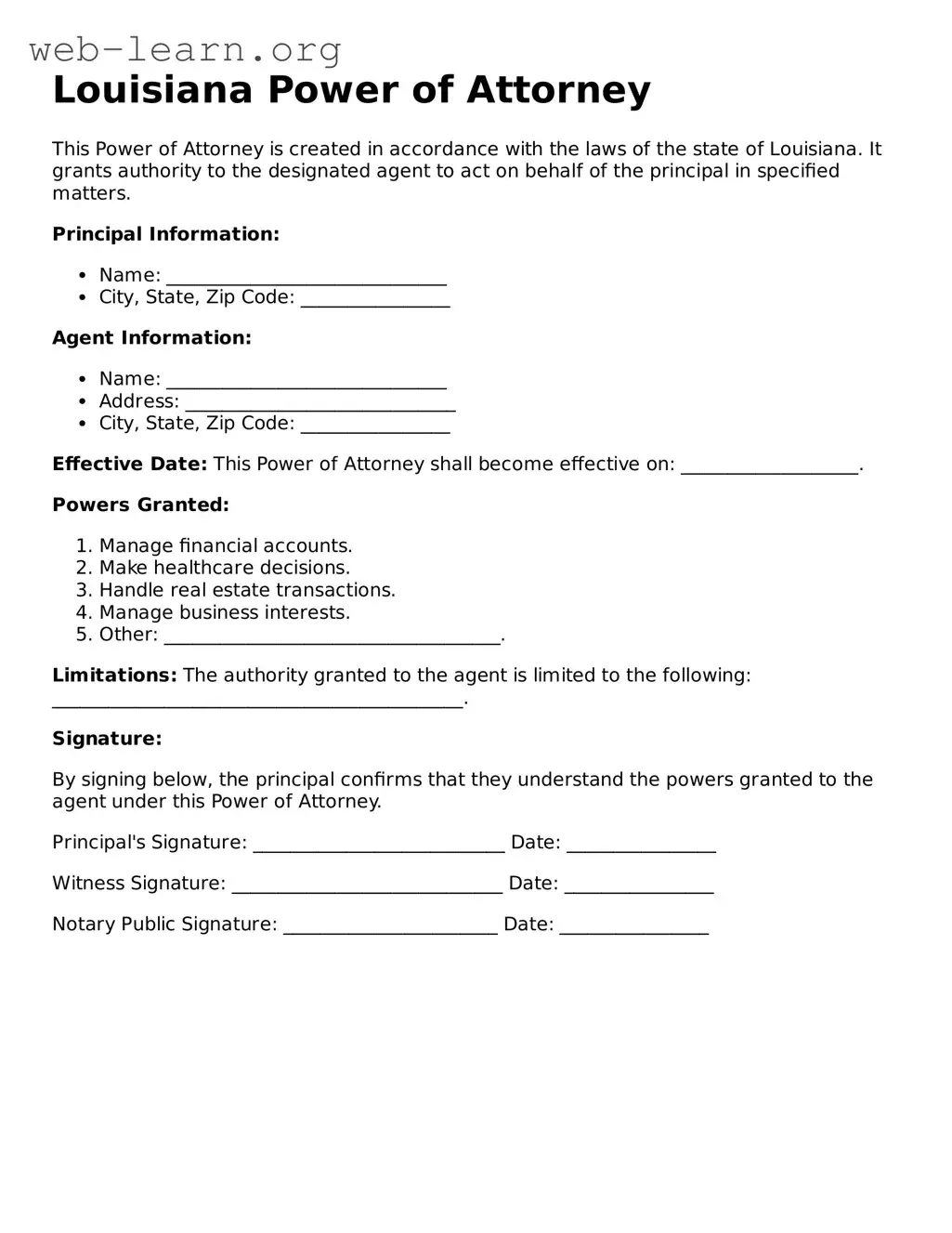
This Power of Attorney is created in accordance with the laws of the state of Louisiana. It grants authority to the designated agent to act on behalf of the principal in specified matters.
Principal Information:
Agent Information:
Effective Date: This Power of Attorney shall become effective on: ___________________.
Powers Granted:
Limitations: The authority granted to the agent is limited to the following: ____________________________________________.
Signature:
By signing below, the principal confirms that they understand the powers granted to the agent under this Power of Attorney.
Principal's Signature: ___________________________ Date: ________________
Witness Signature: _____________________________ Date: ________________
Notary Public Signature: _______________________ Date: ________________
| Fact Name | Description |
|---|---|
| Definition | A Louisiana Power of Attorney form allows one person to grant another the authority to make decisions on their behalf. |
| Governing Law | This form is governed by Louisiana Civil Code, specifically Articles 2991 to 3020. |
| Types | There are various types of Power of Attorney, including durable, springing, and limited powers. |
| Durable Power of Attorney | A durable Power of Attorney remains in effect even if the principal becomes incapacitated. |
| Springing Power of Attorney | A springing Power of Attorney only becomes effective under specific conditions, such as incapacity. |
| Agent's Authority | The agent's authority can be broad or limited, depending on the principal's wishes stated in the form. |
| Revocation | The principal can revoke the Power of Attorney at any time as long as they are mentally competent. |
| Notarization | In Louisiana, the Power of Attorney must be signed in the presence of a notary public and two witnesses. |
| Healthcare Decisions | For healthcare-related decisions, a separate document known as a Healthcare Power of Attorney is recommended. |
| Legal Advice | Consulting with a legal professional is advisable to ensure that the form meets all necessary requirements. |
Filling out a Power of Attorney form in Louisiana is an important step in designating someone to make decisions on your behalf. After completing the form, you will need to ensure that it is signed and notarized properly to be legally effective. Here are the steps to guide you through the process of filling out the form.
What is a Power of Attorney (POA) in Louisiana?
A Power of Attorney is a legal document that allows one person (the principal) to appoint another person (the agent) to act on their behalf in financial, legal, or medical matters. In Louisiana, this document can be tailored to grant specific powers or can be broad in scope, depending on the needs of the principal.
Who can be appointed as an agent in a Louisiana POA?
In Louisiana, the agent can be anyone the principal trusts. This could be a family member, friend, or a professional, such as an attorney. It is essential that the agent is of legal age and has the capacity to act in the principal's best interest.
What types of decisions can an agent make under a Louisiana POA?
The powers granted to the agent can vary widely. Common areas include:
It is important for the principal to specify the powers they wish to grant in the document.
Do I need to have my POA document notarized?
Yes, in Louisiana, a Power of Attorney must be notarized to be valid. This ensures that the document is authentic and that the principal is acting voluntarily and with full understanding.
Can I revoke a Power of Attorney in Louisiana?
Absolutely. The principal has the right to revoke a Power of Attorney at any time as long as they are mentally competent. To revoke, the principal should create a written revocation document and notify the agent and any relevant third parties.
What happens if the principal becomes incapacitated?
If the principal becomes incapacitated, the agent can continue to act on their behalf as long as the Power of Attorney is durable. A durable POA remains effective even if the principal is unable to make decisions due to illness or disability.
Is a Louisiana POA valid in other states?
Generally, a Louisiana Power of Attorney is recognized in other states, but laws can vary. It is advisable to check the specific requirements of the state where the POA will be used to ensure it meets their regulations.
How do I create a Power of Attorney in Louisiana?
To create a Power of Attorney in Louisiana, follow these steps:
Consider consulting with a legal professional to ensure that the document is correctly prepared and reflects your wishes.
Can I use a generic Power of Attorney form in Louisiana?
While you can use a generic form, it is recommended to use a Louisiana-specific Power of Attorney form. This ensures compliance with state laws and that all necessary provisions are included.
Filling out a Power of Attorney form in Louisiana can be a straightforward process, but mistakes often occur. One common error is failing to specify the powers granted to the agent. Without clear definitions, the agent may not have the authority to act in the way the principal intended. It is essential to outline the specific powers, whether they relate to financial matters, healthcare decisions, or other responsibilities.
Another frequent mistake is neglecting to sign and date the form appropriately. The Power of Attorney must be signed by the principal, and in some cases, witnesses or a notary may also be required. If these signatures are missing, the document may be deemed invalid. Ensuring all necessary parties sign the form can prevent complications in the future.
People sometimes overlook the importance of choosing the right agent. Selecting someone who is trustworthy and capable of handling the responsibilities is crucial. If the chosen agent lacks the necessary skills or is not dependable, it can lead to issues in managing the principal's affairs. It’s advisable to consider the agent’s qualifications and reliability before making a decision.
Lastly, individuals may fail to update the Power of Attorney when their circumstances change. Life events such as marriage, divorce, or the death of an agent can impact the effectiveness of the document. Regularly reviewing and updating the Power of Attorney ensures that it reflects the principal's current wishes and circumstances.
When establishing a Power of Attorney in Louisiana, several other forms and documents may be necessary to ensure comprehensive legal coverage. Each of these documents serves a specific purpose and can enhance the effectiveness of the Power of Attorney.
Understanding these documents can provide clarity and assurance when planning for the future. Each serves a distinct role in ensuring that personal wishes are respected and that financial and medical decisions can be managed effectively.
When filling out the Louisiana Power of Attorney form, it’s important to follow certain guidelines to ensure the document is valid and effective. Here’s a list of what you should and shouldn’t do:
When it comes to the Louisiana Power of Attorney form, several misconceptions can lead to confusion. It's important to clarify these misunderstandings to ensure that individuals make informed decisions. Here are six common misconceptions:
Many people believe that a Power of Attorney (POA) is solely for handling financial affairs. In reality, a POA can also cover medical decisions, property management, and other personal matters. The specific powers granted depend on how the document is drafted.
This is not true. A Power of Attorney can be revoked at any time as long as the person who created it is mentally competent. It’s essential to follow the proper legal procedures to ensure the revocation is valid.
There are different types of Powers of Attorney, such as durable, springing, and limited. Each serves a unique purpose and may have different implications. Understanding the specific type you need is crucial.
While you can choose almost anyone as your agent, it’s wise to select someone you trust completely. This person will have significant authority over your affairs, so consider their ability to act responsibly.
This misconception overlooks the fact that anyone can become incapacitated due to unexpected circumstances, such as accidents or sudden illness. Having a POA in place is a proactive measure for individuals of all ages.
A Power of Attorney can be set for a specific duration or until certain conditions are met. It’s essential to understand the terms of your POA and know when it may expire or become invalid.
By addressing these misconceptions, individuals can better navigate the complexities of the Louisiana Power of Attorney form and ensure their wishes are respected.
When filling out and using the Louisiana Power of Attorney form, it is important to consider the following key points:
Poa Papers - Using a Power of Attorney can help manage your financial affairs when you are unable to do so yourself.
New York Power of Attorney - Designating a trusted individual can provide peace of mind for you and your family.
Alabama Power of Attorney Form - This form can prevent delays in decision-making during emergencies.