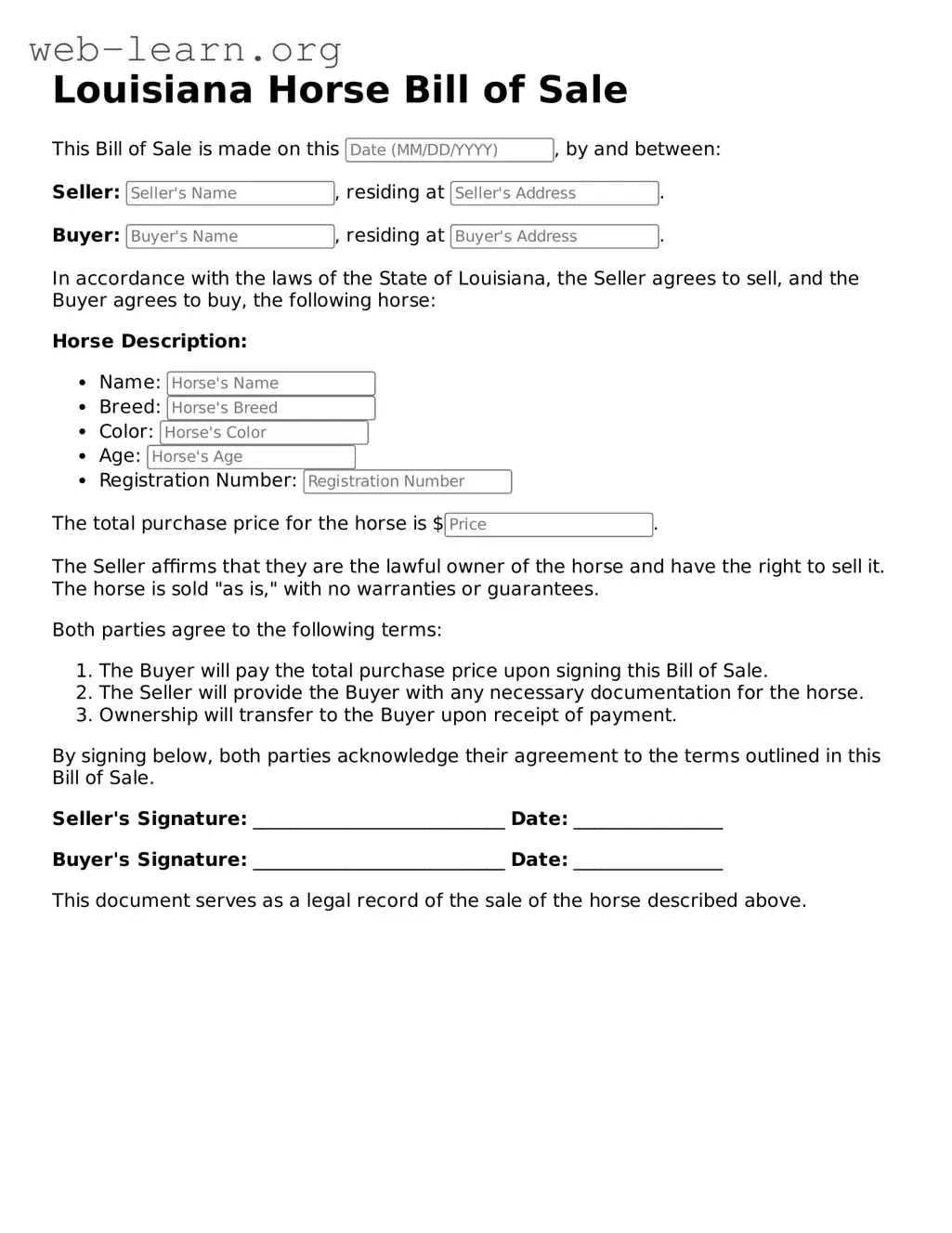
The Louisiana Horse Bill of Sale form serves as a crucial document in the transfer of ownership for horses within the state. This form outlines essential details such as the buyer's and seller's information, the horse's description, and the sale price. Additionally, it may include terms and conditions related to the sale, ensuring both parties have a clear understanding of their rights and obligations. This document not only provides legal protection for both the buyer and the seller but also serves as a record of the transaction, which can be useful for future reference. Properly completing this form is vital to avoid potential disputes and to ensure compliance with state regulations regarding the sale of livestock. Understanding the components of the Louisiana Horse Bill of Sale is essential for anyone involved in equine transactions, as it lays the groundwork for a successful and legally binding agreement.
Louisiana Horse Bill of Sale
This Bill of Sale is made on this , by and between:
Seller: , residing at .
Buyer: , residing at .
In accordance with the laws of the State of Louisiana, the Seller agrees to sell, and the Buyer agrees to buy, the following horse:
Horse Description:
The total purchase price for the horse is $.
The Seller affirms that they are the lawful owner of the horse and have the right to sell it. The horse is sold "as is," with no warranties or guarantees.
Both parties agree to the following terms:
By signing below, both parties acknowledge their agreement to the terms outlined in this Bill of Sale.
Seller's Signature: ___________________________ Date: ________________
Buyer's Signature: ___________________________ Date: ________________
This document serves as a legal record of the sale of the horse described above.
| Fact Name | Description |
|---|---|
| Purpose | The Louisiana Horse Bill of Sale form is used to document the sale of a horse between a buyer and a seller. |
| Governing Law | This form is governed by Louisiana state law, specifically the Louisiana Civil Code. |
| Identification | The form should include detailed information about the horse, such as breed, age, color, and any identifying marks. |
| Purchase Price | The agreed purchase price must be clearly stated on the form to ensure transparency in the transaction. |
| Signatures | Both the buyer and seller must sign the form to validate the sale and transfer of ownership. |
| Record Keeping | It is advisable for both parties to keep a copy of the completed Bill of Sale for their records. |
Once you have the Louisiana Horse Bill of Sale form in front of you, it's time to complete it. This document serves as a record of the sale and transfer of ownership of a horse. Careful attention to detail will ensure that all necessary information is accurately captured.
After completing the form, make sure to keep a copy for your records. This document may be needed for future reference or in case of any disputes regarding the sale.
A Louisiana Horse Bill of Sale is a legal document used to transfer ownership of a horse from one party to another. This form serves as proof of the transaction and outlines important details such as the buyer's and seller's information, the horse's description, and the sale price. This document is crucial for both parties, as it protects their rights and provides clarity regarding the sale.
The Horse Bill of Sale generally includes the following information:
Including accurate and complete information helps prevent disputes and ensures a smooth transfer of ownership.
While it is not legally required to have a Horse Bill of Sale in Louisiana, it is highly recommended. This document provides legal protection for both the buyer and seller. Without it, proving ownership or the terms of the sale may become challenging. Having a written record can be particularly beneficial in case of disputes or if the horse needs to be registered.
Once the Horse Bill of Sale is signed by both parties, it is generally considered a binding agreement. Modifying the document after signing can lead to complications. If changes are necessary, both parties should agree to the modifications and ideally create a new document or an addendum to the original Bill of Sale. This ensures that all parties are aware of the changes and agree to them.
When filling out the Louisiana Horse Bill of Sale form, individuals often encounter several common mistakes that can lead to complications down the line. One significant error is failing to provide complete information about the horse being sold. This includes details such as the horse's breed, age, color, and any unique identifying marks. Omitting this information can create confusion regarding the horse's identity and ownership.
Another frequent mistake is neglecting to include both the buyer's and seller's full legal names and contact information. This information is crucial for establishing a clear and enforceable transaction. If either party's information is incomplete or incorrect, it may hinder future communication or lead to disputes.
People sometimes forget to include the purchase price in the Bill of Sale. This omission can lead to misunderstandings about the terms of the sale. Clearly stating the agreed-upon price helps to solidify the transaction and can be important for tax purposes as well.
Some individuals overlook the importance of signatures. Both the buyer and the seller must sign the document for it to be legally binding. Without these signatures, the Bill of Sale may not hold up in legal situations, leaving one party vulnerable.
Not dating the document is another common mistake. A date provides context for the transaction and can be essential if any disputes arise later. A Bill of Sale without a date may lead to ambiguity about when the sale took place.
People often fail to include any warranties or guarantees regarding the horse's health or soundness. If the seller makes claims about the horse that are not documented, it could lead to legal issues. Clearly outlining any warranties helps protect both parties.
In some cases, individuals do not check local regulations regarding horse sales. Each state may have specific requirements for such transactions. Ignoring these regulations can result in fines or complications that could have been avoided.
Another mistake involves not keeping a copy of the signed Bill of Sale. After the transaction, both parties should retain a copy for their records. This document serves as proof of the sale and can be important for future reference.
Additionally, individuals may fail to verify the buyer's ability to care for the horse. While not a formal requirement of the Bill of Sale, ensuring that the buyer is prepared for the responsibilities of horse ownership can prevent future issues.
Lastly, some people may not seek legal advice when necessary. If the transaction involves a significant amount of money or unique circumstances, consulting with a legal professional can provide guidance and help avoid pitfalls.
When buying or selling a horse in Louisiana, the Horse Bill of Sale form is an essential document. However, there are several other forms and documents that are often used alongside it to ensure a smooth transaction. Here’s a list of some important documents you might need.
Using these documents along with the Horse Bill of Sale can help ensure a clear and legally sound transaction. It’s always best to be prepared and informed to protect both the buyer and seller in the process.
When filling out the Louisiana Horse Bill of Sale form, it’s important to be thorough and accurate. Here are some dos and don'ts to keep in mind:
The Louisiana Horse Bill of Sale form is an important document for anyone involved in buying or selling horses in the state. However, several misconceptions surround this form. Here are seven common misunderstandings:
This is not true. The Horse Bill of Sale is required for all horses, regardless of their breed or pedigree. It serves as a legal record of the transaction.
While verbal agreements can be made, they are difficult to enforce. A written Bill of Sale provides clear proof of the transaction and protects both parties.
This misconception overlooks the importance of the terms outlined in the Bill of Sale. Depending on the agreement, the buyer may assume certain liabilities once the sale is complete.
Both the buyer and the seller should sign the Bill of Sale. This ensures that both parties agree to the terms of the sale and provides mutual protection.
In reality, the Horse Bill of Sale is a legally binding document. It can be used in court to resolve disputes if necessary.
There is no minimum sale price for requiring a Bill of Sale. Regardless of the amount, having a written record is always a good practice.
This is misleading. The form should include essential information such as the horse's description, sale price, and any warranties or guarantees. This information helps avoid misunderstandings later on.
Understanding these misconceptions can help ensure a smooth transaction when buying or selling a horse in Louisiana.
When engaging in the sale or purchase of a horse in Louisiana, using the Horse Bill of Sale form is essential. Here are some key takeaways to keep in mind:
Using the Horse Bill of Sale form properly can simplify the transaction process and protect the interests of both parties involved.
Free Printable Printable Horse Bill of Sale - This form can help clarify any potential misunderstandings regarding the sale agreement.
Horse Bill of Sale - Can help resolve disputes related to the sale of the horse.
Horse Bill of Sale - The bill of sale can help establish trust between the parties involved.