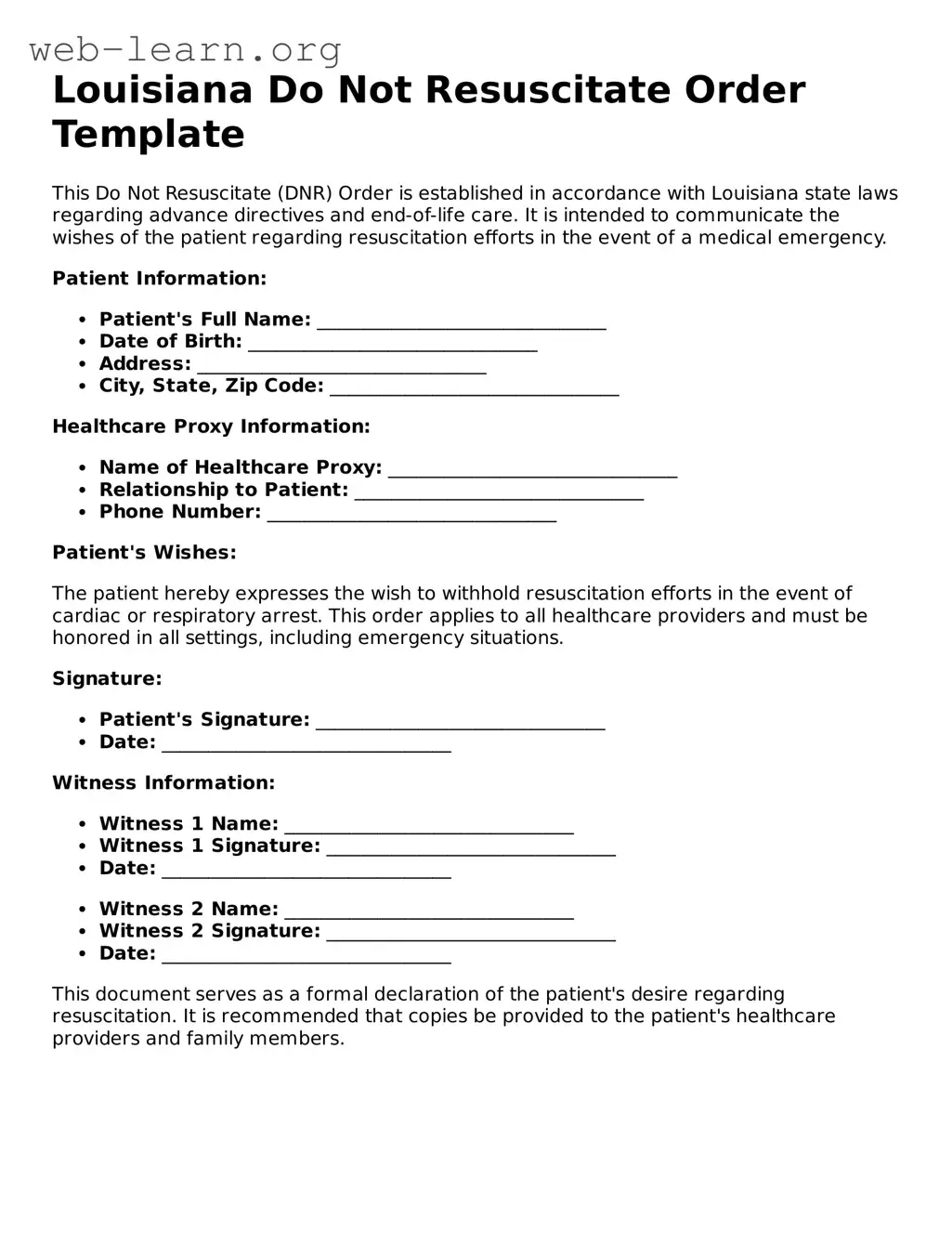
In Louisiana, the Do Not Resuscitate (DNR) Order form serves as a crucial document for individuals wishing to express their preferences regarding medical treatment in emergencies. This form allows patients to communicate their desire not to receive cardiopulmonary resuscitation (CPR) in the event of a cardiac arrest or respiratory failure. It is essential for ensuring that a person's wishes are respected during critical moments when they may be unable to voice their decisions. The DNR Order must be signed by a physician and can be presented in various settings, including hospitals, nursing homes, and at home. Understanding the significance of this form is vital for patients and their families, as it not only addresses medical choices but also provides peace of mind, knowing that their wishes regarding end-of-life care are clearly documented and honored. Families can find comfort in knowing that they have taken steps to ensure that their loved ones receive care that aligns with their values and preferences.
Louisiana Do Not Resuscitate Order Template
This Do Not Resuscitate (DNR) Order is established in accordance with Louisiana state laws regarding advance directives and end-of-life care. It is intended to communicate the wishes of the patient regarding resuscitation efforts in the event of a medical emergency.
Patient Information:
Healthcare Proxy Information:
Patient's Wishes:
The patient hereby expresses the wish to withhold resuscitation efforts in the event of cardiac or respiratory arrest. This order applies to all healthcare providers and must be honored in all settings, including emergency situations.
Signature:
Witness Information:
This document serves as a formal declaration of the patient's desire regarding resuscitation. It is recommended that copies be provided to the patient's healthcare providers and family members.
| Fact Name | Description |
|---|---|
| Purpose | The Louisiana Do Not Resuscitate (DNR) Order form allows individuals to express their wish not to receive CPR or other life-saving measures in case of cardiac arrest. |
| Governing Law | The DNR Order is governed by Louisiana Revised Statutes Title 40, Chapter 11, which outlines the legal requirements and procedures for creating a DNR. |
| Eligibility | Any adult can complete a DNR Order, but it must be signed by a physician to be valid. |
| Storage and Accessibility | The completed DNR Order should be kept in a place where it can be easily accessed by medical personnel, such as in a medical file or displayed prominently at home. |
Completing the Louisiana Do Not Resuscitate Order form is an important step in expressing your healthcare wishes. After filling out the form, you will need to ensure that it is signed and kept in a safe place where it can be easily accessed by your healthcare providers and loved ones.
What is a Do Not Resuscitate (DNR) Order in Louisiana?
A Do Not Resuscitate Order is a legal document that allows a person to refuse certain medical treatments, specifically cardiopulmonary resuscitation (CPR), in the event of a medical emergency. In Louisiana, this order is intended for individuals who wish to avoid resuscitation efforts if their heart stops beating or if they stop breathing. It is an important tool for ensuring that a person's wishes regarding end-of-life care are respected.
Who can request a DNR Order?
Any adult who is capable of making medical decisions can request a DNR Order. This includes individuals who are seriously ill or have a terminal condition. Additionally, a legal guardian or an authorized representative can also request a DNR Order on behalf of someone who is unable to do so. It is crucial that the request reflects the genuine wishes of the individual.
How is a DNR Order created in Louisiana?
To create a DNR Order in Louisiana, an individual must fill out the official DNR Order form provided by the state. This form must be signed by the individual and their physician. The physician's signature confirms that the individual has made an informed decision regarding their medical care. Once completed, the form should be kept in a place that is easily accessible, such as with other important medical documents or in a visible location in the home.
Is a DNR Order valid in all healthcare settings?
Yes, a DNR Order is valid in all healthcare settings, including hospitals, nursing homes, and at home. However, it is essential that the DNR Order is clearly documented and available to healthcare providers. If there is any confusion or lack of documentation, medical personnel may be required to perform resuscitation efforts, even if a DNR Order exists.
Can a DNR Order be revoked?
Yes, an individual can revoke a DNR Order at any time. This can be done verbally or in writing. To ensure that healthcare providers are aware of the revocation, it is advisable to notify the physician and any healthcare facilities where the DNR Order was previously provided. Keeping a record of the revocation is also a good practice.
What should individuals do if they change their mind about a DNR Order?
If someone changes their mind about having a DNR Order, they should take steps to revoke it as mentioned earlier. Additionally, they should discuss their wishes with their healthcare provider and family members. Open communication ensures that everyone involved understands the individual's current preferences regarding resuscitation and end-of-life care.
When completing the Louisiana Do Not Resuscitate Order form, individuals often encounter several common pitfalls. One frequent mistake is failing to provide accurate personal information. This includes not only the patient's name but also their date of birth and other identifying details. Inaccurate information can lead to confusion during a medical emergency, potentially undermining the intent of the document.
Another mistake is neglecting to sign the form properly. The signature of the patient or their legal representative is crucial for the document to be considered valid. Without this signature, healthcare providers may not recognize the order, which defeats its purpose. Additionally, the presence of a witness signature is required in many cases, and omitting this step can create further complications.
People sometimes overlook the importance of discussing their wishes with family members or healthcare providers before finalizing the form. This conversation can help ensure that everyone understands the patient’s preferences and can advocate for them if necessary. Failing to communicate these wishes may lead to misunderstandings or disputes during critical moments.
Lastly, individuals may forget to keep copies of the completed form in accessible locations. It is essential to distribute copies to healthcare providers, family members, and anyone involved in the patient's care. Without readily available copies, there is a risk that the order may not be honored when needed most. Proper distribution is key to ensuring that the document serves its intended purpose.
The Louisiana Do Not Resuscitate (DNR) Order form is an important document for individuals wishing to express their preferences regarding medical treatment in emergency situations. However, several other forms and documents can complement the DNR to ensure that a person's healthcare wishes are respected. Here’s a list of some commonly used forms that work in conjunction with the DNR Order:
Having these documents in place can significantly ease the burden on family members and healthcare providers during difficult times. They ensure that a person’s wishes are honored and respected, providing peace of mind for both the individual and their loved ones.
A Do Not Resuscitate Order (DNR) form is an important legal document that indicates a patient's wishes regarding resuscitation efforts in the event of cardiac arrest. Several other documents serve similar purposes in expressing healthcare preferences. Here are four documents that share similarities with a DNR form:
Filling out a Louisiana Do Not Resuscitate (DNR) Order form is an important decision that requires careful consideration. To help you navigate this process, here’s a list of things you should and shouldn't do.
By following these guidelines, you can ensure that your preferences are respected and understood. This is a significant step in managing your healthcare choices, so take your time and make informed decisions.
Understanding the Louisiana Do Not Resuscitate (DNR) Order form is essential for individuals and families making critical healthcare decisions. Unfortunately, several misconceptions can lead to confusion and misinterpretation. Here are eight common misconceptions:
Clarifying these misconceptions can help individuals make informed decisions about their healthcare preferences. Understanding the DNR process is vital for ensuring that personal wishes are respected in critical medical situations.
Filling out and using the Louisiana Do Not Resuscitate Order (DNR) form is an important step in ensuring your healthcare wishes are respected. Here are some key takeaways to consider:
Dnr Hospital - The DNR order can be part of a broader advance care plan that outlines overall healthcare wishes.
Do Not Resuscitate Form - A DNR order can help avoid unwanted resuscitation attempts that may not align with a patient’s desires.
Georgia Dnr Form - Some individuals may feel more comfortable discussing DNR orders in a supportive environment.