When navigating the emotional and often complex process of divorce, having a clear and comprehensive Divorce Settlement Agreement can significantly ease the transition for both parties involved. This essential document serves as a roadmap, outlining the terms of the separation and addressing critical issues such as the division of assets, child custody arrangements, and spousal support. In Louisiana, this form is particularly important as it formalizes the agreements reached between spouses, ensuring that both parties understand their rights and obligations. By detailing how property will be divided and how children will be cared for, the agreement aims to minimize future disputes and provide a sense of closure. Furthermore, it is crucial to ensure that the form adheres to state laws and reflects the unique circumstances of the individuals involved. This article will delve into the key components of the Louisiana Divorce Settlement Agreement form, offering insights into its significance and guiding you through the process of creating a fair and enforceable agreement.
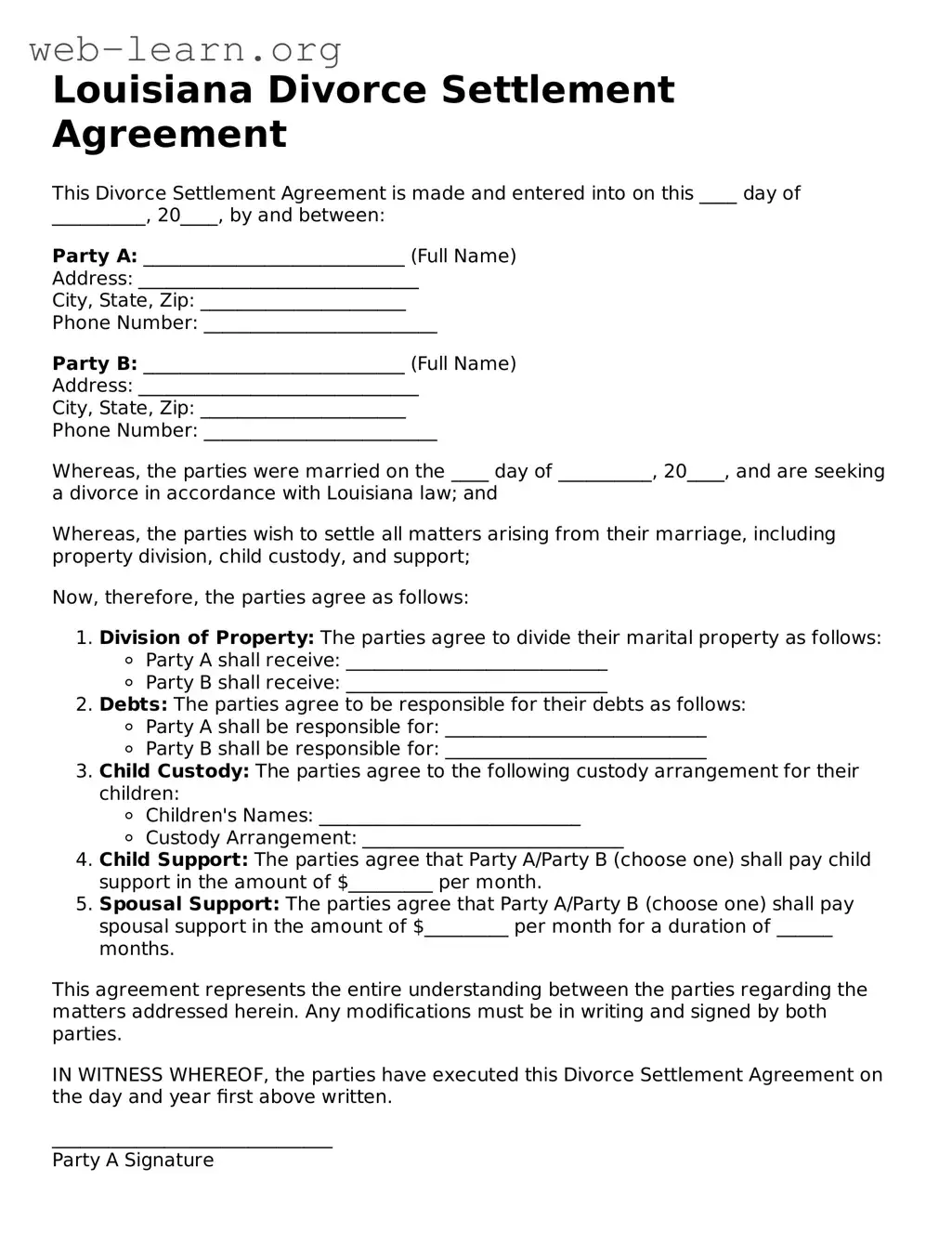
Louisiana Divorce Settlement Agreement
This Divorce Settlement Agreement is made and entered into on this ____ day of __________, 20____, by and between:
Party A: ____________________________ (Full Name)
Address: ______________________________
City, State, Zip: ______________________
Phone Number: _________________________
Party B: ____________________________ (Full Name)
Address: ______________________________
City, State, Zip: ______________________
Phone Number: _________________________
Whereas, the parties were married on the ____ day of __________, 20____, and are seeking a divorce in accordance with Louisiana law; and
Whereas, the parties wish to settle all matters arising from their marriage, including property division, child custody, and support;
Now, therefore, the parties agree as follows:
This agreement represents the entire understanding between the parties regarding the matters addressed herein. Any modifications must be in writing and signed by both parties.
IN WITNESS WHEREOF, the parties have executed this Divorce Settlement Agreement on the day and year first above written.
______________________________
Party A Signature
______________________________
Party B Signature
______________________________
Witness Signature
______________________________
Date
| Fact Name | Details |
|---|---|
| Governing Law | The Louisiana Divorce Settlement Agreement is governed by Louisiana Civil Code, specifically Title 9. |
| Purpose | This form outlines the terms of the divorce settlement between the parties involved. |
| Required Information | It typically requires details such as property division, child custody arrangements, and spousal support. |
| Filing Process | The completed agreement must be filed with the appropriate court as part of the divorce proceedings. |
| Mutual Consent | Both parties must agree to the terms outlined in the settlement agreement for it to be valid. |
| Modification | Changes to the agreement may be made, but typically require court approval to be enforceable. |
Filling out the Louisiana Divorce Settlement Agreement form is an important step in finalizing your divorce. This form outlines the terms agreed upon by both parties regarding property division, child custody, and other relevant issues. Once completed, this form will be submitted to the court for approval.
What is a Louisiana Divorce Settlement Agreement?
A Louisiana Divorce Settlement Agreement is a legal document that outlines the terms and conditions agreed upon by both spouses during a divorce. It typically covers issues such as property division, child custody, child support, and spousal support. This agreement is crucial as it helps to finalize the divorce process and can be submitted to the court for approval.
Who needs to fill out this form?
Both spouses involved in the divorce should participate in creating the Divorce Settlement Agreement. It is essential that both parties agree to the terms outlined in the document. This ensures that all issues are addressed and both parties' rights are protected.
What should be included in the agreement?
The agreement should include several key components:
By including these elements, the agreement provides a comprehensive overview of the divorce settlement.
Is legal representation necessary when creating this agreement?
While it is not legally required to have an attorney when creating a Divorce Settlement Agreement, it is highly advisable. An attorney can help ensure that the agreement is fair, legally binding, and compliant with Louisiana laws. They can also provide guidance on any complex issues that may arise.
How is the agreement submitted to the court?
Once both parties have agreed to the terms and signed the Divorce Settlement Agreement, it must be submitted to the appropriate court. This usually involves filing the document along with other required forms related to the divorce. The court will review the agreement to ensure it is fair and reasonable before finalizing the divorce.
Can the agreement be modified after it is finalized?
Yes, the Divorce Settlement Agreement can be modified after it has been finalized, but this typically requires a court's approval. If circumstances change significantly, such as a change in income or living situation, either party can request a modification. It is important to follow the proper legal process to make any changes.
What happens if one party does not comply with the agreement?
If one party fails to comply with the terms of the Divorce Settlement Agreement, the other party may seek legal recourse. This can involve filing a motion with the court to enforce the agreement. The court can then take appropriate actions to ensure compliance, which may include sanctions or modifications to the agreement.
Are there any fees associated with filing the agreement?
Yes, there may be filing fees associated with submitting the Divorce Settlement Agreement to the court. These fees can vary by jurisdiction. It is advisable to check with the local court for specific fee amounts and any additional costs that may be incurred during the divorce process.
Where can I obtain the Louisiana Divorce Settlement Agreement form?
The Divorce Settlement Agreement form can often be obtained from the local courthouse, legal aid offices, or online legal resources. It is important to use the correct form that complies with Louisiana state laws to ensure that the agreement is valid and enforceable.
Filling out the Louisiana Divorce Settlement Agreement form can be a complex process. Many individuals make mistakes that can lead to delays or complications in their divorce proceedings. Here are ten common errors to avoid.
One frequent mistake is failing to provide complete information. Each section of the form requires specific details about assets, debts, and personal information. Incomplete entries can result in the court rejecting the form or requesting additional information, which can prolong the process.
Another common error is not being clear about the division of property. Couples often assume that verbal agreements will suffice, but the form needs to reflect any agreements made. Vague language can lead to misunderstandings and disputes later on.
Many people also forget to include all sources of income. It’s essential to list every source, including salaries, bonuses, and side jobs. Omitting income can affect support calculations and may lead to issues with the court.
Inaccurate calculations are another pitfall. When determining child support or alimony, individuals sometimes miscalculate their expenses or income. It’s crucial to double-check these figures to ensure they reflect reality and meet legal standards.
Additionally, some individuals neglect to date and sign the document properly. This may seem minor, but without proper signatures and dates, the agreement may not be legally binding. Always ensure that all parties involved have signed and dated the form.
Another mistake is failing to consider tax implications. Divorce settlements can have significant tax consequences, and individuals often overlook this aspect. Consulting with a tax professional can help clarify potential issues and ensure that the agreement is fair.
People sometimes forget to include provisions for future changes. Life circumstances can change, and it’s wise to include language that addresses how to handle future modifications to child support or custody arrangements.
Moreover, some individuals may not fully understand the legal terms used in the form. This can lead to misinterpretations that affect the agreement. It’s beneficial to seek clarification on any terms that are unclear before finalizing the document.
Lastly, many people fail to seek legal advice. Even if both parties agree on the terms, having a legal professional review the agreement can prevent future problems. A lawyer can ensure that the document complies with Louisiana law and protects everyone's interests.
When navigating the process of divorce in Louisiana, several forms and documents may accompany the Divorce Settlement Agreement. Each of these documents serves a specific purpose and helps ensure a smoother transition through the legal proceedings.
Understanding these accompanying documents can help streamline the divorce process and ensure that all parties are adequately represented. Each form plays a vital role in achieving a fair and comprehensive resolution.
Separation Agreement: A Separation Agreement outlines the terms under which a couple will live apart. Similar to a Divorce Settlement Agreement, it addresses issues such as property division, child custody, and support. Both documents serve to clarify the rights and responsibilities of each party.
Child Custody Agreement: This document specifically focuses on the arrangements for the care and custody of children. Like the Divorce Settlement Agreement, it aims to ensure the best interests of the children are prioritized, detailing visitation rights, parenting schedules, and decision-making responsibilities.
Property Settlement Agreement: A Property Settlement Agreement details how assets and debts will be divided between spouses. This document shares similarities with the Divorce Settlement Agreement in that it seeks to provide a clear and fair distribution of property, preventing future disputes.
Marital Settlement Agreement: This document encompasses the overall terms of the divorce, including financial support, property division, and custody arrangements. It is similar to the Divorce Settlement Agreement in that it formalizes the terms agreed upon by both parties, ensuring compliance and clarity moving forward.
When filling out the Louisiana Divorce Settlement Agreement form, it's crucial to approach the task with care. Here are six important dos and don'ts to keep in mind:
When it comes to the Louisiana Divorce Settlement Agreement form, there are several misconceptions that can lead to confusion. Understanding these can help you navigate the process more smoothly.
Understanding these misconceptions can help you approach the Louisiana Divorce Settlement Agreement form with clarity and confidence. Taking the time to educate yourself can lead to a smoother divorce process.
When navigating the Louisiana Divorce Settlement Agreement form, it is essential to understand its components and implications. Here are some key takeaways to consider:
By keeping these points in mind, individuals can approach the Louisiana Divorce Settlement Agreement with greater confidence and clarity.
Divorce Contract Template - It may outline the process for selling shared property, if necessary.
Divorce Contract Template - It specifies child custody arrangements and visitation rights for parents.