When engaging in the sale or transfer of personal property in Louisiana, a Bill of Sale serves as a vital document to ensure a smooth transaction. This form outlines essential details, such as the names and addresses of both the seller and the buyer, a clear description of the item being sold, and the agreed-upon purchase price. Additionally, it may include information about any warranties or guarantees associated with the item, as well as the date of the transaction. The Bill of Sale not only provides proof of ownership transfer but also protects the rights of both parties involved. In the event of disputes or misunderstandings, this document can serve as a critical piece of evidence. Understanding the components and significance of the Louisiana Bill of Sale form is crucial for anyone looking to buy or sell property in the state, ensuring that all parties are adequately informed and legally protected throughout the process.
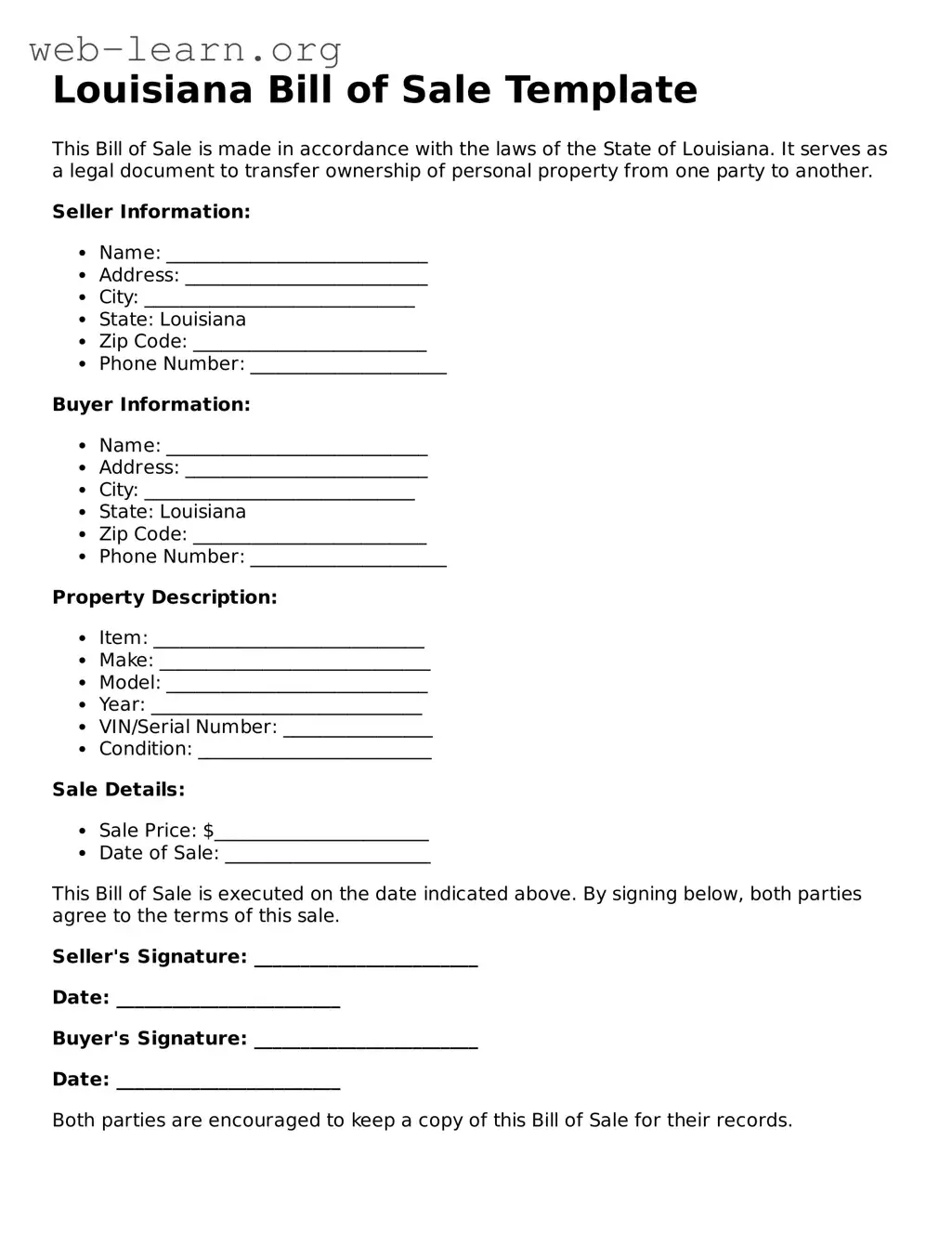
Louisiana Bill of Sale Template
This Bill of Sale is made in accordance with the laws of the State of Louisiana. It serves as a legal document to transfer ownership of personal property from one party to another.
Seller Information:
Buyer Information:
Property Description:
Sale Details:
This Bill of Sale is executed on the date indicated above. By signing below, both parties agree to the terms of this sale.
Seller's Signature: ________________________
Date: ________________________
Buyer's Signature: ________________________
Date: ________________________
Both parties are encouraged to keep a copy of this Bill of Sale for their records.
| Fact Name | Description |
|---|---|
| Purpose | The Louisiana Bill of Sale form is used to document the transfer of ownership of personal property from one party to another. |
| Requirements | Both the seller and buyer must sign the Bill of Sale for it to be valid. It is recommended to include a description of the property being sold. |
| Governing Laws | The form is governed by Louisiana Civil Code Articles 2440-2460, which outline the requirements for sales and transfers of property. |
| Usage | This form is commonly used for the sale of vehicles, boats, and other tangible personal property within the state of Louisiana. |
After obtaining the Louisiana Bill of Sale form, you will need to complete it accurately to ensure that all necessary information is included. This document is important for transferring ownership of property or goods. Follow the steps below to fill out the form correctly.
Once you have completed the form, keep a copy for your records. The buyer should also retain a copy for their own reference. This will help ensure a smooth transfer of ownership.
What is a Louisiana Bill of Sale?
A Louisiana Bill of Sale is a legal document that records the transfer of ownership of personal property from one party to another. This form serves as proof of the transaction and outlines the details of the sale, including the buyer, seller, and item being sold.
Do I need a Bill of Sale for every transaction?
While not every transaction requires a Bill of Sale, it is highly recommended for significant purchases, such as vehicles, boats, or expensive items. Having a Bill of Sale can protect both the buyer and seller by providing a clear record of the agreement.
What information should be included in the Bill of Sale?
A complete Bill of Sale should include:
Is a Bill of Sale required to register a vehicle in Louisiana?
Yes, when registering a vehicle in Louisiana, a Bill of Sale is typically required. It serves as proof of ownership and helps ensure that the buyer is legally entitled to register the vehicle. Always check with the Louisiana Department of Motor Vehicles for specific requirements.
Can I create my own Bill of Sale?
Yes, you can create your own Bill of Sale. Just make sure it includes all necessary information and is signed by both parties. However, using a template can help ensure you don't miss any important details.
What if I lose my Bill of Sale?
If you lose your Bill of Sale, you can request a duplicate from the seller if they are willing to provide one. It's a good idea to keep a copy of any Bill of Sale for your records, as it can be important for future transactions or disputes.
Filling out the Louisiana Bill of Sale form can seem straightforward, but many people make common mistakes that can lead to complications later on. One frequent error is failing to include all necessary details about the item being sold. Whether it’s a vehicle, boat, or piece of equipment, the description should be clear and comprehensive. Omitting important information can create confusion and disputes down the line.
Another mistake often seen is neglecting to include the correct names and addresses of both the buyer and the seller. It’s crucial that these details are accurate and match the identification documents provided. If there are discrepancies, it could lead to legal issues or problems with registration in the future.
Many individuals also forget to indicate the sale price. This is a vital piece of information that serves not only for record-keeping but also for tax purposes. Leaving this field blank can raise eyebrows during audits or when transferring ownership.
Some people overlook the need for signatures. A Bill of Sale is not just a form; it’s a legal document. Both parties must sign the form to confirm the transaction. Without signatures, the document may be considered invalid, leaving both parties vulnerable.
Additionally, failing to date the document is another common pitfall. A date provides context for the transaction, which is essential for both parties. It helps establish timelines for any warranties or guarantees associated with the sale.
Another mistake is not keeping a copy of the completed Bill of Sale. After the form is filled out and signed, both parties should retain a copy for their records. This ensures that each party has proof of the transaction, which can be invaluable if disputes arise later.
Some individuals may also forget to check for any specific state requirements that might apply to their transaction. Louisiana may have unique stipulations regarding certain items, especially vehicles. Ignoring these can lead to legal complications or additional fees.
Lastly, many people rush through the process without reviewing the completed form. Taking a moment to double-check for errors can save a lot of time and trouble. A quick review can catch mistakes that could otherwise complicate the sale.
The Louisiana Bill of Sale form is a crucial document for anyone looking to buy or sell personal property in the state. However, it is often accompanied by other forms and documents that help to ensure a smooth transaction. Here are four commonly used documents that complement the Bill of Sale.
Incorporating these documents along with the Louisiana Bill of Sale can help facilitate a clear and legal transfer of ownership. Each document plays a vital role in protecting the interests of both the buyer and seller, ensuring a smooth transaction process.
When filling out the Louisiana Bill of Sale form, it is important to follow specific guidelines to ensure accuracy and legality. Here are some things you should and shouldn't do:
The Louisiana Bill of Sale form is often misunderstood. Here are seven common misconceptions:
Many believe that the Bill of Sale is exclusively for vehicles. In reality, it can be used for various transactions involving personal property, including furniture, electronics, and other goods.
Some people think that notarization is mandatory for a Bill of Sale to be valid. While notarization can add an extra layer of authenticity, it is not a legal requirement in Louisiana.
A receipt may provide proof of purchase, but it does not serve the same purpose as a Bill of Sale. The Bill of Sale includes important details about the transaction, which a simple receipt may lack.
Some individuals believe that a Bill of Sale is only necessary for high-value transactions. However, it is advisable to use one for any sale to protect both the buyer and seller, regardless of the amount involved.
Another misconception is that seller information is optional. In fact, including the seller's name and contact details is essential for establishing accountability in the transaction.
While the Louisiana Bill of Sale form is specific to the state, the concept of a Bill of Sale exists in many jurisdictions. Each state has its own regulations, but the fundamental purpose remains the same.
People often think that a Bill of Sale is final and unchangeable once signed. However, parties can agree to modify the document if both sides consent to the changes and document them properly.
When filling out and using the Louisiana Bill of Sale form, keep the following key points in mind:
Generic Bill of Sale Template - It can also serve as evidence of a gift if the item is given without payment.
Hand Written Bill of Sale Oregon - This form can provide legal recourse if the transaction does not go as planned.