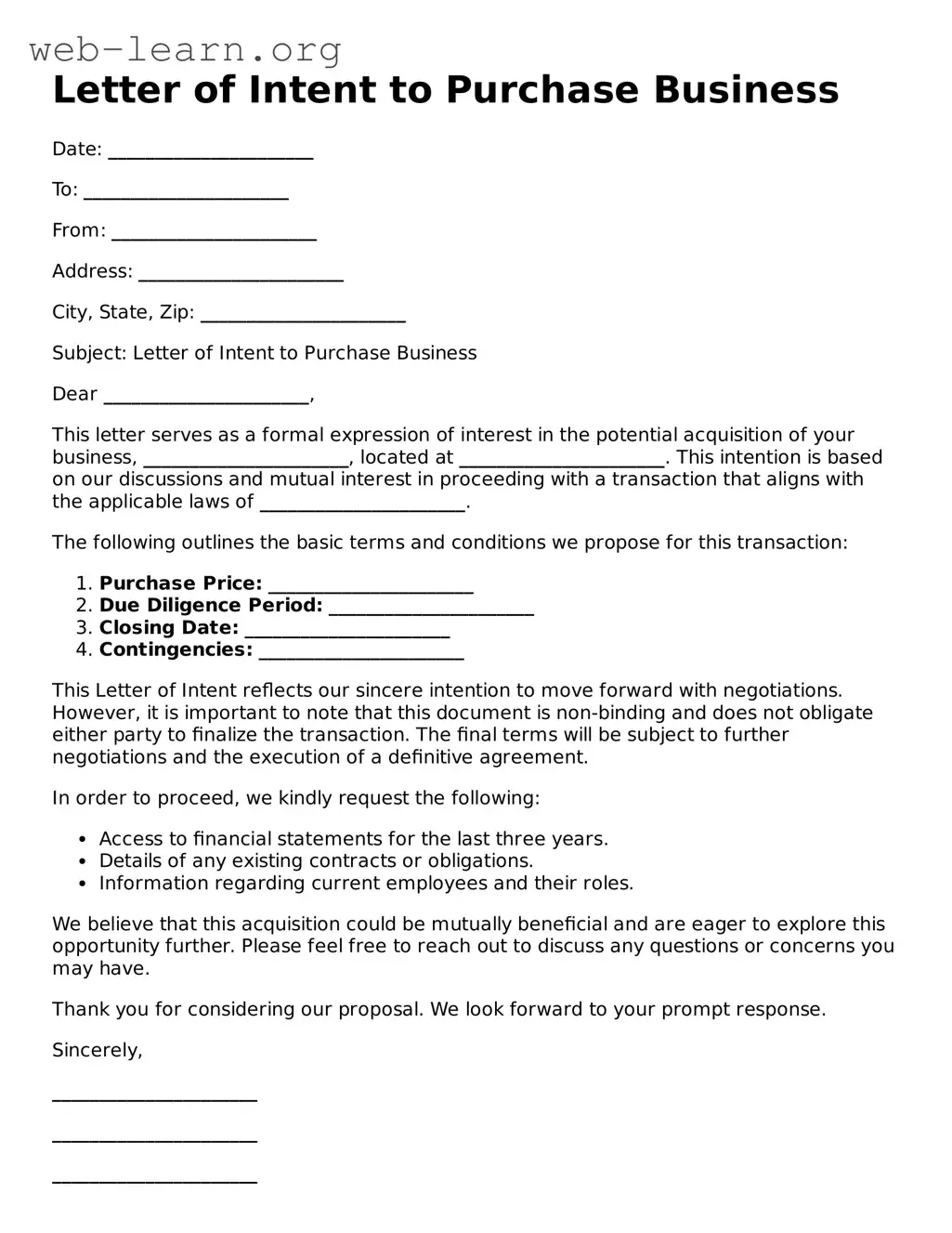
When embarking on the journey of acquiring a business, a Letter of Intent (LOI) to Purchase Business serves as a crucial preliminary document that outlines the basic terms and conditions of the proposed transaction. This form typically includes essential elements such as the purchase price, payment structure, and any contingencies that may affect the deal. Additionally, it often details the timeline for due diligence and the closing process, providing both parties with a clear roadmap for moving forward. By setting forth the intentions of the buyer and the seller, the LOI helps to establish a mutual understanding and can serve as a foundation for drafting a more formal purchase agreement later on. Furthermore, while the LOI is generally non-binding, it can include binding provisions related to confidentiality and exclusivity, which protect the interests of both parties during negotiations. Overall, the Letter of Intent is an invaluable tool that facilitates communication and clarity in the early stages of a business acquisition, paving the way for a smoother transaction process.
Letter of Intent to Purchase Business
Date: ______________________
To: ______________________
From: ______________________
Address: ______________________
City, State, Zip: ______________________
Subject: Letter of Intent to Purchase Business
Dear ______________________,
This letter serves as a formal expression of interest in the potential acquisition of your business, ______________________, located at ______________________. This intention is based on our discussions and mutual interest in proceeding with a transaction that aligns with the applicable laws of ______________________.
The following outlines the basic terms and conditions we propose for this transaction:
This Letter of Intent reflects our sincere intention to move forward with negotiations. However, it is important to note that this document is non-binding and does not obligate either party to finalize the transaction. The final terms will be subject to further negotiations and the execution of a definitive agreement.
In order to proceed, we kindly request the following:
We believe that this acquisition could be mutually beneficial and are eager to explore this opportunity further. Please feel free to reach out to discuss any questions or concerns you may have.
Thank you for considering our proposal. We look forward to your prompt response.
Sincerely,
______________________
______________________
______________________
| Fact Name | Description |
|---|---|
| Definition | A Letter of Intent to Purchase Business outlines the preliminary agreement between a buyer and a seller before finalizing a sale. |
| Purpose | This document expresses the buyer's interest and intentions regarding the purchase of a business. |
| Non-Binding | Typically, a Letter of Intent is non-binding, meaning it does not create a legal obligation to complete the sale. |
| Key Components | Common elements include purchase price, payment terms, and a timeline for due diligence. |
| Confidentiality | Many Letters of Intent include confidentiality clauses to protect sensitive business information. |
| State-Specific Forms | Some states may have specific requirements or forms for Letters of Intent, so it's essential to check local laws. |
| Governing Laws | The governing law for the agreement typically depends on the state where the business is located. |
| Negotiation Tool | This letter serves as a starting point for negotiations between the buyer and seller. |
| Next Steps | After signing, both parties usually move toward drafting a formal purchase agreement. |
Completing the Letter of Intent to Purchase Business form is a crucial step in the business acquisition process. This document outlines the preliminary terms of the proposed transaction and serves as a foundation for further negotiations. After filling out the form, both parties can proceed to draft a more detailed purchase agreement.
A Letter of Intent (LOI) to Purchase Business is a document that outlines the preliminary understanding between a buyer and a seller regarding the sale of a business. It serves as a starting point for negotiations and indicates the buyer's interest in purchasing the business.
Typically, an LOI includes:
Generally, an LOI is not legally binding. It usually expresses the intent to negotiate a formal agreement. However, certain sections, such as confidentiality or exclusivity clauses, may be binding. It's important to clarify which parts are enforceable.
An LOI helps both parties clarify their intentions and expectations before proceeding with a detailed purchase agreement. It can save time and resources by identifying any major issues early in the process.
The buyer can outline their terms and conditions clearly. This allows them to gauge the seller's willingness to negotiate. Additionally, it may provide the buyer with a period of exclusivity to conduct due diligence.
While an LOI can be beneficial, it may lead to misunderstandings if not drafted carefully. If the terms are vague, either party may have different interpretations. This can create complications later in the negotiation process.
A Letter of Intent should be clear and concise. It should be formatted professionally, typically including:
Yes, a Letter of Intent can be modified. Both parties can agree to changes before signing a final purchase agreement. It’s important to document any modifications to ensure clarity and mutual understanding.
Filling out a Letter of Intent to Purchase Business form can be a straightforward process, but many individuals make common mistakes that can lead to complications later. One frequent error is failing to provide complete and accurate information about the parties involved. This includes not listing all relevant business names, addresses, and contact details. Inaccurate or incomplete information can delay negotiations and create confusion.
Another common mistake is neglecting to outline the terms of the agreement clearly. Many people assume that the other party understands their intentions without explicitly stating them. It’s crucial to detail the purchase price, payment terms, and any contingencies. Without this clarity, misunderstandings may arise, leading to disputes down the line.
Additionally, some individuals overlook the importance of including a timeline for the transaction. A well-defined timeline sets expectations for both parties and helps keep the process on track. Without a timeline, the transaction can become protracted, causing frustration and potential loss of interest from either party.
People also often forget to specify any conditions that must be met before the purchase can proceed. This might include obtaining financing or completing due diligence. Failing to include these conditions can result in one party feeling blindsided if the deal does not go as planned.
Lastly, many individuals neglect to review the document thoroughly before submission. Errors in spelling, grammar, or formatting can undermine the professionalism of the letter. It is essential to proofread the document to ensure it reflects the seriousness of the intent to purchase. Taking these steps can help avoid pitfalls and facilitate a smoother transaction.
A Letter of Intent (LOI) to Purchase a Business serves as a preliminary agreement outlining the intentions of a buyer and seller. However, several other forms and documents often accompany the LOI to provide a comprehensive framework for the transaction. These documents help clarify terms, protect interests, and facilitate a smooth process. Below is a list of common forms used alongside the LOI.
Each of these documents plays a crucial role in the business acquisition process. Together, they create a structured approach that helps both parties navigate the complexities of the transaction. By understanding and utilizing these forms, buyers and sellers can work toward a successful transfer of ownership.
When filling out the Letter of Intent to Purchase Business form, it’s crucial to approach the task with care. Here’s a helpful list of things you should and shouldn’t do to ensure your submission is clear and effective.
By following these guidelines, you can enhance the clarity and effectiveness of your Letter of Intent to Purchase Business. Your attention to detail will help facilitate a smoother transaction.
When it comes to the Letter of Intent to Purchase Business form, there are several misconceptions that can lead to confusion. Understanding these misconceptions is crucial for anyone considering entering into a business purchase agreement.
By addressing these misconceptions, individuals can approach the Letter of Intent to Purchase Business form with a clearer understanding, making the process smoother and more effective.
When filling out and using the Letter of Intent to Purchase Business form, consider the following key takeaways:
Internship Letter of Intent - The letter should be tailored to the specific internship you are applying for.
Commercial Lease Proposal Template - The letter can include provisions for security deposits or other financial commitments.
Intent to Vacate Letter Template - A document used by tenants to formally announce their intention to leave a rental property.