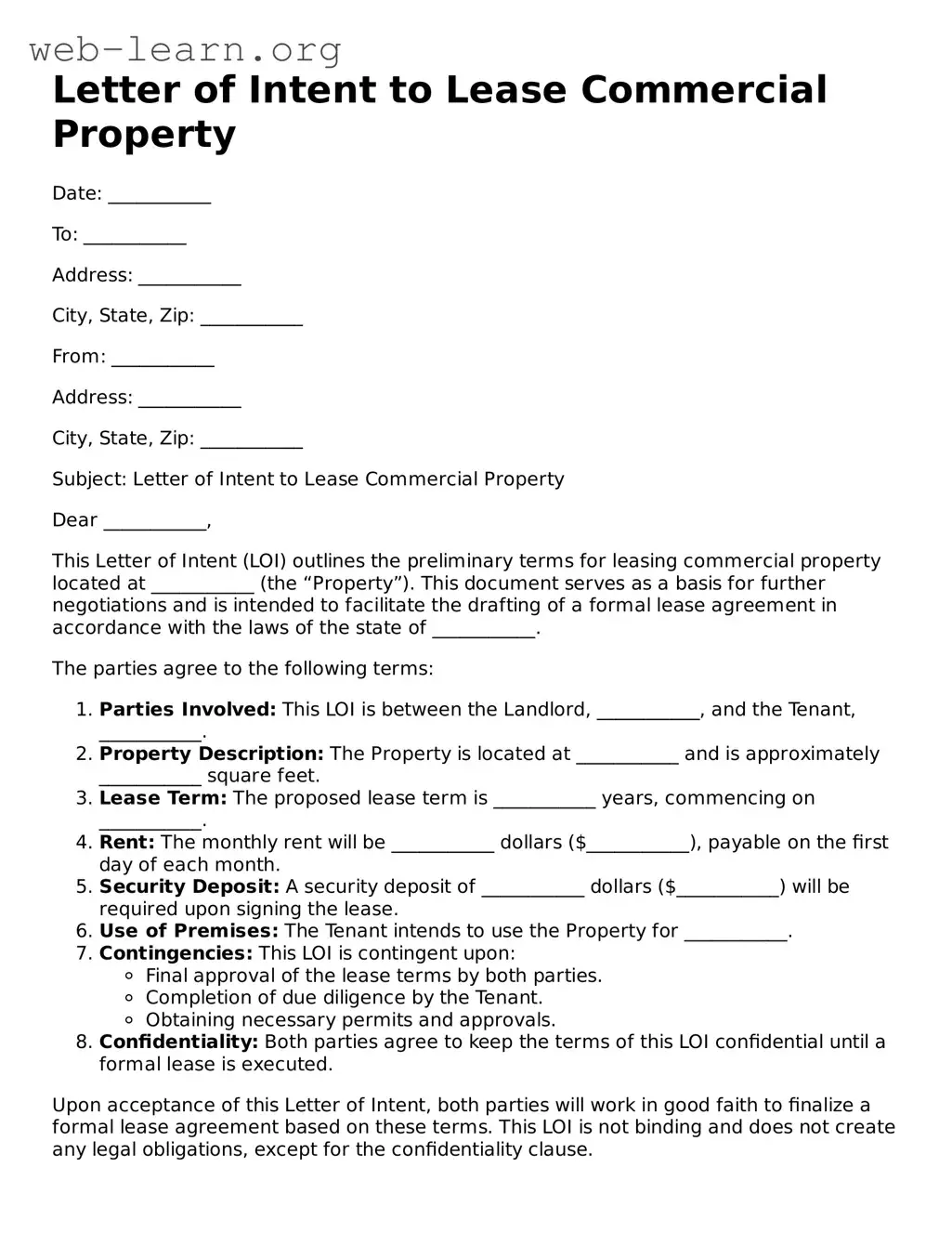
When entering the world of commercial real estate, understanding the Letter of Intent to Lease Commercial Property form is crucial for both landlords and potential tenants. This document serves as a preliminary agreement outlining the basic terms and conditions under which a lease may be negotiated. It typically includes essential details such as the proposed lease duration, rental rates, and any specific requirements or contingencies that either party may have. Additionally, the form may address topics like maintenance responsibilities, options for renewal, and any necessary deposits. By clarifying these points early in the negotiation process, the Letter of Intent helps to establish a mutual understanding, paving the way for a smoother transition to a formal lease agreement. As both parties review and discuss the terms presented in this document, they can identify any potential issues and work collaboratively to resolve them before committing to a long-term arrangement.
Letter of Intent to Lease Commercial Property
Date: ___________
To: ___________
Address: ___________
City, State, Zip: ___________
From: ___________
Address: ___________
City, State, Zip: ___________
Subject: Letter of Intent to Lease Commercial Property
Dear ___________,
This Letter of Intent (LOI) outlines the preliminary terms for leasing commercial property located at ___________ (the “Property”). This document serves as a basis for further negotiations and is intended to facilitate the drafting of a formal lease agreement in accordance with the laws of the state of ___________.
The parties agree to the following terms:
Upon acceptance of this Letter of Intent, both parties will work in good faith to finalize a formal lease agreement based on these terms. This LOI is not binding and does not create any legal obligations, except for the confidentiality clause.
Please indicate your acceptance of these terms by signing below:
Landlord Signature: ________________________ Date: ___________
Tenant Signature: ________________________ Date: ___________
Thank you for considering this proposal. I look forward to your response.
Sincerely,
__________________________
Title: ___________
Company: ___________
| Fact Name | Description |
|---|---|
| Purpose | A Letter of Intent (LOI) outlines the preliminary terms of a lease agreement for commercial property, serving as a starting point for negotiations. |
| Non-Binding Nature | Typically, an LOI is non-binding, meaning that it does not create a legal obligation for either party until a formal lease agreement is executed. |
| State-Specific Forms | Different states may have specific requirements for LOIs. For instance, in California, the governing law includes the California Civil Code. |
| Key Components | An effective LOI usually includes essential details such as rental terms, duration, and any contingencies, providing a clear framework for the lease agreement. |
After completing the Letter of Intent to Lease Commercial Property form, you will typically submit it to the landlord or property manager. This step initiates discussions regarding the terms of the lease and sets the stage for further negotiations.
What is a Letter of Intent to Lease Commercial Property?
A Letter of Intent (LOI) to lease commercial property is a preliminary document that outlines the basic terms and conditions under which a tenant intends to lease a commercial space. It serves as a starting point for negotiations and helps clarify the intentions of both the landlord and tenant before a formal lease agreement is drafted.
Why is an LOI important?
The LOI is important because it provides a clear framework for the leasing process. It helps both parties understand each other's expectations and can prevent misunderstandings later on. Additionally, having a written LOI can expedite the lease negotiation process and save time.
What information is typically included in an LOI?
Typically, an LOI includes:
Is the LOI legally binding?
Generally, a Letter of Intent is not legally binding, but it can contain binding provisions, such as confidentiality agreements or exclusivity clauses. It is crucial to clearly state which parts of the LOI are binding and which are not to avoid confusion.
How does an LOI differ from a lease agreement?
An LOI is a preliminary document that outlines the main terms of the lease, while a lease agreement is a comprehensive legal contract that details all the rights and obligations of both parties. The lease agreement is typically more formal and legally binding, whereas the LOI is more of a negotiation tool.
Can I modify the LOI after it is signed?
Yes, an LOI can be modified after it is signed, but both parties must agree to the changes. It is advisable to document any modifications in writing to maintain clarity and avoid misunderstandings.
What should I do if I receive an LOI?
If you receive an LOI, review it carefully. Consider whether the terms align with your expectations and business needs. It may be beneficial to consult with a real estate professional or attorney to ensure that your interests are protected before responding.
How long does it take to negotiate an LOI?
The time it takes to negotiate an LOI can vary widely based on the complexity of the terms and the responsiveness of both parties. Some LOIs can be agreed upon in a matter of days, while others may take weeks or longer, especially if there are many details to work out.
What happens after the LOI is signed?
Once the LOI is signed, the next steps typically involve drafting a formal lease agreement based on the terms outlined in the LOI. Both parties will review the lease, negotiate any final details, and ultimately sign the lease to finalize the agreement.
Filling out a Letter of Intent to Lease Commercial Property can be straightforward, but several common mistakes can lead to complications. One frequent error is leaving out critical details. Many people forget to include essential information, such as the property address or the proposed lease term. Omitting these details can create confusion and delay the leasing process.
Another mistake is not specifying the intended use of the property. Clearly stating how you plan to use the space is crucial. Without this information, landlords may hesitate to proceed, fearing potential conflicts with zoning laws or property restrictions.
Some individuals underestimate the importance of including financial terms. Failing to outline the proposed rent amount or any additional costs can lead to misunderstandings later. It’s vital to be clear about your budget and any expectations regarding rent increases or other financial obligations.
Additionally, many people overlook the need for contingencies. It’s wise to include conditions that must be met before the lease is finalized. This might involve securing financing or obtaining necessary permits. Without these contingencies, you may find yourself locked into an agreement that doesn’t work for you.
Another common oversight is neglecting to review the document for clarity. Ambiguous language can lead to differing interpretations. It’s essential to ensure that your intentions are expressed clearly and concisely, avoiding any potential disputes down the line.
Many also fail to consider the timeline for the lease. Not specifying when you want the lease to start can create uncertainty. Clearly stating your desired timeline helps both parties align their expectations and plan accordingly.
Finally, people often forget to sign and date the document. A Letter of Intent is not valid without signatures. Ensure that all parties involved have reviewed and agreed to the terms before finalizing the document. Taking these steps can help avoid unnecessary complications and ensure a smoother leasing process.
A Letter of Intent to Lease Commercial Property serves as a preliminary agreement between a landlord and a potential tenant. It outlines the basic terms of the lease before the final contract is drafted. Along with this letter, several other forms and documents are commonly utilized to ensure a smooth leasing process. Below are some of these important documents.
Understanding these additional documents can facilitate a more efficient leasing process. Each plays a crucial role in protecting the interests of both parties and ensuring that all necessary information is clearly communicated.
The Letter of Intent to Lease Commercial Property serves as a preliminary agreement outlining the key terms of a lease before a formal contract is drafted. Several other documents share similarities with this letter, each serving distinct yet related purposes in the leasing process. Below are four documents that are comparable to the Letter of Intent:
When filling out a Letter of Intent to Lease Commercial Property form, it is important to approach the task with care. Here are some essential dos and don'ts to keep in mind.
By following these guidelines, you can help ensure that your Letter of Intent is clear, effective, and serves your interests well.
When it comes to the Letter of Intent to Lease Commercial Property, there are several common misconceptions that can lead to confusion. Here are four of them:
It is a legally binding contract. Many people believe that a Letter of Intent (LOI) is a formal contract. In reality, an LOI outlines the basic terms and conditions of a lease but is typically not legally binding. It serves as a starting point for negotiations.
It is unnecessary for small leases. Some assume that LOIs are only for large commercial leases. However, even small leases can benefit from an LOI. It helps clarify expectations and can prevent misunderstandings down the line.
All terms are final once the LOI is signed. Another misconception is that signing an LOI means all terms are set in stone. This is not true. The LOI is a preliminary document, and terms can still be negotiated before a final lease agreement is reached.
It is only for landlords. Some believe that only landlords need to worry about the LOI. In fact, tenants should also take an active role in drafting and reviewing the LOI to ensure their interests are represented.
Understanding these misconceptions can help both landlords and tenants navigate the leasing process more effectively. A clear communication of intentions can lead to a smoother negotiation and ultimately a successful lease agreement.
When it comes to leasing commercial property, a Letter of Intent (LOI) serves as a crucial first step in the negotiation process. Here are some key takeaways to keep in mind when filling out and using this important document:
By keeping these points in mind, you can navigate the process of leasing commercial property more effectively and confidently.
Homeschool Letter of Intent - It’s a straightforward document that helps clarify your educational plans to the school district.