In various business transactions, the Letter of Intent (LOI) serves as a crucial preliminary document that outlines the intentions of the parties involved. It typically details key aspects such as the proposed terms of a deal, timelines for negotiations, and the expectations of each party. While not legally binding in most cases, the LOI establishes a framework for discussions, allowing both sides to clarify their objectives and reduce misunderstandings. This form often includes confidentiality clauses to protect sensitive information, as well as provisions that indicate whether exclusivity will be granted during the negotiation period. By articulating the foundational elements of a potential agreement, the LOI can facilitate smoother negotiations and lay the groundwork for a more formal contract in the future. Understanding the significance and structure of this document is essential for anyone engaged in business dealings, as it can significantly influence the outcome of negotiations.
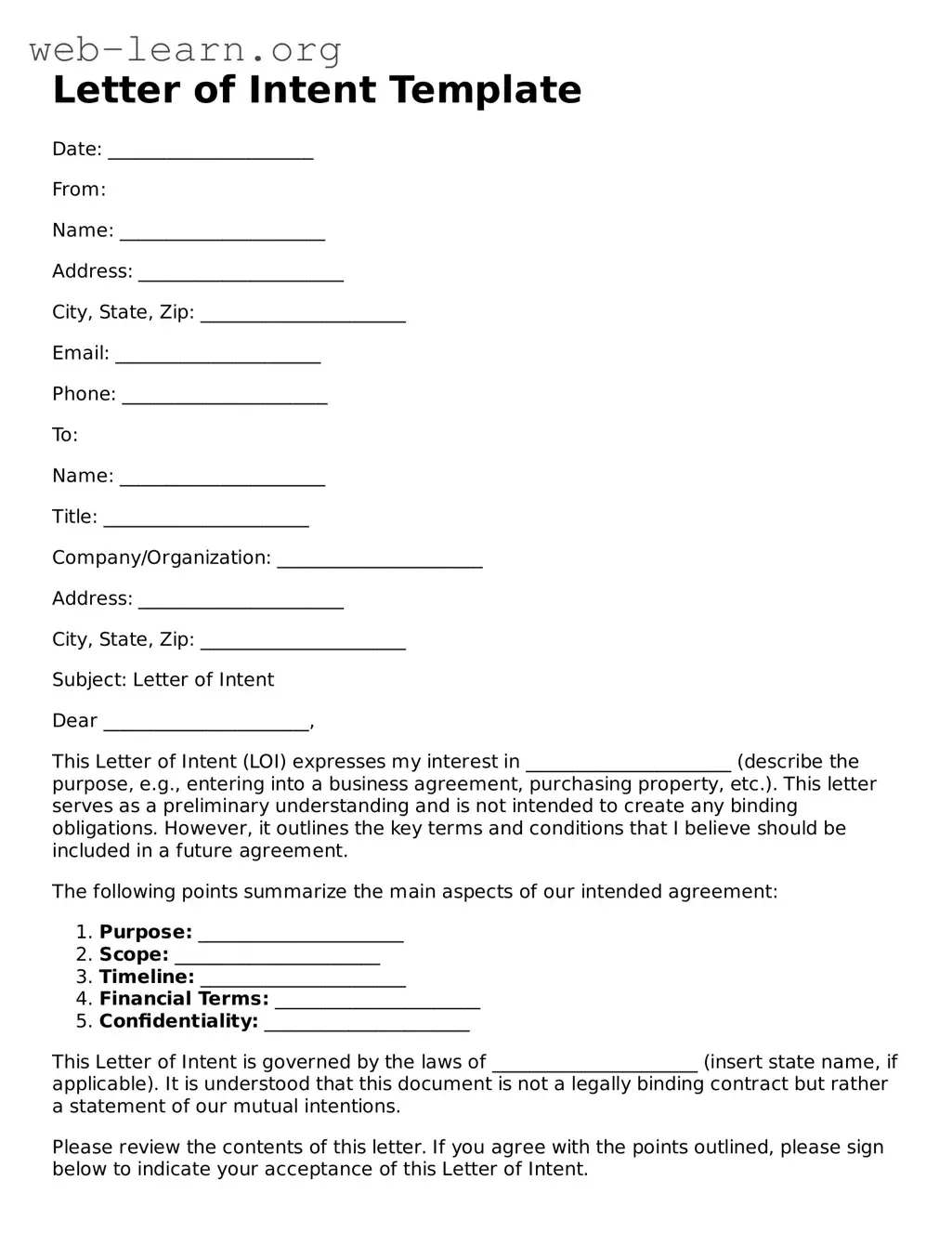
Letter of Intent Template
Date: ______________________
From:
Name: ______________________
Address: ______________________
City, State, Zip: ______________________
Email: ______________________
Phone: ______________________
To:
Name: ______________________
Title: ______________________
Company/Organization: ______________________
Address: ______________________
City, State, Zip: ______________________
Subject: Letter of Intent
Dear ______________________,
This Letter of Intent (LOI) expresses my interest in ______________________ (describe the purpose, e.g., entering into a business agreement, purchasing property, etc.). This letter serves as a preliminary understanding and is not intended to create any binding obligations. However, it outlines the key terms and conditions that I believe should be included in a future agreement.
The following points summarize the main aspects of our intended agreement:
This Letter of Intent is governed by the laws of ______________________ (insert state name, if applicable). It is understood that this document is not a legally binding contract but rather a statement of our mutual intentions.
Please review the contents of this letter. If you agree with the points outlined, please sign below to indicate your acceptance of this Letter of Intent.
Sincerely,
______________________
(Signature)
______________________
(Printed Name)
Agreed and Accepted:
______________________
(Signature)
______________________
(Printed Name)
| Fact Name | Description |
|---|---|
| Purpose | A Letter of Intent (LOI) outlines the preliminary understanding between parties before finalizing a contract. It serves as a roadmap for negotiations and can clarify intentions. |
| Binding Nature | Typically, an LOI is non-binding, meaning it does not create legal obligations. However, certain provisions, like confidentiality or exclusivity, can be binding if explicitly stated. |
| State-Specific Forms | Different states may have unique requirements for LOIs. For instance, in California, the governing law includes the California Civil Code, which outlines contract formation and enforceability. |
| Common Uses | LOIs are commonly used in real estate transactions, mergers and acquisitions, and partnership agreements. They help set the stage for detailed negotiations and contract drafting. |
After completing the Letter of Intent form, you will be ready to submit it to the relevant party. Ensure that all information is accurate and clear. Review the document for any errors before finalizing your submission.
What is a Letter of Intent (LOI)?
A Letter of Intent is a document that outlines the preliminary understanding between two or more parties who intend to enter into a formal agreement. It serves as a starting point for negotiations and may include key terms and conditions that will be further detailed in a final contract.
Why should I use a Letter of Intent?
Using a Letter of Intent can clarify the intentions of all parties involved and set the stage for future discussions. It helps ensure everyone is on the same page regarding the main points of the agreement, reducing the risk of misunderstandings later on.
Is a Letter of Intent legally binding?
The binding nature of a Letter of Intent depends on its wording. Some LOIs are intended to be non-binding, while others may include binding clauses. It is important to specify which parts of the LOI are binding and which are not to avoid confusion.
What should be included in a Letter of Intent?
A well-drafted Letter of Intent typically includes:
How long does it take to draft a Letter of Intent?
The time it takes to draft a Letter of Intent can vary. Simple LOIs may be completed in a few hours, while more complex agreements may require several days of negotiation and revisions. Engaging all parties early in the process can help expedite this timeline.
Can I modify a Letter of Intent after it is signed?
Yes, a Letter of Intent can be modified after it is signed, but both parties must agree to the changes. It is advisable to document any modifications in writing to maintain clarity and avoid potential disputes.
What happens after a Letter of Intent is signed?
Once a Letter of Intent is signed, the parties typically move forward with drafting a more detailed and formal agreement. This may involve further negotiations and discussions to finalize the terms outlined in the LOI.
Can a Letter of Intent be used in any type of agreement?
A Letter of Intent can be used in various types of agreements, including business transactions, real estate deals, and partnership arrangements. However, it is essential to tailor the LOI to fit the specific context and needs of the parties involved.
What should I do if I have questions about my Letter of Intent?
If you have questions about your Letter of Intent, it is advisable to consult with a legal professional. They can provide guidance tailored to your specific situation and help ensure that your interests are adequately protected.
Filling out a Letter of Intent (LOI) form can be a straightforward process, but several common mistakes can lead to complications. One frequent error is failing to provide complete contact information. It’s essential to include accurate names, addresses, phone numbers, and email addresses. Incomplete or incorrect contact details can hinder communication and delay the process.
Another mistake often seen is neglecting to specify the purpose of the letter clearly. A vague or ambiguous statement about intentions can lead to misunderstandings. The purpose should be explicitly stated to ensure all parties involved understand the intent behind the letter.
Additionally, many individuals overlook the importance of reviewing the form for grammatical and typographical errors. Mistakes in spelling or grammar can detract from the professionalism of the document. Such errors can create doubts about the seriousness of the intent, potentially affecting the outcome.
Lastly, some people forget to sign and date the LOI. A signature is a critical component that signifies agreement and commitment. Without a signature, the document may be considered incomplete and could lead to legal challenges or disputes down the line.
A Letter of Intent (LOI) is often used in various transactions to outline the preliminary understanding between parties before formal agreements are finalized. Along with the LOI, several other documents may be utilized to clarify intentions and responsibilities. Below is a list of commonly associated forms and documents.
Understanding these documents can facilitate smoother negotiations and help establish clear expectations between parties. Each form plays a unique role in the process, contributing to a comprehensive understanding of the transaction at hand.
A Letter of Intent (LOI) serves as a preliminary agreement outlining the intentions of parties before entering into a formal contract. Several other documents share similarities with an LOI in terms of purpose and function. Below are six such documents:
When filling out a Letter of Intent form, it's important to follow certain guidelines to ensure clarity and effectiveness. Here’s a list of things you should and shouldn't do:
Understanding the Letter of Intent (LOI) can be challenging due to various misconceptions. Here are ten common misunderstandings about this important document:
By dispelling these misconceptions, individuals can approach the Letter of Intent with a clearer understanding and make informed decisions in their negotiations.
When filling out and using a Letter of Intent (LOI) form, it's important to understand its purpose and implications. Here are some key takeaways: